
Chef Fai
Dry Egg Noodles (Ba Mee Haeng)
The four pillars live at the bottom of the bowl before the noodles ever touch it: nam pla for salt, sugar for sweet, vinegar for sour, chili for heat. Every noodle cart in Bangkok runs on this principle.
A cooking platform built around craft, culture, and the stories behind what we eat.

Created by
Wok hei is not a technique, it's a temperature. Garlic hits screaming oil, pork chars on contact, holy basil wilts in the last breath of heat. Thailand's most eaten lunch, governed by the same four pillars as every other Thai dish.
Wok hei. The breath of the wok. That's what this dish is about. Not the basil, not the pork, not even the fried egg. The governing principle of pad kra pao is heat. Violent, uncompromising heat that turns a handful of ordinary ingredients into something that smells like a Bangkok street at noon.
Ajarn always said that stir-frying is not cooking. It's a controlled explosion. The wok has to be so hot that garlic turns golden the instant it touches oil. The pork has to char on contact, not steam in its own moisture. If your kitchen doesn't smell faintly of smoke when you're done, you weren't hot enough. That char, that breath, is what separates a vendor's pad kra pao from the sad version you get at tourist restaurants where the wok never breaks three hundred degrees.
Now here's the thing people miss. This dish doesn't use a kreung tam. There's no paste. But it still follows the system. Fish sauce (nam pla) for salt. A pinch of sugar for balance. Chilies pounded or bruised, not minced into oblivion. The four pillars are here: salt, sweet, heat. Sour sits this one out, and that's fine. Not every dish uses all four. The system is flexible within its own rules. That's what makes it a system and not a checklist.
The basil is holy basil, bai kra pao (ใบกะเพรา). The dish is literally named after it. Not sweet basil. Not Italian basil. Holy basil has a peppery, clove-like bite with purple-tinged stems and serrated leaves. When it hits residual heat in a scorching wok, it releases volatile oils that taste like nothing else on earth. You throw it in at the last second. Two tosses. Done. If the leaves go dark and limp, you cooked them. You wilt them. There's a difference, and it matters.
Pad kra pao emerged as a Central Thai street food staple in the second half of the 20th century, tied directly to the explosion of made-to-order stalls (ร้านตามสั่ง) that spread across Bangkok as rapid urbanization sent workers looking for fast, cheap, filling lunches. The dish's genius is economic: one wok, one burner, five ingredients, sixty seconds. Holy basil (Ocimum tenuiflorum), sometimes called tulsi in South Asian traditions, has been cultivated in Thailand for centuries and carries a distinctly different volatile compound profile from sweet basil (Ocimum basilicum), dominated by eugenol (the same compound in cloves) rather than linalool. By the 2010s, pad kra pao had become arguably Thailand's most consumed single dish, with surveys consistently ranking it as the number-one weekday lunch order.
Quantity
300g
hand-minced or coarsely ground
Quantity
6 cloves
roughly chopped
Quantity
5-10
lightly pounded or bruised
Quantity
2 tablespoons
Quantity
1.5 tablespoons
Quantity
1 tablespoon
Quantity
1 teaspoon
Quantity
1 teaspoon
Quantity
2 large handfuls
Quantity
2
Quantity
for serving
Quantity
for serving
| Ingredient | Quantity |
|---|---|
| pork shoulder or bellyhand-minced or coarsely ground | 300g |
| garlicroughly chopped | 6 cloves |
| bird's eye chilies (prik khi nu)lightly pounded or bruised | 5-10 |
| vegetable oil | 2 tablespoons |
| fish sauce (nam pla) | 1.5 tablespoons |
| oyster sauce | 1 tablespoon |
| dark soy sauce (si ew dam) | 1 teaspoon |
| granulated sugar or palm sugar (nam tan pip) | 1 teaspoon |
| holy basil leaves and tender stems (bai kra pao) | 2 large handfuls |
| fried eggs | 2 |
| steamed jasmine rice | for serving |
| bird's eye chilies (prik khi nu) (optional) | for serving |
Before the wok gets hot, everything must be within arm's reach. Roughly chop the garlic. Don't mince it fine. You want irregular chunks that will get golden on some edges and stay soft on others. Take the bird's eye chilies and either bruise them with the flat of your knife or give them three quick strikes in the mortar. You're cracking them open, not making a paste. Measure your sauces into a small bowl if you want: fish sauce, oyster sauce, dark soy, sugar. Once the wok is hot, you won't have time to reach for bottles.
Set your wok over the highest heat your stove can produce. Leave it there for two full minutes. Not one. Two. Hold your hand six inches above the surface. If the heat forces your hand away, you're ready. Add the oil. It should shimmer and smoke within three seconds. If it just sits there looking calm, the wok isn't hot enough. Wait longer.
Slam the garlic and bruised chilies into the smoking oil. You'll hear a violent sizzle. That's correct. Stir once, fast. The garlic should start turning golden at the edges within two seconds. If it takes longer, your wok wasn't hot enough. Don't let the garlic burn. You have a five-second window between golden and black. The aroma should be sharp and aggressive, hitting the back of your throat.
Add the pork immediately. Spread it across the wok surface in a single layer. Press it down with your spatula. Don't move it. Let it sit on the hot metal for fifteen seconds. You want contact. You want char. That's wok hei. Then break it apart, toss, and press again. Repeat. The pork should have visible brown, almost blackened edges mixed with just-cooked pink. Total time on the wok: about two minutes. The moment there's no more raw pink visible, you move to the next step. Overcooked pork tastes like cardboard.
Add the fish sauce, oyster sauce, dark soy sauce, and sugar. All at once. The liquids will hit the screaming wok and explode into aromatic vapor. That's flavor concentrating on the metal surface and coating every piece of pork. Toss twice. The dark soy gives color, not salt. The oyster sauce gives body and gloss. The fish sauce is the salt. The sugar balances. Thirty seconds of tossing. Taste a piece of pork. It should be salty first, savory second, with a whisper of sweetness and building chili heat.
Kill the heat. Immediately add the holy basil, both leaves and tender stems, in one aggressive handful. Toss twice in the residual heat. The basil should wilt just enough to soften but stay bright green and fragrant. If the leaves turn dark, you left them too long. The volatile oils in holy basil are what make this dish. They activate with brief heat and die with prolonged heat. Two tosses. That's it. Plate the stir-fry over jasmine rice. Set a fried egg on top with crispy, lacy, golden-bubbled edges and a yolk that's still liquid. Break the yolk. Let it run into the rice and the pork. That's the design. Eat immediately.
1 serving (about 420g)
Culinary guides, cultural storytelling, and the editorial depth that makes cooking meaningful.
Discover Culinary ExplorerChef Fai
The four pillars live at the bottom of the bowl before the noodles ever touch it: nam pla for salt, sugar for sweet, vinegar for sour, chili for heat. Every noodle cart in Bangkok runs on this principle.

Chef Fai
The kreung tam fried in cracked coconut cream until the oil bleeds red. That's the technique. Concentrated, semi-dry, spooned thick over crispy fish. This is what happens when the four pillars meet restraint.
Chef Fai
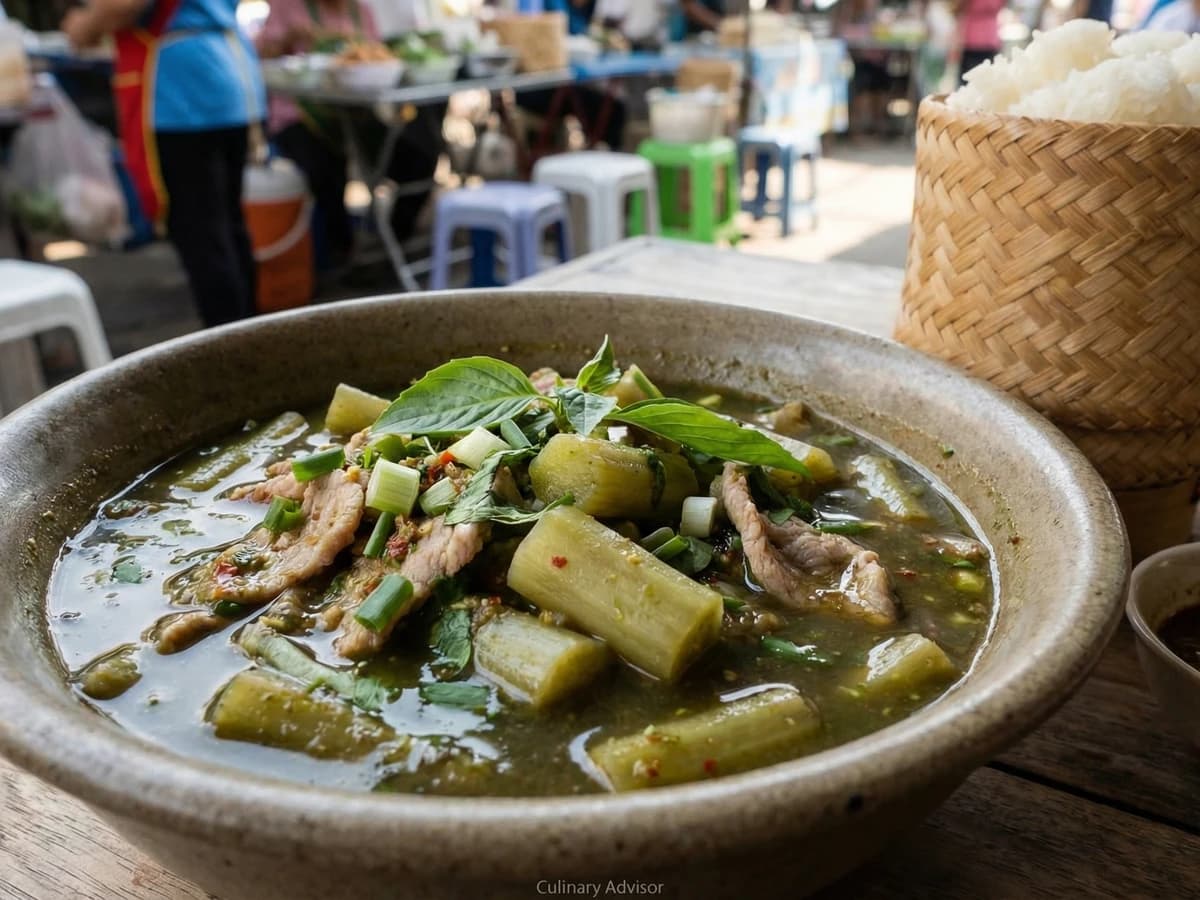
Isan foraging in a bowl: wild taro stems stripped of their sting, simmered in padaek broth with a pounded chili paste and yanang leaf extract. The land feeds you if you know the rules.

Chef Fai
Lanna's kreung tam breaks from Central Thai rules: ginger over galangal, cumin and coriander from Burmese spice routes, tamarind for sour instead of lime. The North has its own system, and this curry is its crown.