
Chef Takumi
Abura Soba (油そば, brothless ramen)
Abura soba is ramen without the hiding place of soup: hot noodles, strong shōyu tare, fragrant oil, and the discipline to mix while every strand is still hot.
A cooking platform built around craft, culture, and the stories behind what we eat.
Created by
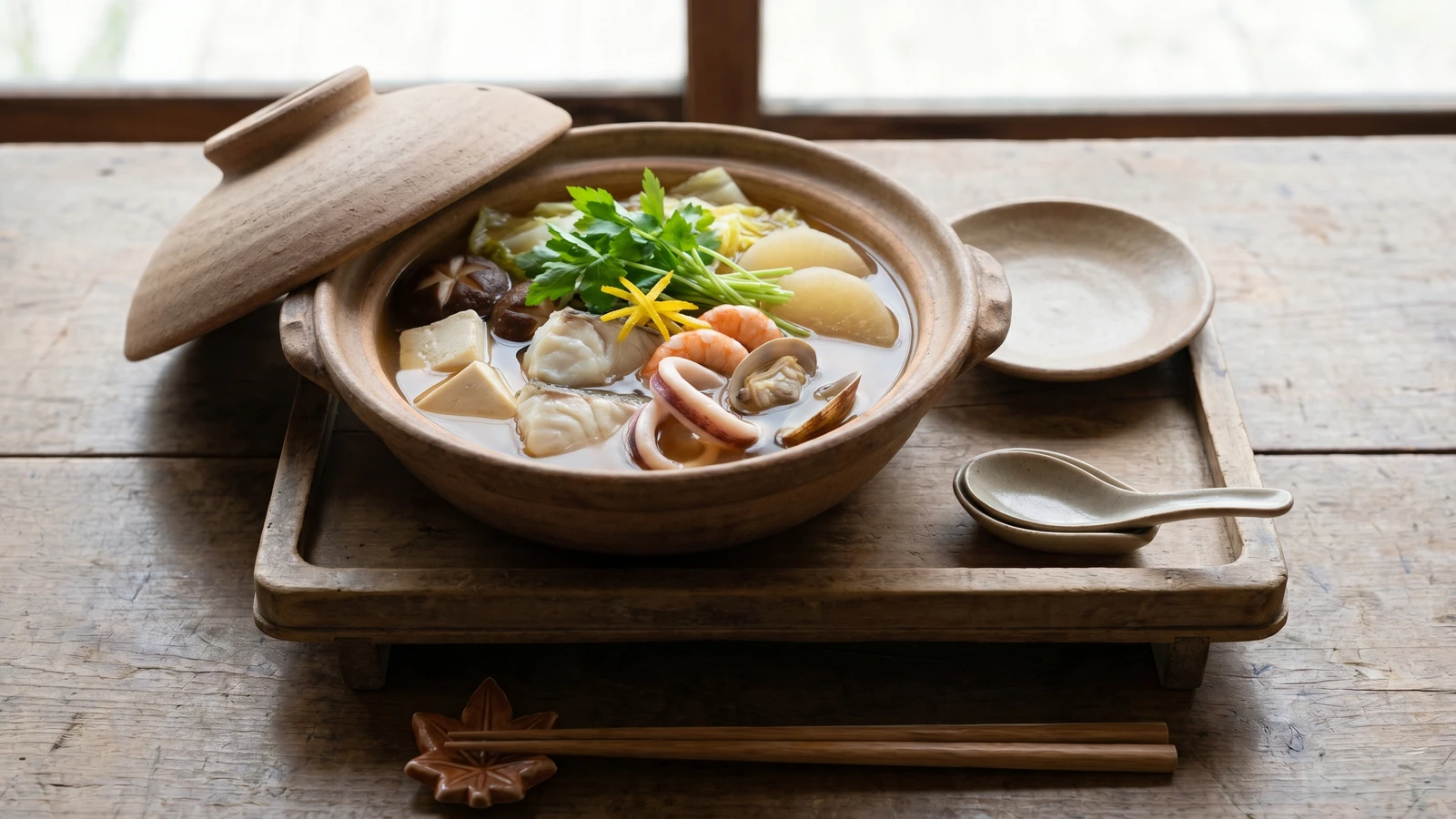
Ishiru nabe is winter at the Noto shore: clear dashi, glistening seafood, sturdy vegetables, and a spoonful of fermented squid sauce doing quiet, serious work.
Ishiru makes people nervous before they taste it. A fish sauce made from squid sounds forceful, and it can be, if you pour it in like soy sauce and walk away. Use it as we do in Noto, a little at a time, and it gives the pot a clean sea-depth that salt alone cannot manage.
The dish is not complicated. Make a clear dashi, season it lightly with sake and ishiru, then simmer seafood and winter vegetables in the order they need. The one detail that decides it is restraint: ishiru is seasoning, not soup base. Let the dashi carry the broth, and let the fish sauce darken the edge.
Choose seafood that looks glistening fresh and smells clean, not loud. Cod, squid, shrimp, clams, yellowtail, or local white fish all suit the pot when they are at their prime, shun. Add hakusai, leeks, daikon, mushrooms, and tofu, and leave each piece enough room to cook cleanly. Nothing hidden under sauce. The broth should taste like the coast after a cold wind has passed over it, not like a bottle tipped too boldly.
Ishiru is a fermented fish sauce of the Noto Peninsula in Ishikawa Prefecture, traditionally made from squid guts or whole sardines packed with salt and aged for months or longer. It is often described as older in local use than soy sauce in the region, and it remains tied to coastal preservation work where winter seafood and salt became seasoning as much as food. Ishiru nabe is one of its clearest uses: a communal hot pot that lets the sauce season broth, fish, and vegetables without hiding them.
Quantity
1 piece (about 10g)
Quantity
6 cups
Quantity
20g
Quantity
1/4 cup
Quantity
2 to 3 tablespoons
plus more to taste
Quantity
1 teaspoon
Quantity
300g
cut into large pieces
Quantity
200g
cleaned and cut into rings
Quantity
8
peeled or shell-on
Quantity
8
scrubbed
Quantity
1/4 head
cut into wide pieces
Quantity
1 small
peeled and thinly sliced
Quantity
1
cut on the diagonal
Quantity
150g
stems trimmed
Quantity
1 block
drained and cut into large cubes
Quantity
1 small bunch
cut into 2-inch lengths
Quantity
1 strip
cut into fine slivers
| Ingredient | Quantity |
|---|---|
| konbu (dried kelp) | 1 piece (about 10g) |
| cold water | 6 cups |
| katsuobushi (bonito flakes) | 20g |
| sake | 1/4 cup |
| ishiru (Noto fermented squid fish sauce)plus more to taste | 2 to 3 tablespoons |
| usukuchi (light soy sauce) (optional) | 1 teaspoon |
| firm white fish such as codcut into large pieces | 300g |
| squidcleaned and cut into rings | 200g |
| large shrimppeeled or shell-on | 8 |
| small clamsscrubbed | 8 |
| hakusai (napa cabbage)cut into wide pieces | 1/4 head |
| daikonpeeled and thinly sliced | 1 small |
| long negi or leekcut on the diagonal | 1 |
| shiitake mushroomsstems trimmed | 150g |
| firm tofudrained and cut into large cubes | 1 block |
| seri or mizunacut into 2-inch lengths | 1 small bunch |
| yuzu peel (optional)cut into fine slivers | 1 strip |
Wipe the konbu with a damp cloth, but don't wash it. Put it in the cold water and bring it up slowly over low heat. Pull the konbu when the water trembles and small bubbles climb the sides, before it boils. Add the katsuobushi, take the pot off the heat, and leave it alone for three minutes. Strain through a cloth without squeezing, because squeezing presses heavy, oily flavors into the clear stock.
Pour the dashi into a donabe or wide heavy pot. Add the sake and 2 tablespoons of ishiru, then taste. It should be gently salty, clean, and deeper than plain dashi, but not sharp. Add the usukuchi only if the broth needs a rounder edge. Ishiru varies by maker, so tasting is not fussiness. It is the method.
Pat the fish, squid, and shrimp dry, and check that the clams are tightly closed or close when tapped. If the fish smells strong, change the dish and cook something else. This pot has nothing to hide behind. Cut the fish into pieces large enough to hold together, because small pieces cloud the broth and overcook before the vegetables are ready.
Bring the seasoned broth to a quiet simmer. Add the daikon first and cook for about 6 minutes, until the edges begin to turn translucent. Add the hakusai stems, negi, shiitake, and tofu. These sturdier pieces go in before the seafood because they need time to soften, and the broth gathers sweetness from them as they cook.
Nestle in the fish, squid, shrimp, clams, and the leafy hakusai tops. Keep the simmer gentle, just enough movement to cook everything through. Boil it hard and the fish tightens, the squid toughens, and the broth turns cloudy. Cover for 4 to 6 minutes, until the clams open, the shrimp turn pink, and the fish flakes when nudged.
Taste the broth once more and add a few drops of ishiru if it needs salt and sea-depth. Scatter the seri or mizuna over the top and let it wilt for less than a minute, so the greens stay bright. Finish with yuzu peel if using. Carry the donabe to the table with individual tori-zara plates and chirirenge spoons, and serve from the pot while the surface stays glossy and clear.
1 serving (about 840g)
Culinary guides, cultural storytelling, and the editorial depth that makes cooking meaningful.
Discover Culinary ExplorerChef Takumi
Abura soba is ramen without the hiding place of soup: hot noodles, strong shōyu tare, fragrant oil, and the discipline to mix while every strand is still hot.

Chef Takumi
Akadashi asks you to trust the dark miso. Build a clear dashi, loosen the Hatchō mame-miso gently, and the soup turns coffee-dark, savory, and clean.

Chef Takumi
Toast the rice until its skin is firm, then let it meet chicken broth, burdock, maitake, and seri. The pot looks grand, but the work is rice, broth, and patience.

Chef Takumi
Shottsuru nabe is Akita winter in one pot: clean dashi, hatahata at shun, tofu and napa cabbage carrying a salt-deep broth without anything heavy enough to hide the fish.