Culinary Explorer
A cooking platform built around craft, culture, and the stories behind what we eat.
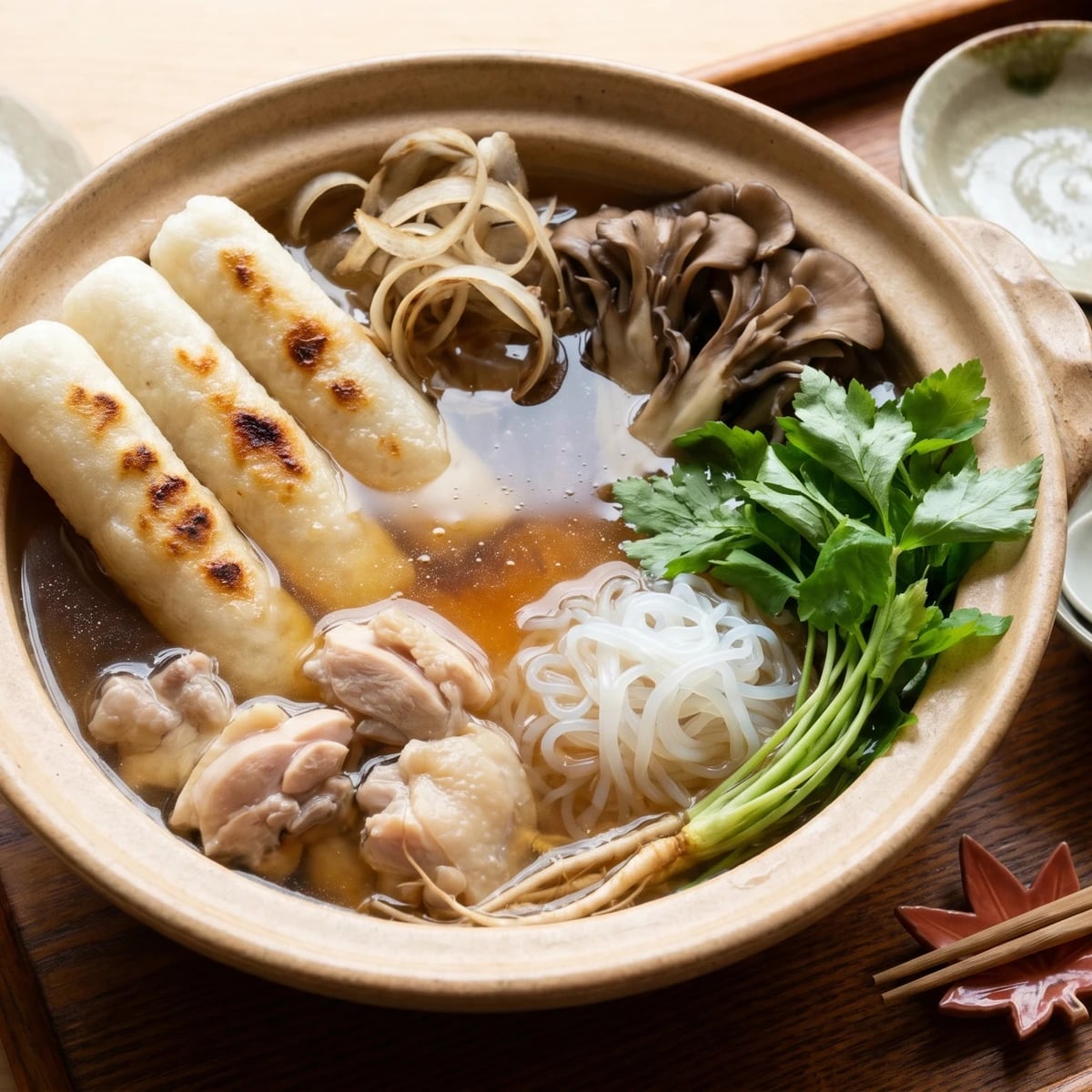
Akita Mashed-Rice Hot Pot (きりたんぽ鍋, Kiritanpo Nabe)
Created by Chef Takumi
Toast the rice until its skin is firm, then let it meet chicken broth, burdock, maitake, and seri. The pot looks grand, but the work is rice, broth, and patience.
The rice is not a topping here. It is the dish's appetite. Cooked short-grain rice is mashed, pressed around cedar, toasted until it forms a dry skin, then cut and laid into chicken broth where it drinks what the pot has to give.
People see the cedar sticks and the donabe and assume ceremony. Don't give the dish that much distance. If you can cook rice, mash it while hot, and toast it until the surface is firm, you've done the part that matters. The stick is a tool, not a shrine. An untreated wooden dowel will stand in when cedar is out of reach.
Kiritanpo nabe is cold-weather food from Akita, and shun matters. Seri, Japanese parsley, should be green, sharp, and fresh, with roots if you can buy it; those roots perfume the broth in a way flat-leaf parsley cannot politely imitate. Hinai-jidori is the pride of the place, but the best chicken in front of you today is better than a famous name tired from travel. Nothing hidden.
The one detail that decides the pot is timing. Toast the rice enough to make a skin, then add it near the end. Too early, it slumps and clouds the broth; too late, it stays outside the meal instead of drinking the soy-bright chicken stock. We let the broth season the rice, not drown it. That's honmono made reachable: rice, chicken, burdock, seri, and restraint.
Ingredients
Japanese short-grain rice
Quantity
2 cups (about 400g)
rinsed and soaked 30 minutes
water
Quantity
2 1/4 cups
for cooking the rice
sea salt
Quantity
1/2 teaspoon, plus a pinch
for the rice and shaping water
| Ingredient | Quantity |
|---|---|
| Japanese short-grain ricerinsed and soaked 30 minutes | 2 cups (about 400g) |
| waterfor cooking the rice | 2 1/4 cups |
| sea saltfor the rice and shaping water | 1/2 teaspoon, plus a pinch |
Where cooking meets culture.
Culinary guides, cultural storytelling, and the editorial depth that makes cooking meaningful.
Discover Culinary Explorer