
Chef Takumi
Abura Soba (油そば, brothless ramen)
Abura soba is ramen without the hiding place of soup: hot noodles, strong shōyu tare, fragrant oil, and the discipline to mix while every strand is still hot.
A cooking platform built around craft, culture, and the stories behind what we eat.
Created by
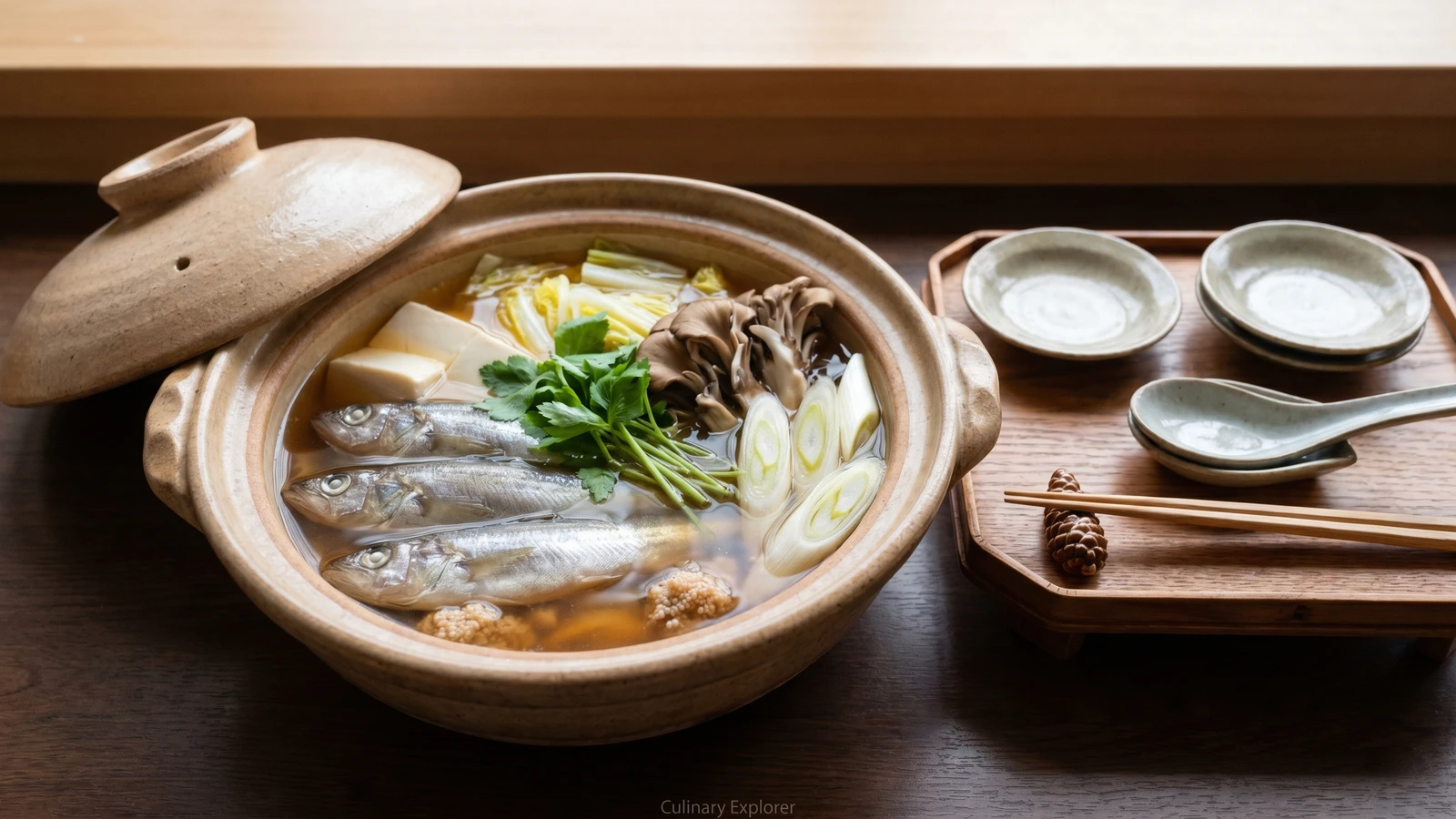
Shottsuru nabe is Akita winter in one pot: clean dashi, hatahata at shun, tofu and napa cabbage carrying a salt-deep broth without anything heavy enough to hide the fish.
Hatahata comes to Akita with winter, small silver fish riding the cold Sea of Japan into the bays, often carrying the beadlike roe called buriko. This pot is built for that moment. If the fish is glistening fresh and the shottsuru is good, you don't need cleverness. You need a clear stock and a light hand.
Fish sauce makes some careful cooks stiffen. They expect a hard smell taking over the room, and shottsuru can do that if you pour it like soy. We don't. In this nabe it seasons the dashi, salt-deep and clean, while tofu and napa cabbage soften the brine and carry it to the spoon.
The detail that decides it is the simmer. Hatahata is tender, and a hard boil breaks it apart, clouds the broth, and sends the roe wandering around the pot like it has lost its manners. Lay the fish in after the vegetables are nearly tender, keep the surface just moving, and serve as soon as the flesh turns opaque. At the winter table this is the main pot, rice nearby, everyone taking from the donabe without fuss. Honmono, but not severe.
Shottsuru is Akita's traditional gyoshō, a fermented fish sauce made by salting hatahata, and it was a practical preserved seasoning before soy sauce from warmer brewing regions was easy to obtain in the north. Hatahata stocks collapsed late in the twentieth century, and Akita fishermen accepted a full fishing ban from 1992 to 1995 to let the winter runs recover. Shottsuru is often counted with Noto's ishiru and Kagawa's ikanago shōyu among Japan's best-known old fish sauces, and shottsuru nabe remains its plainest winter use.
Quantity
1 piece (about 10g)
Quantity
6 cups
Quantity
25g
Quantity
4 to 6 fish (about 700g total)
gills and guts removed, rinsed, roe kept if present
Quantity
1/4 cup
Quantity
1 tablespoon
Quantity
3 to 4 tablespoons
Quantity
200g
peeled and cut into thin half-moons
Quantity
400g
stems and leaves separated, cut into bite-size pieces
Quantity
1 large
cut diagonally into 2-inch pieces
Quantity
1 block (about 300g)
drained and cut into 8 pieces
Quantity
150g
torn into clusters
Quantity
1 small bunch
cut into 2-inch lengths
Quantity
2 cups
for shime, the closing bowl
| Ingredient | Quantity |
|---|---|
| konbu (dried kelp) | 1 piece (about 10g) |
| cold water | 6 cups |
| katsuobushi (bonito flakes) | 25g |
| hatahata (Japanese sandfish)gills and guts removed, rinsed, roe kept if present | 4 to 6 fish (about 700g total) |
| sake | 1/4 cup |
| mirin (optional) | 1 tablespoon |
| shottsuru (Akita fish sauce) | 3 to 4 tablespoons |
| daikonpeeled and cut into thin half-moons | 200g |
| napa cabbage (hakusai)stems and leaves separated, cut into bite-size pieces | 400g |
| Japanese negi or small leekcut diagonally into 2-inch pieces | 1 large |
| momen tofu (firm cotton tofu)drained and cut into 8 pieces | 1 block (about 300g) |
| maitake mushroomstorn into clusters | 150g |
| seri or shungikucut into 2-inch lengths | 1 small bunch |
| cooked short-grain rice (optional)for shime, the closing bowl | 2 cups |
Keep the hatahata cold until you need them. If the monger hasn't cleaned them, snip out the gills, open the belly neatly, and remove the guts, leaving the roe sacs in place if the fish have buriko. Rinse quickly under cold water, especially around the backbone, then pat dry. Blood muddies the broth, but soaking washes away the clean sweetness you bought the fish for.
Wipe the konbu with a damp cloth, but don't wash it. Put it in the cold water and bring it up slowly over low heat, about ten minutes. Lift the konbu out when the water trembles and small bubbles climb the sides, just before a boil.
Bring the water to a gentle boil, add the katsuobushi all at once, and turn off the heat. Leave the flakes alone for two or three minutes, until they sink. Strain through a cloth into a clean pot or donabe and let it drip by itself. Don't squeeze. Squeezing presses the strong, oily flavors into the stock, and this nabe wants clarity.
Cut the daikon thin enough to soften quickly. Keep the firm napa stems separate from the tender leaves. Tear the maitake by hand, cut the tofu into large pieces, and slice the negi on the diagonal. This isn't fuss. Each ingredient has its own timing, and the pot stays calm when you give the slow ones a head start.
Pour 5 cups of the dashi into the donabe. Add the sake and mirin if using, then bring it to a quiet simmer for one minute to soften the alcohol edge. Add 3 tablespoons shottsuru and taste. It should be a little stronger than you want to drink, because the tofu and cabbage will dilute it as they cook.
Add the daikon, napa stems, and maitake. Simmer gently for five to seven minutes, until the daikon bends a little at the edge and the cabbage stems begin to turn translucent. These go in before the fish because they need time. Hatahata does not.
Lay the hatahata in a single layer, then tuck the tofu and negi around them. Do not stir. Spoon a little broth over the exposed fish, keep the surface just moving, and cook six to eight minutes, a few minutes longer if the roe is heavy. Skim any foam. The fish is done when the flesh turns opaque and slips easily from the backbone.
Add the napa leaves and seri or shungiku, and cook just until the greens relax while their color stays alive, one or two minutes. Taste the broth and add the remaining shottsuru a teaspoon at a time if it needs depth. Serve from the donabe into individual tori-zara, giving each person fish, tofu, vegetables, and clear broth.
If you want shime, the closing bowl, add cooked short-grain rice to the remaining broth after the fish and vegetables are eaten. Simmer gently until the grains loosen and drink the shottsuru-dashi. This uses the best seasoning left in the pot instead of letting it disappear down the sink.
1 serving (about 850g)
Culinary guides, cultural storytelling, and the editorial depth that makes cooking meaningful.
Discover Culinary ExplorerChef Takumi
Abura soba is ramen without the hiding place of soup: hot noodles, strong shōyu tare, fragrant oil, and the discipline to mix while every strand is still hot.

Chef Takumi
Akadashi asks you to trust the dark miso. Build a clear dashi, loosen the Hatchō mame-miso gently, and the soup turns coffee-dark, savory, and clean.

Chef Takumi
Toast the rice until its skin is firm, then let it meet chicken broth, burdock, maitake, and seri. The pot looks grand, but the work is rice, broth, and patience.

Chef Takumi
Winter udon with staying power: clear dashi, a little soy and mirin, and just enough starch to make the broth cling without turning heavy.