
Chef Takumi
Abura Soba (油そば, brothless ramen)
Abura soba is ramen without the hiding place of soup: hot noodles, strong shōyu tare, fragrant oil, and the discipline to mix while every strand is still hot.
A cooking platform built around craft, culture, and the stories behind what we eat.
Created by
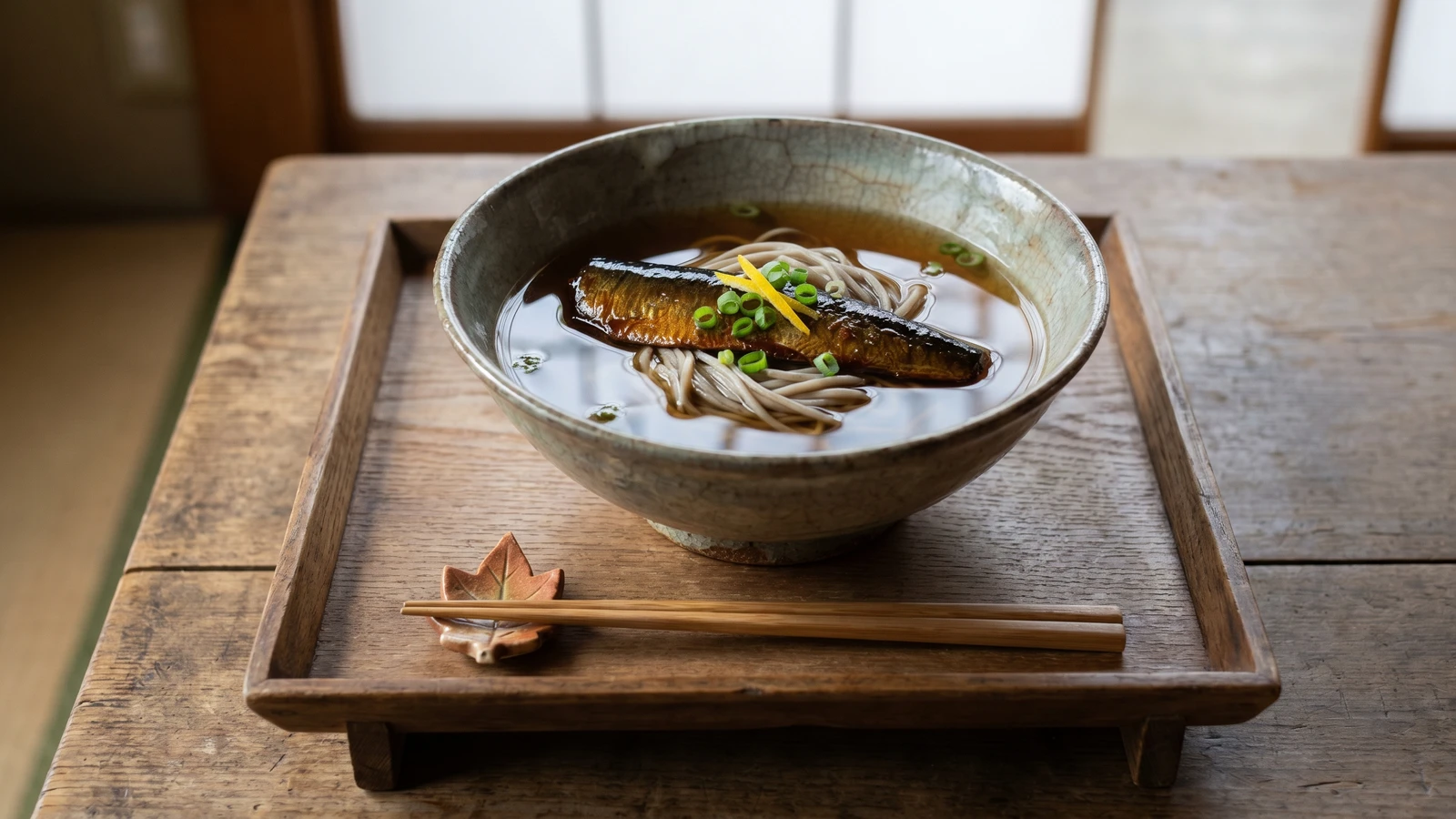
Kyoto's winter soba looks severe, a dark strip of herring over amber broth, but the work is simple: soften the fish properly, keep the dashi clear, and let the bowl stay quiet.
The herring arrives looking rather severe: dark, dry, and not especially eager to charm you. Don't be bullied by it. This is migaki nishin, dried herring, and its whole dignity depends on being slowly returned to tenderness before it ever meets the soba bowl.
The first secret is patience, not skill. Soak the fish until the flesh relaxes, simmer it first to take off the rough edge, then sweeten it before the soy goes in. That order matters. Sugar moves slowly into dried fish, while soy tightens the surface and can leave you with a salty outside and a stubborn middle. Give the sweetness time, and the herring becomes supple and glossy, still itself, nothing hidden under sauce.
Kyoto made a quiet luxury of this northern fish. In the bowl, the dark nishin lies over soba in clear amber dashi, the preserved and the fresh keeping company. It is often eaten at year-end as toshikoshi soba, the long noodles carrying you across New Year's Eve. We don't make the bowl heavy. The broth stays clear, the noodles are rinsed even though they return hot, and the fish rests on top where you can see the work.
The real thing is more reachable than it looks. Buy good dried herring, make honest dashi, and keep the assembly unhurried. The one detail that decides it is the tenderness of the nishin. If the fish yields cleanly to chopsticks, the bowl has already forgiven you everything else.
Nishin soba is most closely associated with Kyoto, where the restaurant Matsuba near the Minamiza theater is widely credited with serving it from 1882, in the Meiji period. The fish was migaki nishin from Hokkaido, carried south by the kitamaebune coastal shipping routes that supplied inland Kyoto with preserved seafood. It later became a favored form of toshikoshi soba, the long noodles eaten on New Year's Eve for continuity and a clean crossing into the new year.
Quantity
4 fillets (about 200-240g)
Quantity
enough to cover
for soaking
Quantity
3 thin slices
Quantity
2 cups
for simmering the herring
Quantity
1/2 cup
for simmering the herring
Quantity
3 tablespoons
Quantity
2 tablespoons
for the herring
Quantity
4 tablespoons
for the herring
Quantity
1 piece (about 10g)
Quantity
5 cups
for dashi
Quantity
25g
Quantity
3 tablespoons
Quantity
2 tablespoons
for the broth
Quantity
1 tablespoon
for the broth
Quantity
1/2 teaspoon, plus more to taste
Quantity
320g
or 480g fresh soba noodles
Quantity
2 slender stalks
thinly sliced
Quantity
4 thin strips
Quantity
for serving
| Ingredient | Quantity |
|---|---|
| migaki nishin (dried herring fillets) | 4 fillets (about 200-240g) |
| cold water or cloudy rice-rinsing waterfor soaking | enough to cover |
| fresh ginger | 3 thin slices |
| waterfor simmering the herring | 2 cups |
| sakefor simmering the herring | 1/2 cup |
| sugar | 3 tablespoons |
| mirinfor the herring | 2 tablespoons |
| soy saucefor the herring | 4 tablespoons |
| konbu (dried kelp) | 1 piece (about 10g) |
| cold waterfor dashi | 5 cups |
| katsuobushi (bonito flakes) | 25g |
| usukuchi shōyu (light soy sauce) | 3 tablespoons |
| mirinfor the broth | 2 tablespoons |
| sakefor the broth | 1 tablespoon |
| sea salt | 1/2 teaspoon, plus more to taste |
| dried soba noodlesor 480g fresh soba noodles | 320g |
| Kujō negi or scallionsthinly sliced | 2 slender stalks |
| yuzu peel (optional) | 4 thin strips |
| shichimi tōgarashi (optional) | for serving |
Rinse the migaki nishin briefly and pull away any loose scales or hard fins. Put the fillets in a bowl and cover them with plenty of cold water, or with the cloudy water left from rinsing rice. Refrigerate 12 to 24 hours, changing the water once if the smell is strong. The soak is not fuss. Dried herring needs time to take water back into the flesh, and rice-rinsing water softens the sharper edge without perfume or disguise.
Drain the herring and lay the fillets in a wide pot. Cover with fresh water, add the ginger, and bring to the gentlest simmer for 15 minutes. Skim any foam, then lift the herring out carefully and rinse the pot. This first simmer removes the rough dried-fish smell and starts softening the flesh, so the final seasoning can enter cleanly instead of sitting on the surface.
Return the herring to the clean pot with 2 cups water and 1/2 cup sake. Bring just to a quiet simmer, then add the sugar and mirin. Lay a wooden drop-lid, or otoshibuta, directly on the fish and simmer 20 minutes. Sugar enters the flesh more slowly than salt does, so we give it a head start. Add soy too early and the surface tightens before the center has learned any sweetness.
Add the 4 tablespoons soy sauce, replace the drop-lid, and simmer 25 to 35 minutes more, spooning the liquid over the fish now and then. The herring should be dark, glossy, and tender enough to bend slightly without breaking. Let it cool in its cooking liquid for at least 30 minutes. That rest is when the seasoning settles into the fish; served at once, it tastes louder on the outside than within.
Wipe the konbu with a damp cloth, but don't wash it. Put it in 5 cups cold water and bring it up slowly over low heat, about 10 minutes. Pull the konbu when the water trembles and small bubbles climb the sides of the pot. Boil the kelp and the dashi turns faintly bitter and slick, and the clear Kyoto broth you wanted has already gone cloudy in spirit.
Bring the konbu water to a gentle boil. Add the katsuobushi all at once, take the pot off the heat, and leave it alone for 2 to 3 minutes until the flakes sink. Strain through a cloth-lined sieve and let it drip by itself. Don't squeeze. Squeezing presses the strong, oily flavors into the stock, and this bowl needs a clean amber broth, not a loud one.
Measure about 4 1/2 cups of the strained dashi into a pot. Add the usukuchi shōyu, mirin, sake, and sea salt, then warm it just below a boil and taste. It should be clear, lightly salty, and a little rounded from the mirin, because the sweet-simmered herring will bring its own richness. If it tastes thin, add a little more dashi or a pinch of salt, not more soy.
Bring a large pot of unsalted water to a rolling boil. Add the soba and stir once so the strands separate. Cook until just tender, following the package timing but tasting early, because soba goes from firm to tired quickly. Drain and rinse under cold running water, rubbing gently to wash away surface starch. Even for hot soba, this matters: unrinsed noodles cloud the broth and make the bowl feel heavy.
Dip the rinsed soba briefly in hot water, drain well, and divide among warm bowls. Ladle the seasoned dashi over the noodles. Lay one piece of nishin across each bowl, dark side up, and spoon over a little of its glossy cooking liquid if you like a sweeter finish. Scatter with Kujō negi and set a thin strip of yuzu peel on top. Keep the herring visible. Nothing hidden.
Serve immediately with shichimi tōgarashi on the side. The soba should be supple, the broth clear, and the herring tender enough to break with chopsticks. This is the method, not the menu: good dashi, properly softened preserved fish, noodles cleaned of their starch, and a bowl with room to breathe.
1 serving (about 520g)
Culinary guides, cultural storytelling, and the editorial depth that makes cooking meaningful.
Discover Culinary ExplorerChef Takumi
Abura soba is ramen without the hiding place of soup: hot noodles, strong shōyu tare, fragrant oil, and the discipline to mix while every strand is still hot.

Chef Takumi
Akadashi asks you to trust the dark miso. Build a clear dashi, loosen the Hatchō mame-miso gently, and the soup turns coffee-dark, savory, and clean.

Chef Takumi
Toast the rice until its skin is firm, then let it meet chicken broth, burdock, maitake, and seri. The pot looks grand, but the work is rice, broth, and patience.

Chef Takumi
Shottsuru nabe is Akita winter in one pot: clean dashi, hatahata at shun, tofu and napa cabbage carrying a salt-deep broth without anything heavy enough to hide the fish.