
Chef Takumi
Abura Soba (油そば, brothless ramen)
Abura soba is ramen without the hiding place of soup: hot noodles, strong shōyu tare, fragrant oil, and the discipline to mix while every strand is still hot.
A cooking platform built around craft, culture, and the stories behind what we eat.
Created by
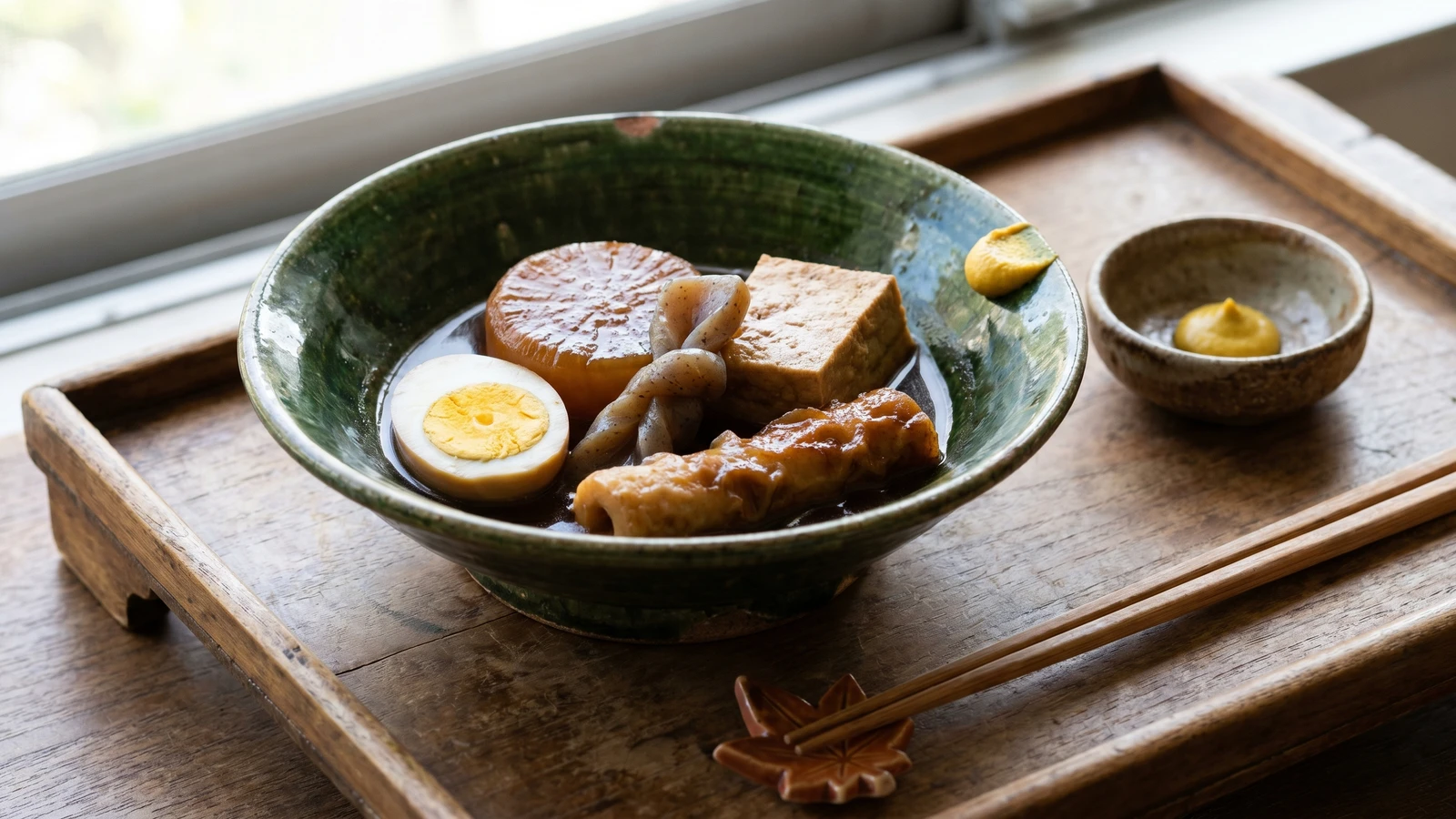
This is Nagoya's winter pot: clear dashi darkened with Hatchō miso, sweetened just enough, then left to teach daikon, egg, tendon, and motsu how to drink.
The first thing you notice is the color. Nagoya miso oden sits in the pot dark as polished wood, and that can make a nervous cook think the dish is severe. It isn't. The broth is deep because Hatchō miso is deep, made from soybeans and salt and time, then softened with sugar until it turns round rather than sharp.
This is winter food, when daikon is at its prime, full of water and sweetness, and good enough to stand up to long simmering. The one detail that decides the dish is not force. Keep the pot low, barely moving, because hard boiling knocks the daikon apart and sends the miso to the bottom where it can scorch. Quiet heat gives you tenderness without roughness.
We prepare each piece before it meets the broth. Tendon and motsu are blanched so their flavor is clean. Daikon is parboiled so its raw edge leaves first. Fried tofu and fish cakes are rinsed so their oil doesn't cloud the pot. None of this is ceremony for ceremony's sake. It is simply the way we make sure the miso has nothing to hide.
Set this beside rice and pickles and you have the method, not the menu: simmering as patience made visible. The real thing, honmono, is reachable here. A good dashi, real Hatchō miso, daikon in shun, and the willingness to let the pot rest.
Oden descends from dengaku, skewered tofu grilled and brushed with miso; by the late Edo and Meiji periods, the name had also come to mean mixed ingredients simmered in a shared pot. In Aichi, the local version leaned on mame miso, especially Hatchō miso from Hatchōmachi in Okazaki, a district named for being eight chō from Okazaki Castle. That is why Nagoya's oden is dark and thick, not the thinner soy-dashi pot more familiar in other regions.
Quantity
1 piece (about 10g)
Quantity
25g
Quantity
6 cups
Quantity
300g
cut into 1 1/2-inch pieces
Quantity
250g
intestine or tripe
Quantity
1 thumb
sliced
Quantity
2
for blanching
Quantity
1 large (about 800g)
peeled and cut into 1-inch rounds
Quantity
1/4 cup rice or 4 cups rice-rinsing water
for parboiling daikon
Quantity
4 to 6
Quantity
1 block (about 250g)
scored and cut into triangles
Quantity
1 block (about 300g)
cut into 8 pieces
Quantity
4
Quantity
2
cut diagonally in half
Quantity
150g
or another Aichi mame miso
Quantity
3 tablespoons
preferably coarse zarame sugar
Quantity
3 tablespoons
Quantity
2 tablespoons
Quantity
for serving
| Ingredient | Quantity |
|---|---|
| konbu (dried kelp) | 1 piece (about 10g) |
| katsuobushi (bonito flakes) | 25g |
| cold water | 6 cups |
| gyūsuji (beef tendon)cut into 1 1/2-inch pieces | 300g |
| cleaned pork motsuintestine or tripe | 250g |
| gingersliced | 1 thumb |
| scallion green topsfor blanching | 2 |
| daikonpeeled and cut into 1-inch rounds | 1 large (about 800g) |
| uncooked rice or rice-rinsing waterfor parboiling daikon | 1/4 cup rice or 4 cups rice-rinsing water |
| large eggs | 4 to 6 |
| konnyakuscored and cut into triangles | 1 block (about 250g) |
| atsuagecut into 8 pieces | 1 block (about 300g) |
| satsuma-age fish cakes | 4 |
| chikuwacut diagonally in half | 2 |
| Hatchō misoor another Aichi mame miso | 150g |
| sugarpreferably coarse zarame sugar | 3 tablespoons |
| mirin | 3 tablespoons |
| sake | 2 tablespoons |
| karashi mustard (optional) | for serving |
Wipe the konbu with a damp cloth, but don't wash it. Put it in the cold water and bring it up slowly over low heat. Pull the konbu when the water trembles and small bubbles climb the sides, before it boils. Boiled konbu gives the stock a bitter, slick edge. Bring the water to a gentle boil, add the katsuobushi all at once, take the pot off the heat, and leave it alone for 3 minutes. Strain through cloth or a fine sieve and let it drip. Don't squeeze, because squeezing presses strong oily flavors into the clear stock.
Put the gyūsuji and pork motsu in a pot, cover with cold water, and bring to a boil. Boil 5 minutes, then drain and rinse each piece under running water. Wash the pot, return the meat with fresh water, ginger, and scallion tops, and simmer 45 minutes to 1 hour, until the tendon bends but still holds its shape. This first cooking removes blood and strong surface smells. Hatchō miso is deep, but it isn't a curtain.
Peel the daikon, cut it into thick rounds, and trim the sharp edges so they don't chip in the pot. Cut a shallow cross in one face of each round, the hidden knife called kakushi-bōchō, so heat and seasoning enter evenly. Simmer the daikon in rice-rinsing water, or plain water with the uncooked rice tied in a small cloth, for 20 to 25 minutes, until the edges turn translucent. Rinse gently. This takes away the raw sharpness and lets the later miso broth enter cleanly.
Hard-boil the eggs, cool them, and peel them. Score the konnyaku in a shallow crosshatch, cut it into triangles, and boil it for 3 minutes to remove its alkaline smell and open the surface. Pour boiling water over the atsuage and satsuma-age, then drain. That quick rinse lifts off stale surface oil, which would muddy the miso broth.
Whisk the Hatchō miso in a bowl with a ladleful of warm dashi until smooth, then whisk in the sugar, mirin, and sake. Pour this back into the remaining dashi. Taste it now. It should be stronger, saltier, and sweeter than soup, because daikon, egg, tofu, tendon, and konnyaku will drink from it and calm it down.
Arrange the daikon, gyūsuji, motsu, and konnyaku in a wide heavy pot. Pour in the miso dashi to almost cover. Bring it only to a quiet tremble, then set a wooden drop-lid, otoshibuta, on the surface. A circle of parchment with a hole in the center does the same work. Simmer gently for 1 hour, nudging the bottom now and then so the miso doesn't settle and scorch.
Add the peeled eggs and atsuage and keep the pot at the same low simmer for 30 minutes. The eggs need time to take on color, and the tofu needs time to drink the broth. Don't hurry this with a hard boil. It breaks the daikon's edges, tightens the egg, and makes the miso taste rough.
Add the satsuma-age and chikuwa for the last 15 to 20 minutes. Fish cakes have already been cooked once, so they only need to warm through and share their flavor. Leave them too long and they lose their spring. The broth should now be dark, glossy, and thick enough to coat a chopstick.
Turn off the heat and let the oden rest in its broth for at least 1 hour, longer if you can. This is not idleness. Simmering cooks the pieces, but cooling in the pot seasons them. Oden is one of those honest dishes that often becomes better after the cook has stopped fussing with it.
Rewarm the pot gently, stirring the bottom with care. If the broth is too loose, simmer it uncovered for a few minutes. If it has tightened too much, loosen it with a little dashi, not plain water. Serve a restrained mix of pieces in each bowl with a small dab of karashi mustard. Leave it room. The dark broth is rich enough without crowding the vessel.
1 serving (about 725g)
Culinary guides, cultural storytelling, and the editorial depth that makes cooking meaningful.
Discover Culinary ExplorerChef Takumi
Abura soba is ramen without the hiding place of soup: hot noodles, strong shōyu tare, fragrant oil, and the discipline to mix while every strand is still hot.

Chef Takumi
Akadashi asks you to trust the dark miso. Build a clear dashi, loosen the Hatchō mame-miso gently, and the soup turns coffee-dark, savory, and clean.

Chef Takumi
Toast the rice until its skin is firm, then let it meet chicken broth, burdock, maitake, and seri. The pot looks grand, but the work is rice, broth, and patience.

Chef Takumi
Shottsuru nabe is Akita winter in one pot: clean dashi, hatahata at shun, tofu and napa cabbage carrying a salt-deep broth without anything heavy enough to hide the fish.