
Chef Lupita
Acambaritas de Acámbaro
Guanajuato's daily bread from Acámbaro, a small glazed roll built on pata, enriched with manteca de cerdo, and baked until the top shines lightly for merienda.
A cooking platform built around craft, culture, and the stories behind what we eat.

Created by
Puebla and Oaxaca's convent sponge bread, built from eggs, sugar, wheat flour, and patience, beaten until pale and porous enough to drink chocolate like a proper altar bread.
Puebla and Oaxaca share this convent bread, but each state sets it on the table with its own hand. In Puebla, I saw it beside talavera cups of chocolate. In Oaxaca, especially around Día de Muertos, it sits on the altar because the dead are offered what the living still respect.
Marquesote is not cake with frosting. It is an egg bread, dry, porous, and pale-gold, made to receive hot chocolate, atole, or cafe de olla. The ingredient that defines it is not chile or manteca this time. It is air beaten into eggs until your arm complains. The convent kitchens perfected that discipline before mixers made cooks lazy.
Use fresh eggs, fine sugar, good wheat flour, and a little Mexican canela. No butter. No oil. No baking powder if your eggs are beaten correctly. No me vengas con atajos. The crumb should be open and thirsty, not rich and tender like birthday cake. Cada estado, su propia cocina, and this one belongs to the old convent corridor between Puebla and Oaxaca.
Marquesote belongs to Mexico's colonial convent baking tradition, where Spanish sponge-bread technique met the sugar, eggs, and wheat flour controlled by religious houses in cities like Puebla and Oaxaca. Larousse Cocina documents marquesote as an egg-white sponge bread, porous and dry, associated with convent kitchens and placed on Día de Muertos altars. Its dryness is not a flaw, it is the point: the bread was built to keep, travel, and drink hot chocolate without collapsing.
Quantity
8
separated, at room temperature
Quantity
1 cup
Quantity
1 cup
sifted
Quantity
1/4 cup
sifted
Quantity
1/4 teaspoon
Quantity
1 teaspoon
Quantity
1/2 teaspoon
Quantity
1 teaspoon
Quantity
as needed
for greasing the pan
Quantity
as needed
for dusting the pan
| Ingredient | Quantity |
|---|---|
| large eggsseparated, at room temperature | 8 |
| granulated sugar | 1 cup |
| wheat floursifted | 1 cup |
| cornstarchsifted | 1/4 cup |
| fine sea salt | 1/4 teaspoon |
| Mexican vanilla extract | 1 teaspoon |
| ground Mexican canela | 1/2 teaspoon |
| lime zest (optional) | 1 teaspoon |
| butter or lardfor greasing the pan | as needed |
| wheat flourfor dusting the pan | as needed |
Heat the oven to 350F. Grease a 9 by 5 inch loaf pan or a small rectangular clay-safe baking mold with butter or lard, then dust it lightly with flour. Tap out the excess. The pan must be ready before the eggs are beaten because this batter waits for nobody.
Sift the wheat flour, cornstarch, salt, and canela together twice. Twice, not because I like extra work, but because this bread has no fat to hide lumps. The flour must fall into the eggs like dust.
Beat the egg whites in a clean bowl until foamy, then add the sugar a spoonful at a time. Keep beating until the whites are glossy, thick, and hold firm peaks. By hand this takes 20 minutes or more. With a stand mixer, 6 to 8 minutes. The old convent test is simple: lift the whisk and the peak should stand without folding over.
Beat the yolks separately until thick and pale, about 3 minutes. Fold them into the whites with the vanilla and lime zest if using. Work with a wide spatula, lifting from the bottom and turning the bowl. Do not stir like you are making pancake batter. You are protecting the air.
Sprinkle one third of the sifted flour mixture over the eggs and fold gently. Repeat twice more. Stop when no dry streaks remain. The batter should look pale, thick, and light, with small bubbles across the surface. If it deflates, you were rough. La cocina no es decoración, es trabajo.
Pour the batter into the prepared pan and smooth the top gently. Bake for 30 to 35 minutes, until the surface is deep golden, the edges pull slightly from the pan, and a toothpick comes out clean. The top should feel springy but dry. Marquesote is supposed to be porous, not moist like butter cake.
Let the marquesote rest in the pan for 10 minutes, then turn it onto a rack and cool completely. Slice it thick. Serve with Oaxacan chocolate de agua, champurrado, atole blanco, or cafe de olla. For an altar, let it dry uncovered overnight so the crumb firms and holds its shape. Así se hace y punto.
1 serving (about 65g)
Culinary guides, cultural storytelling, and the editorial depth that makes cooking meaningful.
Discover Culinary ExplorerChef Lupita
Guanajuato's daily bread from Acámbaro, a small glazed roll built on pata, enriched with manteca de cerdo, and baked until the top shines lightly for merienda.

Chef Lupita
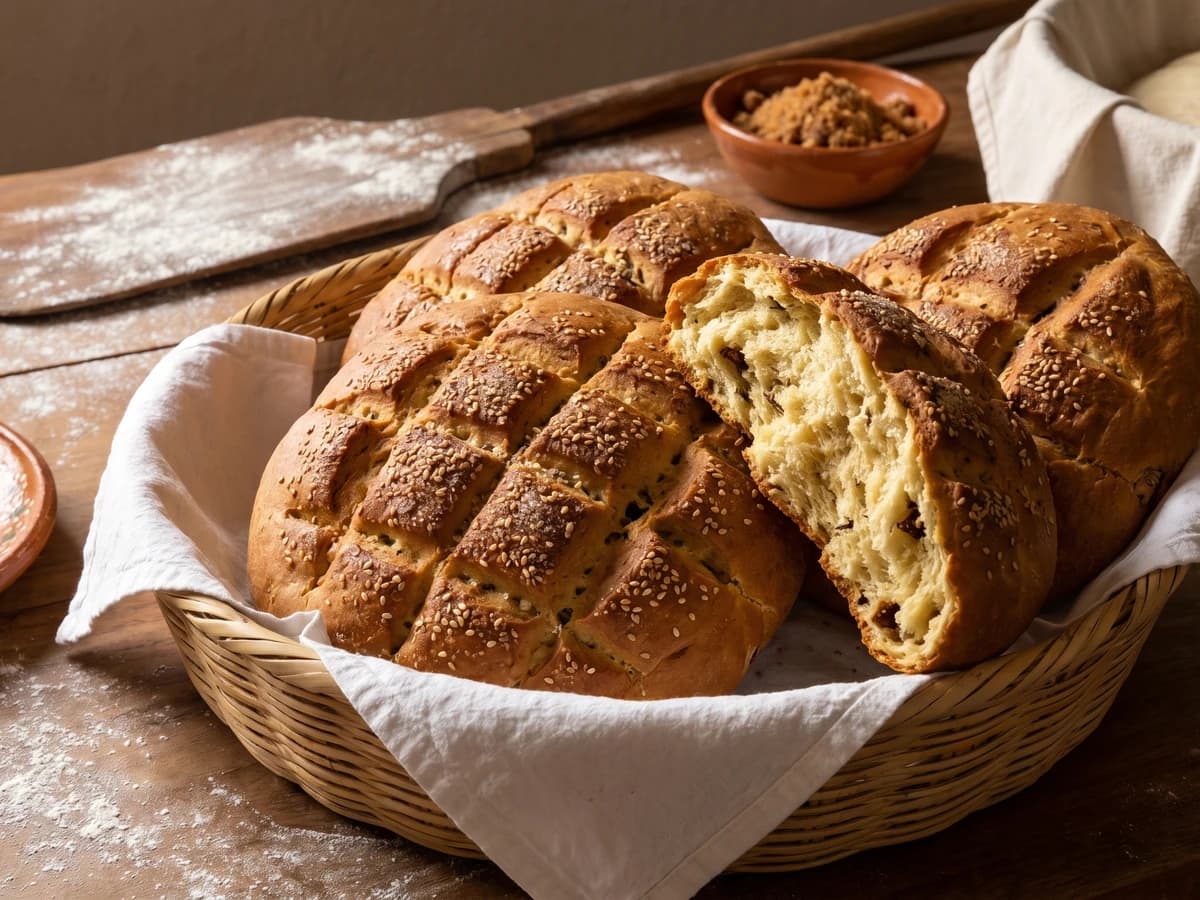
Michoacan's Tinguindin aguacatas are flat, leaf-scored sweet breads made with harina de trigo, piloncillo, anise, and manteca de cerdo, shaped by hand for the wood oven.
Chef Lupita
From Ajijic on Lake Chapala, Pan Tachihual is a lightly sweet wedding loaf built with harina de trigo, harina de maiz, piloncillo, manteca, anise, and the old Guadalajara pata.

Chef Lupita
Comitán's pan de yema shaped into little pigs, birds, and rabbits, a Chiapas bakery bread rich with egg yolks, manteca de cerdo, and anís, baked golden on hoja de plátano.