
Chef Fai
Southern Cucumber Relish (Ajad)
The one Thai condiment where vinegar replaces lime as the sour pillar, and the system still holds. Palm sugar for sweet, nam pla for salt, prik for heat. Ajad is the four pillars in a jar.
A cooking platform built around craft, culture, and the stories behind what we eat.
Created by
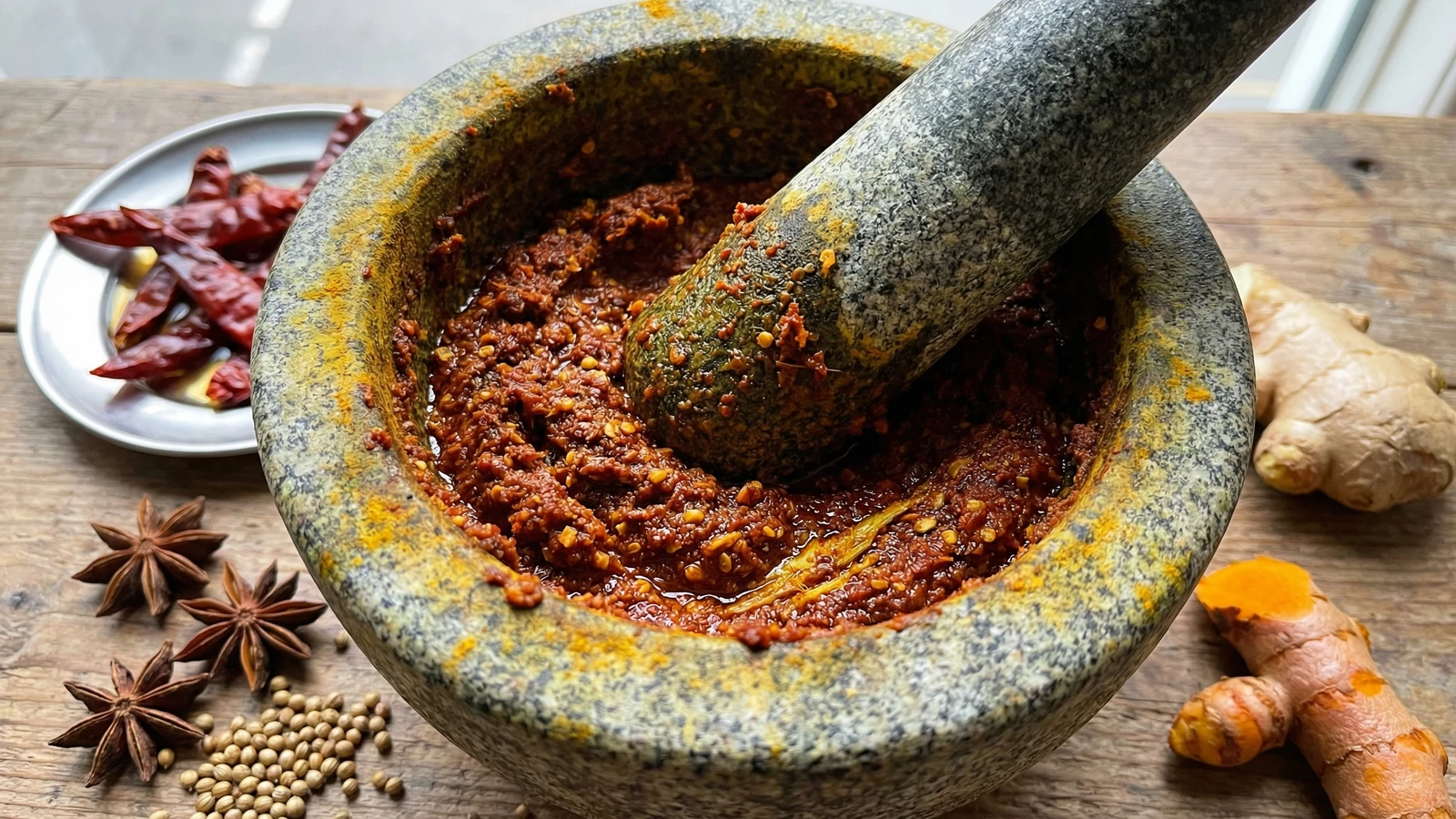
The kreung tam that proves the system adapts. Ginger instead of galangal, cumin and star anise alongside lemongrass. Lanna's mortar holds the whole Burma-to-Chiang Mai trade route in a single paste.
Geography shapes the kreung tam. That's the principle this paste teaches.
Ajarn always said Thai cuisine is a system, not a menu. The kreung tam is the foundation. But the kreung tam is not frozen in time. It responds to where you are. What grows around you. Who your neighbors are. Who walked through your market a hundred years ago. In Central Thailand, the mortar holds galangal, kaffir lime, cilantro root: ingredients from the tropical lowlands. In the North, in Lanna, the mortar tells a different story.
Hang le paste replaces galangal with ginger. That single swap is a declaration. Galangal is the backbone of Central Thai pastes. It's sharp, resinous, almost medicinal. Ginger is warmer, rounder, sweeter. It points north, toward Myanmar, toward Yunnan, toward the trade routes that brought dried spices into Lanna kitchens centuries ago. Cumin. Star anise. Turmeric. Coriander seed. These are not Central Thai ingredients. They're Burmese and Indian spice-road ingredients that settled into Northern Thai cooking and never left.
When I teach this paste at Fai Thai workshops, I always start by lining up a Central Thai green curry paste and a hang le paste side by side. Same mortar, same technique, same principle: pound until the aromatics release their oils and merge into a unified paste. But the ingredients are completely different. The students smell the difference before they see it. The green curry is sharp, bright, herbaceous. The hang le is warm, earthy, almost sweet. Same system. Different geography. That's the kreung tam adapting.
The mortar order is everything here. Dried spices go in first because they're the hardest. Then the dried chilies. Then the fibrous aromatics: lemongrass, ginger, turmeric. Then the wet, soft ingredients: shallots, garlic. Shrimp paste goes in last because it's already a paste. You're building layers. Hardest to softest. Driest to wettest. Krok ก่อน, krok ก่อน.
Gaeng hang le (also spelled hang lay) entered Northern Thai cuisine through centuries of cultural and trade exchange between Lanna (the historical kingdom centered on Chiang Mai) and Burma's Shan States. The name itself likely derives from the Burmese "hin lay" or the Shan word for curry. The dish's reliance on dried spices like cumin, star anise, and turmeric, absent from Central Thai curry pastes, maps directly onto the overland spice trade routes connecting India, Burma, and northern Thailand. Hang le remains fiercely regional: it's standard fare at Chiang Mai's khantoke dinner trays and temple festivals but rarely appears on menus in Bangkok outside of Northern Thai specialty restaurants.
Quantity
10
seeded and soaked in warm water for 15 minutes, squeezed dry
Quantity
1 tablespoon
Quantity
1 teaspoon
Quantity
2 whole pods
Quantity
5
roughly sliced
Quantity
10 cloves
Quantity
3 tablespoons
sliced
Quantity
2 tablespoons
sliced
Quantity
2 stalks
tender inner part only, thinly sliced
Quantity
1 tablespoon
Quantity
1 teaspoon
| Ingredient | Quantity |
|---|---|
| dried long red chilies (prik haeng)seeded and soaked in warm water for 15 minutes, squeezed dry | 10 |
| coriander seeds (luk phak chi) | 1 tablespoon |
| cumin seeds (yira) | 1 teaspoon |
| star anise (poy kak) | 2 whole pods |
| shallots (hom daeng)roughly sliced | 5 |
| garlic (kratiam) | 10 cloves |
| ginger (khing)sliced | 3 tablespoons |
| fresh turmeric (khamin)sliced | 2 tablespoons |
| lemongrass (takhrai)tender inner part only, thinly sliced | 2 stalks |
| shrimp paste (kapi) | 1 tablespoon |
| salt | 1 teaspoon |
Set a dry pan or wok over medium-low heat. Add the coriander seeds, cumin seeds, and star anise pods. Toast them, shaking the pan frequently, until the coriander darkens a shade, the cumin becomes fragrant, and the whole kitchen smells like a Northern Thai market. About 3 to 4 minutes. Don't walk away. Cumin burns fast and bitter cumin will ruin the paste. The moment you smell warmth and nuttiness, pull the pan off the heat. Let them cool completely before grinding.
Add the cooled roasted spices and salt to a heavy granite mortar (krok hin). Pound them to a fine powder. This takes effort. The star anise pods are stubborn, woody little things. Keep pounding until you can't feel any gritty fragments when you rub the powder between your fingers. This is your spice foundation, the layer of the paste that makes it unmistakably Lanna. No Central Thai curry paste has this step. Geography is in the mortar.
Squeeze the soaked dried chilies to remove excess water. Add them to the mortar on top of the ground spices. Pound until the chilies break down into a rough, fibrous paste and absorb the spice powder. This takes a few minutes of steady work. The paste should turn a deep brick red and the spice powder should be fully incorporated. You'll feel the texture shift from stringy to cohesive.
Add the lemongrass first. It's the most fibrous fresh ingredient and needs the most pounding. Work it in until no stringy fibers remain. Then add the ginger. Pound until it's fully integrated. Then the turmeric. Each addition should be pounded into the existing paste before the next goes in. Don't rush this. Don't dump everything in at once. Layering is the method. The mortar can only process so much at a time.
Add the shallots. They're softer than lemongrass and ginger, so they'll break down faster. Pound until they dissolve into the paste and their moisture helps everything bind together. Then the garlic. Same approach: pound until it's completely incorporated and you can't see individual pieces. The paste should be getting smoother now, more unified. The color deepens with every addition.
Add the shrimp paste (kapi) last. It's already a paste, so it needs only to be worked into the mixture. Pound and fold for another minute until the kapi is evenly distributed throughout. The smell will shift: suddenly there's a deep, funky, oceanic layer underneath all that warm spice. That's the umami backbone. Taste the paste. It should be aromatic, warm, moderately spicy, with a round ginger heat and the earthy depth of toasted cumin and star anise. It should not taste raw or grainy. If you can feel grit, keep pounding.
1 serving (about 26g)
Culinary guides, cultural storytelling, and the editorial depth that makes cooking meaningful.
Discover Culinary ExplorerChef Fai
The one Thai condiment where vinegar replaces lime as the sour pillar, and the system still holds. Palm sugar for sweet, nam pla for salt, prik for heat. Ajad is the four pillars in a jar.

Chef Fai
Every grilled dish in Isan answers to this dip. Roasted dried chilies, nam pla, manao, khao khua, and shallots: the four pillars in a condiment that's structural, not optional.
Chef Fai
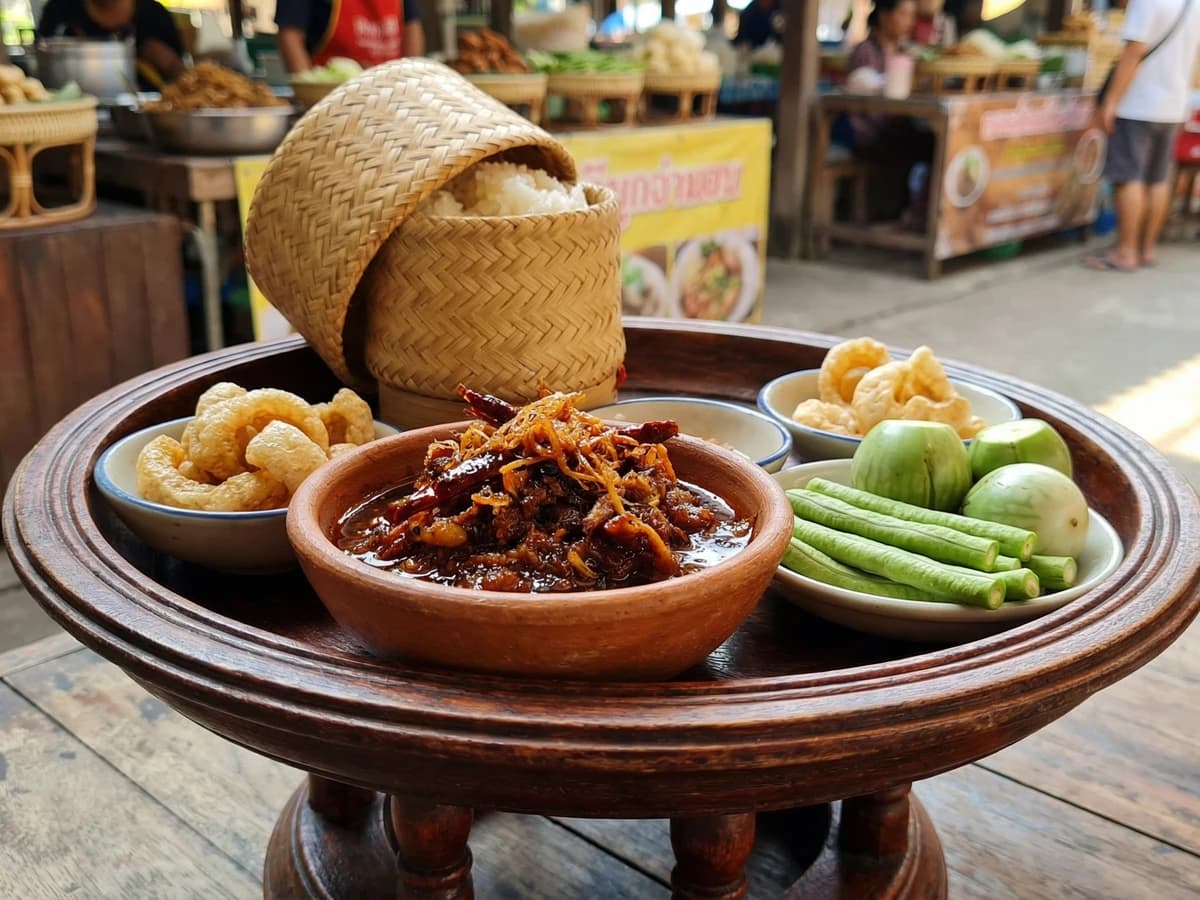
Roasted dried chilies and galangal pounded to a rough paste, folded with shredded pork skin and palm sugar until it becomes something sweet, smoky, and chewy that belongs on every khantoke tray in Chiang Mai.
Chef Fai
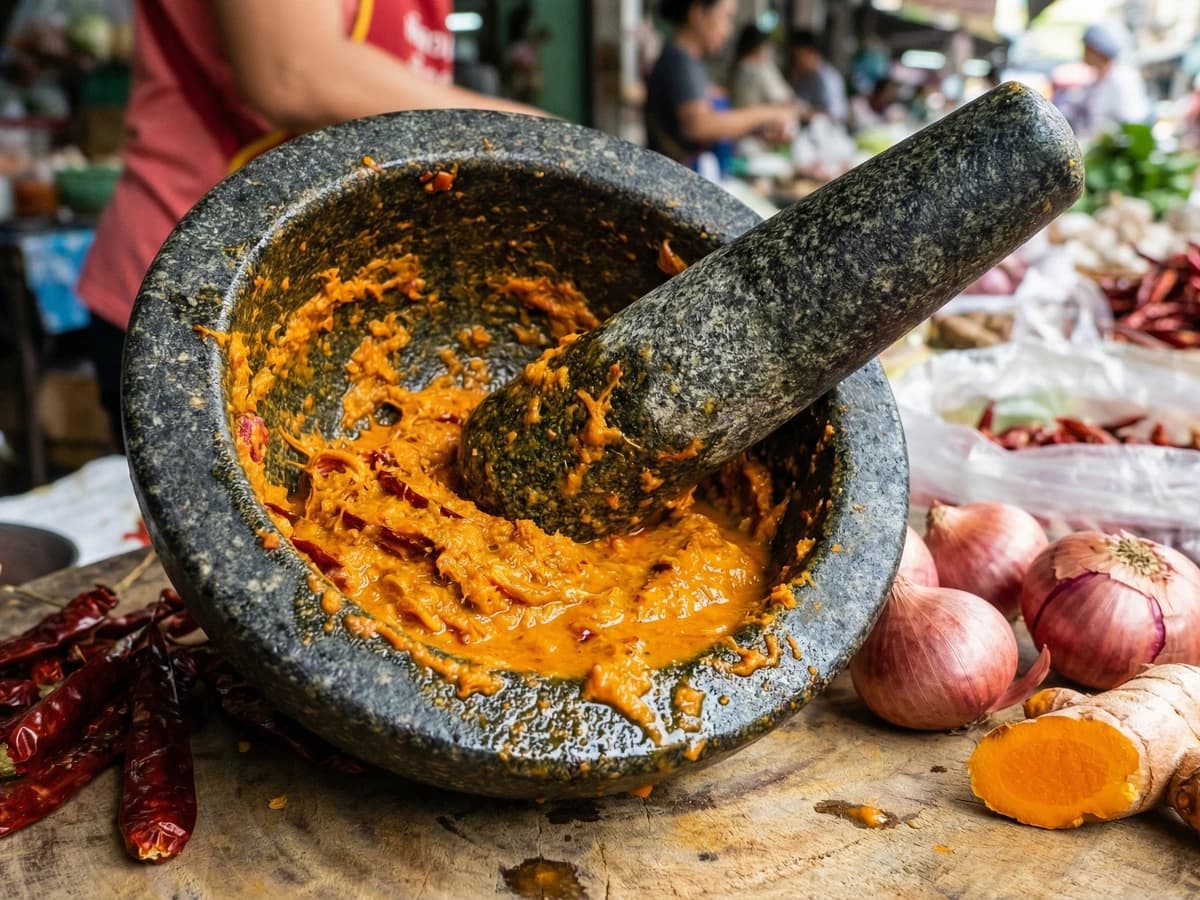
Four ingredients pounded clean in a granite mortar. This is the kreung tam stripped to its essence: dried chilies for heat, shallots for aromatics, turmeric for earth, kapi for depth. The foundation of Thailand's most underestimated curry.