Chef Fai
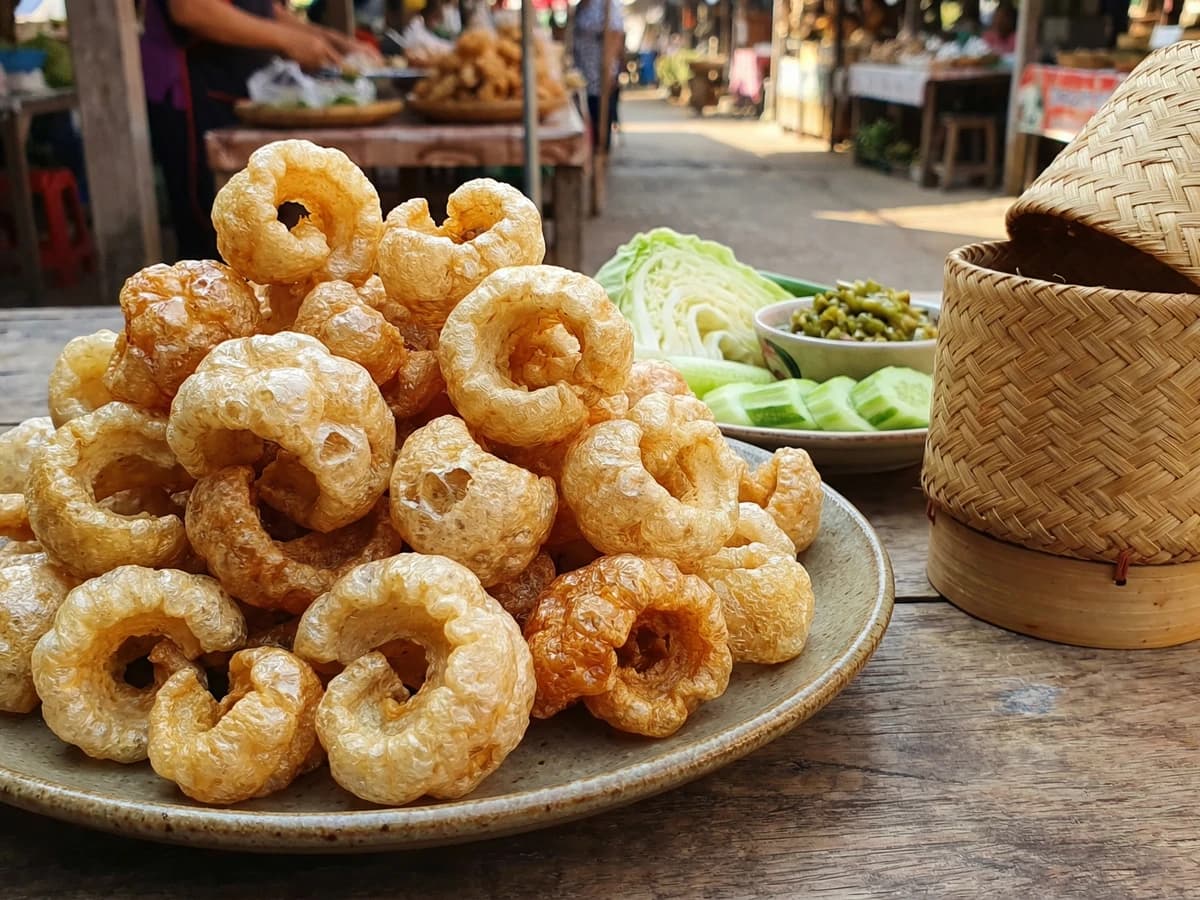
Northern Pork Rinds (Kab Moo)
Sun-dried pork skin fried until it shatters into golden shards. In the Lanna meal, kab moo isn't the star. It's the vehicle that carries nam prik and sticky rice to your mouth. Texture with purpose.
A cooking platform built around craft, culture, and the stories behind what we eat.

Created by
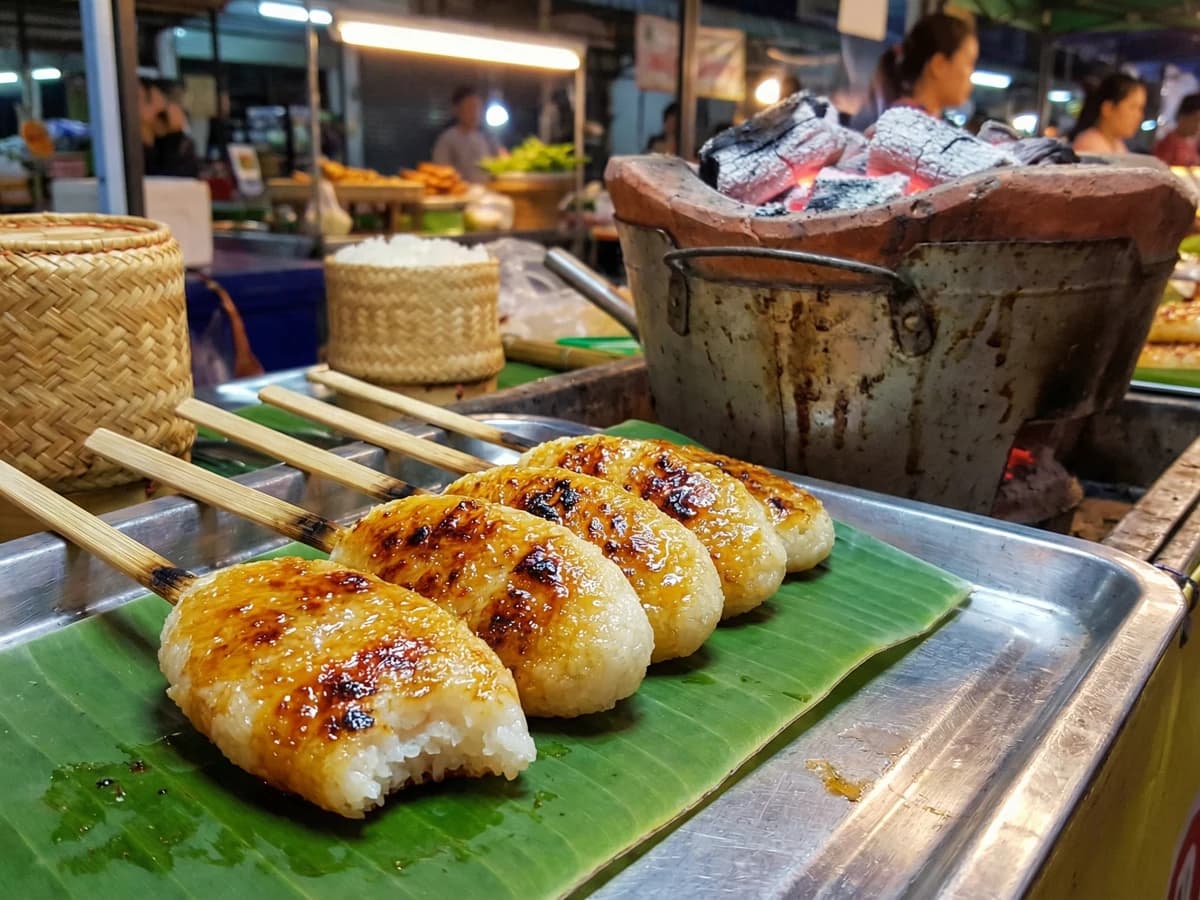
Before the four pillars, before the kreung tam, there's khao niew. In the North, sticky rice isn't a side dish. It's the foundation of every meal. These charcoal-grilled cakes prove the rice itself can be the whole point.
Every principle in Thai cooking sits on top of a starch. In Central Thailand, that's jasmine rice. In the North, it's khao niew. Sticky rice. And if you don't understand that distinction, you don't understand Lanna food at all.
Ajarn always said the system has a foundation before the four pillars even come into play. Salty, sweet, sour, spicy: those govern the flavors. But what carries those flavors to your mouth? The starch. In Lanna, that starch is always glutinous rice, steamed in a bamboo basket, eaten with the hands. Every curry, every nam prik, every piece of grilled pork in the North is designed to be pinched into a ball of sticky rice and eaten together. Jasmine rice doesn't exist at a Northern Thai table. Full stop.
Khao niew ping takes that foundation and flips it. Instead of the rice carrying other dishes, the rice IS the dish. Steamed sticky rice mixed with beaten egg, pressed into flat cakes, skewered on bamboo, and grilled over charcoal until the outside is golden and slightly crisp while the inside stays soft and chewy. The egg binds the rice and gives it that golden sheen when it hits the heat. The charcoal gives it smoke. That's it. No paste. No dressing. Just rice, egg, fire. For the sweet version, you fold in steamed taro (phueak) and a bit of palm sugar (nam tan pip), and the cake becomes something between a snack and a dessert: nutty, earthy, barely sweet.
I learned this from a vendor at Warorot market in Chiang Mai who'd been grilling these since before I was born. She had a small charcoal brazier, a stack of bamboo skewers, and a bowl of beaten egg with a brush made from pandan leaves. Nothing else. She didn't need anything else. The simplicity IS the principle. When your rice is good and your fire is right, you don't need to dress it up. You just need to cook it with respect.
Khao niew ping is a traditional Lanna (Northern Thai) street food found throughout Chiang Mai, Chiang Rai, and Lamphun provinces, with roots in the sticky rice culture shared across Northern Thailand, Laos, and parts of Yunnan. The dish likely evolved as a way to use leftover steamed sticky rice, transforming day-old khao niew into a portable, reheatable snack for market vendors and travelers. The taro (phueak) variation reflects the mountain agriculture of the North, where taro has been cultivated in highland fields for centuries alongside glutinous rice.
Quantity
2 cups
soaked in cold water for at least 4 hours or overnight, drained
Quantity
3
beaten
Quantity
1/2 teaspoon
Quantity
for brushing the grill
Quantity
150g
peeled, cut into 1-inch cubes, steamed until soft
Quantity
2 tablespoons
grated or finely chopped
Quantity
2 tablespoons
| Ingredient | Quantity |
|---|---|
| sticky rice (khao niew)soaked in cold water for at least 4 hours or overnight, drained | 2 cups |
| eggsbeaten | 3 |
| salt | 1/2 teaspoon |
| vegetable oil | for brushing the grill |
| taro (phueak) (optional)peeled, cut into 1-inch cubes, steamed until soft | 150g |
| palm sugar (nam tan pip) (optional)grated or finely chopped | 2 tablespoons |
| coconut cream (hua ka thi) (optional) | 2 tablespoons |
Drain the soaked sticky rice and spread it in a single layer on a cheesecloth-lined steamer basket. Set the basket over a pot of boiling water, making sure the water doesn't touch the rice. Cover and steam for 20 to 25 minutes. Halfway through, flip the rice with a spatula so the top layer moves to the bottom. The rice is done when every grain is translucent and tender but still has a slight chew. No hard white centers. If you bite a grain and see a chalky spot in the middle, give it five more minutes.
Transfer the hot steamed rice to a large mixing bowl. Reserve about a third of the beaten egg in a small bowl for brushing later. Pour the remaining beaten egg and the salt over the hot rice. Mix with a wet wooden spoon or wet hands, folding and pressing until the egg is evenly distributed and the rice starts to hold together when squeezed. The heat of the rice will partially cook the egg on contact, creating a binder. For the sweet version: fold in the steamed mashed taro, palm sugar, and coconut cream at this stage. The taro should be soft enough to mash into a rough paste. It doesn't need to be perfectly smooth. Lumps are fine. The sugar dissolves into the warm rice. Mix until the color goes from white to a pale purple-grey from the taro.
With wet hands, take a fistful of the rice mixture (about 1/3 cup) and press it into a flat oval cake, roughly 3 inches across and half an inch thick. Press firmly so the cake holds together but don't crush the grains into a dense puck. You want it compact enough to survive the grill but loose enough that you can still see individual grains on the surface. Thread each cake onto a soaked bamboo skewer, pushing the skewer through the long side so the cake sits flat. You should get about 8 cakes.
Light your charcoal and let it burn down to glowing coals with a thin layer of white ash. No flames. You want steady, even heat, not an inferno. Brush the grill grate with oil. Lay the skewered rice cakes on the grate and grill for 3 to 4 minutes per side. Brush the top surface with the reserved beaten egg while the bottom grills. The egg wash sets in the heat and turns golden. Flip carefully with tongs (not your fingers, the skewers are hot). Brush the other side with egg. Grill until both sides are golden brown with visible char marks and the surface has a light crust. The inside should still be soft and yielding when you press the center.
Pull the cakes off the grill and serve immediately while they're warm. The outside should be slightly crisp and golden from the egg wash, the inside soft and chewy. Plain khao niew ping is eaten on its own or alongside grilled meats, nam prik, or any Northern Thai dish that needs a starch companion. The sweet taro version is a snack by itself: nutty, earthy, barely sweet, best eaten standing at the market stall where you bought it. Either way, eat them warm. Once they cool, the rice firms up and the magic goes away.
1 serving (about 250g)
Culinary guides, cultural storytelling, and the editorial depth that makes cooking meaningful.
Discover Culinary ExplorerChef Fai
Sun-dried pork skin fried until it shatters into golden shards. In the Lanna meal, kab moo isn't the star. It's the vehicle that carries nam prik and sticky rice to your mouth. Texture with purpose.
Chef Fai
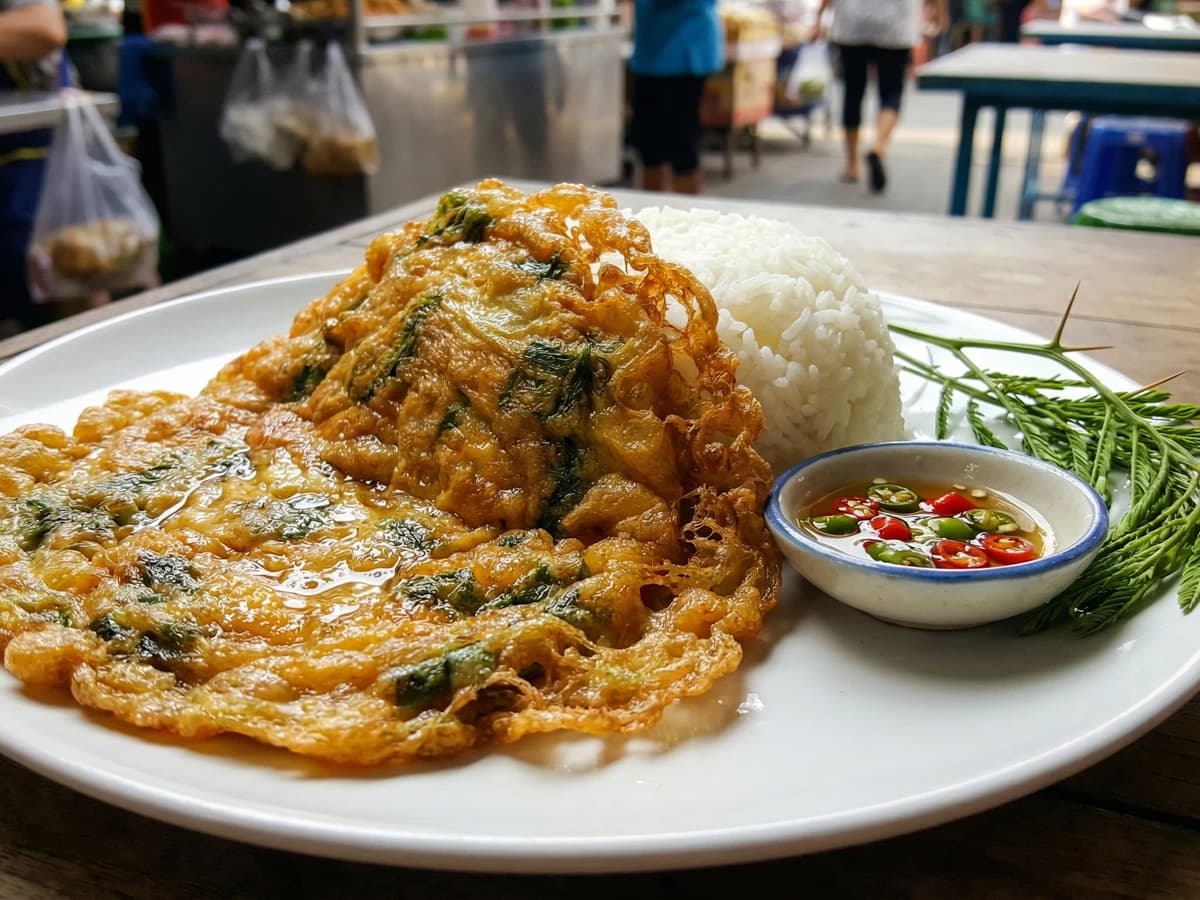
Three ingredients, one principle: fish sauce seasons the eggs, not salt. Hot oil fries the omelet into a golden, lacy puff. Cha-om's bitter punch makes this Southern Thai, not Central Thai. Over rice. Done.
Chef Fai
Sticky rice pressed onto bamboo skewers, brushed with egg and palm sugar, charred over low coals until golden and crackly outside, soft and chewy inside. Even the starch gets the fire treatment in Isan.

Chef Fai
Pork blood binds soaked sticky rice into dense, iron-rich slabs, steamed in banana leaf, cooled, sliced, and grilled over charcoal until the edges crisp. Morning market food from the Lanna highlands. Nothing wasted, nothing precious.