
Chef Fai
Dry Egg Noodles (Ba Mee Haeng)
The four pillars live at the bottom of the bowl before the noodles ever touch it: nam pla for salt, sugar for sweet, vinegar for sour, chili for heat. Every noodle cart in Bangkok runs on this principle.
A cooking platform built around craft, culture, and the stories behind what we eat.

Created by
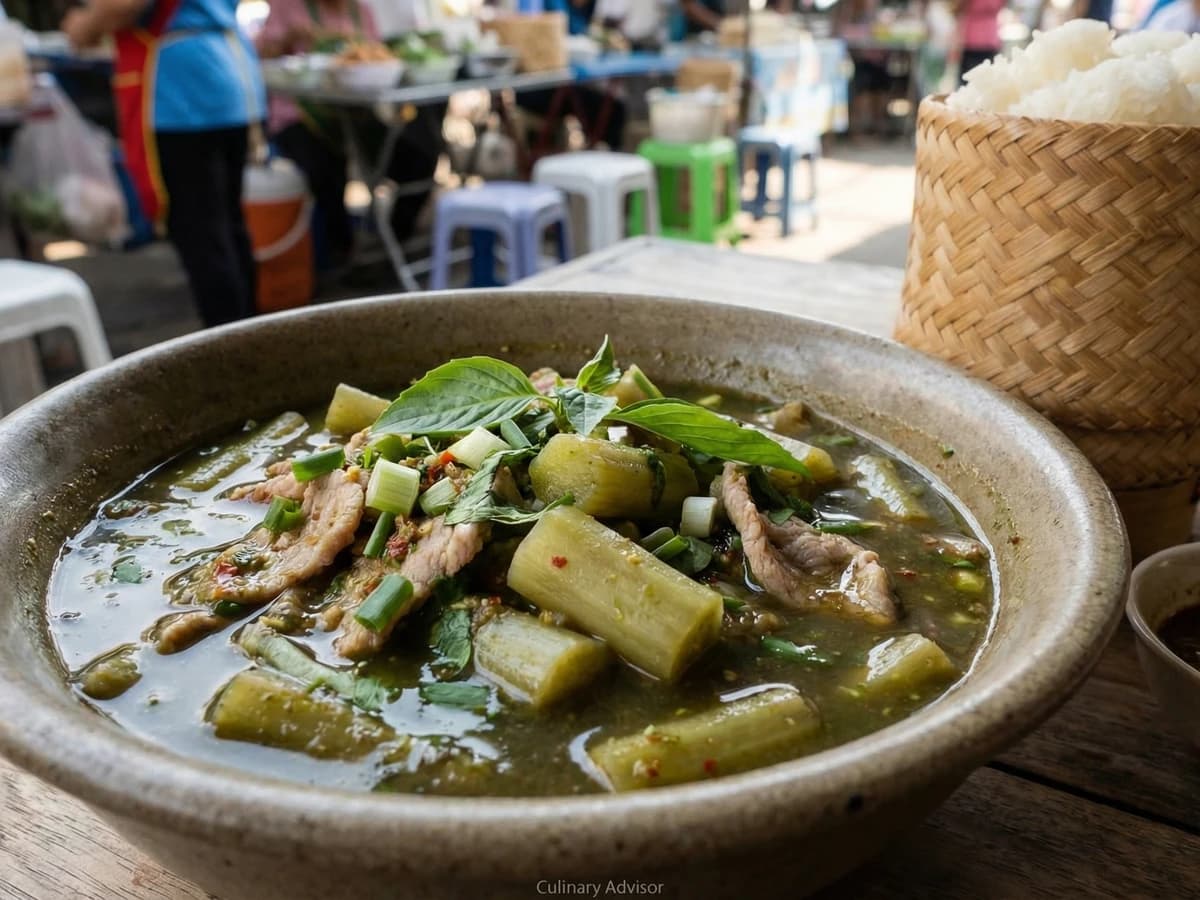
The inner trunk of the banana plant, not the fruit, simmered in a Lanna herb broth with pork ribs. Peasant food that turns agricultural waste into dinner. The highlands use what grows at the door.
Zero waste isn't a trend. It's how people in the northern highlands have always cooked.
Kaeng yuak uses the inner stalk of the banana plant. Not the fruit. Not the leaf. The trunk. After you harvest the bananas, a massive fibrous column stands in your yard doing nothing. A Central Thai cook would ignore it. A Lanna cook peels away the tough outer layers until she reaches a pale, tender core with a texture somewhere between heart of palm and a soft zucchini. She slices it, soaks it in lime water to stop it from browning, and drops it into a curry built on pork broth and a Lanna kreung tam.
Ajarn always said the kreung tam is everything, and in Lanna cooking the kreung tam tells you exactly where you are on the map. More ginger than galangal. Dried chilies that bring warmth, not violence. And tua nao (แผ่นถั่วเน่า), the fermented soybean disc, standing in for shrimp paste because the mountains are a long way from the sea. Tua nao gives you the same fermented depth as kapi but through a completely different pathway: soybean protein fermentation instead of shrimp. Same principle, different raw material. That's the system adapting to geography.
This curry has no coconut milk. Coconut palms don't grow in the northern highlands. The broth is water and pork bones, nothing more, and the flavor comes entirely from the paste and the slow simmer of pork ribs releasing collagen into the liquid. When you taste a bowl of kaeng yuak, you're tasting the mountain kitchen: herb-forward, gentle, built on what's growing within arm's reach of the house. Finish it with a fistful of phak chi lao (ผักชีลาว), the dill that shows up in almost every Lanna curry and signals to your mouth that you're eating Northern Thai, not Central. Sticky rice. Always sticky rice. Never jasmine. That's the law up here.
Kaeng yuak (แกงหยวก) is a peasant curry of the Lanna region (Chiang Mai, Chiang Rai, Lamphun, Lampang) that exemplifies the Northern Thai zero-waste relationship with the banana plant, where every part from leaf to flower to stalk finds a use in the kitchen. The dish predates any written recipe and remains a home-kitchen staple rarely seen in restaurants, even in Chiang Mai. The use of tua nao (fermented soybean discs) in the kreung tam places kaeng yuak firmly in the inland fermentation tradition that developed because the northern highlands had no access to the coastal shrimp paste (kapi) that defines Central and Southern Thai curries.
Quantity
1 stalk (about 500g after peeling)
peeled to tender core, sliced into 1/2-inch rounds, soaked in lime water
Quantity
juice of 2 limes
for soaking water
Quantity
300g
cut into 2-inch pieces
Quantity
150g
sliced thin
Quantity
6 cups
Quantity
3 tablespoons
Quantity
7
soaked 15 minutes, seeded
Quantity
5
sliced
Quantity
8 cloves
Quantity
2 tablespoons
sliced
Quantity
2 stalks
bottom 3 inches, sliced thin
Quantity
1 tablespoon
dry-roasted
Quantity
1 teaspoon
Quantity
1 teaspoon
Quantity
5
Quantity
1 large handful
roughly chopped
Quantity
3
cut into 1-inch pieces
Quantity
for serving
| Ingredient | Quantity |
|---|---|
| banana stalk inner corepeeled to tender core, sliced into 1/2-inch rounds, soaked in lime water | 1 stalk (about 500g after peeling) |
| lime juicefor soaking water | juice of 2 limes |
| pork spare ribscut into 2-inch pieces | 300g |
| pork bellysliced thin | 150g |
| water | 6 cups |
| fish sauce (nam pla) | 3 tablespoons |
| dried red chilies (prik chi fa haeng)soaked 15 minutes, seeded | 7 |
| shallots (hom daeng)sliced | 5 |
| garlic | 8 cloves |
| ginger (khing)sliced | 2 tablespoons |
| lemongrass (takhrai)bottom 3 inches, sliced thin | 2 stalks |
| tua nao (fermented soybean disc)dry-roasted | 1 tablespoon |
| shrimp paste (kapi) (optional) | 1 teaspoon |
| salt | 1 teaspoon |
| black peppercorns | 5 |
| fresh dill (phak chi lao)roughly chopped | 1 large handful |
| spring onions (ton hom)cut into 1-inch pieces | 3 |
| pickled garlic (kratiam dong) (optional) | for serving |
This is the step that separates you from someone who's never cooked Lanna food. Take the banana stalk and strip away the outer layers one by one. They're tough, fibrous, and dark. Keep peeling. You're looking for the pale, almost white inner core that feels soft when you press your thumb into it. You'll lose more than half the stalk. That's normal. Slice the tender core into rounds about half an inch thick. Drop them immediately into a bowl of cold water with the juice of two limes. The acid stops oxidation. Without it, your banana stalk turns brown and slimy within minutes. Leave it soaking while you build the paste.
Put the tua nao disc in a dry pan over medium heat. Toast it until it darkens a shade and smells intensely funky, maybe two minutes per side. It should be fragrant and slightly brittle. Break it into pieces. This is your fermented backbone, the salt-umami foundation that replaces kapi in highland Lanna cooking. Shrimp paste comes from the coast. Tua nao comes from the mountains. Same job, different ingredient. Geography shapes the kreung tam.
Start with the peppercorns and salt in your granite mortar. Grind them fine. Add the soaked, seeded dried chilies and pound until broken down. Then the garlic, working it into the paste. Then shallots. Then ginger, not galangal, this is Lanna. Ginger is sharper, brighter, and it tells you you're north of Bangkok. Pound it in. Add the lemongrass. Finally, the roasted tua nao. Pound until everything is integrated, a rough, fragrant paste, reddish from the chilies, flecked with bits of soybean. The aroma should be warm and herbaceous, not fiery. Lanna pastes are gentler than Central Thai. Fewer chilies, more aromatics. That's the regional fingerprint.
Bring the water to a boil in a pot. Add the pork ribs and pork belly. Skim the foam that rises in the first few minutes. Reduce heat and let it simmer for 15 minutes. The ribs are doing two jobs: they're becoming tender and they're turning water into broth. The collagen from the bones and the fat from the belly give your curry body without coconut milk. This is how Lanna curries get their richness. Patience and pork.
Spoon the pounded paste into the simmering pork broth and stir it in. Watch the broth change. It goes from clear pork stock to a cloudy, reddish, herb-infused liquid within a minute. Let it simmer together for another 5 minutes so the paste fully dissolves and the aromatics bloom. Your kitchen should smell like a Northern Thai grandmother's house: warm ginger, gentle chili, that unmistakable tua nao earthiness.
Drain the banana stalk slices from the lime water and add them to the pot. They'll look pale and almost translucent going in. Simmer for 15 to 20 minutes. The stalk is done when it's completely tender and has absorbed the curry broth, turning from white to a warm, golden hue. It should yield to a spoon with no resistance, soft and silky but not falling apart. Season with fish sauce. Start with 2 tablespoons, taste, then add the third if it needs it. The broth should be savory and gently spicy, with the banana stalk providing a subtle vegetal sweetness that balances the fish sauce.
Kill the heat. Tear the dill (phak chi lao) roughly and scatter it in along with the spring onion pieces. Stir once. Dill is the herb that marks Lanna curry the way holy basil marks Central Thai stir-fries. It's not decoration. It's a structural flavor. The anise-like freshness of the dill cuts through the richness of the pork broth and lifts the whole bowl. Ladle into bowls. Serve with pickled garlic (kratiam dong) on the side and a kratip of sticky rice. Not jasmine. Sticky rice. That's the only rice that exists in Northern Thai cooking.
1 serving (about 500g)
Culinary guides, cultural storytelling, and the editorial depth that makes cooking meaningful.
Discover Culinary ExplorerChef Fai
The four pillars live at the bottom of the bowl before the noodles ever touch it: nam pla for salt, sugar for sweet, vinegar for sour, chili for heat. Every noodle cart in Bangkok runs on this principle.

Chef Fai
The kreung tam fried in cracked coconut cream until the oil bleeds red. That's the technique. Concentrated, semi-dry, spooned thick over crispy fish. This is what happens when the four pillars meet restraint.
Chef Fai
Isan foraging in a bowl: wild taro stems stripped of their sting, simmered in padaek broth with a pounded chili paste and yanang leaf extract. The land feeds you if you know the rules.

Chef Fai
Lanna's kreung tam breaks from Central Thai rules: ginger over galangal, cumin and coriander from Burmese spice routes, tamarind for sour instead of lime. The North has its own system, and this curry is its crown.