Chef Graziella
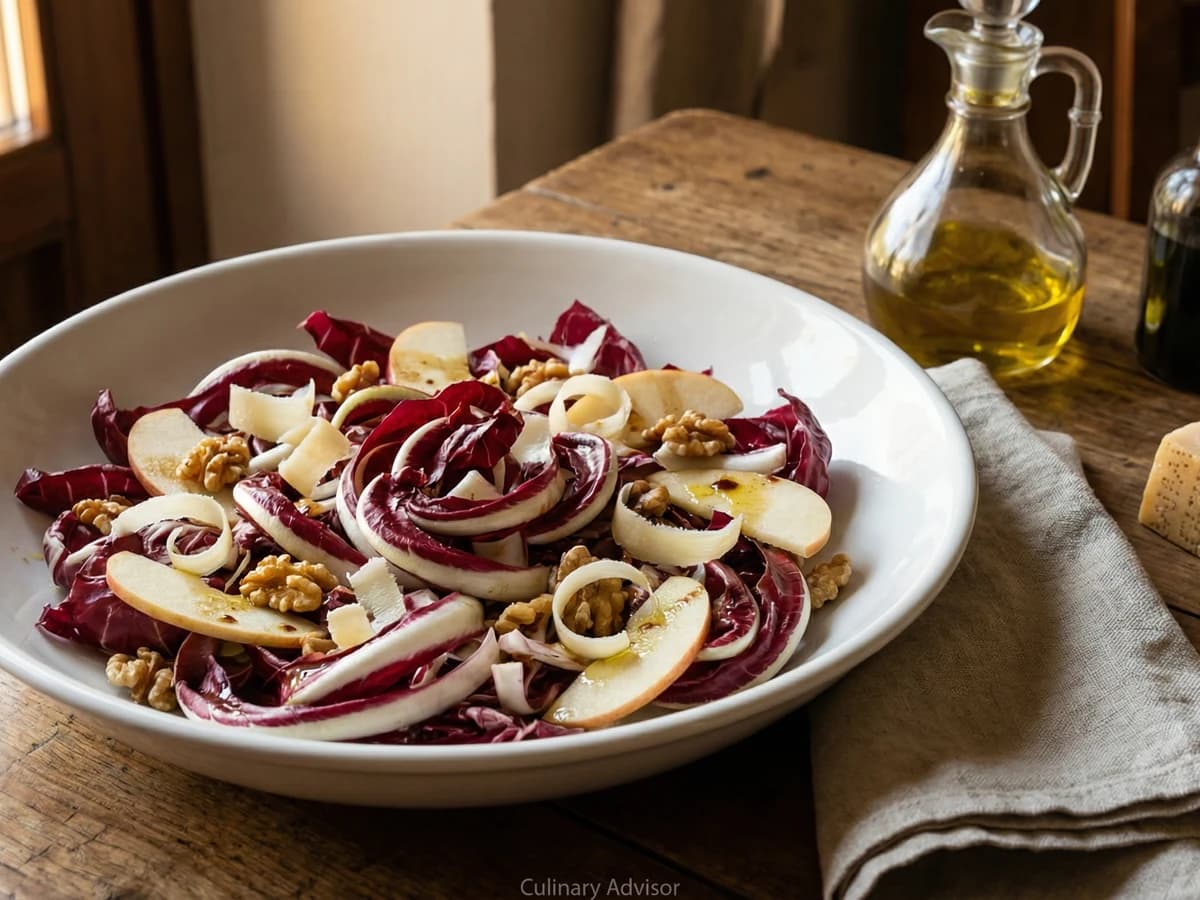
Insalata di Radicchio Tardivo di Treviso
The aristocrat of bitter lettuces, dressed simply to let its elegant burgundy leaves and complex flavor speak. From the fields outside Treviso to your winter table.
A cooking platform built around craft, culture, and the stories behind what we eat.

Created by
The Christmas Eve salad of the Venetian and Neapolitan table, where salt cod, patient soaking, and a generous hand with olive oil create something that tastes nothing like the preserved fish you started with.
Baccalà is preserved fish, salted and dried until it becomes stiff as a board. It looks unpromising. It smells assertive. And yet, after two or three days of patient soaking, it transforms into something delicate, sweet, and faintly oceanic. This transformation is the point. You are not merely rehydrating an ingredient. You are performing an act of culinary faith.
This salad appears on tables throughout Italy on Christmas Eve, the Vigilia, when Catholic tradition calls for abstinence from meat. In Venice, they dress the cod simply with olive oil, perhaps some onion, and leave it at that. In Naples, they add olives and capers, a touch more assertiveness. Both approaches are correct. What matters is the quality of the fish and the generosity of your olive oil.
The recipe requires almost no cooking. It requires instead attention, planning, and the willingness to change water three times a day for three days. Those who find this troublesome should make something else. Those who understand that good food demands participation will be rewarded with a dish that tastes like the Adriatic itself.
Salt cod traveled from Scandinavia and the Basque coast to the Mediterranean beginning in the 15th century, when Catholic fasting rules created enormous demand for preserved fish. By the 18th century, baccalà had become central to the Christmas Eve vigil feast, particularly in Venice, where the trade routes deposited it in vast quantities at the Rialto market.
Quantity
1 1/2 pounds
bone-in preferred
Quantity
1 pound
Quantity
1 small
sliced paper thin
Quantity
2
with leaves
Quantity
1/3 cup
Quantity
2 tablespoons
rinsed and soaked
Quantity
1/2 cup, plus more for drizzling
Quantity
3 tablespoons
Quantity
1/4 cup, loosely packed
Quantity
to taste
freshly ground
Quantity
1 small
| Ingredient | Quantity |
|---|---|
| salt cod (baccalà)bone-in preferred | 1 1/2 pounds |
| waxy potatoes | 1 pound |
| red onionsliced paper thin | 1 small |
| celery stalks from the heartwith leaves | 2 |
| Taggiasca or Gaeta olives | 1/3 cup |
| salt-packed capersrinsed and soaked | 2 tablespoons |
| extra virgin olive oil | 1/2 cup, plus more for drizzling |
| fresh lemon juice | 3 tablespoons |
| flat-leaf parsley leaves | 1/4 cup, loosely packed |
| black pepperfreshly ground | to taste |
| garlic clove (optional) | 1 small |
Place the salt cod in a large bowl and cover with abundant cold water. Refrigerate for 48 to 72 hours, changing the water at least three times daily. The cod is ready when it tastes pleasantly seasoned, not aggressively salty. Cut a small piece from the thickest section and taste it. This is the only reliable test.
Place the soaked cod in a pot and cover with fresh cold water. Bring slowly to the gentlest simmer over medium-low heat. The water should never boil, only tremble. Poach until the fish flakes easily and the flesh is opaque throughout, 15 to 20 minutes depending on thickness. Remove to a plate and let cool just enough to handle.
While the cod poaches, place the potatoes in a separate pot of cold salted water. Bring to a boil, then reduce to a steady simmer. Cook until tender when pierced with a knife but not falling apart, about 20 minutes. Drain and let cool until you can handle them, then peel and slice into rounds one-third inch thick.
Place the sliced onion in a small bowl of ice water for 15 minutes. This tames its sharpness and makes it digestible. Drain and pat dry with a clean towel.
Remove and discard the skin and any bones from the cod. Flake the flesh into generous pieces with your fingers. Do not shred it into threads. You want substantial chunks that hold their shape when dressed. The texture should remain distinct.
In a wide serving bowl, arrange the warm potato slices and flaked cod. Scatter the drained onion, sliced celery, olives, and capers over the top. If using garlic, crush the clove with the flat of your knife, rub it around the inside of the bowl, then discard it. The garlic should be a whisper, not a presence.
Whisk together the olive oil and lemon juice. Pour over the salad and turn everything gently with your hands or two spoons, taking care not to break up the fish. Scatter the parsley leaves over the top. Grind black pepper generously. Let the salad rest at room temperature for at least 30 minutes before serving. It should never be cold.
Taste and adjust the seasoning. The cod may not need additional salt, but it often wants more lemon or oil. Drizzle with a final thread of your best olive oil. Serve at cool room temperature, never refrigerator cold. In Venice, this would be one of many dishes on the Christmas Eve table. In your home, it stands proudly on its own.
1 serving (about 290g)
Culinary guides, cultural storytelling, and the editorial depth that makes cooking meaningful.
Discover Culinary ExplorerChef Graziella
The aristocrat of bitter lettuces, dressed simply to let its elegant burgundy leaves and complex flavor speak. From the fields outside Treviso to your winter table.

Chef Juliette
Cold roast chicken, ciseled lettuce, and a shining coat of homemade mayonnaise, arranged with capers, olives, anchovies, eggs, and lettuce hearts, then tossed at the table as the canon intends.

Chef Juliette
Cold roast or poached chicken with fine ribbons of lettuce, dressed at the final moment with oil and vinegar: a composed salad whose freshness depends entirely on timing.

Chef Juliette
Five leaves, one living rule: laitue, romaine, chicorée, mâche, or pissenlit must be washed, dried, and dressed only as they go to the table, while every leaf still carries its light vinaigrette.