
Chef Graziella
Insalata di Baccalà
The Christmas Eve salad of the Venetian and Neapolitan table, where salt cod, patient soaking, and a generous hand with olive oil create something that tastes nothing like the preserved fish you started with.
A cooking platform built around craft, culture, and the stories behind what we eat.
Created by
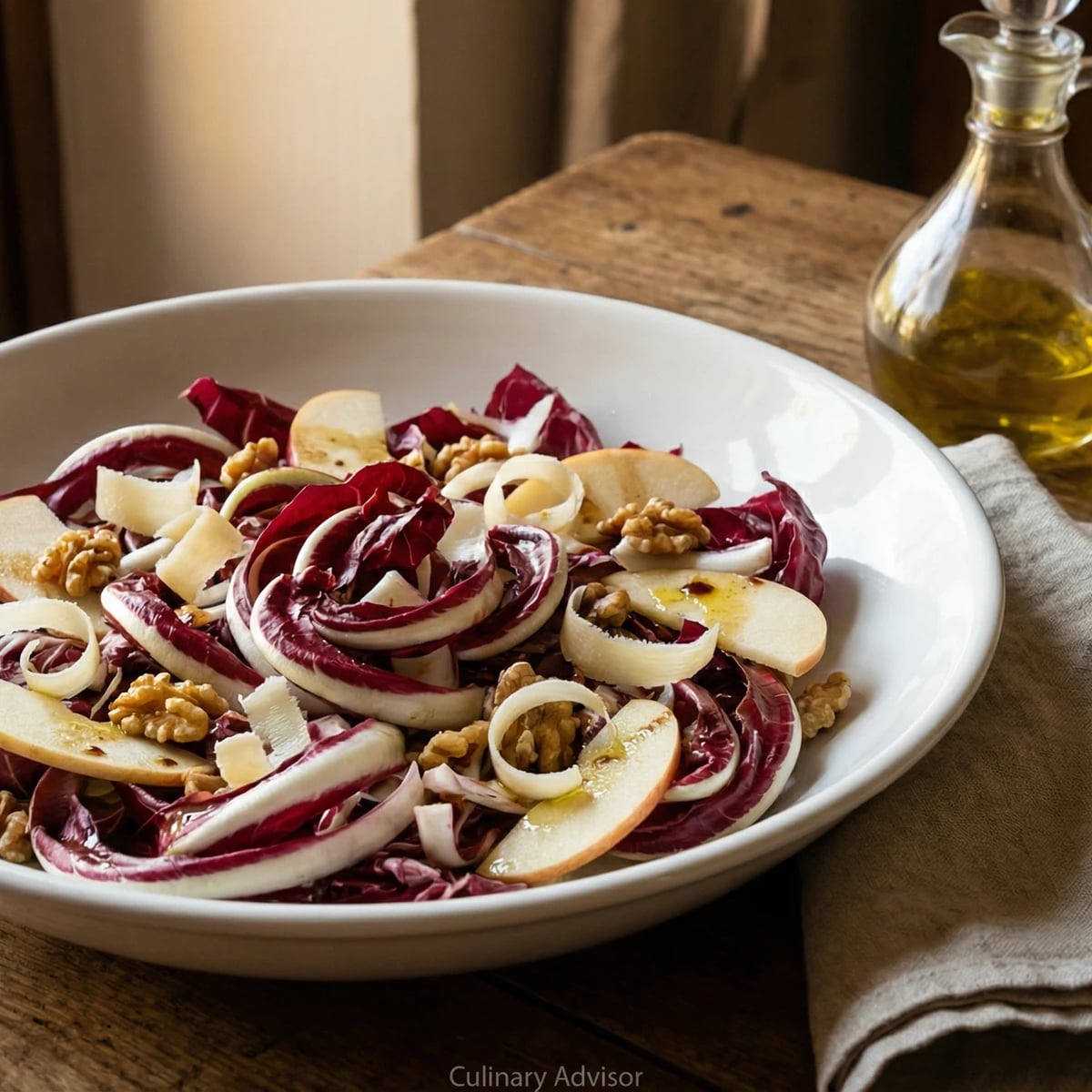
The aristocrat of bitter lettuces, dressed simply to let its elegant burgundy leaves and complex flavor speak. From the fields outside Treviso to your winter table.
Radicchio tardivo di Treviso is not ordinary radicchio. It is a different vegetable entirely, with long, curving leaves like crimson flames and a bitterness so refined it borders on sweetness. The farmers of the Veneto harvest it after the first frosts, then force it in spring water in the dark, a technique called imbianchimento that concentrates flavor and produces that characteristic white rib against deep red leaf.
This salad requires excellent ingredients and almost no technique. The apple provides sweetness and crunch that makes the bitterness more approachable. The walnuts add richness. The balsamic, if it is real and aged, brings complexity without acidity. What you keep out matters: no dried fruit, no honey, no goat cheese. The radicchio needs room to be itself.
If you cannot find true tardivo, do not substitute regular radicchio di Chioggia, the round heads found in supermarkets. They are different varieties with different flavors. Wait until you can find the real thing, or make a different salad.
Radicchio tardivo di Treviso earned its IGP protection in 1996, though the forcing technique dates to the 1860s when a Belgian agronomist introduced the method to Treviso. The practice transformed a field vegetable into a winter delicacy, with the best heads fetching prices comparable to fine truffles at the Rialto market.
Quantity
2 heads (about 12 ounces total)
Quantity
1
quartered and cored
Quantity
1/2 cup
Quantity
3 tablespoons
Quantity
1 tablespoon
Quantity
to taste
Quantity
to taste
freshly ground
Quantity
2-ounce wedge
for shaving
| Ingredient | Quantity |
|---|---|
| radicchio tardivo di Treviso | 2 heads (about 12 ounces total) |
| crisp applequartered and cored | 1 |
| walnut halves | 1/2 cup |
| extra virgin olive oil | 3 tablespoons |
| aged balsamic vinegar | 1 tablespoon |
| flaky sea salt | to taste |
| black pepperfreshly ground | to taste |
| Parmigiano-Reggianofor shaving | 2-ounce wedge |
Place the walnut halves in a dry skillet over medium heat. Shake the pan occasionally and watch them carefully. When they become fragrant and darken slightly at the edges, 3 to 4 minutes, remove them immediately to a plate. Walnuts go from toasted to burnt in seconds. Let them cool completely before using.
Trim the base of each radicchio head, removing any browned or damaged outer leaves. Separate the long, curving leaves and examine each one. Rinse gently in cold water and dry thoroughly in a salad spinner or with towels. Wet leaves dilute the dressing and create a soggy salad. Slice each leaf lengthwise into strips about half an inch wide. The elegant shape of tardivo is part of its beauty, so do not chop it into bits.
Slice each apple quarter crosswise into thin crescents, no more than an eighth of an inch thick. Work quickly. If the apple will sit for more than a few minutes before serving, toss the slices with a teaspoon of lemon juice to prevent browning. This step is not optional. Brown apples ruin the visual balance of the salad.
Place the radicchio strips in a wide, shallow bowl. Scatter the apple slices throughout. Break the cooled walnuts into rough pieces with your hands (uniform pieces look manufactured) and distribute them over the top.
Drizzle the olive oil evenly over the salad. Add the balsamic vinegar in a thin stream, aiming for the radicchio rather than the bowl. Season with flaky salt and a few grinds of black pepper. Toss gently with your hands or two large spoons, lifting from the bottom to coat everything without bruising the leaves.
Use a vegetable peeler to shave thin curls of Parmigiano-Reggiano over the top. Do not grate it. The shavings should be visible and substantial, adding salt and richness in distinct bites. Serve immediately. The radicchio begins to wilt within minutes of dressing.
1 serving (about 170g)
Culinary guides, cultural storytelling, and the editorial depth that makes cooking meaningful.
Discover Culinary Explorer
Chef Graziella
The Christmas Eve salad of the Venetian and Neapolitan table, where salt cod, patient soaking, and a generous hand with olive oil create something that tastes nothing like the preserved fish you started with.

Chef Juliette
Cold roast chicken, ciseled lettuce, and a shining coat of homemade mayonnaise, arranged with capers, olives, anchovies, eggs, and lettuce hearts, then tossed at the table as the canon intends.

Chef Juliette
Cold roast or poached chicken with fine ribbons of lettuce, dressed at the final moment with oil and vinegar: a composed salad whose freshness depends entirely on timing.

Chef Juliette
Five leaves, one living rule: laitue, romaine, chicorée, mâche, or pissenlit must be washed, dried, and dressed only as they go to the table, while every leaf still carries its light vinaigrette.