
Chef Takumi
Abura Soba (油そば, brothless ramen)
Abura soba is ramen without the hiding place of soup: hot noodles, strong shōyu tare, fragrant oil, and the discipline to mix while every strand is still hot.
A cooking platform built around craft, culture, and the stories behind what we eat.
Created by
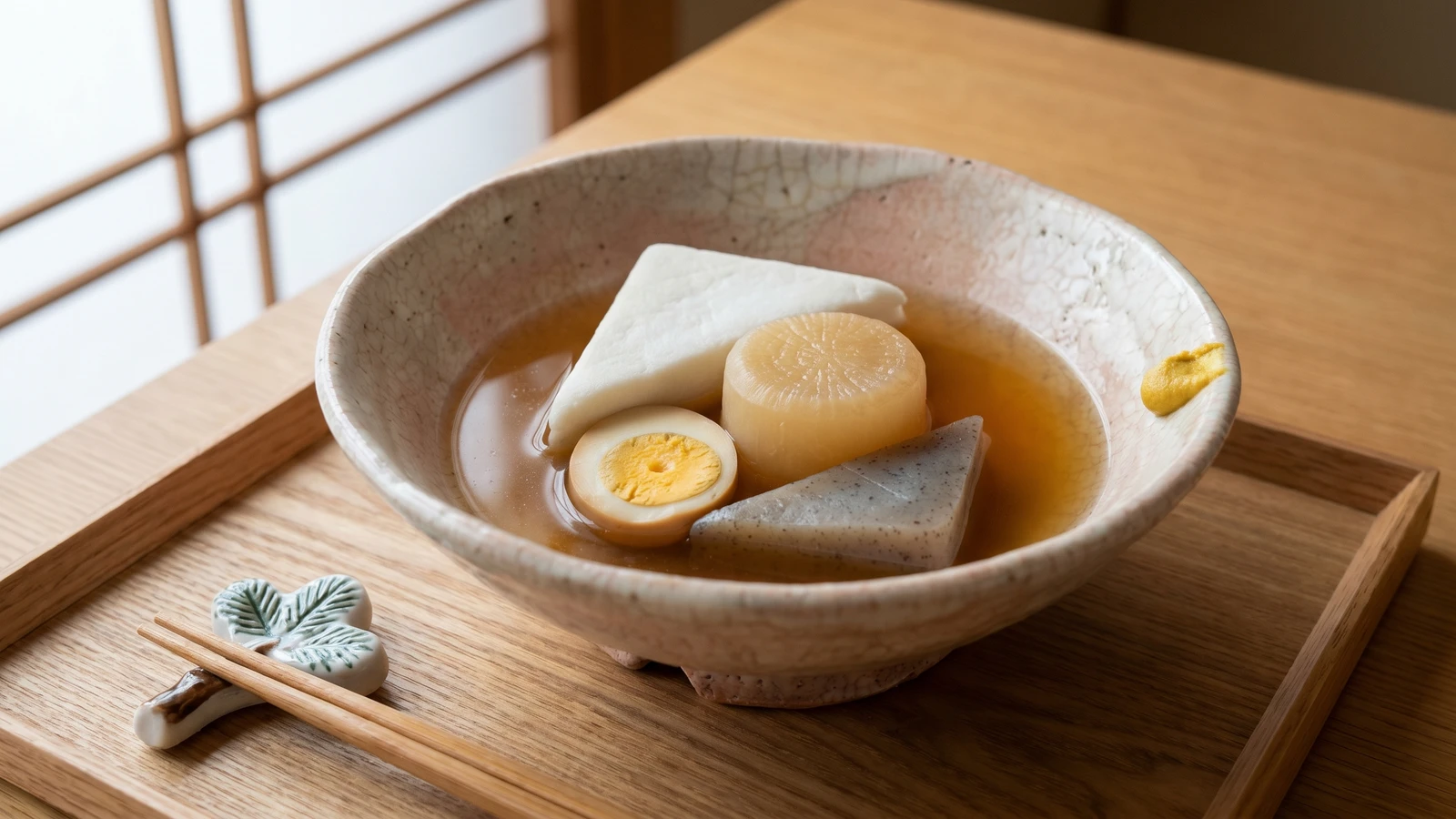
Hanpen is the delicate one in the oden pot: a white triangle of whipped fish and yam that floats, swells, and must never be bullied by a boil.
Hanpen looks too soft for a stew. That is the point. Most oden ingredients can sit in the pot and grow deeper by the hour, but hanpen is a puffed white fish cake, whipped with yamaimo, mountain yam, and it asks for restraint. Slide it in at the end and let the broth warm it through. Boil it hard and it gives up, as many of us would under the same treatment.
Oden itself is not difficult, only unfamiliar in its patience. We build a clear dashi first, then season it lightly with soy, mirin, sake, and a little salt. The broth should taste a shade stronger than you would drink alone, because daikon, egg, and konnyaku will take it in and soften it. The method, not the menu, is what matters here: simmer the sturdy things gently until they are seasoned through, then add the fragile thing last.
The detail that decides this dish is timing. Hanpen needs only five minutes in hot broth, just long enough to swell slightly and turn silky at the surface. Keep the pot below a boil and leave the triangles room. In winter, this is comfort food of the plainest kind: clear broth, quiet heat, and nothing hidden.
Oden developed from dengaku, skewered foods brushed with miso, and by the Edo period the word was used for simmered preparations sold in towns and at stalls. Hanpen is especially associated with eastern Japan, where the white, triangular fish cake became a familiar oden ingredient in Tokyo-style broth. Its light texture comes from surimi, minced fish paste, whipped with yamaimo or a similar binder before being shaped and briefly heated.
Quantity
1 piece (about 10g)
Quantity
5 cups
Quantity
25g
Quantity
1 medium (about 500g)
peeled and cut into 1-inch rounds
Quantity
4
Quantity
1 block (about 250g)
Quantity
2 pieces
cut diagonally into 4 triangles
Quantity
3 tablespoons
Quantity
2 tablespoons
Quantity
2 tablespoons
Quantity
1 teaspoon
Quantity
1/2 teaspoon
plus more as needed
Quantity
for serving
| Ingredient | Quantity |
|---|---|
| konbu (dried kelp) | 1 piece (about 10g) |
| cold water | 5 cups |
| katsuobushi (bonito flakes) | 25g |
| daikonpeeled and cut into 1-inch rounds | 1 medium (about 500g) |
| large eggs | 4 |
| konnyaku | 1 block (about 250g) |
| hanpencut diagonally into 4 triangles | 2 pieces |
| usukuchi shoyu (light soy sauce) | 3 tablespoons |
| mirin | 2 tablespoons |
| sake | 2 tablespoons |
| sugar | 1 teaspoon |
| sea saltplus more as needed | 1/2 teaspoon |
| karashi mustard (optional) | for serving |
Wipe the konbu with a damp cloth, but don't wash it. Put it in the cold water and bring it up slowly over low heat, about ten minutes. Pull the konbu when the water trembles and small bubbles climb the sides, before it boils. Add the katsuobushi all at once, take the pot off the heat, and leave it alone for three minutes. Strain through a cloth and let it drip without squeezing, because squeezing presses harsh, oily flavor into the clear stock.
Round the sharp edges of the daikon slices with a knife if you want them neat, then simmer them in plain water for 15 minutes and drain. This first simmer removes the raw sharpness and helps the daikon drink the oden broth later without clouding it.
Lower the eggs into simmering water and cook 9 minutes, then cool in cold water and peel. The yolks should be set but not chalky, because they will warm again in the broth.
Score the konnyaku lightly in a crosshatch pattern, then cut it into triangles. Blanch it for 2 minutes and drain. Konnyaku carries a faint alkaline smell from its setting process, and blanching clears that away before it meets the dashi.
Return the strained dashi to a wide pot and add the usukuchi shoyu, mirin, sake, sugar, and salt. Taste it now. It should be clear, gently savory, and a little stronger than a soup, because the daikon, egg, and konnyaku will soften it as they sit.
Add the daikon, eggs, and konnyaku to the seasoned broth. Bring it just to a simmer, then lower the heat so the surface barely moves. Rest a wooden drop-lid, otoshibuta, over the pieces, or use a circle of parchment with a small hole in the center. Cook gently for 45 minutes, because a quiet simmer seasons the pieces without toughening the eggs or muddying the broth.
Turn off the heat and let the pot rest for at least 20 minutes, or longer if you have time. Simmered dishes season most deeply as they cool in their broth. This is where the daikon becomes itself.
Bring the broth back until it is hot but not boiling. Lay the hanpen triangles on top in a single layer and warm them for 4 to 5 minutes, turning once if needed. Do not boil them. Hanpen is full of trapped air from the whipped paste, and a rolling boil collapses that lightness into a sodden sponge.
Serve each bowl with one hanpen triangle, a round of daikon, an egg, and a piece of konnyaku, with enough broth to shine around them. Add a small dab of karashi on the side if you like its heat. Don't crowd the bowl. Hanpen is pale and quiet, and it looks best when it has room.
1 serving (about 540g)
Culinary guides, cultural storytelling, and the editorial depth that makes cooking meaningful.
Discover Culinary ExplorerChef Takumi
Abura soba is ramen without the hiding place of soup: hot noodles, strong shōyu tare, fragrant oil, and the discipline to mix while every strand is still hot.

Chef Takumi
Akadashi asks you to trust the dark miso. Build a clear dashi, loosen the Hatchō mame-miso gently, and the soup turns coffee-dark, savory, and clean.

Chef Takumi
Toast the rice until its skin is firm, then let it meet chicken broth, burdock, maitake, and seri. The pot looks grand, but the work is rice, broth, and patience.

Chef Takumi
Shottsuru nabe is Akita winter in one pot: clean dashi, hatahata at shun, tofu and napa cabbage carrying a salt-deep broth without anything heavy enough to hide the fish.