
Chef Fai
Dry Egg Noodles (Ba Mee Haeng)
The four pillars live at the bottom of the bowl before the noodles ever touch it: nam pla for salt, sugar for sweet, vinegar for sour, chili for heat. Every noodle cart in Bangkok runs on this principle.
A cooking platform built around craft, culture, and the stories behind what we eat.

Created by
No paste. No mortar. Just a screaming wok, sliced chilies, garlic, and fish sauce doing what the four pillars do: salt, sweet, heat. Central Thai stir-fry at its most stripped-down and honest.
This dish is proof that Thai cooking doesn't always start in the mortar. Sometimes it starts with a knife, a wok, and five minutes of total commitment.
Gai pad prik is the stir-fry that teaches you what the wok actually does. There's no kreung tam here. No paste to hide behind. It's chicken, fresh chilies, garlic, fish sauce, oyster sauce, and sugar. That's it. When you strip a Thai dish down to this level, the principles have nowhere to hide. If your fish sauce is bad, you'll taste it. If your wok isn't hot enough, you'll see it. If your timing is off by thirty seconds, you'll know. Ajarn always said: "The simplest dishes are the hardest to fake."
The four pillars show up even here: nam pla (fish sauce) for salt, a pinch of sugar for sweet, and prik chi fa (spur chilies) plus prik khi nu (bird's eye chilies) for heat. Sour sits this one out. Not every dish needs all four. The system is flexible, not rigid. But fish sauce is non-negotiable. If you reach for soy sauce, you've left Thai cooking and entered something else.
I watched a vendor on Charoen Krung road cook this dish forty times in a lunch rush. Same wok, same burner, same motion. Garlic in the oil, chicken flat against the steel, sauce splashed in, chilies tossed, plate. Sixty seconds per order. She didn't think about it. Her hands knew the timing because her hands had done it ten thousand times. That's what principles give you: the freedom to stop thinking and start cooking.
Pad prik belongs to the family of Central Thai "pad" (stir-fry) dishes that emerged from the integration of Chinese wok technique into Thai kitchens during the late 19th and early 20th centuries. Thai cooks adopted the wok but replaced soy sauce with fish sauce as the primary seasoning, creating a distinctly Thai stir-fry tradition. The use of large, colorful spur chilies (prik chi fa) as a primary vegetable rather than just a heat source distinguishes Thai wok cooking from its Chinese origins, where chilies typically play a supporting role.
Quantity
300g
sliced against the grain into bite-size pieces
Quantity
5 cloves
roughly smashed
Quantity
3 large, red and green mixed
sliced diagonally into 1-inch pieces
Quantity
5
lightly bruised
Quantity
1 small
sliced into thick wedges
Quantity
2 tablespoons
Quantity
1.5 tablespoons
Quantity
1 tablespoon
Quantity
1 teaspoon
Quantity
1 tablespoon
Quantity
for serving
| Ingredient | Quantity |
|---|---|
| boneless chicken thighsliced against the grain into bite-size pieces | 300g |
| garlic (kratiam)roughly smashed | 5 cloves |
| spur chilies (prik chi fa)sliced diagonally into 1-inch pieces | 3 large, red and green mixed |
| bird's eye chilies (prik khi nu)lightly bruised | 5 |
| onionsliced into thick wedges | 1 small |
| vegetable oil | 2 tablespoons |
| fish sauce (nam pla) | 1.5 tablespoons |
| oyster sauce | 1 tablespoon |
| palm sugar (nam tan pip) or white sugar | 1 teaspoon |
| water or chicken stock | 1 tablespoon |
| steamed jasmine rice | for serving |
Slice the chicken against the grain into thin, bite-size pieces. Smash the garlic with the flat of your knife. Slice the spur chilies on a diagonal, about an inch long. Bruise the bird's eye chilies with a quick press. Wedge the onion. Mix the fish sauce, oyster sauce, sugar, and water in a small bowl. Everything goes on a plate next to the stove, within arm's reach. Once the wok is hot, you don't walk away. Not even for a second.
Set the wok over the highest heat your stove can produce. Wait. Keep waiting. When you see the first wisp of smoke from the dry steel, add the oil. It should shimmer and ripple instantly. If the oil sits there calmly, your wok isn't hot enough. Start over. Wok hei only happens at temperatures that make you nervous. That nervousness is correct.
Drop the smashed garlic into the oil. It should sizzle violently on contact. Toss it once. Two seconds maximum. The edges should be turning gold but the center is still pale. That's the window. Don't wait for it to brown evenly. You're not making garlic chips. You're blooming flavor into the oil.
Spread the chicken in a single layer against the wok surface. Don't touch it. Let it sit for 30 seconds. You want contact between protein and screaming-hot metal. That's where wok hei lives. You'll hear it crackling. You'll see edges turning white, then golden. Now flip, toss, and let the other side get color. Another 30 seconds. The chicken should be 80% cooked with char on the edges. Not fully done. The sauce will finish it.
Throw in the spur chili pieces, the bruised bird's eye chilies, and the onion wedges. Toss hard. The chilies should blister slightly from the heat, their skin tightening and getting a few char spots. The onion just needs to soften at the edges but stay firm at the center. Fifteen seconds of aggressive tossing. The wok should never stop moving now.
Pour the fish sauce, oyster sauce, sugar, and water mixture down the side of the wok, not on top of the food. It hits the hot metal first, reduces for a split second, then coats everything as you toss. The sauce should glaze the chicken and chilies, not pool at the bottom. If it's pooling, your wok temperature dropped. Two or three fast tosses. Taste a piece of chicken. Salty, slightly sweet, savory from the oyster sauce, heat building from the chilies. If it's flat, a splash more fish sauce. If it's too salty, a pinch more sugar. The balance is yours.
The moment the sauce glazes the chicken, it's done. Total wok time: under three minutes. Slide everything onto a plate next to a mound of steamed jasmine rice. The chilies should be blistered but still vibrant. The chicken should glisten. There should be almost no liquid on the plate, just a thin, glossy coating. If you've got a puddle, the wok wasn't hot enough. Eat it now. Stir-fries don't wait.
1 serving (about 350g)
Culinary guides, cultural storytelling, and the editorial depth that makes cooking meaningful.
Discover Culinary ExplorerChef Fai
The four pillars live at the bottom of the bowl before the noodles ever touch it: nam pla for salt, sugar for sweet, vinegar for sour, chili for heat. Every noodle cart in Bangkok runs on this principle.

Chef Fai
The kreung tam fried in cracked coconut cream until the oil bleeds red. That's the technique. Concentrated, semi-dry, spooned thick over crispy fish. This is what happens when the four pillars meet restraint.
Chef Fai
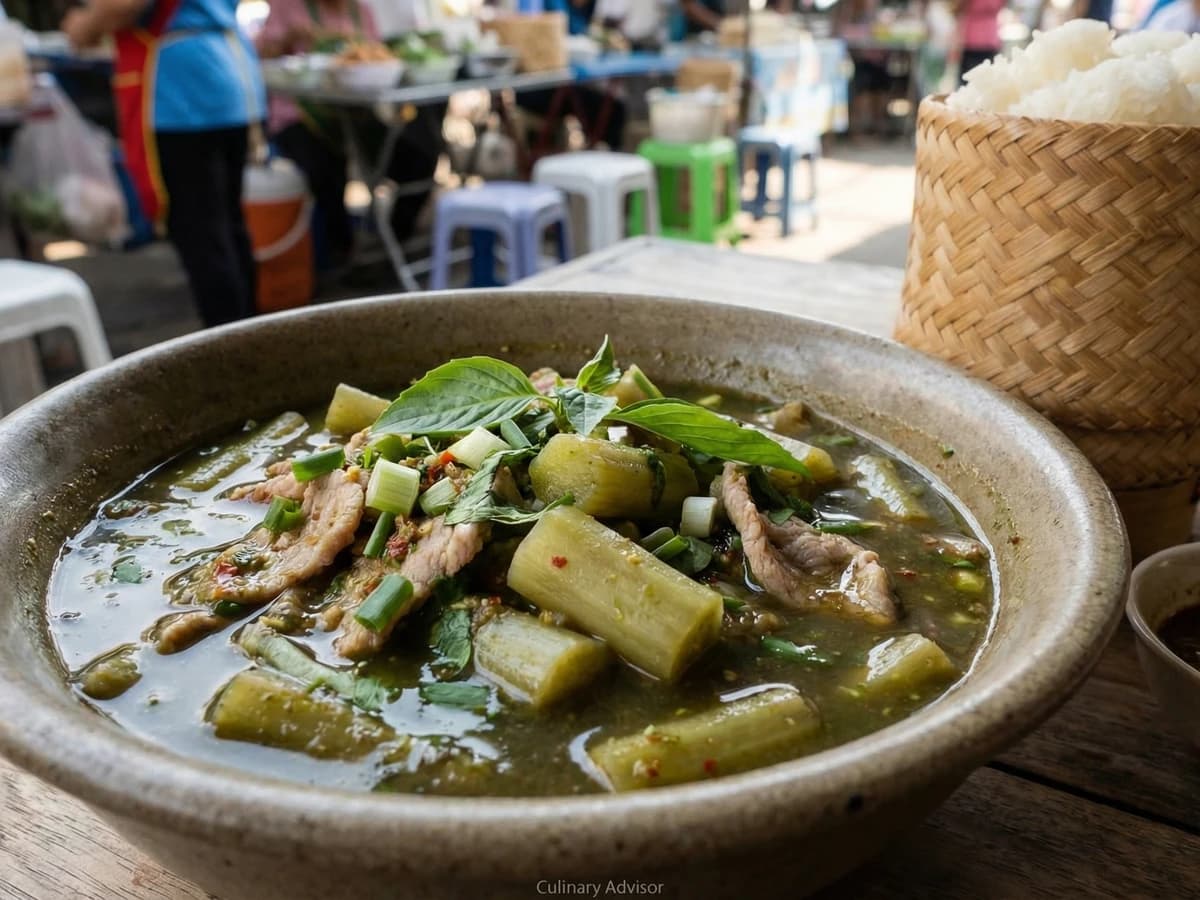
Isan foraging in a bowl: wild taro stems stripped of their sting, simmered in padaek broth with a pounded chili paste and yanang leaf extract. The land feeds you if you know the rules.

Chef Fai
Lanna's kreung tam breaks from Central Thai rules: ginger over galangal, cumin and coriander from Burmese spice routes, tamarind for sour instead of lime. The North has its own system, and this curry is its crown.