
Chef Fai
Dry Egg Noodles (Ba Mee Haeng)
The four pillars live at the bottom of the bowl before the noodles ever touch it: nam pla for salt, sugar for sweet, vinegar for sour, chili for heat. Every noodle cart in Bangkok runs on this principle.
A cooking platform built around craft, culture, and the stories behind what we eat.

Created by
Same red kreung tam as every gaeng phet, but roast duck changes everything: the rendered fat from the skin cracks into the coconut cream, the char meets the chili paste, and suddenly you understand why Bangkok claimed this dish as its own.
Red curry is the test. If you can make a proper gaeng phet, you understand Central Thai curry. The kreung tam is the same whether you're currying chicken, pork, or duck. That's the principle: the paste is the foundation, the protein is the variable. Ajarn always said, "Learn one kreung tam and you can cook twenty dishes." Gaeng phet is where you start.
But this version, ped yang, roast duck, is where the principle gets interesting. You're taking a Chinese-style roasted bird with lacquered, fat-rendered skin and dropping it into a Thai curry system. The duck doesn't cook in the curry. It's already cooked. You're adding it at the end so the richness of the roast duck fat meets the heat of the paste and the sweetness of the coconut cream. The fat from the skin dissolves into the sauce and changes everything. It gets richer, silkier, more complex. This is Bangkok cooking at its best: absorbing an outside technique and running it through Thai principles.
The fruit matters here. Pineapple and cherry tomatoes aren't garnish. They're sour. In gaeng phet ped yang, the tropical fruit provides the acid that balances the fat of the duck and the sweetness of the coconut cream. Fish sauce for salt. Palm sugar for sweet. Pineapple and tomato for sour. Dried chilies for heat. All four pillars, working harder than usual because roast duck is a heavy protein. The balance has to compensate.
Crack the coconut cream first. Always. Fry the paste in the separated cream until the oil floats red on the surface. That's how you know the paste is cooked and the curry will have body. If you dump everything into a pot and simmer, you get soup. Crack the cream, fry the paste, build the curry in layers. Principles, not recipes.
Gaeng phet is one of the oldest Central Thai curry forms, with the red kreung tam documented in palace and market cooking for centuries. The pairing with Chinese-style roast duck (ped yang) emerged in Bangkok's Yaowarat (Chinatown) district, where Thai and Chinese culinary traditions have intersected since the late 18th century. The addition of tropical fruits like pineapple, lychee, and cherry tomatoes is a Central Thai technique for balancing the richness of fatty proteins, a principle that predates the duck version and appears across the gaeng phet family.
Quantity
12
seeded, soaked in warm water 15 minutes
Quantity
1 tablespoon
toasted
Quantity
1 teaspoon
toasted
Quantity
1 teaspoon
Quantity
1 tablespoon
sliced
Quantity
2 stalks
tender inner part only, sliced thin
Quantity
1 tablespoon
Quantity
4
scraped and chopped
Quantity
8 cloves
roughly chopped
Quantity
6
roughly chopped
Quantity
1 tablespoon
Quantity
1 teaspoon
Quantity
400ml
Quantity
400ml
Quantity
half a duck, about 500g
chopped through the bone into bite-sized pieces
Quantity
150g
cut into bite-sized chunks
Quantity
10
halved
Quantity
4
torn, central rib removed
Quantity
2 tablespoons
Quantity
1 tablespoon
Quantity
3
sliced diagonally
Quantity
1 large handful
Quantity
for serving
| Ingredient | Quantity |
|---|---|
| large dried red chilies (prik chi fa daeng)seeded, soaked in warm water 15 minutes | 12 |
| coriander seeds (met phak chi)toasted | 1 tablespoon |
| cumin seeds (yira)toasted | 1 teaspoon |
| white peppercorns (prik thai khao) | 1 teaspoon |
| galangal (kha)sliced | 1 tablespoon |
| lemongrass (takhrai)tender inner part only, sliced thin | 2 stalks |
| kaffir lime zest (phiu makrut) | 1 tablespoon |
| cilantro roots (rak phak chi)scraped and chopped | 4 |
| garlicroughly chopped | 8 cloves |
| shallotsroughly chopped | 6 |
| shrimp paste (kapi) | 1 tablespoon |
| salt | 1 teaspoon |
| coconut cream, thick head (hua kathi) | 400ml |
| coconut milk, thin tail (hang kathi) | 400ml |
| Chinese-style roast duck (ped yang)chopped through the bone into bite-sized pieces | half a duck, about 500g |
| fresh pineapple (sapparot)cut into bite-sized chunks | 150g |
| cherry tomatoes (makhue thet)halved | 10 |
| kaffir lime leaves (bai makrut)torn, central rib removed | 4 |
| fish sauce (nam pla) | 2 tablespoons |
| palm sugar (nam tan pip) | 1 tablespoon |
| large fresh red chilies (prik chi fa)sliced diagonally | 3 |
| Thai basil leaves (horapha) | 1 large handful |
| steamed jasmine rice | for serving |
Put the coriander seeds, cumin seeds, and white peppercorns in a dry pan over medium heat. Shake the pan every few seconds. Within a minute, the coriander will smell warm and citrusy, the cumin will turn fragrant and slightly smoky. Pull them before they darken past light brown. Burn them and you start over. Grind to a fine powder in the mortar. This is your spice base. Scrape it out and set aside.
Drain the soaked chilies and squeeze out excess water. In your granite mortar, start with the salt and drained chilies. Pound to a rough paste. Add the lemongrass and galangal. Pound again until fibrous but broken down. Then the kaffir lime zest and cilantro roots. Pound. Then the garlic and shallots. Pound until the paste is cohesive but still has texture. Add the ground spice powder and the shrimp paste. Pound until everything is integrated and the paste is a deep brick-red, wet and fragrant. The aroma should fill your kitchen: smoky chili, citrus from the lemongrass and lime zest, the funky depth of the kapi. When you can smell all of those at once, the kreung tam is ready.
Pour the thick coconut cream into a wok or heavy pan over medium-high heat. No oil. The cream is the oil. Stir it constantly as it heats. After 5 to 7 minutes, the cream will begin to separate: you'll see clear, oily liquid rising to the surface while the white solids shrink. That's the crack. The surface will look slick and the cream will start to sizzle instead of bubble. Don't rush this. If the cream doesn't crack, the paste won't fry properly and the curry will taste raw.
Add 4 to 5 tablespoons of the kreung tam to the cracked coconut cream. Stir it in and let it fry. The paste will sizzle and sputter. Keep stirring. After 3 to 4 minutes, red-tinted oil will pool on the surface of the paste. That red oil is the signal. It means the paste is cooked, the raw edge is gone, and the essential oils from every ingredient have been released into the fat. The color should be deep red-orange, and the smell should be intense: roasted chili, shrimp paste, lemongrass all hitting you at once.
Pour in the thin coconut milk. Stir to combine. Bring it to a gentle boil. Add the fish sauce and palm sugar. Stir and taste. The base should be: salty from the nam pla, gently sweet from the palm sugar, with the heat of the paste building underneath. This is your canvas. Add the pineapple chunks and let them simmer for 3 minutes. The pineapple provides acid, the sour element. As it cooks, it softens slightly and releases juice into the curry. Then add the cherry tomato halves and the sliced fresh red chilies. Simmer for another 2 minutes.
Lay the roast duck pieces into the curry. Don't stir aggressively or the meat will fall off the bones. Push the pieces gently below the surface. The duck is already cooked. You're warming it through and letting the fat from the skin melt into the curry. Two to three minutes is all you need. The skin should soften slightly but not disintegrate. You still want pieces with identifiable skin attached. The rendered duck fat will make the curry noticeably richer and silkier. That's the whole point of using ped yang.
Add the torn kaffir lime leaves and the Thai basil. Torn, not chopped. The tearing releases the oils from the leaf surface. Stir once, gently. The basil should wilt into the curry but stay bright green. Kill the heat. Ladle into a serving bowl immediately. The curry should be rich, red-orange, fragrant, with pieces of duck skin glistening, chunks of pineapple and halved tomatoes visible, basil leaves scattered on top. Serve with steamed jasmine rice. One ladle of curry, one spoon of rice. That's the ratio.
1 serving (about 425g)
Culinary guides, cultural storytelling, and the editorial depth that makes cooking meaningful.
Discover Culinary ExplorerChef Fai
The four pillars live at the bottom of the bowl before the noodles ever touch it: nam pla for salt, sugar for sweet, vinegar for sour, chili for heat. Every noodle cart in Bangkok runs on this principle.

Chef Fai
The kreung tam fried in cracked coconut cream until the oil bleeds red. That's the technique. Concentrated, semi-dry, spooned thick over crispy fish. This is what happens when the four pillars meet restraint.
Chef Fai
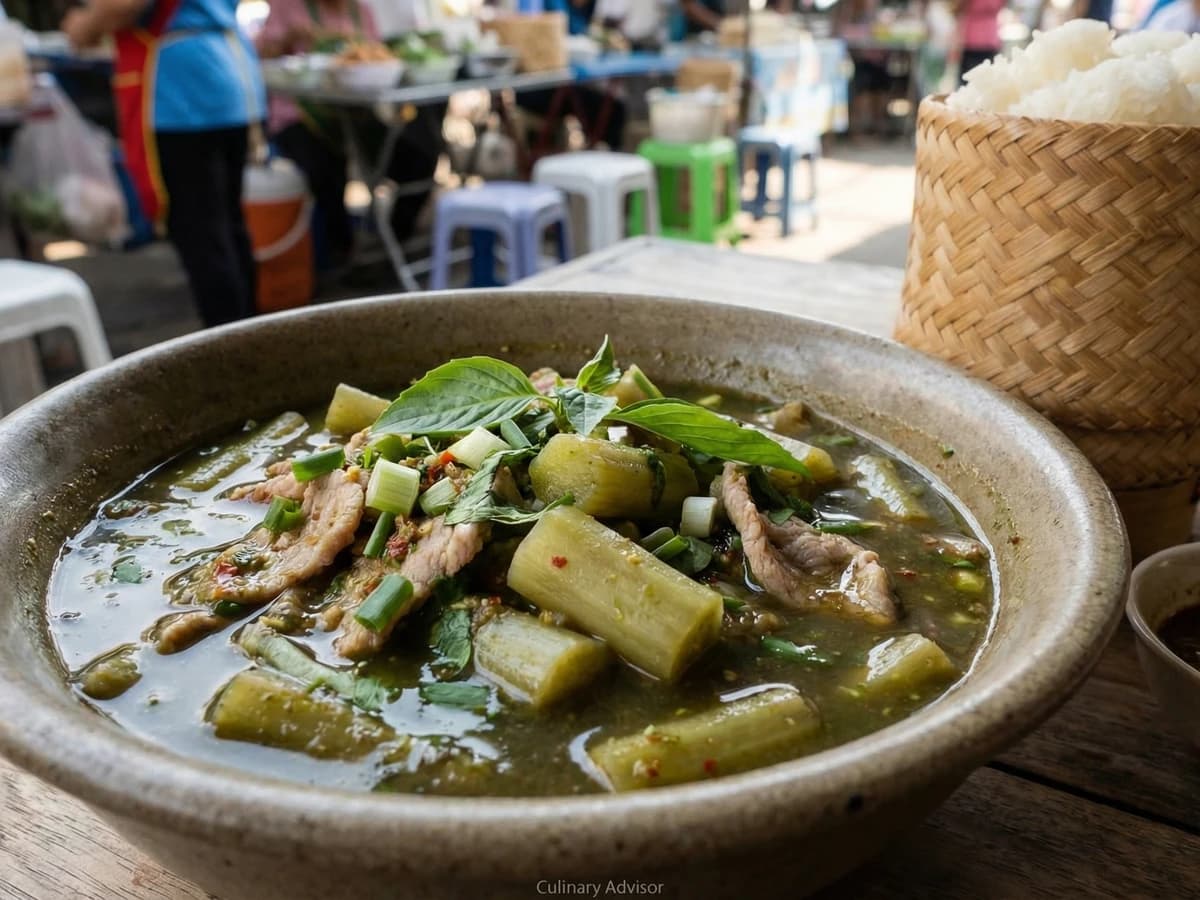
Isan foraging in a bowl: wild taro stems stripped of their sting, simmered in padaek broth with a pounded chili paste and yanang leaf extract. The land feeds you if you know the rules.

Chef Fai
Lanna's kreung tam breaks from Central Thai rules: ginger over galangal, cumin and coriander from Burmese spice routes, tamarind for sour instead of lime. The North has its own system, and this curry is its crown.