
Chef Fai
Dry Egg Noodles (Ba Mee Haeng)
The four pillars live at the bottom of the bowl before the noodles ever touch it: nam pla for salt, sugar for sweet, vinegar for sour, chili for heat. Every noodle cart in Bangkok runs on this principle.
A cooking platform built around craft, culture, and the stories behind what we eat.

Created by
Strip away the coconut milk and the kreung tam has nowhere to hide. This water-based Central Thai curry is the ultimate test of your paste: fierce, herbal, no safety net. The four pillars raw and exposed.
Every other curry in this collection has coconut milk to round out the edges. Gaeng pa has water. That's it. And that changes everything.
Ajarn always said: if you want to know whether someone can really pound a kreung tam, have them make gaeng pa. In a coconut curry, the fat coats your tongue, softens the edges, smooths over a paste that's a little rough or under-pounded. In jungle curry, there is no buffer. The paste is the flavor. Every ingredient in your krok has to be pounded until the oils release and the cell walls break and the whole thing becomes a single, unified force. If your lemongrass is still stringy, you'll taste it. If your shrimp paste isn't fully integrated, you'll know. The water exposes everything.
This is the curry of the forest. No market, no coconut vendor, no sugar cane press. Just what the jungle gave you: wild ginger, green peppercorns still on the stem, whatever greens and protein you could find. The principle it demonstrates is the most fundamental one in Thai cooking: the kreung tam is everything. Strip away every luxury and the paste still carries the dish.
Fish sauce for salt. A bare whisper of palm sugar for balance, not sweetness. Chili for heat, and gaeng pa runs hot, hotter than any coconut curry because there's no fat to slow the capsaicin down. Sour comes from the herbs themselves, the kaffir lime zest in the paste, the sharp bite of grachai (กระชาย, fingerroot). The four pillars are here, but they're raw and direct. No velvet glove. Just the fist.
Gaeng pa (แกงป่า, literally "forest curry") predates the widespread use of coconut milk in Thai cooking, originating with hunters and foragers in Central Thailand's dense interior forests who cooked with water, foraged herbs, and whatever protein the jungle provided. The curry's defining ingredient, grachai (fingerroot/Boesenbergia rotunda), grows wild in Thai forests and is rarely found in other regional curry traditions. Some food historians argue that gaeng pa represents the oldest form of Thai curry, a water-based, paste-driven preparation that existed before coconut trade routes made coconut milk a Central Thai kitchen staple.
Quantity
7
soaked 15 minutes, deseeded
Quantity
5
Quantity
1 tablespoon
Quantity
3 stalks
outer layers removed, thinly sliced
Quantity
1 tablespoon
sliced thin
Quantity
zest of 1 lime
finely sliced
Quantity
3
scraped and chopped
Quantity
6 cloves
Quantity
4
sliced
Quantity
1 teaspoon
Quantity
400g
sliced against the grain into bite-sized pieces
Quantity
2 tablespoons
Quantity
2.5 cups
Quantity
60g
julienned
Quantity
100g
sliced thin
Quantity
100g
left whole or halved
Quantity
50g
sliced diagonally
Quantity
50g
cut into 1-inch pieces
Quantity
30g
Quantity
4
torn
Quantity
2-3 tablespoons
Quantity
1 teaspoon
Quantity
1 large handful
| Ingredient | Quantity |
|---|---|
| dried long red chilies (prik chi fa haeng)soaked 15 minutes, deseeded | 7 |
| bird's eye chilies (prik khi nu) | 5 |
| white peppercorns (prik thai khao) | 1 tablespoon |
| lemongrass (takhrai)outer layers removed, thinly sliced | 3 stalks |
| galangal (kha)sliced thin | 1 tablespoon |
| kaffir lime zest (phiu makrut)finely sliced | zest of 1 lime |
| cilantro roots (rak phak chi)scraped and chopped | 3 |
| garlic (kratiam) | 6 cloves |
| shallots (hom daeng)sliced | 4 |
| shrimp paste (kapi) | 1 teaspoon |
| boneless chicken thighsliced against the grain into bite-sized pieces | 400g |
| vegetable oil | 2 tablespoons |
| water | 2.5 cups |
| grachai (fingerroot/krachai)julienned | 60g |
| bamboo shoots (no ra mai)sliced thin | 100g |
| Thai pea eggplant (makhua phuang)left whole or halved | 100g |
| baby corn (khao phot on)sliced diagonally | 50g |
| long beans (thua fak yao)cut into 1-inch pieces | 50g |
| fresh green peppercorns on stem (prik thai on) | 30g |
| kaffir lime leaves (bai makrut)torn | 4 |
| fish sauce (nam pla) | 2-3 tablespoons |
| palm sugar (nam tan pip) | 1 teaspoon |
| Thai basil leaves (horapha) | 1 large handful |
Start with the hard, dry ingredients in your granite mortar. Peppercorns first. Pound them to a coarse powder. Then the soaked, drained dried chilies and the bird's eye chilies. Pound until they break down into a rough, fibrous mass. Now the lemongrass, galangal, and kaffir lime zest, one at a time, pounding each addition until it's fully integrated before adding the next. Then cilantro roots. Then garlic and shallots together. Finally, the shrimp paste. Pound and fold until you have a unified, fragrant paste with no visible chunks of lemongrass or galangal fiber. This should take fifteen to twenty minutes. Your arm will hurt. The paste should be finer than any other curry paste you've made because there's no coconut to hide behind.
Heat the oil in a wok or heavy pot over high heat. Add the entire kreung tam and fry it hard, stirring constantly. In coconut curries, you crack the cream to fry the paste. Here, you use a small amount of plain oil. The paste should sizzle aggressively. Fry for two to three minutes until the raw shrimp paste smell cooks out and the oil starts to separate at the edges. The color will darken. The aroma will shift from sharp and raw to deep and toasted. That transition is what you're waiting for.
Add the chicken pieces directly to the fried paste. Toss and stir for about a minute so every piece gets coated and starts to seal. The chicken should be wearing the paste like a second skin. You'll see the surface of the meat change color. Don't cook it through yet. It'll finish in the broth.
Pour in the water. All at once. The pot will scream and steam and the curry will look thin. That's correct. This is a brothy curry, not a thick one. Bring it to a rolling boil, then add the bamboo shoots and pea eggplant. These are the hardest vegetables and need the most time. Let it boil for three minutes. Then add the long beans, baby corn, julienned grachai, and the fresh green peppercorns on their stems. Drop in the torn kaffir lime leaves. Another two to three minutes at a solid boil. The chicken should be cooked through and the vegetables should be just tender with some bite left.
Season with fish sauce and palm sugar. Start with two tablespoons of nam pla and the teaspoon of palm sugar. Taste. The balance in gaeng pa is different from other curries: fiercely salty and spicy with only the faintest sweetness. The sugar is there to round the fish sauce, not to sweeten the curry. If you can taste the sugar as sweetness, you've added too much. Adjust the fish sauce until the broth is savory and deep. Kill the heat. Throw in the Thai basil leaves and stir once. The residual heat will wilt them in seconds. Ladle immediately into bowls over steamed jasmine rice. This curry does not improve by sitting. Serve it now.
1 serving (about 325g)
Culinary guides, cultural storytelling, and the editorial depth that makes cooking meaningful.
Discover Culinary ExplorerChef Fai
The four pillars live at the bottom of the bowl before the noodles ever touch it: nam pla for salt, sugar for sweet, vinegar for sour, chili for heat. Every noodle cart in Bangkok runs on this principle.

Chef Fai
The kreung tam fried in cracked coconut cream until the oil bleeds red. That's the technique. Concentrated, semi-dry, spooned thick over crispy fish. This is what happens when the four pillars meet restraint.
Chef Fai
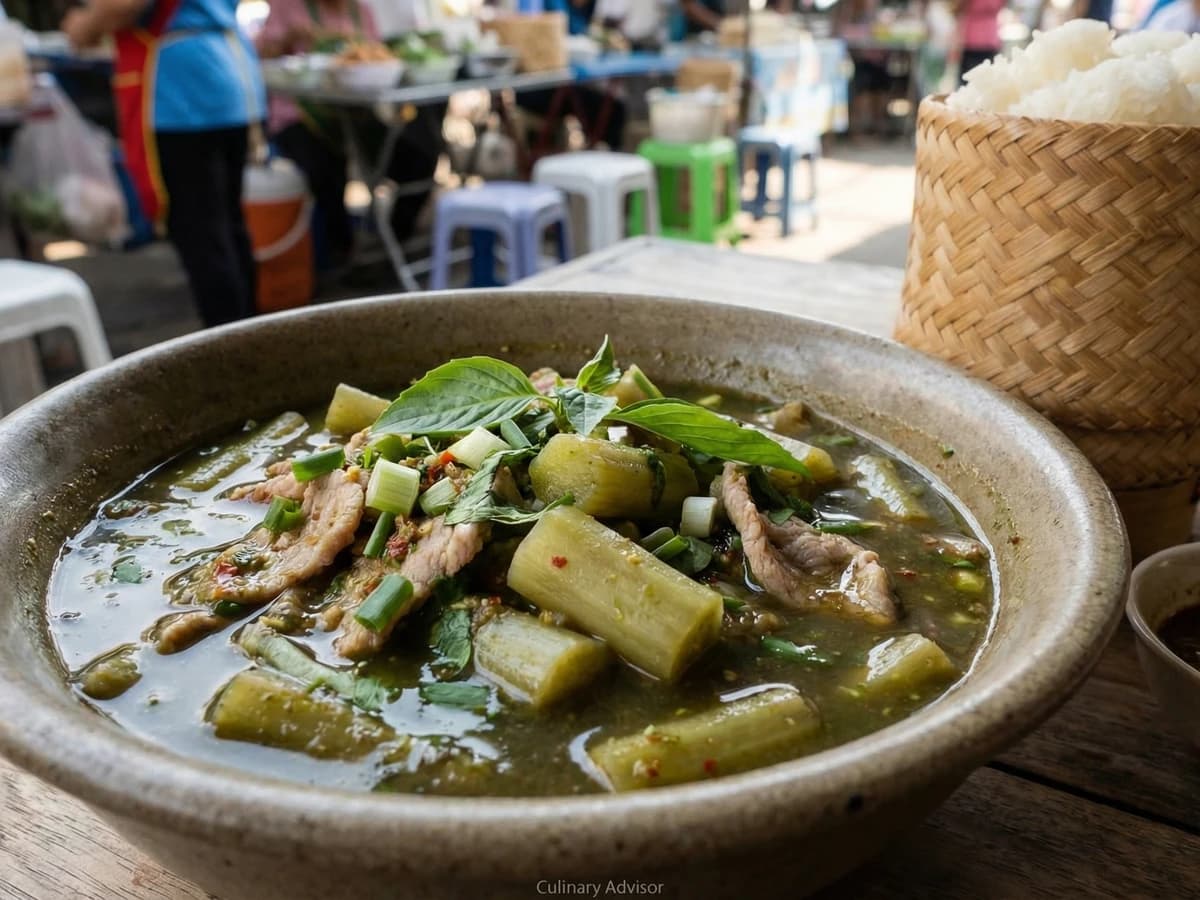
Isan foraging in a bowl: wild taro stems stripped of their sting, simmered in padaek broth with a pounded chili paste and yanang leaf extract. The land feeds you if you know the rules.

Chef Fai
Lanna's kreung tam breaks from Central Thai rules: ginger over galangal, cumin and coriander from Burmese spice routes, tamarind for sour instead of lime. The North has its own system, and this curry is its crown.