
Chef Dimitra
Aegean Island Chtapodi me Kritharaki (Χταπόδι με Κριθαράκι)
Aegean island octopus, tomato, red wine, and toasted kritharaki share one pot, so the pasta drinks the briny sauce and stays glossy instead of turning heavy.
A cooking platform built around craft, culture, and the stories behind what we eat.
Created by
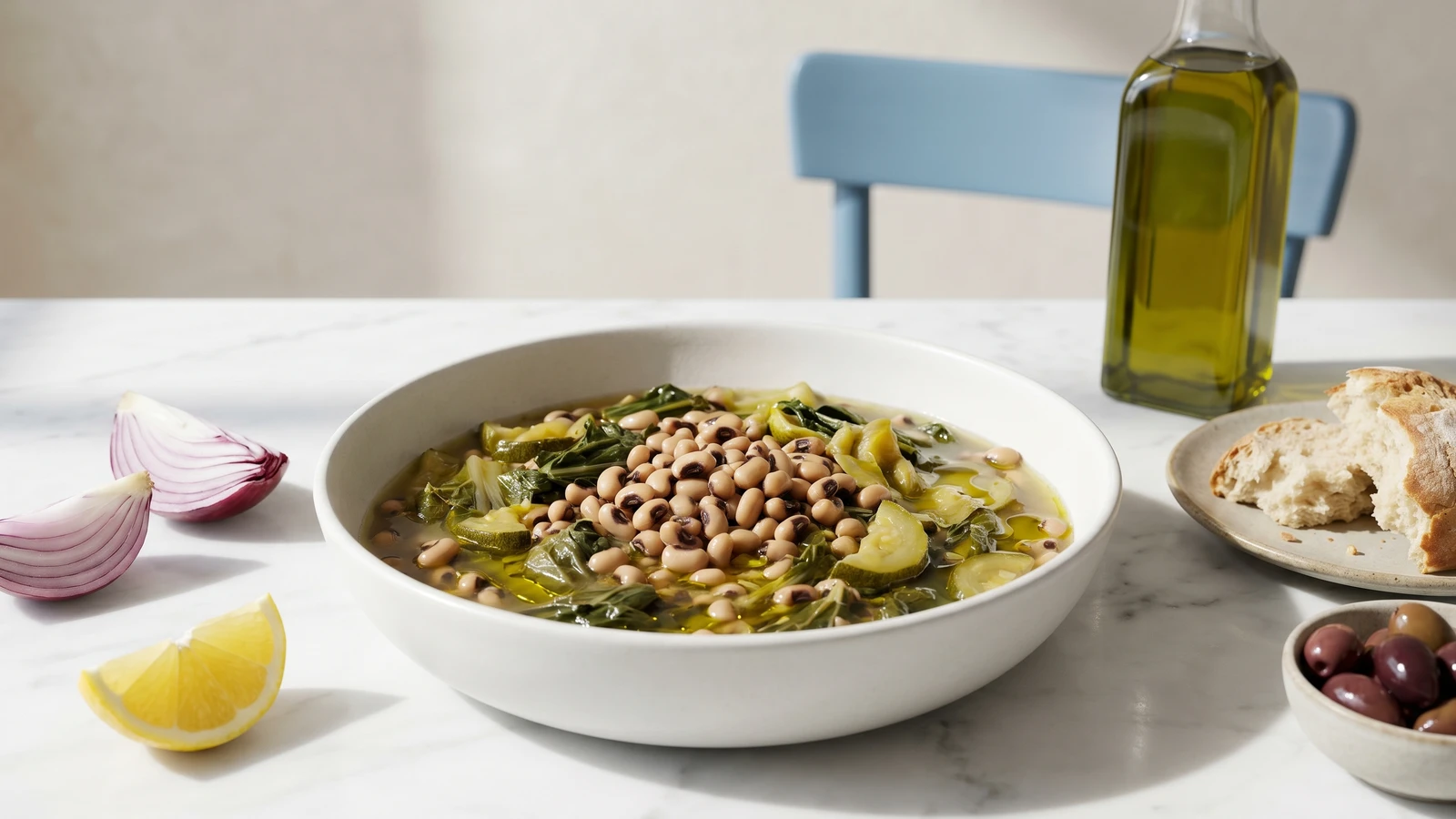
Cyprus puts black-eyed peas, chard, and zucchini in one plain pot, then lets lemon and green-gold olive oil do the finishing.
Louvia me Lahana is Cyprus in its weekday clothes: black-eyed peas boiled with chard and zucchini, served warm with lemon and olive oil. Louvia are the beans, lahana are the greens, and the dish is not trying to impress you. It is feeding you properly.
The one rule is timing the salt. Let the beans soften first, then salt the pot when their skins have begun to give. Salt too early and the skins resist while the centers lag behind, and you lose the soft, clean bite this dish needs. Lemon waits until the plate, because acid belongs at the end here, bright and sharp over the oil.
This is nistisimo food, made for fasting days, but no one eats it as a compromise. A bowl of louvia, a heel of bread, olives on the side, and you understand how a poor pot becomes a complete meal. Λίγα και καλά: a few things, and good ones.
Louvia me Lahana belongs to the everyday Cypriot kitchen, where black-eyed peas were valued because they cooked faster than many dried beans and suited the Orthodox fasting calendar. The pairing with chard reflects a wider Cypriot habit of cooking pulses with whatever greens were fresh, especially in winter and spring. Zucchini is a common addition in home kitchens, softening into the pot without turning the dish into a stew.
Quantity
300g
picked over and rinsed
Quantity
1.5L
plus more as needed
Quantity
500g
washed well
Quantity
350g
cut into thick half-moons
Quantity
1
peeled and left whole
Quantity
1
Quantity
1 1/2 teaspoons
added late
Quantity
80ml
plus more for serving
Quantity
2
cut into wedges
Quantity
1
thinly sliced, for serving
Quantity
as needed
for serving
| Ingredient | Quantity |
|---|---|
| dried black-eyed peas (louvia)picked over and rinsed | 300g |
| waterplus more as needed | 1.5L |
| Swiss chard or beet greens (lahana)washed well | 500g |
| zucchinicut into thick half-moons | 350g |
| small onionpeeled and left whole | 1 |
| bay leaf | 1 |
| fine sea saltadded late | 1 1/2 teaspoons |
| extra virgin Koroneiki olive oilplus more for serving | 80ml |
| lemonscut into wedges | 2 |
| small red onionthinly sliced, for serving | 1 |
| Kalamata olives (optional)for serving | as needed |
Put the rinsed black-eyed peas in a wide pot with plenty of cold water. Bring to a boil and cook for 5 minutes, then drain. Return the beans to the pot with 1.5L fresh water, the whole onion, and the bay leaf.
Bring the pot back to a steady simmer, then lower the heat. Cook uncovered for 25 to 30 minutes, until the beans are not fully soft but their skins have begun to give when pressed. Do not salt yet. This is the part that decides the dish.
While the beans cook, separate the chard stems from the leaves. Slice the stems into 2cm pieces and cut the leaves into wide ribbons. Wash them again if there is grit hiding near the ribs, because grit in greens is not rustic, it is just grit.
Add the chard stems and zucchini to the pot. Simmer for 8 minutes, then add the chard leaves and the salt. Cook another 8 to 12 minutes, until the beans are tender, the zucchini is soft but still whole, and the greens have collapsed into the broth.
Remove the onion and bay leaf. Turn off the heat and stir in 80ml olive oil. Let the pot stand for 10 minutes so the broth settles and turns glossy rather than watery.
Spoon the louvia into shallow bowls with a little of their broth. Serve warm or at room temperature with lemon wedges, sliced red onion, more olive oil, and olives if you like. Each person squeezes lemon at the table.
1 serving (about 430g)
Culinary guides, cultural storytelling, and the editorial depth that makes cooking meaningful.
Discover Culinary ExplorerChef Dimitra
Aegean island octopus, tomato, red wine, and toasted kritharaki share one pot, so the pasta drinks the briny sauce and stays glossy instead of turning heavy.

Chef Dimitra
Aegean coast psari plaki is the quiet whole-fish bake: onions and tomato softened first, fish laid on top, and olive oil doing its slow work until the bones release cleanly.

Chef Dimitra
Astakomakaronada is the Aegean islands' celebration pasta: spiny lobster, tomato, olive oil, and long noodles cooked in the shell broth, never drowned in cream or cheese.

Chef Dimitra
Aegean Easter goat on the spit, lean and full-flavored, turned slowly over charcoal and basted with lemon, oregano, garlic, and good olive oil.