
Chef Dimitra
Aegean Island Chtapodi me Kritharaki (Χταπόδι με Κριθαράκι)
Aegean island octopus, tomato, red wine, and toasted kritharaki share one pot, so the pasta drinks the briny sauce and stays glossy instead of turning heavy.
A cooking platform built around craft, culture, and the stories behind what we eat.
Created by
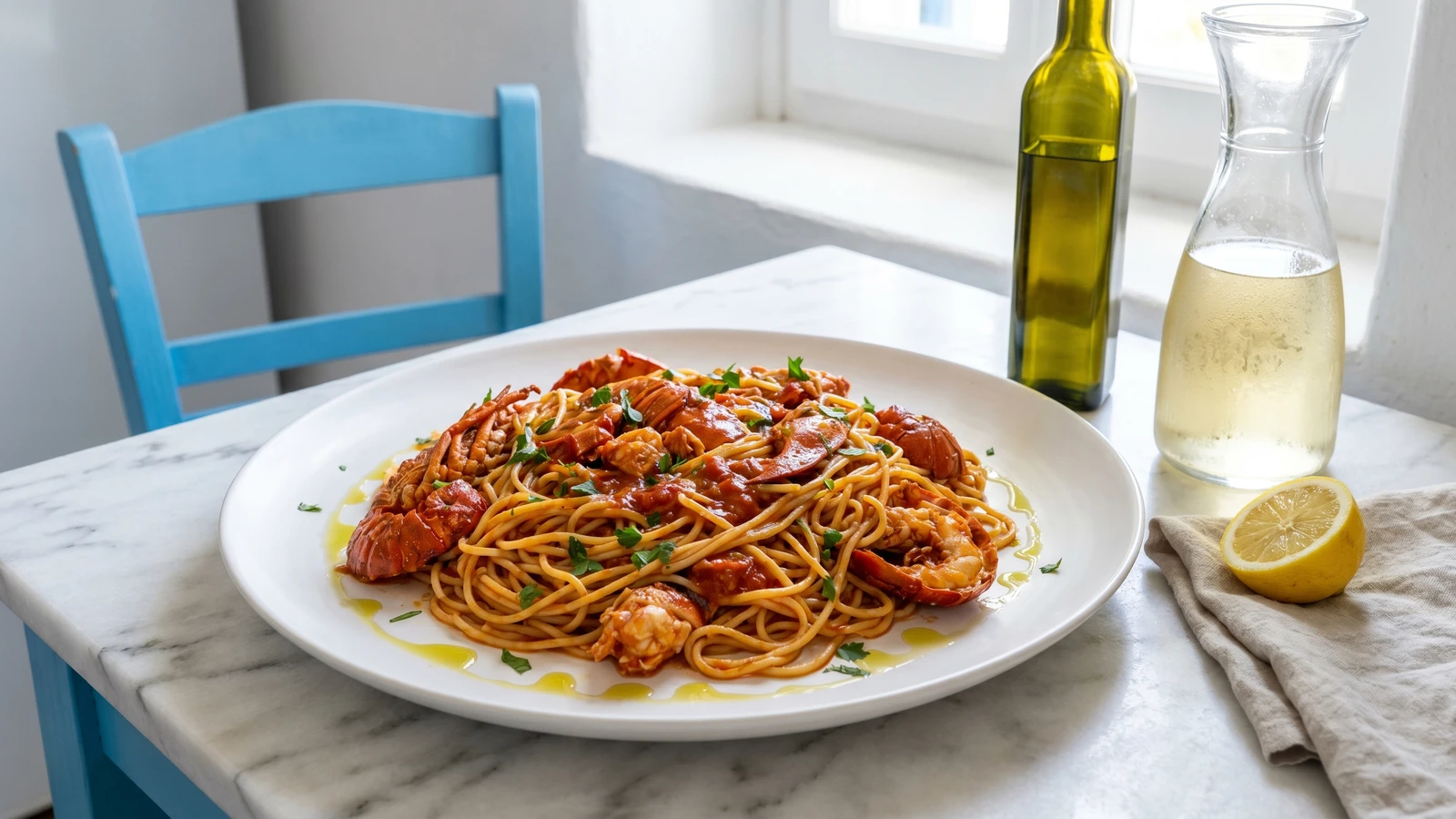
Astakomakaronada is the Aegean islands' celebration pasta: spiny lobster, tomato, olive oil, and long noodles cooked in the shell broth, never drowned in cream or cheese.
Astakomakaronada belongs to the Aegean islands, especially the small harbours where lobster was once a fisherman's prize before it became a feast-day dish. It is spiny lobster with long pasta in a light tomato sauce, sweet from the shell, bright with wine, and plain enough that the lobster can speak. The region is the dish's surname.
The method that decides it is the pasta. You don't boil spaghetti in a separate pot and toss it at the end. You cook it just shy of tender, then finish it in the lobster broth and tomato sauce so the starch tightens everything around the strands. That is why a good astakomakaronada tastes of shell from beginning to end, not only where a piece of lobster sits on the fork.
Use the best lobster you can buy, ideally spiny lobster (astakos) with the shell on. If the boats don't bring lobster, make another dish that day. Λίγα και καλά: a few things, and good ones. My notebook has three island versions of this, and the one thing they agree on is restraint. No cheese. No cream. Good olive oil, tomato, shell broth, and patience.
Astakomakaronada developed in the Aegean island kitchen, where fishermen cooked scarce lobster with pasta to stretch one valuable catch across a family table. The dish is especially associated with the Cyclades and Dodecanese, though each island adjusts the tomato, wine, and herbs according to its harbour and household. Its older logic is practical, not luxurious: the shell broth carries the value of the catch into every strand of pasta.
Quantity
1.2kg
shell on, rinsed
Quantity
400g
Quantity
80ml
Quantity
1 large
finely chopped
Quantity
3
finely sliced
Quantity
120ml
Quantity
400g
grated, or use canned crushed tomatoes
Quantity
2 tablespoons
Quantity
1 small
Quantity
1/2 teaspoon
Quantity
1 small pinch
Quantity
1.5 litres
Quantity
12g
plus more for seasoning
Quantity
1/2 teaspoon
Quantity
15g
chopped
Quantity
1 tablespoon
| Ingredient | Quantity |
|---|---|
| whole spiny lobster (astakos)shell on, rinsed | 1.2kg |
| spaghetti or linguine | 400g |
| extra virgin Koroneiki olive oil | 80ml |
| yellow onionfinely chopped | 1 large |
| garlic clovesfinely sliced | 3 |
| dry white wine | 120ml |
| ripe tomatoesgrated, or use canned crushed tomatoes | 400g |
| tomato paste | 2 tablespoons |
| bay leaf | 1 small |
| sweet paprika | 1/2 teaspoon |
| red pepper flakes (optional) | 1 small pinch |
| water | 1.5 litres |
| fine sea saltplus more for seasoning | 12g |
| freshly ground black pepper | 1/2 teaspoon |
| flat-leaf parsleychopped | 15g |
| lemon juice (optional) | 1 tablespoon |
Bring 1.5 litres water and 12g salt to a boil in a wide pot. Add the lobster, cover, and cook for 8 minutes if using one 1.2kg lobster, or 6 minutes for smaller ones. Lift it out and keep the broth. When cool enough to handle, split the lobster, remove the meat from the tail and claws if present, and cut it into large pieces. Keep the shells and head juices.
Warm the olive oil in a wide, deep pan over medium heat. Add the onion and cook for 8 minutes, until soft and pale gold. Add the garlic and stir for 1 minute, only until it smells sweet. Stir in the tomato paste and cook for 2 minutes so it darkens a little.
Add the lobster shells and any head juices to the pan. Pour in the wine and let it bubble hard for 2 minutes. Add the grated tomatoes, bay leaf, paprika, red pepper flakes if using, black pepper, and 600ml of the lobster broth. Simmer uncovered for 18 to 20 minutes, pressing the shells now and then, until the sauce is glossy and tastes of the sea.
Lift out the large shells, then pass the sauce through a coarse sieve if you want it smooth, pressing well. Return the sauce to the pan. Taste before adding salt, because the broth has already done some work.
Bring the remaining lobster broth back to a boil. Add the pasta and cook it for 3 minutes less than the packet says. Transfer the pasta directly into the sauce with tongs, along with 250ml of the hot broth. Toss over medium heat until the pasta finishes cooking and the sauce clings to every strand. This is the heart of the dish: the pasta must drink the broth, not meet it politely at the end.
Add the lobster meat and parsley to the pasta and toss gently for 1 to 2 minutes, just until the meat is warmed through. Add a spoonful more broth if the pan tightens too much. Finish with lemon juice only if the tomatoes need brightening.
Pile the pasta onto a warm platter and arrange the lobster pieces on top. Spoon over any glossy sauce left in the pan. Serve at once, with no cheese. Cheese on lobster pasta is where I put the spoon down.
1 serving (about 510g)
Culinary guides, cultural storytelling, and the editorial depth that makes cooking meaningful.
Discover Culinary ExplorerChef Dimitra
Aegean island octopus, tomato, red wine, and toasted kritharaki share one pot, so the pasta drinks the briny sauce and stays glossy instead of turning heavy.

Chef Dimitra
Aegean coast psari plaki is the quiet whole-fish bake: onions and tomato softened first, fish laid on top, and olive oil doing its slow work until the bones release cleanly.

Chef Dimitra
Aegean Easter goat on the spit, lean and full-flavored, turned slowly over charcoal and basted with lemon, oregano, garlic, and good olive oil.

Chef Dimitra
Aegean island octopus, simmered tender in its own juices, then marked hard on the grill and finished with oil, vinegar, oregano, and lemon.