
Chef Dimitra
Aegean Island Chtapodi me Kritharaki (Χταπόδι με Κριθαράκι)
Aegean island octopus, tomato, red wine, and toasted kritharaki share one pot, so the pasta drinks the briny sauce and stays glossy instead of turning heavy.
A cooking platform built around craft, culture, and the stories behind what we eat.
Created by
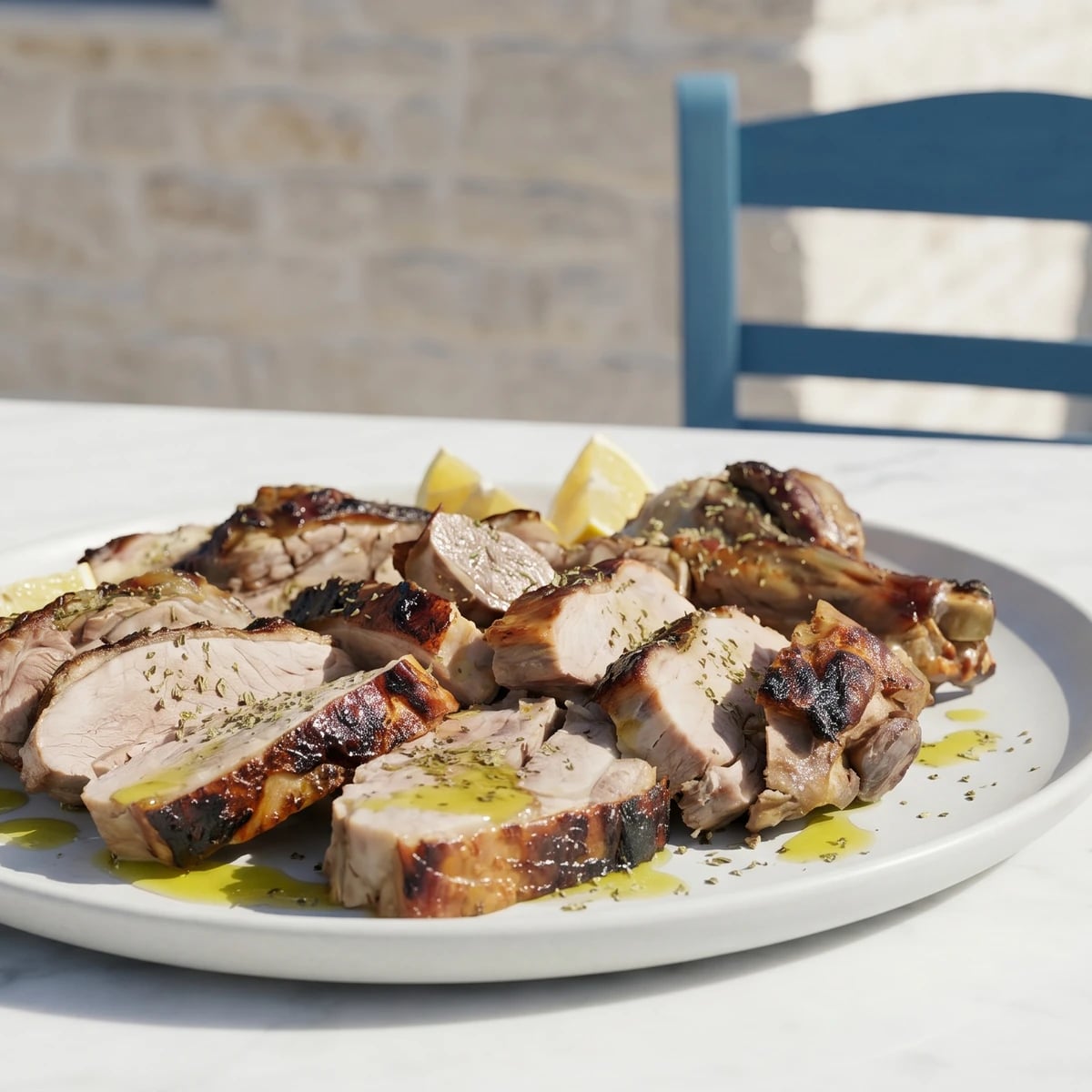
Aegean Easter goat on the spit, lean and full-flavored, turned slowly over charcoal and basted with lemon, oregano, garlic, and good olive oil.
Katsiki sti souvla belongs to the Aegean islands and to the mountain villages where goat was the animal that lived well on rock, scrub, thyme, and stubborn weather. Lamb may get the louder Easter song in many places, but goat has its own table: leaner, cleaner-tasting, a little wilder, with meat that needs fire and attention.
The one method that decides it is basting. Young goat has little fat compared with lamb, so you don't abandon it over the coals and hope for mercy. You turn it steadily and brush it often with lemon, oregano, garlic, wine, and olive oil until the skin bronzes and the joints loosen. Good olive oil, and patience.
I like the Aegean way plain: salt, pepper, oregano, garlic, lemon, nothing sweet, nothing clever. The region is the dish's surname, and here the surname is island and high pasture. The smoke, the lean meat, the bright lemon, and the slow turning are enough.
Whole animals on the spit are part of the Greek Easter table, especially after the Holy Saturday fast breaks and meat returns to the household. In the islands and poorer mountain regions, goat often stood beside or replaced lamb because goats thrived where sheep needed better grazing. The method is older than restaurant barbecue: a communal outdoor roast, tied to family yards, village courtyards, and the Orthodox calendar.
Quantity
1, 9 to 11kg dressed weight
cleaned and patted dry
Quantity
35g
Quantity
12g
Quantity
18g
Quantity
10
crushed
Quantity
180ml
Quantity
120ml
Quantity
60ml
Quantity
2
quartered
Quantity
6
Quantity
4
Quantity
as needed
for securing the goat
| Ingredient | Quantity |
|---|---|
| whole young goatcleaned and patted dry | 1, 9 to 11kg dressed weight |
| fine sea salt | 35g |
| freshly ground black pepper | 12g |
| dried Greek oregano | 18g |
| garlic clovescrushed | 10 |
| extra virgin Koroneiki olive oil | 180ml |
| fresh lemon juice | 120ml |
| dry white wine | 60ml |
| lemonsquartered | 2 |
| fresh bay leaves | 6 |
| rosemary sprigs | 4 |
| butcher's twine or stainless-steel wirefor securing the goat | as needed |
Set the goat on a clean work surface and dry it well inside and out. Mix the salt, pepper, and oregano, then rub this over every surface, especially the thick shoulders and haunches. Work the crushed garlic into the cavity and around the joints. Let it stand covered in the refrigerator overnight, or at least 6 hours.
Whisk the olive oil, lemon juice, and white wine together. This is not decoration. Goat is lean, and the basting is what keeps the outside glossy and the meat from drying before the collagen in the joints has time to soften.
Thread the spit through the cavity from back to front, keeping the body balanced. Tie the spine, shoulders, and legs firmly to the spit with twine or wire, then tuck the lemon quarters, bay leaves, and rosemary into the cavity. Close the belly with twine or wire so the aromatics stay inside.
Prepare a long bed of hardwood charcoal and let it burn down until the coals are gray and steady. Keep the strongest heat under the shoulders and haunches, not under the belly. Start the goat high above the coals and turn it continuously for the first hour.
Baste every 20 minutes, lowering the spit little by little as the meat tightens and begins to color. Keep turning. After 2 hours, the skin should be bronze and the joints should begin to loosen when you press them with tongs.
For the final 45 to 60 minutes, move the goat closer to the coals and baste more often. The meat is ready when the thickest part of the shoulder reaches 74C and the leg gives easily at the joint. Let it rest 20 minutes before carving, loosely covered.
Cut the goat into generous pieces, shoulder first, then leg, ribs, and belly. Spoon over the last of the lemony basting juices if they are clean and cooked through, and serve with lemon wedges, country bread, and a sharp horiatiki if the tomatoes are in season.
1 serving (about 370g)
Culinary guides, cultural storytelling, and the editorial depth that makes cooking meaningful.
Discover Culinary Explorer
Chef Dimitra
Aegean island octopus, tomato, red wine, and toasted kritharaki share one pot, so the pasta drinks the briny sauce and stays glossy instead of turning heavy.

Chef Dimitra
Aegean coast psari plaki is the quiet whole-fish bake: onions and tomato softened first, fish laid on top, and olive oil doing its slow work until the bones release cleanly.

Chef Dimitra
Astakomakaronada is the Aegean islands' celebration pasta: spiny lobster, tomato, olive oil, and long noodles cooked in the shell broth, never drowned in cream or cheese.

Chef Dimitra
Aegean island octopus, simmered tender in its own juices, then marked hard on the grill and finished with oil, vinegar, oregano, and lemon.