
Chef Dimitra
Aegean Island Chtapodi me Kritharaki (Χταπόδι με Κριθαράκι)
Aegean island octopus, tomato, red wine, and toasted kritharaki share one pot, so the pasta drinks the briny sauce and stays glossy instead of turning heavy.
A cooking platform built around craft, culture, and the stories behind what we eat.
Created by
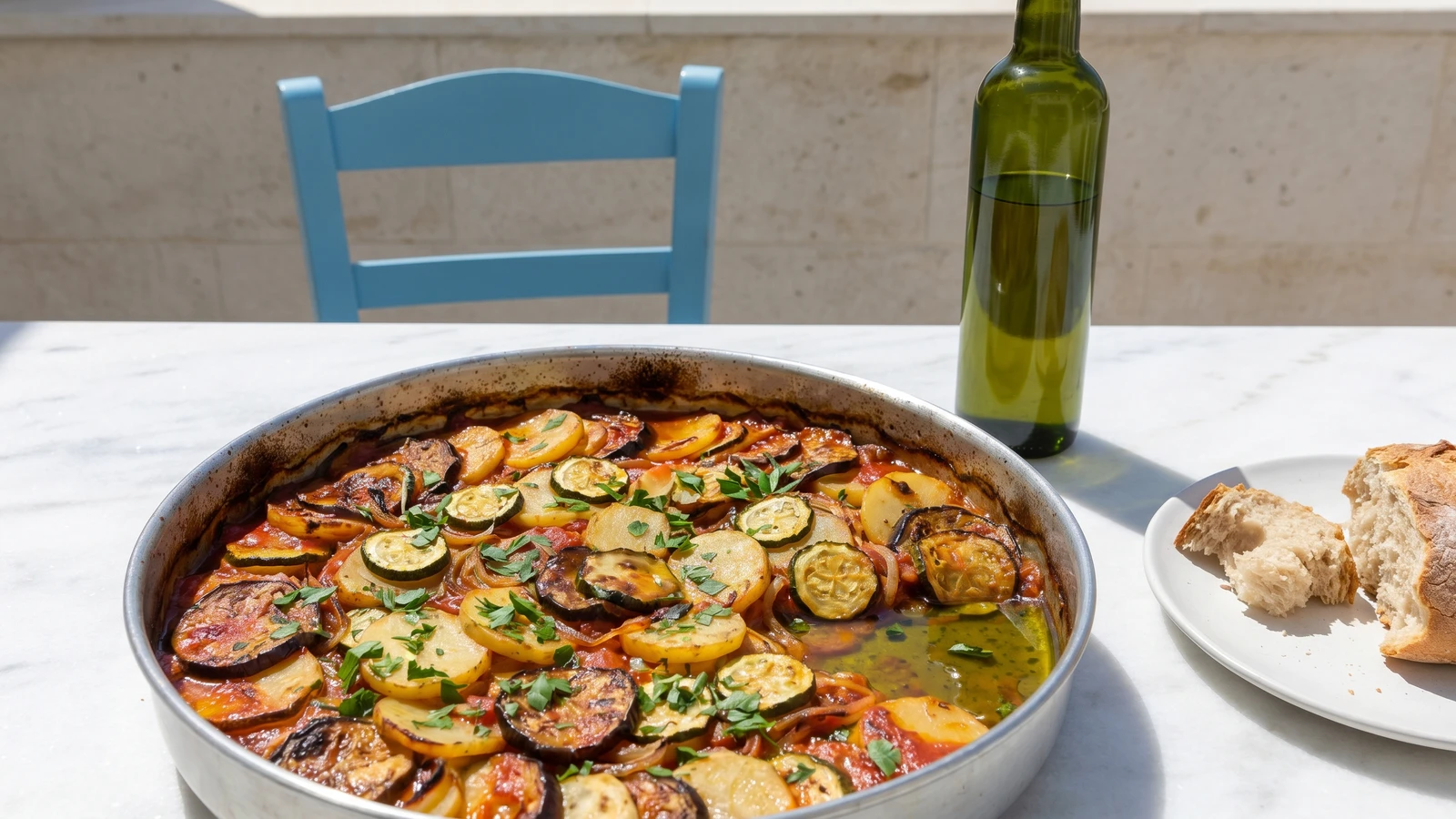
Cycladic briam is the summer tray of zucchini, potato, eggplant, tomato, and good olive oil, sliced thin and baked until the vegetables surrender into one sweet, red-gold pan.
Cycladic briam is the Aegean summer tray of zucchini, potatoes, eggplant, tomato, onion, parsley, and olive oil. It belongs to the family of ladera, the oil-cooked vegetable dishes that carried Greek tables through fasting days and hot months when meat would have felt foolish anyway.
The whole dish depends on the cut. Slice the vegetables thin, about 5mm, and spread them in a wide tapsi so they bake, soften, and caramelize together. Cut them thick and you get separate pieces: hard potato here, watery zucchini there. Thin slices melt into one sweet tray, and the oil turns red from the tomato.
Serve briam warm or at room temperature, never rushed straight from the oven. Bread is not optional if you have any sense. For a fasting table it stands alone with olives; outside the fast, a piece of feta beside it is common enough. I don't invent it. I find it, I test it, I write it down, and this one asks only for summer vegetables, good olive oil, and patience.
Briam belongs to the Greek ladera tradition, vegetable dishes cooked generously with olive oil and often served during Orthodox fasting periods. The name is commonly traced through Ottoman Turkish usage connected to roasted or baked food, and older cooks often distinguish oven-baked briam from tourlou, the mixed vegetable pot associated with Asia Minor and Constantinopolitan kitchens. In the Cyclades, the dish became a practical summer tapsi, built from zucchini, potatoes, onions, and tomatoes that ripen together.
Quantity
700g
grated on the coarse side, skins discarded
Quantity
650g
sliced into 5mm rounds
Quantity
600g
peeled or scrubbed and sliced into 5mm rounds
Quantity
450g
sliced into 5mm half-moons
Quantity
220g
thinly sliced
Quantity
4
thinly sliced
Quantity
150ml
Koroneiki if you have it
Quantity
35g
chopped
Quantity
2 tsp
crumbled
Quantity
12g
Quantity
1 tsp
Quantity
60ml
use only if the tomatoes are not very juicy
| Ingredient | Quantity |
|---|---|
| ripe summer tomatoesgrated on the coarse side, skins discarded | 700g |
| zucchinisliced into 5mm rounds | 650g |
| waxy potatoespeeled or scrubbed and sliced into 5mm rounds | 600g |
| eggplantsliced into 5mm half-moons | 450g |
| red onionsthinly sliced | 220g |
| garlic clovesthinly sliced | 4 |
| extra virgin Greek olive oilKoroneiki if you have it | 150ml |
| flat-leaf parsleychopped | 35g |
| dried Greek oreganocrumbled | 2 tsp |
| fine sea salt | 12g |
| freshly ground black pepper | 1 tsp |
| water (optional)use only if the tomatoes are not very juicy | 60ml |
Heat the oven to 200C, or 180C fan. Choose a wide metal tapsi or roasting pan, about 30 x 40cm, so the vegetables sit in a generous layer rather than a deep pile.
Cut the tomatoes in half and grate them on the coarse side of a box grater, pressing until only the skins remain in your hand. Stir the grated tomato with the garlic, parsley, oregano, salt, pepper, and olive oil. It should look loose, red, and glossy.
Slice the zucchini, potatoes, and eggplant about 5mm thick. This is the step that decides briam. Thin slices cook at the same pace and collapse into each other; thick ones stay separate, and the potato will make you wait while the zucchini gives up too much water.
Put the sliced vegetables and onions into the tapsi. Pour the tomato and oil mixture over them, then turn everything with your hands until each slice is coated. Spread the vegetables evenly, tucking the potatoes down into the juices. Add the water only if your tomatoes are dry.
Cover the pan tightly with parchment and foil. Bake for 45 minutes, until the potatoes have started to soften and the vegetables have released their juices.
Uncover the pan, baste the top with the red oil from the corners, and bake for another 45 minutes, turning the pan once. The briam is ready when the potatoes are tender, the zucchini edges are browned, and the oil has separated into glossy red pools around the vegetables.
Let the briam rest for at least 20 minutes before serving. It tastes better warm than scorching hot, and better still at room temperature, when the oil settles and the tomato sweetens. Serve with country bread, olives, and feta only if you are not keeping the fast.
1 serving (about 375g)
Culinary guides, cultural storytelling, and the editorial depth that makes cooking meaningful.
Discover Culinary ExplorerChef Dimitra
Aegean island octopus, tomato, red wine, and toasted kritharaki share one pot, so the pasta drinks the briny sauce and stays glossy instead of turning heavy.

Chef Dimitra
Aegean coast psari plaki is the quiet whole-fish bake: onions and tomato softened first, fish laid on top, and olive oil doing its slow work until the bones release cleanly.

Chef Dimitra
Astakomakaronada is the Aegean islands' celebration pasta: spiny lobster, tomato, olive oil, and long noodles cooked in the shell broth, never drowned in cream or cheese.

Chef Dimitra
Aegean Easter goat on the spit, lean and full-flavored, turned slowly over charcoal and basted with lemon, oregano, garlic, and good olive oil.