
Chef Lupita
Acambaritas de Acámbaro
Guanajuato's daily bread from Acámbaro, a small glazed roll built on pata, enriched with manteca de cerdo, and baked until the top shines lightly for merienda.
A cooking platform built around craft, culture, and the stories behind what we eat.
Created by
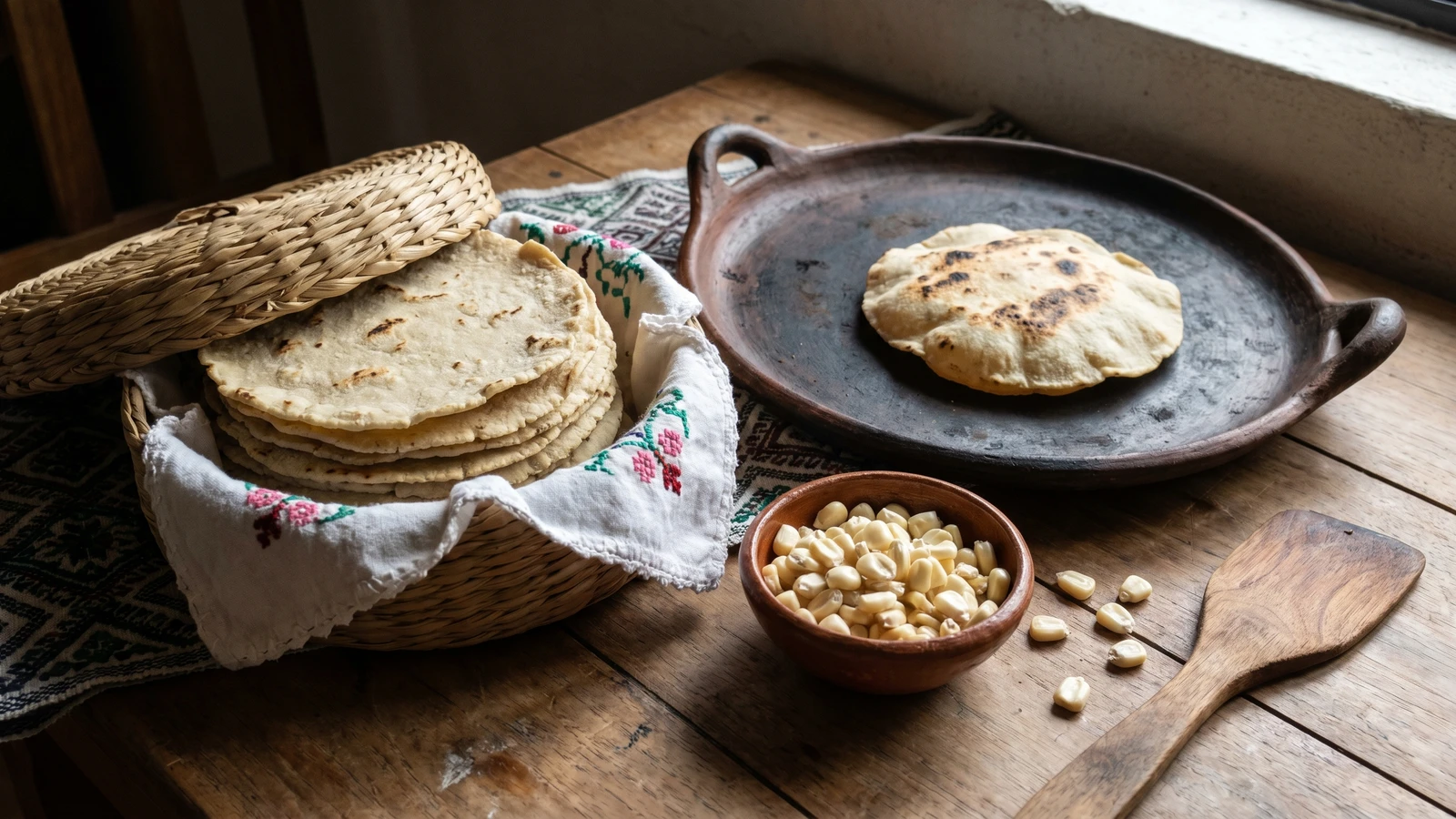
Chiapas highland tortillas pressed from raza Comiteco native corn, nixtamalized with cal, ground while still fragrant, and cooked until they puff with the quiet authority of real maiz.
Chiapas, the Meseta Comiteca around Comitan de Dominguez, is where these tortillas belong. This is highland corn country, cooler than the coast, closer to the Guatemalan border, and the grain tells you that before you taste anything else.
Raza Comiteco corn makes a tortilla with body. It is not the thin supermarket tortilla that folds like paper and tastes like cardboard. The kernels are nixtamalized with cal, rested overnight, washed with judgment, then ground into masa that feels alive under your hands. The flavor is sweet, mineral, and full of maiz nativo. If your corn is old or anonymous, the tortilla will tell on you.
I learned this kind of tortilla from women near Comitan who worked without drama: wash, grind, knead, press, comal. No speech about heritage while the masa dried out on the table. The lesson was practical. You respect the corn by cooking it correctly. Si no conoces el mercado, no conoces la cocina.
Flour tortillas are a northern tradition. Good ones, yes, but not here. In Chiapas highland kitchens, the comal, the cal, and the native corn carry the meal. Cada estado, su propia cocina.
Raza Comiteco is a native maize race associated with the Chiapas highlands and the border region around Comitan, where Indigenous and mestizo farming communities preserved tall, late-maturing corn adapted to cool mountain conditions. Nixtamalization, cooking maize with alkaline cal, predates the Spanish conquest by many centuries and made corn more nutritious, more workable, and more central to Mesoamerican cooking. The modern tortilla press is recent compared with the metate, but the principle remains the same: corn treated with cal, ground into masa, and cooked on a comal.
Quantity
2 pounds
picked over and rinsed
Quantity
3 quarts, plus more as needed
for nixtamal, washing, and adjusting masa
Quantity
2 tablespoons
Quantity
1 teaspoon
| Ingredient | Quantity |
|---|---|
| dried raza Comiteco native cornpicked over and rinsed | 2 pounds |
| waterfor nixtamal, washing, and adjusting masa | 3 quarts, plus more as needed |
| food-grade cal (calcium hydroxide) | 2 tablespoons |
| fine sea salt (optional) | 1 teaspoon |
Pick through the raza Comiteco corn and remove stones, broken husk, or damaged kernels. Rinse until the water runs mostly clear. Native corn deserves this first respect. Start dirty and everything after that is repair work.
In a large nonreactive pot, stir the cal into 3 quarts of water until the water turns cloudy. Add the rinsed corn. Use food-grade cal, not garden lime, not hardware-store powder. The cal loosens the skin, changes the aroma, and makes the corn ready for masa.
Bring the pot to a gentle simmer over medium heat, then lower the heat and cook 25 to 35 minutes. Bite a kernel. The outside should be tender enough that the skin slips under your fingers, but the center should still have a firm white point. Do not cook it to mush. Tortillas need structure.
Turn off the heat, cover the pot, and let the corn rest in its cal water 8 to 12 hours. This is where the grain finishes changing. No me vengas con atajos. If you rush the rest, the masa will be stubborn and the tortilla will crack at the edge.
Drain the nixtamal and rinse it in fresh water, rubbing the kernels between your palms to remove most of the loosened skin. Most, not all. If you scrub it clean like laundry, you wash away flavor. The corn should smell sweet, mineral, and alive.
Grind the nixtamal through a molino, metate, or a strong food mill fitted for wet corn. If using a masa grinder, pass it through twice. The masa should be fine enough to press cleanly but not pasty. Add water by the tablespoon only if the grinder struggles. You want masa, not batter.
Knead the masa for 3 to 5 minutes with the salt if using. Pinch off a piece and press it between your fingers. It should feel soft, warm, and pliable, like firm modeling clay. If the edges crack, knead in water one tablespoon at a time. If it sticks badly, let it sit uncovered for 5 minutes.
Heat a comal over medium-high while you work. Line a tortilla press with two pieces of plastic cut from a clean produce bag. Roll the masa into balls about 1 1/2 ounces each. Press firmly once, rotate the tortilla, and press again if needed. Uneven edges are not failure. Dry cracked edges are failure.
Lay one tortilla on the hot comal. Cook 30 to 40 seconds, just until the underside releases and pale freckles appear. Flip and cook 45 to 60 seconds. Flip once more and press gently at the edge with a folded cloth. A good tortilla will puff. That puff means the two cooked skins trapped air between them. Asi se hace y punto.
Stack the tortillas inside a woven servilleta or palm tortillera as they come off the comal. Let them sit together at least 10 minutes before serving. The trapped warmth finishes softening them. Serve with frijoles de olla, queso fresco from Chiapas if you have it, or a molcajete salsa. The tortilla is not a side note. It is the meal's foundation.
1 serving (about 60g)
Culinary guides, cultural storytelling, and the editorial depth that makes cooking meaningful.
Discover Culinary ExplorerChef Lupita
Guanajuato's daily bread from Acámbaro, a small glazed roll built on pata, enriched with manteca de cerdo, and baked until the top shines lightly for merienda.

Chef Lupita
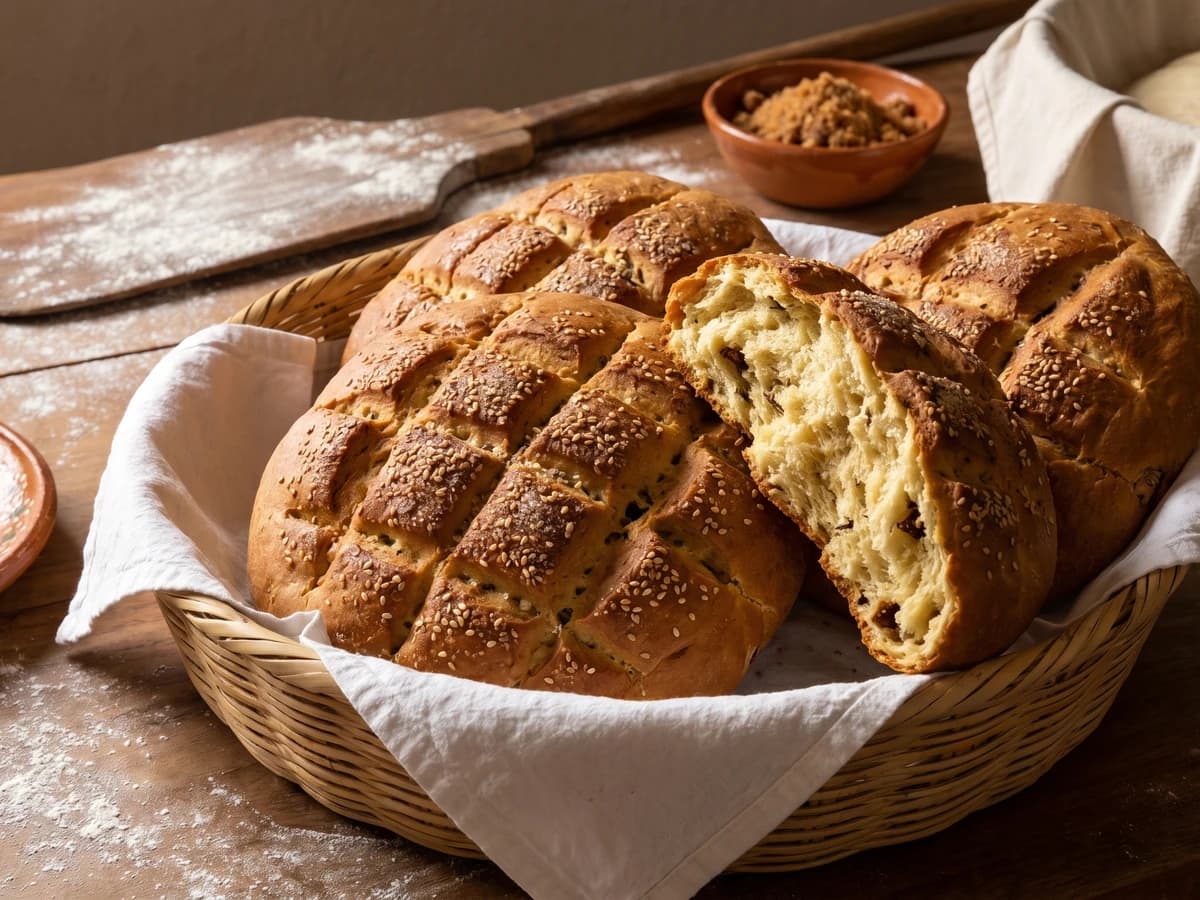
Michoacan's Tinguindin aguacatas are flat, leaf-scored sweet breads made with harina de trigo, piloncillo, anise, and manteca de cerdo, shaped by hand for the wood oven.
Chef Lupita
From Ajijic on Lake Chapala, Pan Tachihual is a lightly sweet wedding loaf built with harina de trigo, harina de maiz, piloncillo, manteca, anise, and the old Guadalajara pata.

Chef Lupita
Comitán's pan de yema shaped into little pigs, birds, and rabbits, a Chiapas bakery bread rich with egg yolks, manteca de cerdo, and anís, baked golden on hoja de plátano.