
Chef Lupita
Acambaritas de Acámbaro
Guanajuato's daily bread from Acámbaro, a small glazed roll built on pata, enriched with manteca de cerdo, and baked until the top shines lightly for merienda.
A cooking platform built around craft, culture, and the stories behind what we eat.

Created by
Oaxaca's rhomboid yeasted rolls, perfumed with toasted anise and softened with manteca, brushed shiny with egg and crowned with ajonjolí. The merienda bread that meets a jícara of chocolate de agua at the end of every Oaxaqueño day.
Cocoles are from Oaxaca. Not from Mexico City, not from the generic shelf of pan dulce that gets called Mexican bread in supermarkets abroad. They are baked in the panaderías of Tlacolula, Zaachila, Mitla, Miahuatlán, the small towns of the Valles Centrales where the wood-fired hornos still smoke at five in the morning and the panaderas pull tray after tray of pan de yema, hojaldras, and cocoles for the day's merienda.
The shape is the rombo, a four-pointed diamond, and that shape is the name. Cocol means rhombus in old Spanish, a word that has held on in Oaxaca long after it disappeared from the rest of the language. A round cocol is not a cocol. The points matter. They catch the egg wash, they crisp first, they hold the ajonjolí. Get the shape right and the bread is right.
What makes a cocol is the trinity: anise, manteca, and ajonjolí. Toasted anise seed perfumes the crumb. Manteca de cerdo softens the dough and gives it the tender pull of a panadería bread, not the dry crumb of a home recipe written by someone afraid of fat. La manteca es el sabor. Sesame on top, toasted by the oven, finishing gold. Skip any of these and you have made a generic roll. You have not made a cocol.
In Oaxaca, cocoles are merienda food. The light meal at the end of the afternoon, when families sit down with a jícara of chocolate de agua frothed with a molinillo, and the bread is broken in half, dunked, and eaten slowly. The bread is built for that ritual. Sweet enough to pair with chocolate, dry enough to soak it up without falling apart. My mother did not bake cocoles in our Colonia Roma kitchen, she was Jalisciense, but I learned them from Doña Eufrosina at the panadería on the corner of Mercado Sánchez Pascuas, who pressed each rombo with the side of her hand in a single motion and told me that the bread is patient and the panadera should be too. Saber cocinar es saber vivir.
The cocol takes its name from the old Spanish 'cocol,' meaning rhombus, a word preserved in Oaxacan Spanish through the colonial-era convent and panadería traditions that introduced wheat baking to the region in the 16th century. The Dominican convents of Oaxaca, established beginning in 1535, were among the earliest centers of wheat cultivation and bread baking in southern New Spain, and the rhomboid shape was a recognizable form of pan corriente sold in colonial markets long before sweetened pan dulce became a 19th-century staple. The pairing of cocoles with chocolate de agua, the unsweetened or lightly sweetened drinking chocolate frothed with a wooden molinillo, descends directly from the pre-Columbian Zapotec and Mixtec chocolate traditions that the convent kitchens absorbed and adapted, making the cocol-and-chocolate merienda one of the clearest living examples of Oaxaca's mestizo culinary inheritance.
Quantity
4 cups (500 grams)
plus more for the work surface
Quantity
1/2 cup (100 grams)
Quantity
1 tablespoon
Quantity
1 teaspoon
Quantity
2 tablespoons
Quantity
1/2 cup
warmed to 100F
Quantity
1/2 cup
warmed to 100F
Quantity
1/2 cup (100 grams)
softened
Quantity
2
at room temperature
Quantity
1
at room temperature
Quantity
1 teaspoon
Quantity
1
beaten with 1 tablespoon water
Quantity
3 tablespoons
| Ingredient | Quantity |
|---|---|
| all-purpose flourplus more for the work surface | 4 cups (500 grams) |
| granulated sugar | 1/2 cup (100 grams) |
| active dry yeast | 1 tablespoon |
| fine sea salt | 1 teaspoon |
| whole anise seed (semilla de anís) | 2 tablespoons |
| whole milkwarmed to 100F | 1/2 cup |
| waterwarmed to 100F | 1/2 cup |
| manteca de cerdosoftened | 1/2 cup (100 grams) |
| large eggsat room temperature | 2 |
| large egg yolkat room temperature | 1 |
| orange blossom water (agua de azahar) | 1 teaspoon |
| large egg for the washbeaten with 1 tablespoon water | 1 |
| ajonjolí (white sesame seeds) | 3 tablespoons |
Heat a dry comal over medium-low. Add the anise seed and toast it, shaking the pan, for about a minute, until you smell the licorice perfume rising off the seeds. Pull it off the heat the moment it turns fragrant. Anise burns fast and burned anise tastes like medicine. This is the smell that defines a cocol. Skip the toasting and the bread will lack the perfume that makes Oaxacan panaderías smell the way they do at six in the morning.
Stir the warm milk and water together in a small bowl. Sprinkle in the yeast and a pinch of the sugar. Let it sit for ten minutes. The surface should turn cloudy and lift with small bubbles. If nothing happens, the yeast is dead and you start over. No me vengas con atajos.
In a large bowl or the bowl of a stand mixer, combine the flour, the rest of the sugar, the salt, and the toasted anise. Make a well in the center. Pour in the bloomed yeast mixture, the softened manteca, the two whole eggs, the yolk, and the orange blossom water. La manteca es el sabor. Do not substitute butter. Mix with your hand or the dough hook until everything comes together into a shaggy mass.
Turn the dough onto a lightly floured surface. Knead for ten to twelve minutes by hand, or eight minutes on medium speed with the dough hook. The dough is enriched with lard and egg, so it stays a little tacky. That is correct. You want it smooth and elastic, soft to the touch but not sticking to your hands. If you press a finger into it, the dent should slowly fill back in.
Lightly grease a bowl with a little manteca. Place the dough in the bowl, turn to coat, and cover with a clean cloth. Let it rise in a warm spot for one and a half to two hours, until doubled. Oaxaca's kitchens run warm, and the rise there is faster. In a cooler kitchen, give it the full two hours. The dough should feel pillowy and smell sweetly of anise and yeast.
Punch the dough down and turn it onto a lightly floured surface. Divide into sixteen equal pieces, about 65 grams each. Roll each piece into a smooth ball, then press it gently into a flat oval. With the side of your hand, pinch each end into a point so the piece takes the shape of a rhombus, what panaderas in Oaxaca call a rombo. Wider in the middle, pointed at the ends. The shape is the signature. A round cocol is not a cocol. Asi se hace y punto.
Line two heavy baking sheets with parchment. Arrange the cocoles two inches apart, points aligned. Cover loosely with a cloth and let them rise for forty-five minutes to one hour, until they look puffed and feel light when you lift one. Underproofed cocoles bake dense. Overproofed ones flatten in the oven. They should be plump but still hold the rombo shape clearly.
Position racks in the upper and lower thirds of the oven. Heat to 375F. The wood-fired hornos in Tlacolula run hotter, but a steady 375 in a home oven gives you the deep amber crust without drying out the crumb.
Brush each cocol generously with the egg wash, getting into the seam where the points meet the body. The wash is what gives the bread its glossy mahogany finish. Sprinkle a healthy pinch of ajonjolí across the center of each one. Use whole white sesame seeds, not toasted, because they will toast in the oven and finish gold. La cocina no es decoracion, es trabajo. The seeds are not garnish. They are part of the bread.
Bake for 22 to 26 minutes, rotating the trays halfway through and switching racks. The cocoles are ready when the tops are deep amber, the points are dark gold, and the bottoms sound hollow when you tap them. The kitchen will smell like a Zaachila panadería. Cool on a wire rack for at least fifteen minutes before tearing one open. The crumb should be soft, faintly yellow from the egg, speckled with whole anise. Recetas probadas y garantizadas.
1 serving (about 70g)
Culinary guides, cultural storytelling, and the editorial depth that makes cooking meaningful.
Discover Culinary ExplorerChef Lupita
Guanajuato's daily bread from Acámbaro, a small glazed roll built on pata, enriched with manteca de cerdo, and baked until the top shines lightly for merienda.

Chef Lupita
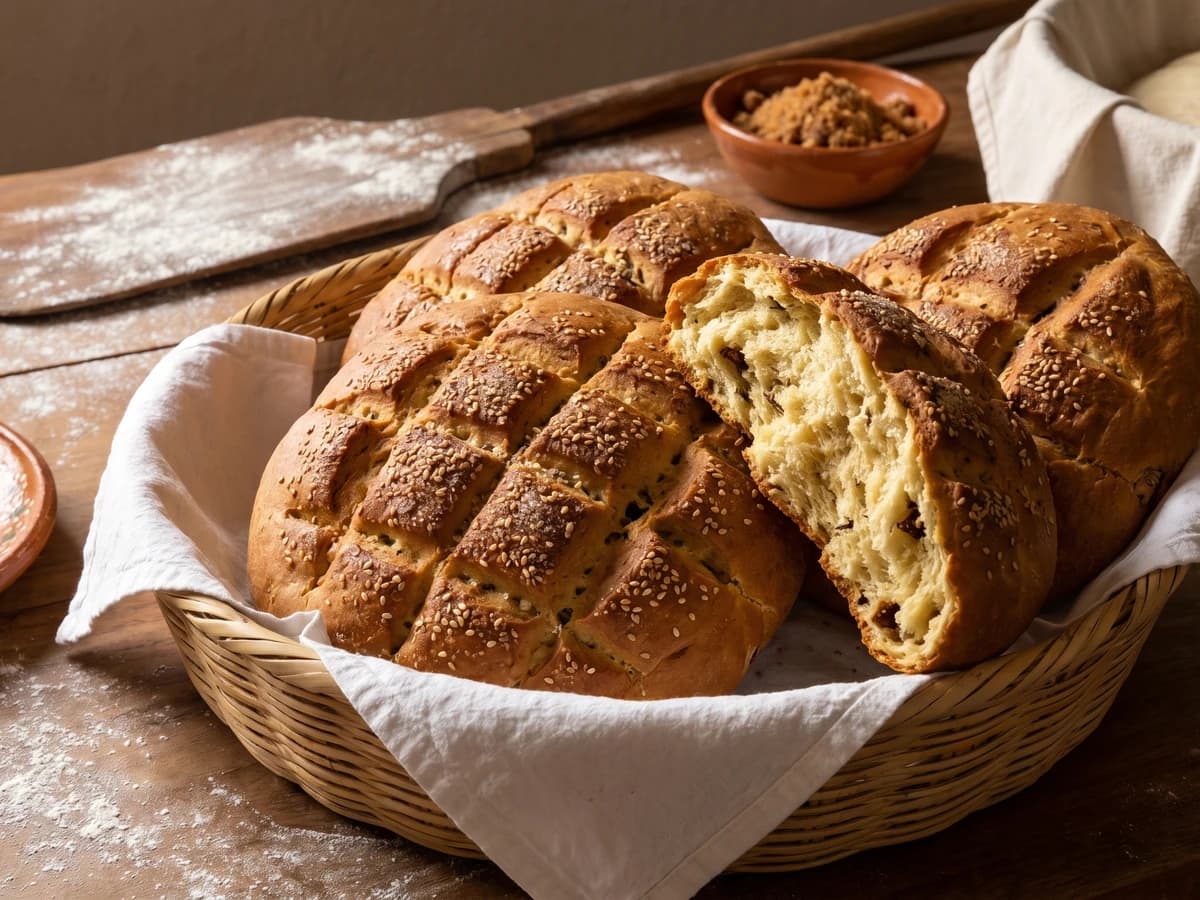
Michoacan's Tinguindin aguacatas are flat, leaf-scored sweet breads made with harina de trigo, piloncillo, anise, and manteca de cerdo, shaped by hand for the wood oven.
Chef Lupita
From Ajijic on Lake Chapala, Pan Tachihual is a lightly sweet wedding loaf built with harina de trigo, harina de maiz, piloncillo, manteca, anise, and the old Guadalajara pata.

Chef Lupita
Comitán's pan de yema shaped into little pigs, birds, and rabbits, a Chiapas bakery bread rich with egg yolks, manteca de cerdo, and anís, baked golden on hoja de plátano.