
Chef Graziella
Panforte di Siena
The medieval spiced confection of Siena, where almonds, hazelnuts, candied citrus, and honey become something that lasts for months and improves with age. This is not a cake. This is edible history.
A cooking platform built around craft, culture, and the stories behind what we eat.
Created by
The austere chestnut cake of the Tuscan mountains, where poverty created genius and a single flour, water, and olive oil became something extraordinary without a grain of sugar.
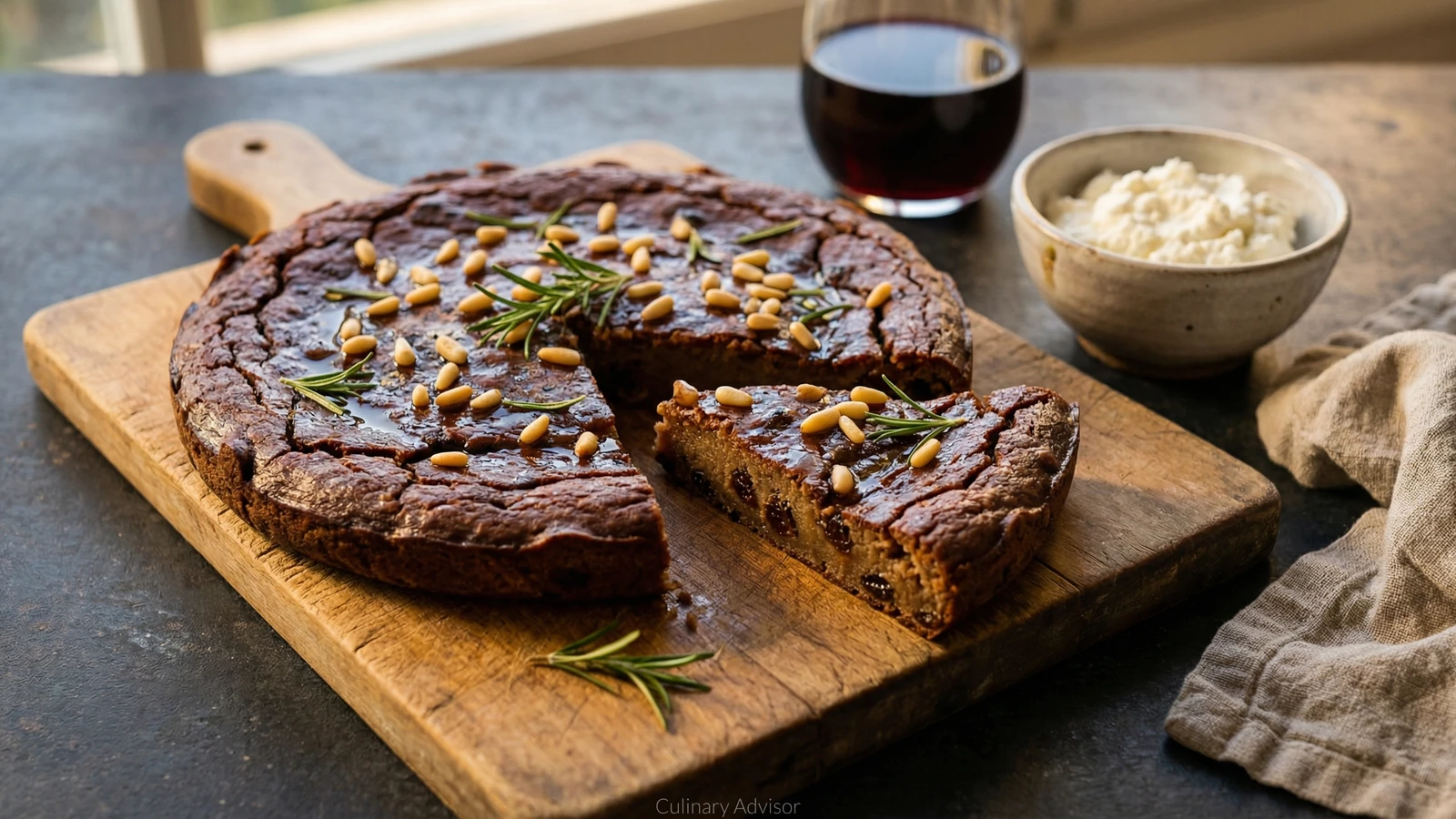
Castagnaccio requires exactly four ingredients to be authentic: chestnut flour, water, olive oil, and salt. Everything else, the pine nuts, the rosemary, the raisins, these are adornments. Delicious adornments, but not essential. What is essential is that you understand this is not a sweet cake in the American sense. There is no sugar. The chestnuts provide a gentle, earthy sweetness that modern palates, trained on excessive sugar, may find subtle. This is correct.
The batter is thin. Alarmingly thin. You will think you have done something wrong. You have not. Castagnaccio should be no more than three-quarters of an inch thick when baked, often less. It should crack on top, those fissures a sign of proper texture, not failure. The surface should glisten with olive oil.
Tuscan mountain families made this when wheat was dear and chestnuts fell free from the trees. They called chestnut trees 'l'albero del pane,' the bread tree, because the flour sustained entire villages through winter. Do not add sugar to this cake. Do not substitute butter for olive oil. Do not make it thick and cakey. You would be erasing the history of people who created something profound from almost nothing.
Castagnaccio dates to at least the 16th century in the Apennine mountains of Tuscany, where chestnut forests provided the primary flour for communities too poor to afford wheat. The cake spread throughout northern and central Italy, each region adding its own touches, but Tuscany claims the original. In the mountain villages of the Garfagnana and Lunigiana, families still make it when the first autumn chestnuts are milled into flour.
Quantity
300 grams (about 2 1/2 cups)
sifted
Quantity
450 milliliters (about 2 cups)
Quantity
4 tablespoons, plus more for pan and drizzling
Quantity
1/2 teaspoon
Quantity
60 grams (about 1/2 cup)
Quantity
50 grams (about 1/3 cup)
soaked in warm water 15 minutes and drained
Quantity
60 grams (about 1/2 cup)
Quantity
2 tablespoons
stripped from stems
| Ingredient | Quantity |
|---|---|
| chestnut floursifted | 300 grams (about 2 1/2 cups) |
| cold water | 450 milliliters (about 2 cups) |
| extra virgin olive oil | 4 tablespoons, plus more for pan and drizzling |
| fine sea salt | 1/2 teaspoon |
| pine nuts | 60 grams (about 1/2 cup) |
| golden raisinssoaked in warm water 15 minutes and drained | 50 grams (about 1/3 cup) |
| walnut pieces (optional) | 60 grams (about 1/2 cup) |
| fresh rosemary leavesstripped from stems | 2 tablespoons |
Sift the chestnut flour through a fine-mesh strainer into a large bowl, pressing any lumps through with the back of a spoon. Chestnut flour clumps terribly. It absorbs moisture from the air and forms hard nodules that will not dissolve in liquid. Every lump must be broken before you add water. This is not optional.
Add the salt to the flour and whisk to combine. Pour in the cold water in a steady stream while whisking constantly. The batter should be completely smooth, without a single lump, and quite thin, like heavy cream. Add three tablespoons of the olive oil and whisk until incorporated. The batter will seem too liquid. This is correct. Let it rest for 30 minutes at room temperature.
Position a rack in the center of the oven and heat to 200°C (400°F). Generously oil a 25-centimeter (10-inch) round cake pan or a rectangular baking pan of similar area with olive oil. The pan should glisten. Castagnaccio sticks tenaciously to anything less than a well-oiled surface.
Whisk the rested batter once more. It may have separated slightly. Pour it into the prepared pan. It should be no more than 2 centimeters (3/4 inch) deep. Scatter the drained raisins, pine nuts, and walnuts if using evenly across the surface. Press them gently so they are half-submerged. Scatter the rosemary leaves over all. Drizzle the remaining tablespoon of olive oil over the top.
Bake until the top is deeply cracked and the surface is firm to the touch, 30 to 35 minutes. The cracks are essential. They indicate that the interior has set properly while the surface has formed a slight crust. The cake should be deep brown, almost mahogany, with the pine nuts golden and the rosemary fragrant.
Let the castagnaccio cool in the pan for 15 minutes, then run a knife around the edge and turn it onto a serving plate, or serve directly from the pan. It can be eaten warm, at room temperature, or cool. In Tuscany, it is often eaten with fresh ricotta or a glass of young red wine. Do not expect American-style cake sweetness. The flavor is earthy, nutty, faintly sweet, and deeply satisfying in a way that sugar-laden desserts cannot match.
1 serving (about 90g)
Culinary guides, cultural storytelling, and the editorial depth that makes cooking meaningful.
Discover Culinary ExplorerChef Graziella
The medieval spiced confection of Siena, where almonds, hazelnuts, candied citrus, and honey become something that lasts for months and improves with age. This is not a cake. This is edible history.

Chef Juliette
Five almond preparations, one discipline: remove the skins cleanly, dry every kernel through, then cut, toast, or cloak it in pale caramel without letting its fragrant oils escape.

Chef Juliette
A pastry pantry lesson in one tray: filberts warmed only until their red skins release, rubbed clean, cooled, and chopped into a fragrant mise-en-place for cakes, creams, pralines, and petits fours.

Chef Juliette
The smallest pâtisserie discipline decides whether a cake leaves its mould intact: clarified butter in every corner, followed by the lightest veil of dry flour or fécule.