
Chef Lupita
Acambaritas de Acámbaro
Guanajuato's daily bread from Acámbaro, a small glazed roll built on pata, enriched with manteca de cerdo, and baked until the top shines lightly for merienda.
A cooking platform built around craft, culture, and the stories behind what we eat.

Created by
From Juchitan and Tehuantepec, soft yeasted rolls scented with toasted anise and enriched with manteca, crowned in ajonjoli. The bread that shows up at every vela, every wedding, every quinceanera in the Istmo.
These bollos are from the Istmo de Tehuantepec, the strip of Oaxaca where the land narrows between the Pacific and the Gulf, where the heat is heavy and the women run the markets. Juchitan and Tehuantepec are where this bread lives. Not Oaxaca City. Not Mexico. The Istmo. If a panadera in Mercado Jesus Carranza in Juchitan does not recognize what came out of your oven, you have made a different bread.
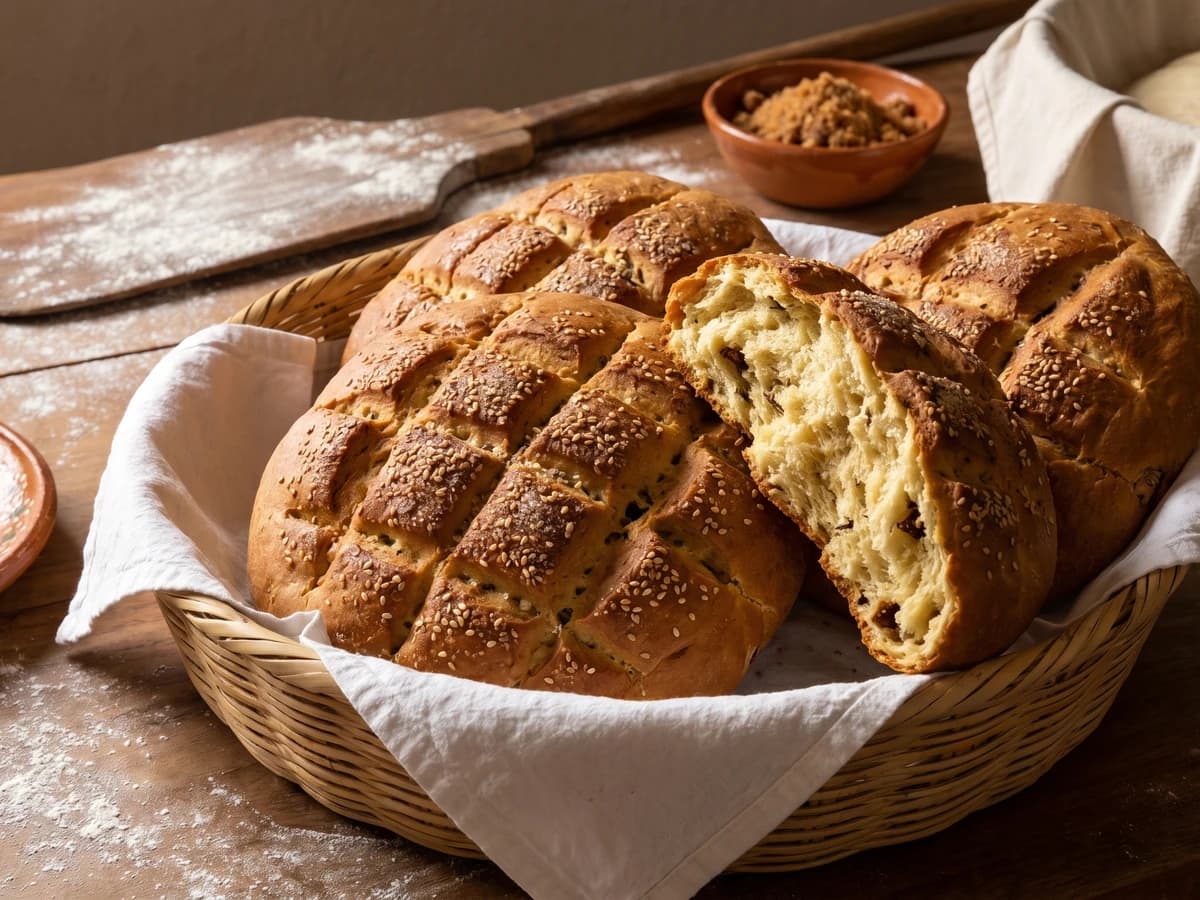
The defining ingredients are three: anise, manteca de cerdo, and ajonjoli. The anise goes in the dough, toasted first on the comal so the licorice oil wakes up. The manteca, not butter, is what gives the crumb its tender pull-apart texture and the flavor that anchors this bread to the Istmo. The ajonjoli on top is the visual signature, scattered generously after the egg wash so it toasts in the oven and clings to the crown of each bollo.
In the Istmo, bollos show up at every vela, the saint's-day celebrations the zapotecas have been throwing for centuries, where women in huipiles bordados carry trays of bread between tables and the band plays sones istmenos until the early morning. They show up at weddings stacked in tall pyramids. They show up at quinceaneras wrapped in embroidered servilletas. They show up at funerals next to the cafe de olla. This is everyday celebration bread, the kind that does not announce itself but is always there.
My mother did not bake these. She was from Jalisco and her bread tradition was different. I learned bollos from a panadera named Senora Rosalba in Tehuantepec who had been pressing them every morning for forty-three years when I met her. She told me: 'la manteca tibia, las manos frescas, el horno paciente.' Warm lard, cool hands, patient oven. I wrote it in the margin of my notebook and I have not forgotten it. Saber cocinar es saber vivir.
The bollo istmeno belongs to the panaderia tradition that arrived with Spanish wheat cultivation in the colonial period and was absorbed and transformed by the zapoteca cooks of the Istmo de Tehuantepec, who incorporated indigenous ajonjoli (introduced via the Manila Galleon trade in the 16th and 17th centuries) and Mediterranean anise into a distinctly local enriched bread. The dish is inseparable from the vela system, the calendar of saint's-day fiestas that structures social life in Juchitan and Tehuantepec, where bread, mezcal, and chocolate de agua are ritual offerings and shared hospitality. The matriarchal economic structure of the Istmo, where zapoteca women have controlled markets, finances, and food production for generations, means the recipe has been transmitted almost exclusively woman-to-woman, with each panaderia in Juchitan's mercados claiming subtle variations in the manteca-to-flour ratio and the toast on the anise.
Quantity
1 cup
warmed to body temperature
Quantity
2 1/4 teaspoons (one packet)
Quantity
1/2 cup
divided
Quantity
5 cups
plus more for dusting
Quantity
1 teaspoon
Quantity
1 tablespoon
lightly toasted on a comal
Quantity
4
at room temperature
Quantity
2
at room temperature
Quantity
3/4 cup
softened to spreadable
Quantity
1 tablespoon
Quantity
1 orange
Quantity
1
beaten with 1 tablespoon milk, for brushing
Quantity
2 tablespoons
for sprinkling
| Ingredient | Quantity |
|---|---|
| whole milkwarmed to body temperature | 1 cup |
| active dry yeast | 2 1/4 teaspoons (one packet) |
| granulated sugardivided | 1/2 cup |
| all-purpose flourplus more for dusting | 5 cups |
| fine sea salt | 1 teaspoon |
| anise seeds (semillas de anis)lightly toasted on a comal | 1 tablespoon |
| large eggsat room temperature | 4 |
| large egg yolksat room temperature | 2 |
| manteca de cerdo (pork lard)softened to spreadable | 3/4 cup |
| orange blossom water (agua de azahar) | 1 tablespoon |
| orange zest | 1 orange |
| large eggbeaten with 1 tablespoon milk, for brushing | 1 |
| ajonjoli (sesame seeds)for sprinkling | 2 tablespoons |
Heat a dry comal over medium-low. Add the anise seeds and toast for about a minute, swirling the pan, until the kitchen smells of licorice and warm pollen. Pull them off the heat the moment they release their oil. Burned anise is bitter and there is no fixing it later. Set aside to cool.
In a small bowl, combine the warm milk, the yeast, and one tablespoon of the sugar. Stir once and walk away for ten minutes. The mixture should puff and smell like beer. If it does not, your yeast is dead and the bollos will not rise. Start over with new yeast. No me vengas con atajos.
In the bowl of a stand mixer fitted with the dough hook, combine the flour, the remaining sugar, the salt, and the cooled toasted anise. On low speed, add the yeast mixture, the four whole eggs, the two yolks, the orange blossom water, and the orange zest. Mix until a shaggy dough forms, about three minutes.
With the mixer running on medium-low, add the softened manteca de cerdo two tablespoons at a time, waiting until each addition is absorbed before adding the next. The dough will fight you for a few minutes and look broken. Keep going. Knead on medium for eight to ten minutes total, until the dough is smooth, elastic, and pulls cleanly off the sides of the bowl. La manteca es el sabor. Butter is not a substitute. The bollos of the Istmo take pork lard and that is the texture you are after, soft, rich, with a tender crumb that pulls apart in long strands.
Transfer the dough to a lightly greased bowl, cover with a damp cotton servilleta, and let rise in a warm corner of the kitchen for 90 minutes to two hours, until doubled. The Istmo is hot and the dough rises fast there. In a colder kitchen, give it the time it needs. The dough is ready when you press a finger into it and the indent stays.
Turn the dough onto a lightly floured surface and divide into 16 equal pieces, about 80 grams each. Working one at a time, flatten each piece, fold the edges into the center to build tension, then roll under a cupped palm against the counter until you have a tight, smooth ball. The seam should disappear underneath. Place the bollos on two parchment-lined sheet pans, leaving three inches between each one. They will spread.
Cover the shaped bollos loosely with a clean cotton servilleta and let them proof for 45 minutes to an hour, until visibly puffed and pillowy. Press one gently with a fingertip; the indent should spring back slowly, not snap back. If it snaps back, give them more time. Underproofed bollos bake into dense, tight rolls.
About 20 minutes before baking, position a rack in the center of the oven and heat to 350F. Brush each bollo gently with the egg wash, getting into the seams where the dough rose without snapping the surface tension. Sprinkle a generous pinch of ajonjoli over the top of each one. The sesame is not optional. It is the visual and textural signature of the bollo istmeno.
Bake for 22 to 25 minutes, rotating the pans halfway through, until the bollos are deep golden brown on top and the bottoms sound hollow when tapped. The internal temperature should read 195F to 200F. Pull them the moment they are dark gold. Overbaked bollos turn dry and the manteca crumb suffers.
Transfer the bollos to a wire rack and let them cool for at least 20 minutes before tearing into one. The crumb sets as they cool. Serve with chocolate de agua frothed with a molinillo, or split and filled with quesillo, or eaten plain at the end of a vela when the music is winding down. Asi se hace y punto.
1 serving (about 77g)
Culinary guides, cultural storytelling, and the editorial depth that makes cooking meaningful.
Discover Culinary ExplorerChef Lupita
Guanajuato's daily bread from Acámbaro, a small glazed roll built on pata, enriched with manteca de cerdo, and baked until the top shines lightly for merienda.

Chef Lupita
Michoacan's Tinguindin aguacatas are flat, leaf-scored sweet breads made with harina de trigo, piloncillo, anise, and manteca de cerdo, shaped by hand for the wood oven.
Chef Lupita
From Ajijic on Lake Chapala, Pan Tachihual is a lightly sweet wedding loaf built with harina de trigo, harina de maiz, piloncillo, manteca, anise, and the old Guadalajara pata.

Chef Lupita
Comitán's pan de yema shaped into little pigs, birds, and rabbits, a Chiapas bakery bread rich with egg yolks, manteca de cerdo, and anís, baked golden on hoja de plátano.