
Chef Dimitra
Aegean Island Chtapodi me Kritharaki (Χταπόδι με Κριθαράκι)
Aegean island octopus, tomato, red wine, and toasted kritharaki share one pot, so the pasta drinks the briny sauce and stays glossy instead of turning heavy.
A cooking platform built around craft, culture, and the stories behind what we eat.
Created by
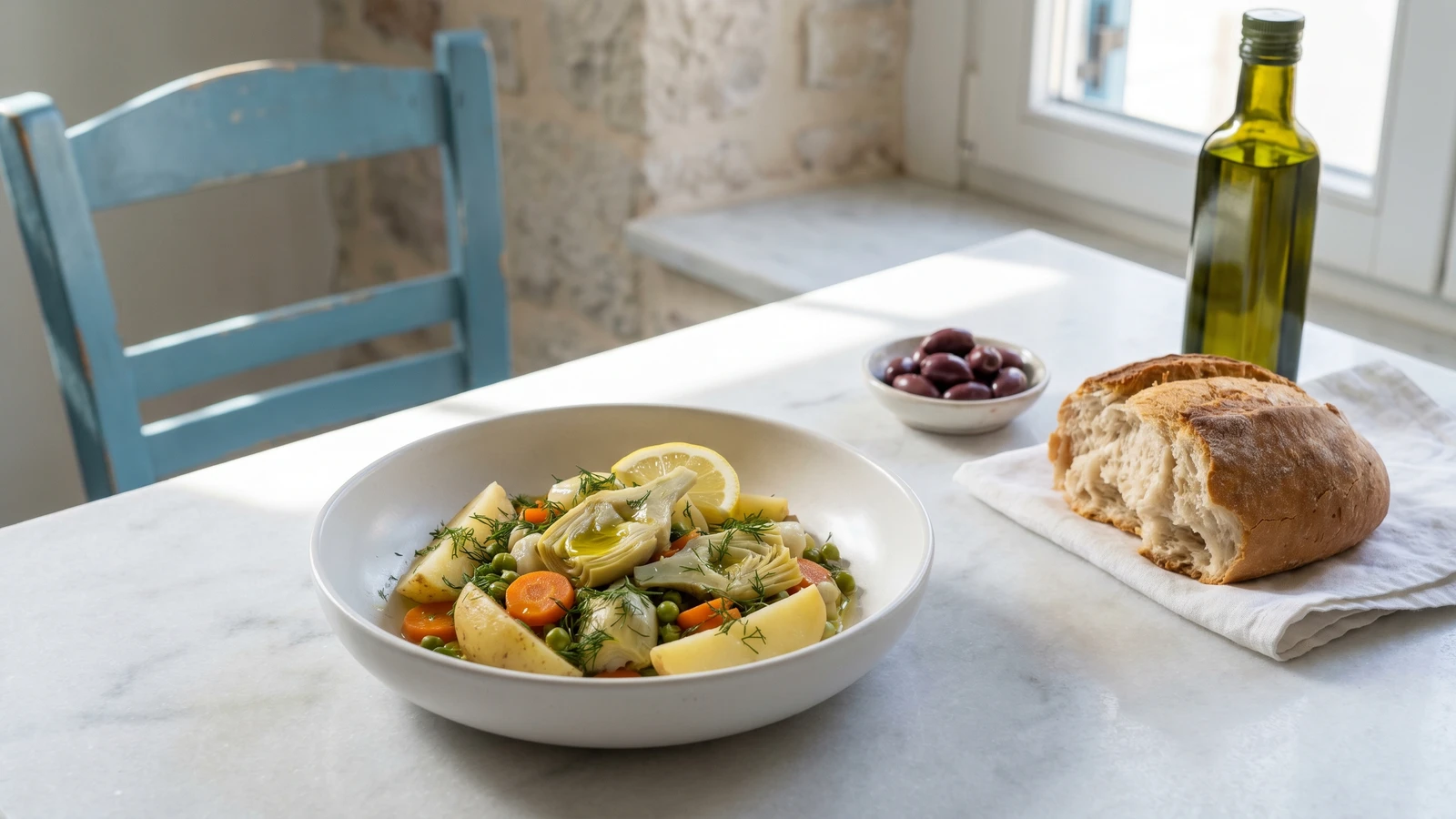
Constantinople's spring artichokes, pale and lemony, braised with potato, carrot, peas, dill, and enough olive oil to make the sauce shine.
Anginares a la Polita belong to Constantinople, the City, and the dish tells you so before the first bite: artichoke hearts kept pale, potato and carrot tucked around them, peas for spring sweetness, dill, lemon, and olive oil making a clean, silky sauce. This is ladera, food carried by oil, not by meat, and it sits naturally on the fasting table as well as the Easter one.
The whole dish is decided at the trimming board. Artichokes darken the moment the knife opens them, so you rub every cut surface with lemon and keep the hearts in lemon water while you work. Do that calmly and the pot stays bright. Rush it and the sauce turns gray before you've begun.
After that, the cooking is kind. The vegetables braise together without browning, covered and quiet, until the potatoes yield and the artichoke hearts take a knife with no fight. Finish with dill and lemon off the heat, then let the pot rest. My grandmother Despina called this food of spring and patience. She was right.
Anginares a la Polita means artichokes in the style of Poli, the Greek name for Constantinople among Romios families. The dish reflects the urban vegetable cookery of the City, where spring produce, olive oil, lemon, and dill made fasting food feel generous rather than spare. Its name preserves a place as much as a method: the region is the dish's surname.
Quantity
8
Quantity
3
divided
Quantity
80ml
Quantity
1 large
finely chopped
Quantity
4
sliced
Quantity
2 medium
sliced into thick coins
Quantity
450g
peeled and cut into large wedges
Quantity
150g
Quantity
15g
finely chopped
Quantity
1 teaspoon
plus more to taste
Quantity
1/2 teaspoon
Quantity
500ml
Quantity
1 tablespoon
| Ingredient | Quantity |
|---|---|
| fresh artichokes (anginares) | 8 |
| lemonsdivided | 3 |
| extra virgin Koroneiki olive oil | 80ml |
| yellow onionfinely chopped | 1 large |
| spring onionssliced | 4 |
| carrotssliced into thick coins | 2 medium |
| waxy potatoespeeled and cut into large wedges | 450g |
| fresh or frozen peas | 150g |
| fresh dillfinely chopped | 15g |
| fine sea saltplus more to taste | 1 teaspoon |
| freshly ground black pepper | 1/2 teaspoon |
| hot water | 500ml |
| plain flour | 1 tablespoon |
Fill a large bowl with cold water and squeeze in the juice of 2 lemons. Drop the squeezed lemon halves into the bowl as well. This is where each trimmed artichoke waits, so keep it close to your cutting board.
Working one at a time, snap off the tough outer leaves until you reach the pale tender leaves. Cut off the top third, trim the stem to about 4cm, peel the stem and base, then halve the artichoke and scoop out the hairy choke if it has formed. Rub every cut surface with lemon immediately and place the heart in the lemon water. This is the step that keeps Anginares a la Polita bright instead of dull and blackened.
Warm the olive oil in a wide, heavy pot over medium-low heat. Add the yellow onion and spring onions with a pinch of the salt, and cook for 6 to 8 minutes until glossy and soft but not browned. This dish wants a pale lemon sauce, not the taste of fried onion.
Add the carrots and potatoes to the pot and turn them gently in the oil. Nestle the drained artichoke hearts on top, cut side down if halved, then add the peas, remaining salt, pepper, and hot water. The liquid should come about halfway up the vegetables, not drown them.
Bring the pot to a quiet simmer, cover, and cook for 30 to 35 minutes. Shake the pot now and then instead of stirring hard, so the potatoes stay whole and the artichokes don't break. The dish is ready for finishing when a knife slips into the thickest heart and the potatoes are tender.
Whisk the flour with the juice of the remaining lemon and 3 tablespoons of warm broth from the pot until smooth. Pour it back around the vegetables, add the dill, and simmer uncovered for 3 to 4 minutes until the sauce looks lightly bound and glossy. Taste for salt and lemon.
Take the pot off the heat and let it rest for at least 15 minutes before serving. Anginares a la Polita are best warm, not scalding, with the sauce settled around the vegetables and a little extra olive oil over the top if the pot asks for it.
1 serving (about 400g)
Culinary guides, cultural storytelling, and the editorial depth that makes cooking meaningful.
Discover Culinary ExplorerChef Dimitra
Aegean island octopus, tomato, red wine, and toasted kritharaki share one pot, so the pasta drinks the briny sauce and stays glossy instead of turning heavy.

Chef Dimitra
Aegean coast psari plaki is the quiet whole-fish bake: onions and tomato softened first, fish laid on top, and olive oil doing its slow work until the bones release cleanly.

Chef Dimitra
Astakomakaronada is the Aegean islands' celebration pasta: spiny lobster, tomato, olive oil, and long noodles cooked in the shell broth, never drowned in cream or cheese.

Chef Dimitra
Aegean Easter goat on the spit, lean and full-flavored, turned slowly over charcoal and basted with lemon, oregano, garlic, and good olive oil.