
Chef Dimitra
Aegean Island Chtapodi me Kritharaki (Χταπόδι με Κριθαράκι)
Aegean island octopus, tomato, red wine, and toasted kritharaki share one pot, so the pasta drinks the briny sauce and stays glossy instead of turning heavy.
A cooking platform built around craft, culture, and the stories behind what we eat.
Created by
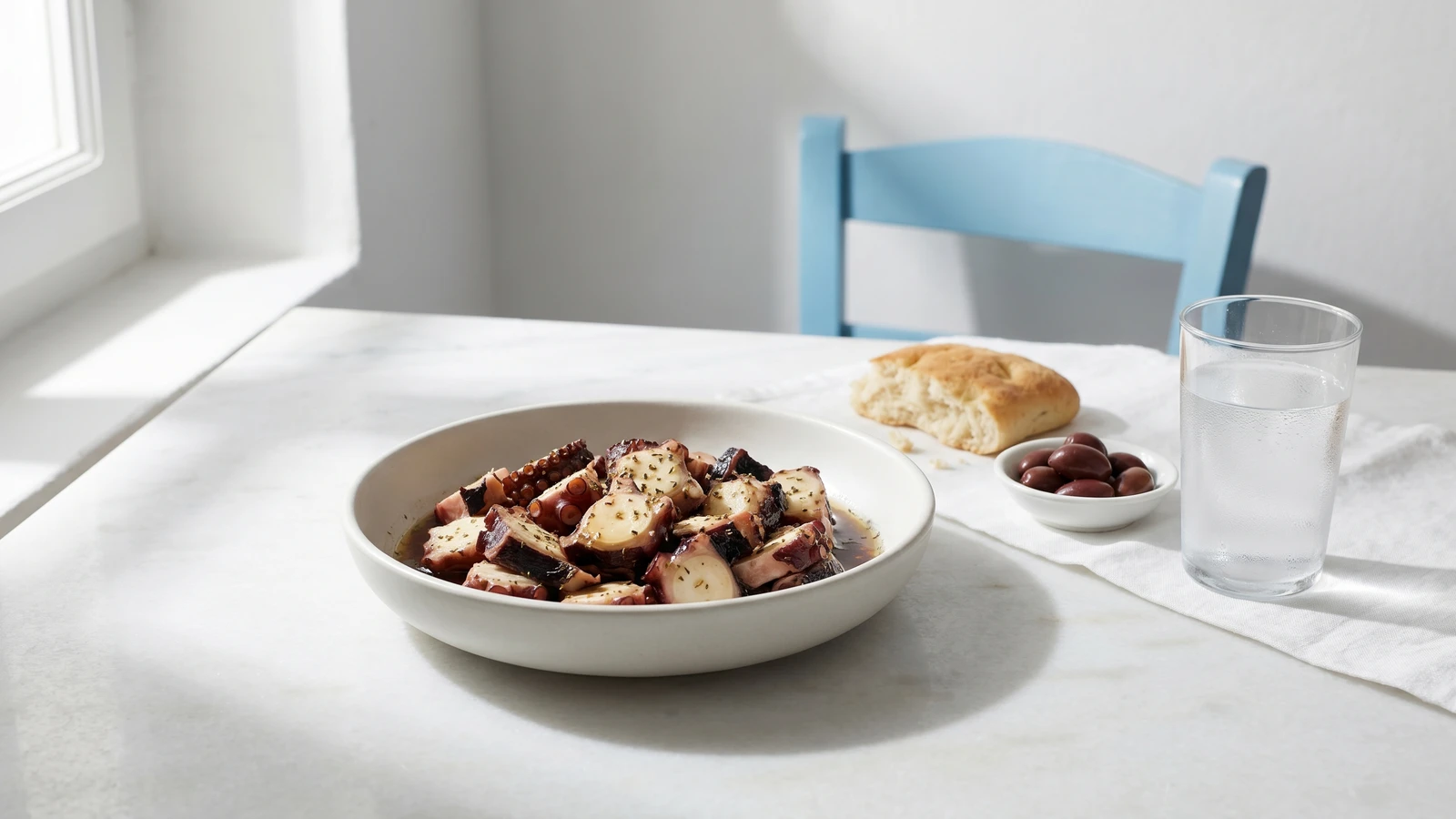
From the Aegean islands, this is the Lenten octopus: simmered slowly without added water, sliced while tender, and steeped in vinegar, oregano, and its own dark cooking liquor.
Aegean island Chtapodi Xidato is the Clean Monday octopus: tender pieces steeped in vinegar, oregano, and their own dark cooking liquor. It is sharp, plain, and serious. On a strict fast day there is no olive oil, which surprises people now, but the restraint is the point.
The method is the dish. Put the octopus in a heavy pot without water and let it give up its own briny juices over low heat. Boil it hard and it stays stubborn; cook it slowly and the thick tentacles relax until a skewer slips through with only a little resistance.
After that, the vinegar finishes the work as a steep. I slice the octopus while it's still warm, cover it with vinegar, oregano, and a little of its cooking liquor, then let time settle the flavor. Serve it cool or at room temperature with lagana and olives. If the fast allows, add good olive oil. If it doesn't, the dish still stands. I don't invent it. I find it, I test it, I write it down.
Vinegared octopus is especially tied to the Aegean islands and to Kathara Deftera (Clean Monday), the first day of Great Lent. In Orthodox fasting practice, octopus and other mollusks stayed on the table because they were not classed with blood-bearing fish or meat, while oil and wine depended on the strictness of the day. Before refrigeration, vinegar was also practical island wisdom: cooked octopus could be kept sharp and ready for the meze table a little longer.
Quantity
1 whole, 1.2-1.5kg
thawed if frozen
Quantity
2
Quantity
8
Quantity
up to 60ml
only if the pot dries before the octopus is tender
Quantity
160ml
Quantity
120ml
Quantity
1 tsp
rubbed between your fingers
Quantity
1 small
lightly crushed
Quantity
60ml
for serving only when the fast allows
| Ingredient | Quantity |
|---|---|
| cleaned octopus (chtapodi)thawed if frozen | 1 whole, 1.2-1.5kg |
| bay leaves | 2 |
| black peppercorns | 8 |
| hot water (optional)only if the pot dries before the octopus is tender | up to 60ml |
| red wine vinegar | 160ml |
| reserved octopus cooking liquid | 120ml |
| dried Greek oreganorubbed between your fingers | 1 tsp |
| garlic clove (optional)lightly crushed | 1 small |
| extra virgin Koroneiki olive oil (optional)for serving only when the fast allows | 60ml |
Rinse the octopus under cold water, especially inside the head, then drain it well. Leave the skin and suckers alone; they give the finished pieces their purple-black color. If the beak is still in place at the center of the arms, push it out with your thumb and discard it.
Put the octopus in a heavy lidded pot with the bay leaves and peppercorns. Add no salt, no oil, and no water. Cover tightly and set over medium-low heat for 10 minutes, until the octopus releases its own red-brown liquid, then lower the heat.
Cook gently for 45 to 70 minutes, turning the octopus once or twice. A skewer should slip into the thickest tentacle with only a little resistance. Boil it hard and it stays stubborn; keep it low and covered and it relaxes. If the pot is nearly dry before the octopus is tender, add up to 60ml hot water, just enough to protect the bottom.
Take the pot off the heat and leave the octopus covered in its liquid for 20 minutes. Lift it out to a board, then strain the cooking liquid into a cup and measure 120ml. Taste it. If it is fiercely salty, use 80ml cooking liquid and 40ml boiled water instead.
Cut the tentacles into 2cm pieces and slice the head into strips. Keep the pieces generous. This is not chopped salad; it should still eat like octopus.
In a glass or ceramic dish, mix the vinegar, measured cooking liquid, oregano, and the optional crushed garlic. Add the warm octopus and turn it well so every piece is coated. Cover and refrigerate for at least 4 hours, or overnight, turning once if you remember. The vinegar belongs here, after tenderness is won, not as a harsh boil in the pot.
Bring the octopus to cool room temperature for 20 to 30 minutes before serving. Spoon over a little of the sharp marinade and rub a pinch more oregano between your fingers if you like. For strict Clean Monday, stop there. When the fast allows oil, finish with the Koroneiki olive oil at the table, not before.
1 serving (about 250g)
Culinary guides, cultural storytelling, and the editorial depth that makes cooking meaningful.
Discover Culinary ExplorerChef Dimitra
Aegean island octopus, tomato, red wine, and toasted kritharaki share one pot, so the pasta drinks the briny sauce and stays glossy instead of turning heavy.

Chef Dimitra
Aegean coast psari plaki is the quiet whole-fish bake: onions and tomato softened first, fish laid on top, and olive oil doing its slow work until the bones release cleanly.

Chef Dimitra
Astakomakaronada is the Aegean islands' celebration pasta: spiny lobster, tomato, olive oil, and long noodles cooked in the shell broth, never drowned in cream or cheese.

Chef Dimitra
Aegean Easter goat on the spit, lean and full-flavored, turned slowly over charcoal and basted with lemon, oregano, garlic, and good olive oil.