
Chef Juliette
John Dory (St. Pierre)
John Dory has the delicacy of sole and the firmness of turbot. A light flouring, a quick butter sauté, and nut-brown beurre noisette show exactly why looks never mattered.
A cooking platform built around craft, culture, and the stories behind what we eat.
Created by Chef Juliette
Based on No. 938, Cold Chicken-Turbot, from Le Guide Culinaire (1907) by Auguste Escoffier
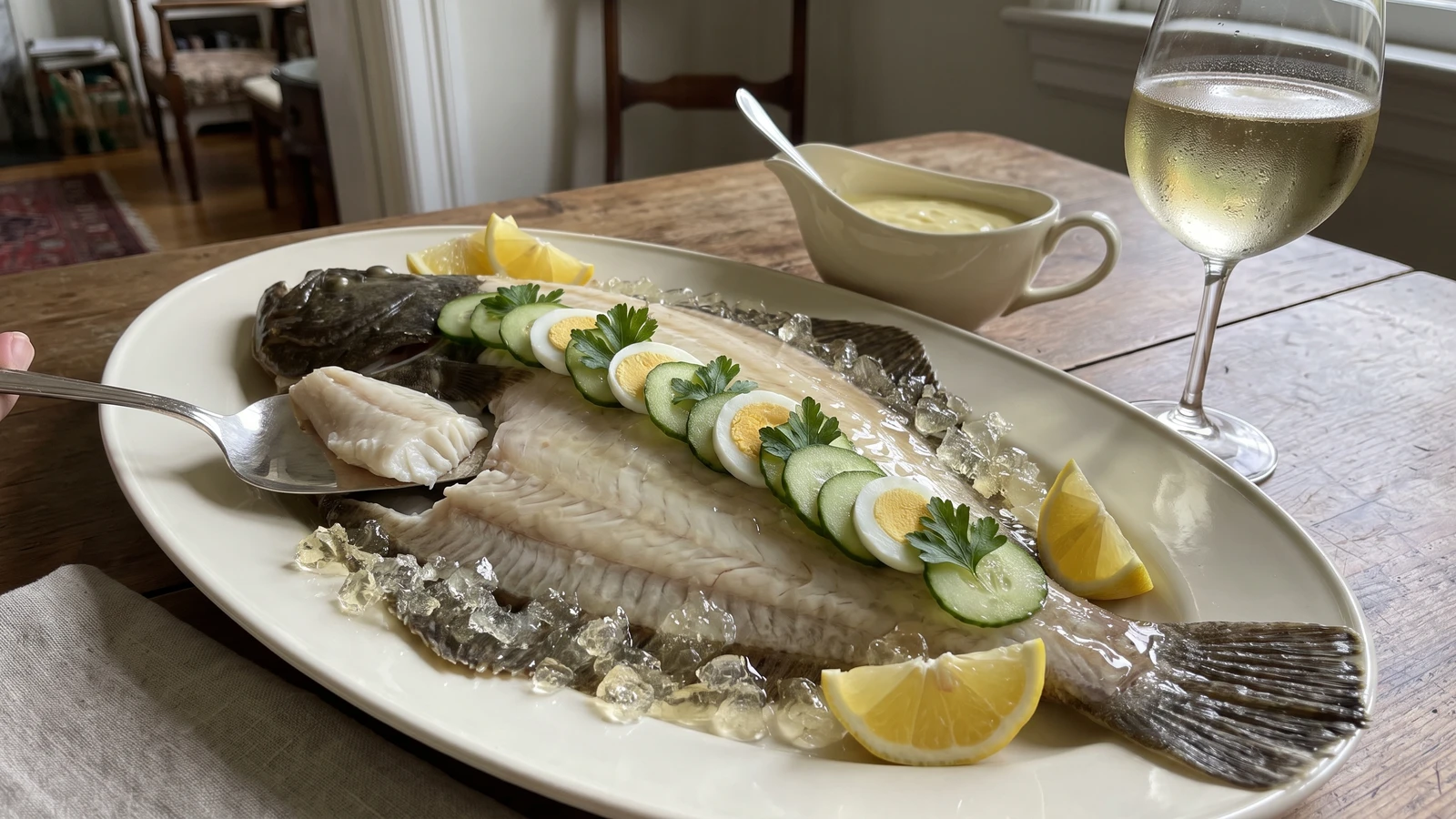
A four-pound turbot poached at a tremble, chilled before it dries, and glossed with clear aspic: the cold centerpiece that proves careful temperature, not elaborate decoration, makes the grand plate.
Turbot froid (cold chicken-turbot) teaches the discipline of cold fish: cook it for the texture it will have once chilled, not for the softness it has when warm. Cold firms fine white flesh and quiets seasoning. Turbot stopped at the bone’s first clean release stays succulent beneath its clear aspic; taken too far, it becomes chalky on the platter.
The grand cold service assumed a turbotière, a stock never off the fire, a saucier to clarify aspic, and larder hands to decorate a brigade-sized fish. A salamander has no work in this cold dish. At home, a snug roasting pan becomes the turbotière, the fish’s court-bouillon becomes the aspic foundation, powdered gelatin gives a dependable set, and the refrigerator does the larder’s work. One cook, one stove, one evening.
The source is firm about size: chicken-turbot may sound dainty, but the cold plate wants a fish of at least four pounds so the flesh stays thick and its broad surface carries decoration gracefully. The brigade’s elaborate ornament is scaffolding and can go; the whole fish, gentle poach, moist chilling, and thin aspic glaze are the dish and must stay. Stop the poach at 145°F (63°C) in the thickest flesh beside the backbone. That is the step that decides everything.
Turbot froid belongs to the formal cold table of Paris and the Channel-facing kitchens that supplied it, where whole turbot was poached, skinned on its dark side, glazed with aspic, and presented intact. Chicken-turbot is a fishmonger’s size term for a relatively small turbot, not a union of poultry and fish; the insistence on four pounds or more reflects the practical truth that thicker flesh chills more tenderly and offers a better surface for decoration. Through generations, the dish traveled from staffed cold larders to private dinner tables without changing its essential grammar: gentle cooking, clear glaze, composed service.
Quantity
4 to 5 lb (1.8 to 2.3 kg)
gutted, gills removed, fins trimmed
Quantity
8 cups (1.9 L / 1.9 kg)
Quantity
2 cups (475 ml / 475 g)
Quantity
1/4 cup (60 ml / 60 g)
Quantity
1 medium (about 1 cup / 150 g)
thinly sliced
Quantity
1 medium (about 2/3 cup / 85 g)
thinly sliced
Quantity
1 small (about 1 cup / 100 g)
washed and sliced
Quantity
1
Quantity
1 teaspoon (5 ml / 3 g)
Quantity
1 1/2 tablespoons (22 ml / 27 g)
Quantity
1 tablespoon (15 ml / 9 g), plus up to 1 teaspoon (5 ml / 3 g) if needed
Quantity
1/4 cup (60 ml / 60 g)
Quantity
1
at room temperature
Quantity
1 teaspoon (5 ml / 5 g)
Quantity
2 tablespoons (30 ml / 30 g)
divided
Quantity
3/4 cup (180 ml / 165 g)
at room temperature
Quantity
1/2 teaspoon (2.5 ml / 3 g)
Quantity
1/8 teaspoon (0.6 ml / 0.3 g)
Quantity
1 (about 7 oz / 200 g)
thinly sliced
Quantity
2
hard-cooked, cooled, and sliced
Quantity
1/4 cup (60 ml / 4 g)
Quantity
1 medium
cut into wedges
| Ingredient | Quantity |
|---|---|
| whole turbotgutted, gills removed, fins trimmed | 4 to 5 lb (1.8 to 2.3 kg) |
| cold water | 8 cups (1.9 L / 1.9 kg) |
| dry white wine | 2 cups (475 ml / 475 g) |
| white wine vinegar | 1/4 cup (60 ml / 60 g) |
| yellow onionthinly sliced | 1 medium (about 1 cup / 150 g) |
| carrotthinly sliced | 1 medium (about 2/3 cup / 85 g) |
| leek, white and pale green parts onlywashed and sliced | 1 small (about 1 cup / 100 g) |
| bouquet garni containing parsley stems, thyme, and bay | 1 |
| black peppercorns | 1 teaspoon (5 ml / 3 g) |
| fine sea salt for the court-bouillon | 1 1/2 tablespoons (22 ml / 27 g) |
| unflavored powdered gelatin | 1 tablespoon (15 ml / 9 g), plus up to 1 teaspoon (5 ml / 3 g) if needed |
| cold water for blooming the gelatin | 1/4 cup (60 ml / 60 g) |
| pasteurized large egg yolkat room temperature | 1 |
| Dijon mustard | 1 teaspoon (5 ml / 5 g) |
| fresh lemon juicedivided | 2 tablespoons (30 ml / 30 g) |
| neutral oilat room temperature | 3/4 cup (180 ml / 165 g) |
| fine sea salt for the mayonnaise | 1/2 teaspoon (2.5 ml / 3 g) |
| ground white pepper | 1/8 teaspoon (0.6 ml / 0.3 g) |
| small cucumberthinly sliced | 1 (about 7 oz / 200 g) |
| large eggshard-cooked, cooled, and sliced | 2 |
| flat-leaf parsley leaves | 1/4 cup (60 ml / 4 g) |
| lemoncut into wedges | 1 medium |
Combine the water, wine, vinegar, onion, carrot, leek, bouquet garni, peppercorns, and salt in a large saucepan. Bring just to a boil, lower the heat, and simmer gently for 20 minutes so the vegetables give their flavor without making the liquor muddy. Strain the court-bouillon into the roasting pan and let it cool until barely warm, about 20 minutes. Starting the fish in fiercely hot liquid would tighten its surface before the center cooks.
Heat the oven to 325°F (165°C). Check that the cavity is clean, then pat the fish dry without soaking it. Set a clean muslin sling or fish rack inside the roasting pan and lay the turbot on it dark side up, keeping the head and tail intact. The sling is the honest replacement for the removable rack of a turbotière, and it prevents a cooked four-pound fish from breaking when lifted.
Pour the barely warm court-bouillon around the fish. It should reach at least halfway up the sides in a snug pan. Lay a sheet of parchment directly over the turbot, seal the pan with foil, and poach in the oven for 25 to 35 minutes, basting once halfway through. The liquid should tremble but never bubble hard. Cook until the thickest flesh beside the backbone reaches 145°F (63°C), looks opaque, and parts from the bone with gentle pressure. If the liquor begins bubbling, uncover the pan for a minute and lower the oven to 275°F (135°C). Ça se rattrape, provided you calm it promptly.
Ladle 3 cups of the hot cooking liquor through a fine strainer into a saucepan for the aspic, reserving another cup separately for adjustments. Set the covered roasting pan into a larger basin of ice water and stir the court-bouillon gently around the fish without disturbing its flesh. Refresh the ice until the liquor falls below 70°F (21°C) within an hour, then refrigerate the fish in its liquor until thoroughly cold, about 2 hours. Moist chilling is not brigade scaffolding; it keeps the fine flesh from drying as it firms.
While the fish chills, skim the reserved cooking liquor and simmer it gently until reduced from 3 cups to 1 1/2 cups. Pass it through damp muslin or a damp coffee filter without pressing on the sediment. Sprinkle the gelatin over the cold water and leave it for 5 minutes, then whisk the swollen gelatin into the hot reduction off the heat. Spoon a little onto a cold saucer and refrigerate it for 5 minutes: it should set softly enough to cut, not bounce. If it remains loose, rewarm it and add the extra teaspoon of gelatin after blooming it in a spoonful of cold water. If it sets rubbery, melt it and loosen it with reserved court-bouillon. Ça se rattrape.
Whisk the egg yolk with the Dijon mustard, 1 tablespoon of lemon juice, the salt, and white pepper until smooth. Add the oil first by drops, then in a thin steady thread once the emulsion has taken, whisking constantly. Finish with the remaining lemon juice and taste it cold; the sauce should be bright and firmly seasoned because cold fish quiets everything. If the mayonnaise splits, put a teaspoon of cold water in a clean bowl and whisk the broken sauce into it a spoonful at a time. Don’t throw it out. Ça se rattrape. Cover and refrigerate.
Lift the cold turbot by its sling and let it drain for 10 minutes. Transfer it dark side up to a chilled oval platter. Starting near the tail, loosen and peel away the dark skin, working toward the head without digging into the flesh. Trim away any grey fringe with the back of a small knife. If the skin tears, scrape off the remaining patches gently; the aspic will smooth small blemishes, and the fish need not suffer for vanity. Pat the surface dry and chill it uncovered for 15 minutes so the glaze can grip.
Cool the aspic over ice, stirring occasionally, until it has the body of light syrup but has not set. Brush a thin coat over the exposed flesh and chill for 10 minutes. Arrange a restrained band of overlapping cucumber and egg slices along the center line, with parsley leaves between them, leaving most of the pale turbot visible. Brush with two more thin coats of aspic, chilling briefly between coats. If the glaze runs straight off, the fish or aspic is too warm; chill both for 10 minutes, stir the aspic smooth, and begin again. Chop any remaining set aspic and spoon it loosely around the fish with the lemon wedges.
Take the turbot from the refrigerator 15 minutes before serving, but keep the mayonnaise cold until the table is ready. Cut along the backbone and lift the two upper fillets with a fish server; remove the skeleton in one piece, then serve the lower fillets. Pass the lemon mayonnaise separately so each guest can take what the fish asks for. Never apologize at your own table. À table!
1 serving (about 375g)
Culinary guides, cultural storytelling, and the editorial depth that makes cooking meaningful.
Discover Culinary ExplorerChef Juliette
John Dory has the delicacy of sole and the firmness of turbot. A light flouring, a quick butter sauté, and nut-brown beurre noisette show exactly why looks never mattered.

Chef Juliette
Fresh haddock proves its delicacy in the meunière pan: a fine flour crust, moist pearly flakes, and beurre noisette sharpened with lemon and parsley, ready from one skillet in half an hour.
Chef Juliette
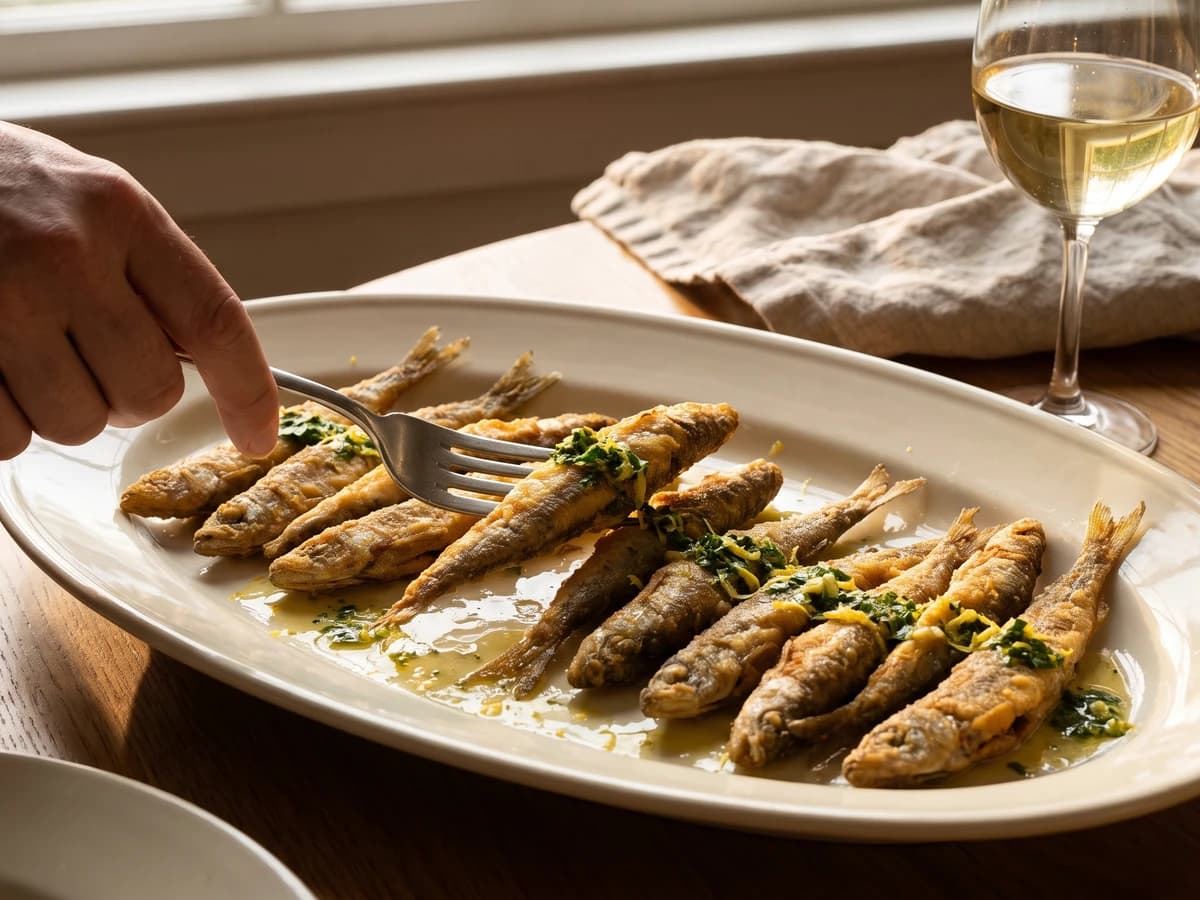
Éperlans à l’Anglaise turns small fish into a lesson in disciplined coating: boned smelts under a close, crisp crumb, pan-fried in clarified butter and finished with bright, half-melted maître d’hôtel butter.

Chef Juliette
Tiny smelts, shallot, mushrooms, white wine, gratin sauce, and fine bread raspings meet a fierce oven, where the fish must turn tender in the same breath the buttered crust bronzes.