
Chef Juliette
John Dory (St. Pierre)
John Dory has the delicacy of sole and the firmness of turbot. A light flouring, a quick butter sauté, and nut-brown beurre noisette show exactly why looks never mattered.
A cooking platform built around craft, culture, and the stories behind what we eat.
Created by Chef Juliette
Based on No. 932, Turbotin à la Mode de Hollande, from Le Guide Culinaire (1907) by Auguste Escoffier
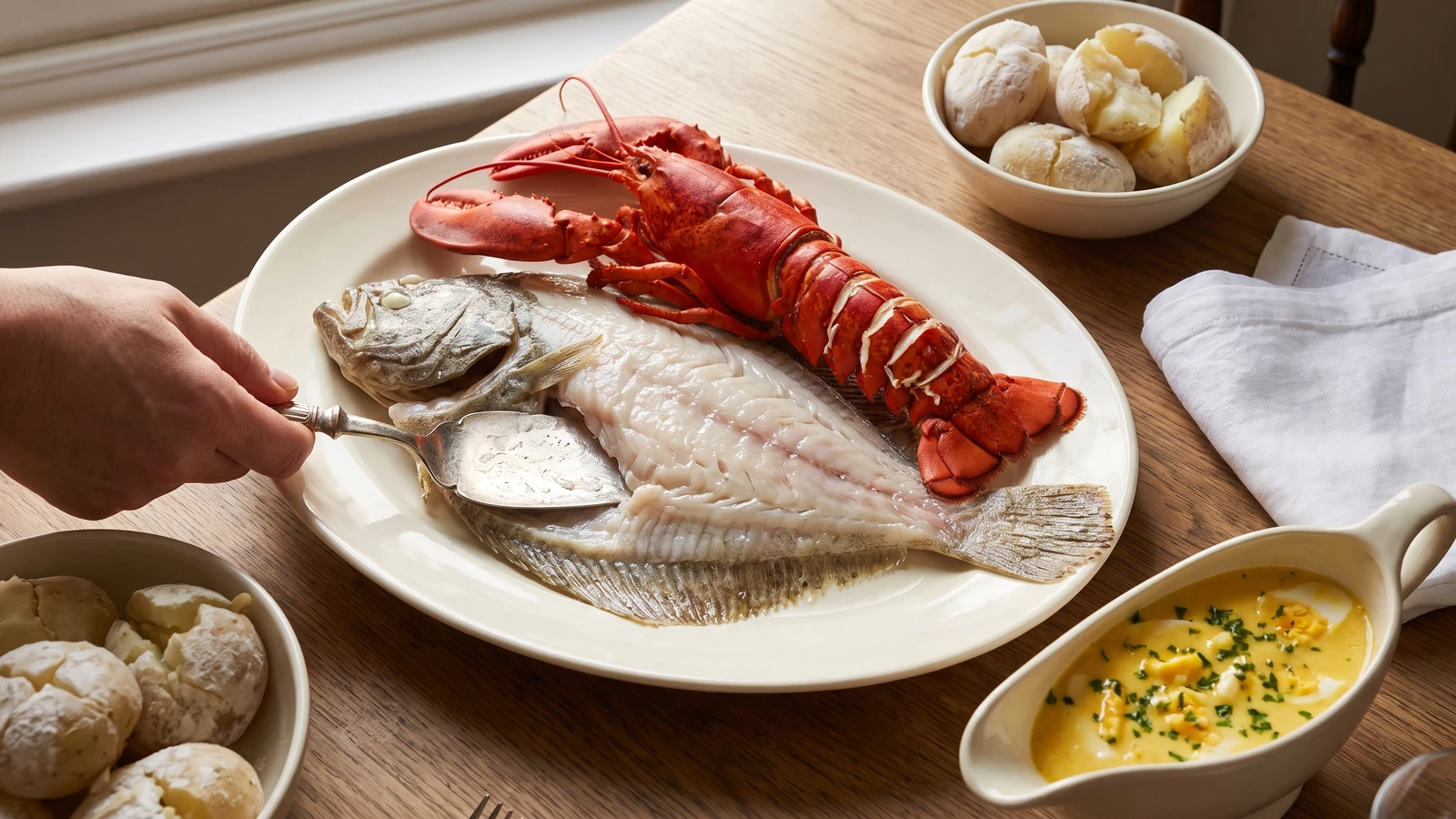
A whole young turbot, gently poached and crowned with scarlet lobster, comes to the table with floury potatoes and warm egg-and-butter sauce apart: plain, generous, and exacting only about heat.
Turbotin à la Mode de Hollande (Dutch-style poached young turbot) teaches control without camouflage. The fish meets nothing but salted water, so the one true thing to know before touching a pan is this: the water must never boil. Hold it at a quiet tremble and the turbot stays succulent, its flesh lifting from the bone in broad, pearly leaves.
The original kitchen assumed a fish kettle, a saucier on staff, a stockpot never off the fire, court-bouillon ready, and enough hands to cook the lobster, potatoes, fish, and sauce together. It required no salamander, and neither do you. A deep roasting pan steadied by the oven replaces the fish kettle, a quick court-bouillon replaces the perpetual pot, and the finished sauce waits over warm water while one young turbot and one lobster feed four. Those conveniences were brigade scaffolding. The salted-water poach, the lobster crown, the floury potatoes, and the sauce served apart are the dish, so they stay.
At the table, the pale whole fish and scarlet lobster look splendid without ornament, while the potatoes drink up melted butter and egg from the sauceboat. One cook, one stove, one evening. Watch the fish bath above everything else, because that quiet poach decides the dish.
Turbotin à la Mode de Hollande belongs to the French classical table of whole poached fish, drawing on turbot landed along the Channel and North Sea coasts rather than claiming one French regional larder. À la mode de Hollande describes a northern garnish logic as French cooks understood it: fish, floury potatoes, eggs, and abundant butter, with lobster added here as an edible crown. Turbotin means a young, small turbot, once translated as chicken-turbot; no poultry belongs in the dish, and its Egg Sauce with Melted Butter is not sauce hollandaise.
Quantity
1, 2½ to 3 pounds (1.1 to 1.35 kg)
cleaned, gutted, and fins trimmed
Quantity
16 cups (3.8 L / 3.8 kg)
Quantity
3 tablespoons (45 ml / 54 g)
Quantity
1, 1¼ to 1½ pounds (570 to 680 g)
humanely dispatched immediately before cooking
Quantity
12 cups (2.8 L / 2.8 kg)
Quantity
2 cups (480 ml / 480 g)
Quantity
1 medium (about 1 cup / 150 g)
sliced
Quantity
1 medium (about ⅔ cup / 100 g)
sliced
Quantity
1 stalk (about ½ cup / 60 g)
sliced
Quantity
½ (about 2 ounces / 60 g)
sliced
Quantity
8
Quantity
1
Quantity
1 teaspoon (5 ml / 3 g)
Quantity
2½ tablespoons (37 ml / 45 g)
Quantity
2 pounds (900 g)
peeled and cut into even 2-inch pieces
Quantity
8 cups (1.9 L / 1.9 kg)
Quantity
1 tablespoon (15 ml / 18 g)
Quantity
1 batch, about 1¼ cups (300 ml / 275 g)
freshly made and warm
Quantity
1 finished preparation; retained for the printed cross-reference but not applied to this dish
| Ingredient | Quantity |
|---|---|
| whole young turbotcleaned, gutted, and fins trimmed | 1, 2½ to 3 pounds (1.1 to 1.35 kg) |
| fish-poaching water | 16 cups (3.8 L / 3.8 kg) |
| fine sea salt for the fish water | 3 tablespoons (45 ml / 54 g) |
| whole raw lobsterhumanely dispatched immediately before cooking | 1, 1¼ to 1½ pounds (570 to 680 g) |
| water for the court-bouillon | 12 cups (2.8 L / 2.8 kg) |
| dry white wine | 2 cups (480 ml / 480 g) |
| onionsliced | 1 medium (about 1 cup / 150 g) |
| carrotsliced | 1 medium (about ⅔ cup / 100 g) |
| celerysliced | 1 stalk (about ½ cup / 60 g) |
| lemonsliced | ½ (about 2 ounces / 60 g) |
| parsley stems | 8 |
| bay leaf | 1 |
| black peppercorns | 1 teaspoon (5 ml / 3 g) |
| fine sea salt for the court-bouillon | 2½ tablespoons (37 ml / 45 g) |
| floury potatoes such as russetspeeled and cut into even 2-inch pieces | 2 pounds (900 g) |
| potato-cooking water | 8 cups (1.9 L / 1.9 kg) |
| fine sea salt for the potatoes | 1 tablespoon (15 ml / 18 g) |
| Egg Sauce with Melted Butter (No. 117)freshly made and warm | 1 batch, about 1¼ cups (300 ml / 275 g) |
| Anglaise (for Egg-and-bread-crumbing) (No. 174) | 1 finished preparation; retained for the printed cross-reference but not applied to this dish |
Combine the court-bouillon water, wine, onion, carrot, celery, lemon, parsley stems, bay leaf, peppercorns, and salt in a narrow stockpot large enough to hold the lobster. Bring it to a boil, then lower the heat and simmer gently for 20 minutes. The brigade held this liquid ready all day; this short infusion gives tonight's lobster the aromatic poach the dish requires without keeping a stockpot on the fire.
Return the court-bouillon to a lively simmer and lower in the lobster headfirst. Cover and cook for 8 to 10 minutes, adjusting for size, until the shell is scarlet and the thickest part of the tail reaches 145°F (63°C). Lift it out and let it stand for 5 minutes. With sturdy kitchen shears, open the upper tail shell lengthwise without cutting through the fan. Lift out the tail meat, remove the dark intestinal vein, slice the meat crosswise into thick medallions, and return them promptly to the opened shell in their original order. Keep the dressed lobster covered. If the flesh has become slightly firm, slice it a little thinner and moisten it with a spoonful of court-bouillon. Ça se rattrape.
Heat the oven to 325°F (165°C). Rinse the turbot cavity, pat the fish dry, and lay it white-side down on a clean cheesecloth sling inside a deep roasting pan that holds it snugly. Heat the fish-poaching water and salt to 185°F (85°C). Set the roasting pan on a partially pulled-out oven rack, then pour the hot water around the fish with a heatproof pitcher until the turbot is just covered. Lay a sheet of parchment directly over the water and slide the rack in carefully.
Poach the turbot for 20 to 28 minutes, depending on its thickness. Keep the liquid between 175°F and 185°F (79°C and 85°C), with only an occasional movement at the edge. The fish is ready when its thickest flesh reaches 145°F (63°C), looks pearly rather than glassy near the backbone, and releases cleanly when tested with the tip of a knife. If the bath begins to boil, pull the pan from the oven and add 1 cup of cool water from the measured bath allowance. Return it only when the surface is quiet. You cannot reverse a hard boil, but stopping it quickly prevents the rest of the fish from tightening.
While the turbot poaches, keep the finished Anglaise (for Egg-and-bread-crumbing) (No. 174) separate. The printed cross-reference names that egg preparation, but the potatoes in this entry are cooked à l'anglaise in the separate boiling sense; coating or frying them would change the dish. Put the potatoes into the cold potato-cooking water with its salt, bring to a measured boil, and cook for 15 to 20 minutes until a knife enters without resistance. Drain thoroughly, return them to the dry pot, and shake once over low heat until their surfaces turn floury. Transfer them to a warmed deep serving bowl and cover with a folded towel, not a lid, so they stay dry.
Set the freshly made Egg Sauce with Melted Butter (No. 117) in its sauceboat over a bowl of barely hot water, stirring it once or twice with a spoon. Warm it gently without boiling or beating it into an emulsion; the loose melted-butter character belongs here. If butter begins to set around the edge, remove the sauceboat from the bath and swirl it until fluid again. Ça se rattrape.
Leave the roasting pan in place and lift the turbot with its cheesecloth sling, allowing it to drain for a full minute. Transfer it carefully to a hot oval platter, draw away the cloth, and blot any water gathered around the fish. Lay the whole dressed lobster lengthwise upon the turbot, with the opened tail and its medallions visible. If the fish skin tears during the transfer, bring the torn edges together and place the lobster over the seam. The crown conceals the repair honestly.
Carry the turbot and lobster to the table at once. Send the floury potatoes in their warm bowl and the Egg Sauce with Melted Butter (No. 117) in its sauceboat at the same time, exactly as the dish intends. Serve a leaf of turbot, a lobster medallion, and potatoes to each person, then let everyone take the butter-rich sauce for themselves. Plain and generous. À table!
1 serving (about 475g)
Culinary guides, cultural storytelling, and the editorial depth that makes cooking meaningful.
Discover Culinary ExplorerChef Juliette
John Dory has the delicacy of sole and the firmness of turbot. A light flouring, a quick butter sauté, and nut-brown beurre noisette show exactly why looks never mattered.

Chef Juliette
Fresh haddock proves its delicacy in the meunière pan: a fine flour crust, moist pearly flakes, and beurre noisette sharpened with lemon and parsley, ready from one skillet in half an hour.

Chef Juliette
Éperlans à l’Anglaise turns small fish into a lesson in disciplined coating: boned smelts under a close, crisp crumb, pan-fried in clarified butter and finished with bright, half-melted maître d’hôtel butter.

Chef Juliette
Tiny smelts, shallot, mushrooms, white wine, gratin sauce, and fine bread raspings meet a fierce oven, where the fish must turn tender in the same breath the buttered crust bronzes.