
Chef Juliette
John Dory (St. Pierre)
John Dory has the delicacy of sole and the firmness of turbot. A light flouring, a quick butter sauté, and nut-brown beurre noisette show exactly why looks never mattered.
A cooking platform built around craft, culture, and the stories behind what we eat.
Created by Chef Juliette
Based on No. 897, Filets de Soles en Pilaw à la Levantine, from Le Guide Culinaire (1907) by Auguste Escoffier
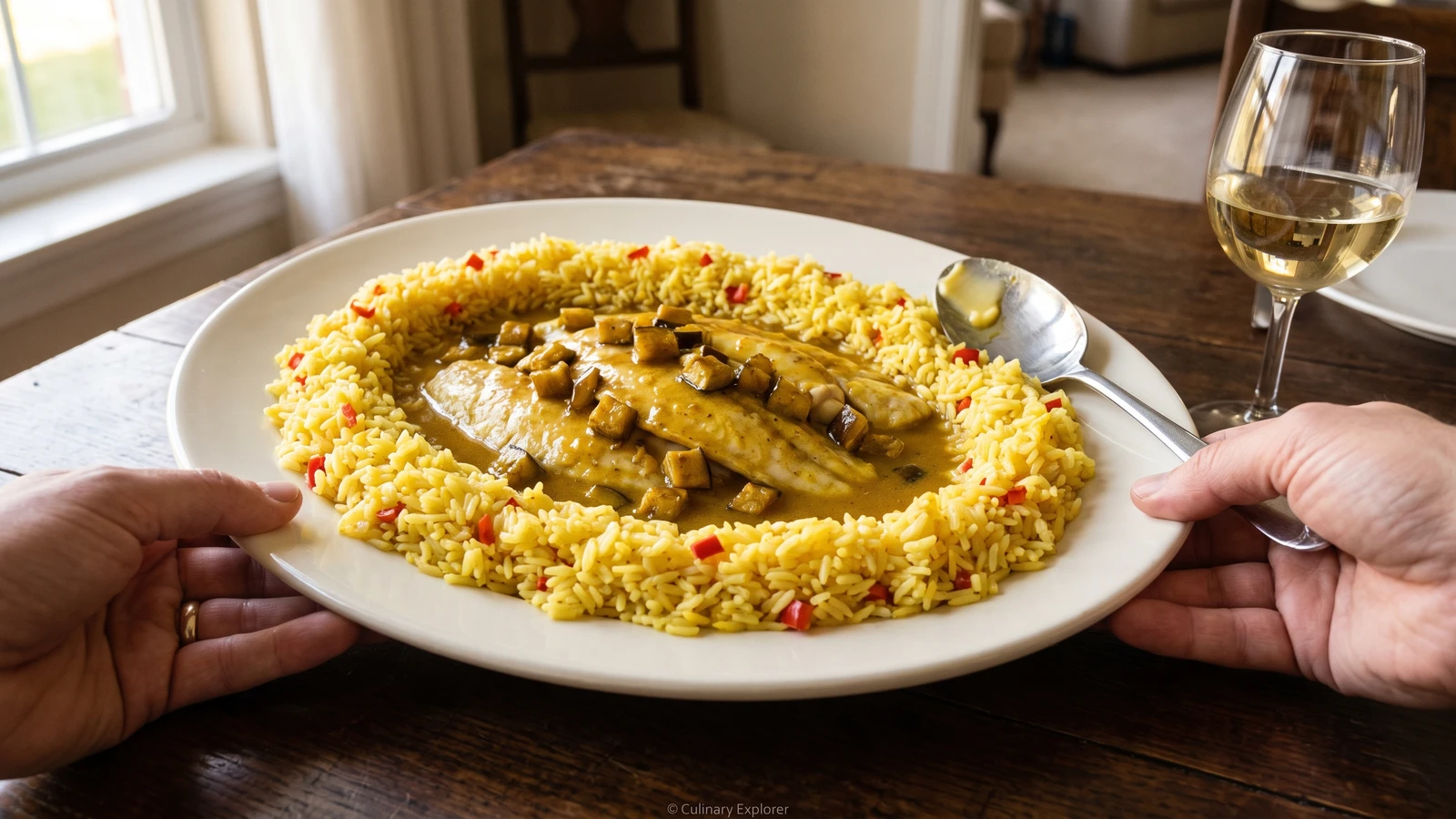
Filets de Soles en Pilaw à la Levantine teaches disciplined saucing: tender sole and aubergine held in glossy curry sauce, encircled by capsicum pilaff that stays separate, buttery, and clean.
Filets de Soles en Pilaw à la Levantine (sole pieces with pilaff and curry sauce) teaches separation. The rice borders, the fish fills, and the sauce belongs to the center alone. Each spoonful brings the buttery grains and sauced sole together at the table, but they must remain distinct on the platter.
The original assumed finished Riz Pilaff (No. 2255), a saucier minding the curry sauce, white stock never off the fire, and extra hands to sauté the fish and aubergine while another cook shaped the border. Your equivalent is one small saucepan, one wide skillet used twice, and a warm platter shaped with two spoons instead of a metal border mould. I change only the service order: sauce and rice wait, sole goes last. Parallel cooking and extra pans were brigade scaffolding; butter-tossed fish, capsicum folded into the pilaff, aubergine in the center, and sauce kept off the rice are the dish and must stay. One cook, one stove, one evening.
The one step that decides the dish is the final pour. Shape a firm rice border before the fish enters, then spoon the curry sauce from the center outward and stop well short of the grains. Restraint here gives you the contrast the recipe promises.
Filets de Soles en Pilaw à la Levantine belongs to the Parisian classical repertoire, where named garnitures suggested distant places through combinations of ingredients and service rather than reproducing local household dishes. Its pilaff border, capsicum, aubergine, and curry sauce represent a French grand-kitchen vision of the eastern Mediterranean filtered through formal sauce work. Despite its title, this is not a vernacular Levantine preparation; it entered the home canon as a precise lesson in keeping buttery rice distinct from sauced fish.
Quantity
4 fillets (about 1⅓ lb / 600 g)
cut crosswise into 1½-inch / 4 cm collops
Quantity
3 cups (720 ml / 585 g) prepared Riz Pilaff (No. 2255)
Quantity
3 tablespoons (45 ml / 28 g)
cut into fine dice
Quantity
½ cup (120 ml / 43 g)
cut into ⅓-inch / 8 mm dice
Quantity
6 tablespoons (90 ml / 85 g)
divided
Quantity
¼ cup (60 ml / 40 g)
finely chopped
Quantity
2 teaspoons (10 ml / 5 g)
Quantity
1 tablespoon (15 ml / 8 g)
Quantity
1 cup (240 ml / 240 g)
Quantity
½ cup (120 ml / 120 g)
Quantity
1 teaspoon (5 ml / 6 g)
divided
Quantity
¼ teaspoon (1 ml / 0.5 g)
divided
| Ingredient | Quantity |
|---|---|
| skinless sole filletscut crosswise into 1½-inch / 4 cm collops | 4 fillets (about 1⅓ lb / 600 g) |
| Riz Pilaff | 3 cups (720 ml / 585 g) prepared Riz Pilaff (No. 2255) |
| red capsicumcut into fine dice | 3 tablespoons (45 ml / 28 g) |
| auberginecut into ⅓-inch / 8 mm dice | ½ cup (120 ml / 43 g) |
| unsalted butterdivided | 6 tablespoons (90 ml / 85 g) |
| onionfinely chopped | ¼ cup (60 ml / 40 g) |
| mild curry powder | 2 teaspoons (10 ml / 5 g) |
| plain flour | 1 tablespoon (15 ml / 8 g) |
| unsalted fish stock | 1 cup (240 ml / 240 g) |
| heavy cream | ½ cup (120 ml / 120 g) |
| fine sea saltdivided | 1 teaspoon (5 ml / 6 g) |
| finely ground white pepperdivided | ¼ teaspoon (1 ml / 0.5 g) |
Check the sole for pin bones, then cut each fillet crosswise into 1½-inch / 4 cm collops, small pieces broad enough to remain succulent in the pan. Pat them thoroughly dry and keep them cold while you prepare the sauce and rice. Wet sole releases water and stews in the butter; a dry surface lets it sauté cleanly without asking a delicate fish to brown hard.
Melt 2 tablespoons (30 ml / 28 g) of the butter in a small saucepan over medium-low heat. Add the onion with ¼ teaspoon of the salt and soften it without colouring, about 4 minutes. Stir in the curry powder for 30 seconds, just until fragrant, then add the flour and cook for 1 minute to make a roux blond, a pale cooked paste that gives the sauce its body. Whisk in the fish stock gradually, bring it to a bare simmer, and cook for 5 minutes. Add the cream and simmer gently until the sauce reaches nappé, coating the back of a spoon in a thin, glossy layer, about 5 minutes more. Pass it through a fine sieve, taste, and hold it over the lowest heat. If it lumps, stop pouring and whisk hard before adding more liquid. Ça se rattrape: stubborn lumps disappear through the sieve, a sauce that is too thick loosens with a spoonful of stock, and a thin one needs another quiet minute of reduction.
Fold the diced capsicum through the hot prepared Riz Pilaff (No. 2255), using a fork so the grains remain separate. Cover and hold it on the lowest burner while you cook the garnish and fish. If the rice begins to clump, lift and separate it with the fork rather than stirring; vigorous stirring bruises the grains and turns a clean border into paste.
Melt 2 tablespoons (30 ml / 28 g) of the butter in a wide skillet over medium-high heat. Add the diced aubergine, season with ¼ teaspoon of the salt and half the white pepper, and sauter, tossing over lively heat, until the cubes are tender and browned at their edges, 3 to 5 minutes. Transfer them to a warm plate. Aubergine drinks butter first and releases some as it cooks, so don't add more at the alarming dry moment; give it another minute.
Return the skillet to medium heat and melt the remaining 2 tablespoons (30 ml / 28 g) butter. Season the sole with the remaining salt and white pepper, then lay the collops in one uncrowded layer, working in two batches if necessary. Sauter gently, turning each piece once, until opaque throughout but still supple, about 1 to 2 minutes per side depending on thickness. Don't chase a dark crust; the fish should taste of fresh sole and butter. If pieces begin to flake before the rest are ready, lift them out at once. The warm sauce will finish their heating without making them dry.
Warm a shallow oval platter, then spoon the pilaff around its edge in a generous ring, pressing only enough to make the border hold while leaving the grains visible. No special mould is needed. Arrange the sole and aubergine together in the central well. Stir the curry sauce, loosen it with a spoonful of stock if it no longer pours softly, and coat only the fish and aubergine, beginning at the center and stopping before the sauce reaches the rice. If one edge is splashed, lift that spoonful into the center and patch the border with clean pilaff. Bring the platter straight to the table while the sole is tender and the sauce still gleams. À table!
1 serving (about 410g)
Culinary guides, cultural storytelling, and the editorial depth that makes cooking meaningful.
Discover Culinary ExplorerChef Juliette
John Dory has the delicacy of sole and the firmness of turbot. A light flouring, a quick butter sauté, and nut-brown beurre noisette show exactly why looks never mattered.

Chef Juliette
Fresh haddock proves its delicacy in the meunière pan: a fine flour crust, moist pearly flakes, and beurre noisette sharpened with lemon and parsley, ready from one skillet in half an hour.
Chef Juliette
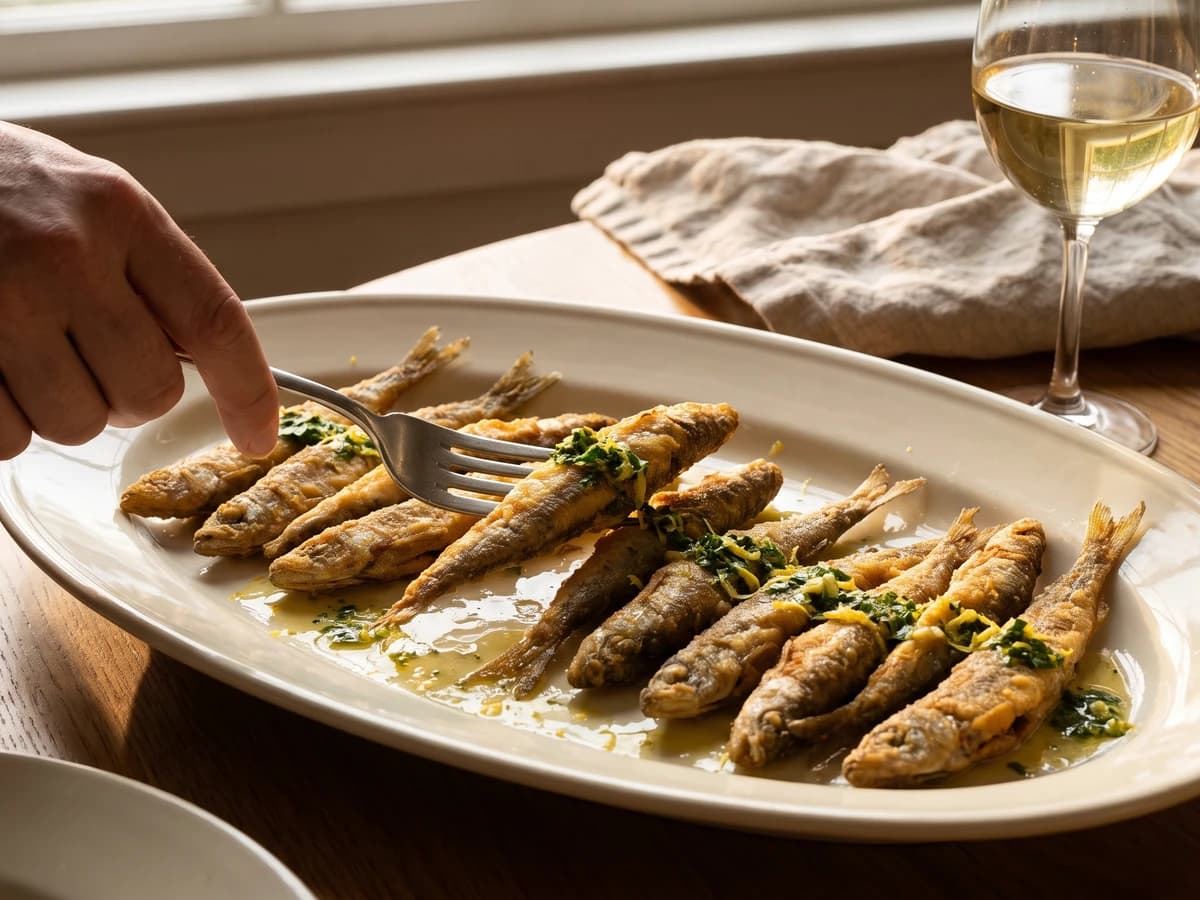
Éperlans à l’Anglaise turns small fish into a lesson in disciplined coating: boned smelts under a close, crisp crumb, pan-fried in clarified butter and finished with bright, half-melted maître d’hôtel butter.

Chef Juliette
Tiny smelts, shallot, mushrooms, white wine, gratin sauce, and fine bread raspings meet a fierce oven, where the fish must turn tender in the same breath the buttered crust bronzes.