
Chef Juliette
John Dory (St. Pierre)
John Dory has the delicacy of sole and the firmness of turbot. A light flouring, a quick butter sauté, and nut-brown beurre noisette show exactly why looks never mattered.
A cooking platform built around craft, culture, and the stories behind what we eat.

Created by Chef Juliette
Based on No. 884, Filets de Soles Mimi, from Le Guide Culinaire (1907) by Auguste Escoffier
Chablis-poached sole, lobster medallions, and creamed spaghetti meet in the emptied shell, with black truffle above and sauce américaine alongside: a grand exercise in timing made workable for one attentive cook.
Filets de Soles Mimi (sole fillets with lobster, creamed spaghetti, and sauce américaine) teaches orchestration. The one true thing to know before touching a pan is this: the dish succeeds by sequence, not speed. Build the sauce first, have the spaghetti ready before the sole poaches, and assemble the moment the fish leaves its Chablis and butter. Done properly, you get pearly folds of sole, coral lobster, ivory cream, and black truffle in one generous platter.
The old formula assumed a saucier at the lobster pan, stock never off the fire, and spare hands for the pasta and fish. It did not call for a salamander because nothing is gratinéed; speed supplied the final heat. This version fixes the brigade quantity at one lobster and eight sole fillets for four, replaces hand-pounding with a small processor followed by the required fine sieve, and uses a warmed platter and sauceboat in place of a staffed hot pass. One cook, one stove, one evening.
The constant holding and hand-pounding were brigade scaffolding. The intact lobster shells, lobster cooked à l’américaine, claw-meat purée, Chablis-and-butter poach, truffle julienne, and separately served sauce are the dish, so they stay. Finish the sauce and spaghetti before poaching the sole; once the fish enters the wine, there must be no pause before the platter reaches the table.
Filets de Soles Mimi belongs to the named compositions of Parisian grand cuisine, where a garnish transformed poached sole into a ceremonial main dish and the whole lobster shell arrived on a napkin-lined platter. Mimi is a dedicatory title rather than a regional method, while the composition draws Chablis from Burgundy into a cosmopolitan arrangement of lobster à l’américaine, black truffle, and spaghetti. The pasta is no stray Italian flourish: French grand kitchens used macaroni and spaghetti as formal garnishes, and household manuals carried that practice from elaborate dining rooms to ambitious home tables.
Quantity
1 lobster (about 1½ pounds / 680 g)
fishmonger-dispatched and split lengthwise immediately before cooking, shell halves kept intact
Quantity
8 fillets (about 1½ pounds / 680 g total)
pin bones removed
Quantity
6 ounces (170 g)
Quantity
1 tablespoon (15 ml / 14 g)
Quantity
½ cup (120 ml / 113 g)
divided
Quantity
½ cup (120 ml / 70 g)
finely diced
Quantity
½ cup (120 ml / 80 g)
finely diced
Quantity
1 clove
lightly crushed
Quantity
2 tablespoons (30 ml / 33 g)
Quantity
½ cup (120 ml / 120 g)
finely chopped
Quantity
¼ cup (60 ml / 56 g)
Quantity
1½ cups (360 ml / 360 g)
divided
Quantity
1 cup (240 ml / 240 g)
Quantity
1
Quantity
1¼ cups (300 ml / 300 g)
divided
Quantity
1 small truffle (¾ ounce / 20 g)
cut into a short, fine julienne
Quantity
1 tablespoon plus 1 teaspoon (20 ml / 24 g)
divided
Quantity
½ teaspoon (2.5 ml / 1 g)
divided
Quantity
1/16 teaspoon (0.3 ml / 0.15 g)
| Ingredient | Quantity |
|---|---|
| live lobsterfishmonger-dispatched and split lengthwise immediately before cooking, shell halves kept intact | 1 lobster (about 1½ pounds / 680 g) |
| skinless sole filletspin bones removed | 8 fillets (about 1½ pounds / 680 g total) |
| dry spaghetti | 6 ounces (170 g) |
| olive oil | 1 tablespoon (15 ml / 14 g) |
| unsalted butterdivided | ½ cup (120 ml / 113 g) |
| carrotfinely diced | ½ cup (120 ml / 70 g) |
| shallotsfinely diced | ½ cup (120 ml / 80 g) |
| garliclightly crushed | 1 clove |
| tomato paste | 2 tablespoons (30 ml / 33 g) |
| canned tomatoesfinely chopped | ½ cup (120 ml / 120 g) |
| Cognac | ¼ cup (60 ml / 56 g) |
| Chablisdivided | 1½ cups (360 ml / 360 g) |
| unsalted fish stock | 1 cup (240 ml / 240 g) |
| bouquet garni of parsley stems, thyme, and bay leaf | 1 |
| heavy creamdivided | 1¼ cups (300 ml / 300 g) |
| very black Périgord truffle or whole preserved black trufflecut into a short, fine julienne | 1 small truffle (¾ ounce / 20 g) |
| fine sea saltdivided | 1 tablespoon plus 1 teaspoon (20 ml / 24 g) |
| finely ground white pepperdivided | ½ teaspoon (2.5 ml / 1 g) |
| cayenne | 1/16 teaspoon (0.3 ml / 0.15 g) |
Set the oven to 170°F (75°C). Warm a large oval platter, four dinner plates, and a sauceboat for about 10 minutes, then turn off the oven. Put a large pot of water on for the spaghetti. Measure every sauce ingredient, cut the truffle into julienne, meaning short, fine matchsticks, and set a wide lidded sauté pan aside for the sole. The order from here is lobster, sauce, spaghetti, sole, assembly. Once the sole meets the Chablis, the table waits for you, not the other way around.
Remove and discard the lobster’s stomach sac, feathery gills, and intestinal vein without damaging the two shell halves. Heat the olive oil with 2 tablespoons (30 ml / 28 g) of the butter in a broad saucepan over medium-high heat. Lay in the lobster halves cut-side down with the claws and cook until the flesh lightly colors and the shells turn vivid red, about 3 minutes. Turn the pieces, add the carrot and shallots, and cook for 3 minutes more, stirring around the shells.
Add the garlic and tomato paste, stirring until the paste darkens slightly, then add the chopped tomato. Take the pan completely off the heat before pouring in the Cognac. Return it to the burner and boil for 1 minute without flaming it. Add ½ cup (120 ml / 120 g) of the Chablis, the fish stock, bouquet garni, cayenne, and a small pinch each of salt and white pepper. Cover and simmer gently until the lobster tail is opaque and springy, about 8 minutes. Remove the tail halves and claws as soon as they are cooked; leave the sauce at a calm simmer.
When the lobster is cool enough to handle, remove each tail half in one piece and cut the meat crosswise into 8 thin medallions. Cover them with buttered parchment and hold them over barely warm water. Pick every scrap of meat from the claws, knuckles, and body cavities, keeping the two large shell halves whole for serving. Pulse this meat with 2 tablespoons (30 ml / 30 g) of the cream until smooth, then press it through a fine-mesh sieve. If the purée is too stiff to pass, work in 1 teaspoon of the warm lobster cooking liquid. The processor replaces the pounding, but the sieve stays because its silkiness belongs to the dish.
Simmer the lobster cooking liquid uncovered until reduced to about ¾ cup (180 ml), then strain it into a clean saucepan, pressing gently on the vegetables without forcing pulp through. Add ½ cup (120 ml / 120 g) of the cream and simmer gently until the sauce américaine coats the back of a spoon yet still pours freely. Taste for salt and white pepper. Keep it warm over the lowest heat. If it turns oily or begins to separate, remove it from the burner and whisk in 1 tablespoon (15 ml / 15 g) of cold cream. Ça se rattrape. Never let the finished sauce boil hard.
Salt the boiling water with 1 tablespoon (15 ml / 18 g) of the measured salt. Cook the spaghetti until tender but still resilient, then reserve ½ cup (120 ml) of its water and drain. Return the spaghetti to its saucepan with 2 tablespoons (30 ml / 28 g) of butter and ½ cup (120 ml / 120 g) of cream. Fold in the sieved lobster purée over low heat until every strand is coated and the garnish looks creamy rather than wet. If it tightens before assembly, loosen it with the reserved pasta water one spoonful at a time. Cover and hold over barely warm water for no longer than 10 minutes.
Dry the sole fillets and season them lightly with the remaining salt and white pepper. Fold each fillet into three, tucking the thin tail end inside so the packets cook evenly. Coat the wide sauté pan with the remaining 4 tablespoons (60 ml / 57 g) of butter and arrange the fillets in one snug layer. Add the remaining 1 cup (240 ml / 240 g) Chablis and cover with buttered parchment or a close-fitting lid. Bring the liquid only to a bare tremble and poach for 4 to 6 minutes, until the fillets are opaque, supple, and separate in moist flakes when pressed. If the wine begins to boil, lift the pan from the heat for 30 seconds, then return it to the lowest burner. A hard boil curls and toughens the fish; caught quickly, ça se rattrape.
Set the two emptied lobster shell halves back-to-back on the warmed oval platter, stabilizing them with a tightly folded clean white napkin tucked underneath. Fill both shells to the brim with the creamed spaghetti and lobster purée. Lift the sole from its poaching liquid with a slotted spatula, drain it briefly, and arrange four folded fillets over each shell. Alternate the warm lobster medallions with the sole so every pair of fillets is separated by lobster.
Scatter the short, fine julienne of black truffle across the sole and lobster. Pour the sauce américaine into the warmed sauceboat and send it to the table separately, exactly as the dish requires. Carry the platter out at once, while the fish still gleams with butter and the sauce pours in a smooth ribbon. No lingering over arrangement now. À table!
1 serving (about 450g)
Culinary guides, cultural storytelling, and the editorial depth that makes cooking meaningful.
Discover Culinary ExplorerChef Juliette
John Dory has the delicacy of sole and the firmness of turbot. A light flouring, a quick butter sauté, and nut-brown beurre noisette show exactly why looks never mattered.

Chef Juliette
Fresh haddock proves its delicacy in the meunière pan: a fine flour crust, moist pearly flakes, and beurre noisette sharpened with lemon and parsley, ready from one skillet in half an hour.
Chef Juliette
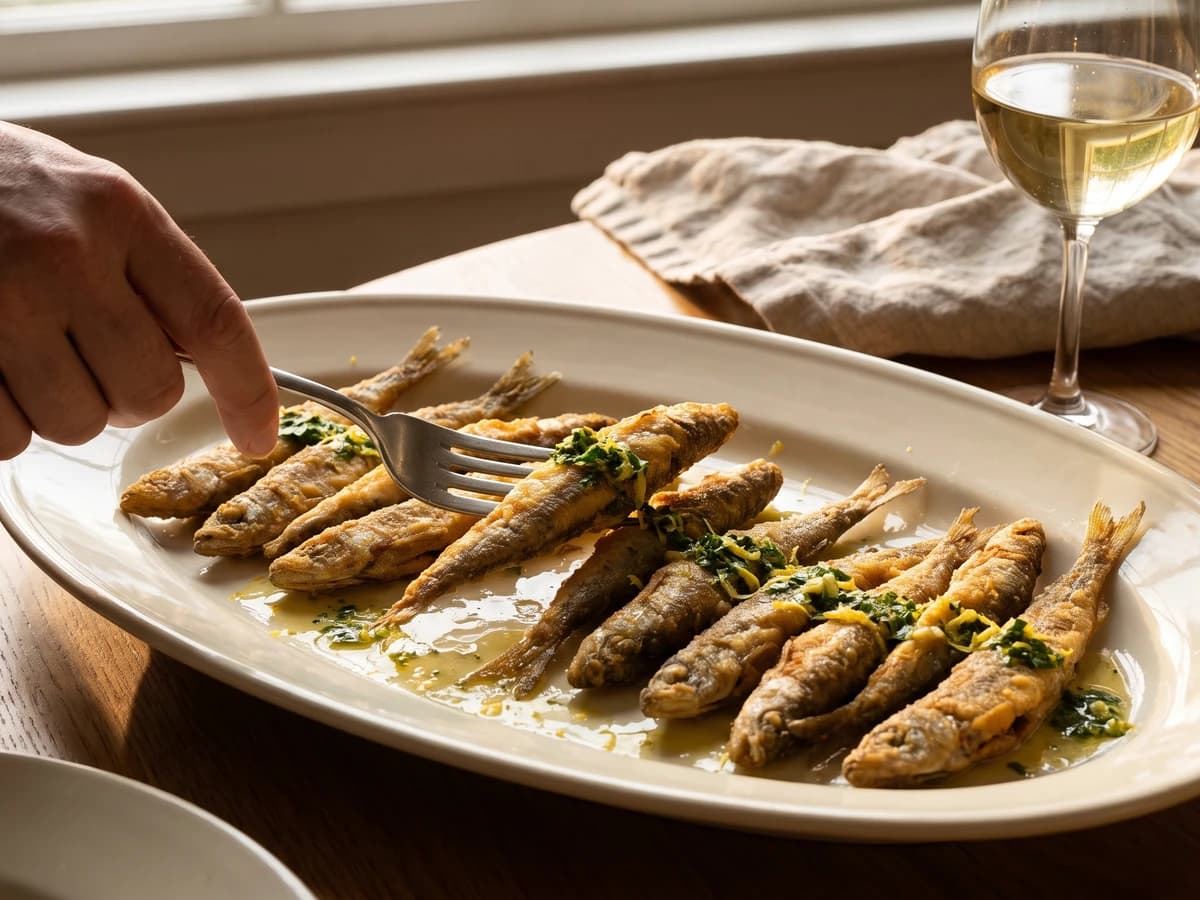
Éperlans à l’Anglaise turns small fish into a lesson in disciplined coating: boned smelts under a close, crisp crumb, pan-fried in clarified butter and finished with bright, half-melted maître d’hôtel butter.

Chef Juliette
Tiny smelts, shallot, mushrooms, white wine, gratin sauce, and fine bread raspings meet a fierce oven, where the fish must turn tender in the same breath the buttered crust bronzes.