
Chef Juliette
John Dory (St. Pierre)
John Dory has the delicacy of sole and the firmness of turbot. A light flouring, a quick butter sauté, and nut-brown beurre noisette show exactly why looks never mattered.
A cooking platform built around craft, culture, and the stories behind what we eat.
Created by Chef Juliette
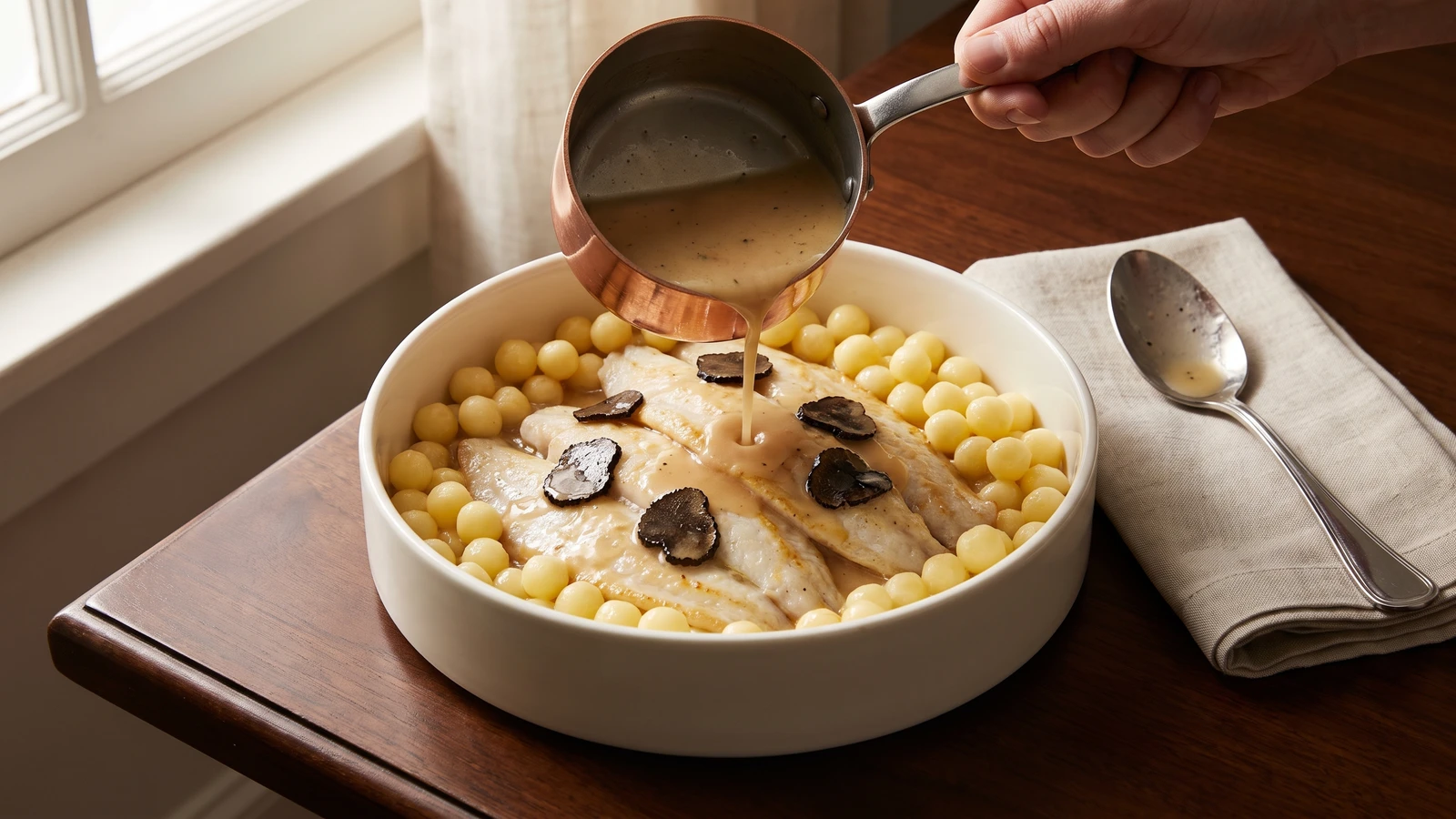
Based on No. 883, Filets de Soles Mignonette, from Le Guide Culinaire (1907) by Auguste Escoffier
Butter-cooked sole, tiny potato pearls, and warm black truffle under a shining meat glaze: a composed classical dish whose success rests on gentle heat and exact last-minute timing.
Filets de Soles Mignonette (sole fillets with potato pearls, truffle, and light meat glaze) teaches one true thing: this is a timing dish, not a difficult dish. The potatoes and glaze must be ready before the sole touches butter, because a thin fillet cooks in minutes and waits for no saucier.
The original kitchen assumed a saucier on staff, stock never off the fire, a tiny round spoon-cutter, and a hot timbale waiting at the pass. At home, reduce good unsalted veal stock to a very light meat glaze, use an 8 to 10 mm Parisienne scoop, and warm a shallow serving dish with hot water. There is no work here for a salamander. Those arrangements were brigade scaffolding and can go; the pea-sized potatoes, eight to ten truffle slices, and glaze mounted with the book's 19 grams of butter must stay. Eight fillets serve four, and the one-sixth pint of glaze is translated precisely as 95 millilitres. One cook, one stove, one evening.
When it is right, the sole is tender and lightly golden, the potato pearls taste richly of butter, and the restrained meat glaze gives the truffle depth without smothering the fish. Have everything within reach, then take the glaze completely off the heat before whisking in the cold butter. That last emulsion decides the dish.
Filets de Soles Mignonette belongs to the Parisian grande cuisine repertoire, in which a sole preparation was often identified by its garnish and sauce rather than by a separate cooking method. Mignonette here does not mean the pepper-and-vinegar accompaniment known from oyster service: this preparation is defined by pea-sized potato balls, sliced truffle, and a light meat glaze. Pairing delicate fish with meat glaze may seem unexpected, but it follows classical sauce logic, using a restrained reduction as seasoning rather than turning the fish into a braise.
Quantity
8 fillets (about 1¾ lb / 800 g total)
pin bones removed
Quantity
3 large (about 1½ lb / 680 g total)
peeled
Quantity
2 cups (480 ml / 480 g), reduced to a scant ½ cup (95 ml / about 100 g)
for the very light meat glaze
Quantity
6 tablespoons plus 1 teaspoon (95 ml / 89 g)
divided, with 1 tablespoon plus 1 teaspoon kept cold for finishing
Quantity
1 small truffle (about ⅔ oz / 18 g)
brushed clean and cut into 8 to 10 thin slices
Quantity
¾ teaspoon (3.75 ml / 4.5 g)
divided
Quantity
6 to 8 drops (about 0.4 ml / 0.4 g)
| Ingredient | Quantity |
|---|---|
| skinless sole filletspin bones removed | 8 fillets (about 1¾ lb / 800 g total) |
| firm yellow potatoespeeled | 3 large (about 1½ lb / 680 g total) |
| gelatin-rich unsalted veal stockfor the very light meat glaze | 2 cups (480 ml / 480 g), reduced to a scant ½ cup (95 ml / about 100 g) |
| unsalted butterdivided, with 1 tablespoon plus 1 teaspoon kept cold for finishing | 6 tablespoons plus 1 teaspoon (95 ml / 89 g) |
| fresh black trufflebrushed clean and cut into 8 to 10 thin slices | 1 small truffle (about ⅔ oz / 18 g) |
| fine sea saltdivided | ¾ teaspoon (3.75 ml / 4.5 g) |
| fresh lemon juice | 6 to 8 drops (about 0.4 ml / 0.4 g) |
Pour the unsalted veal stock into a wide saucepan and bring it to a quiet simmer. Reduce it patiently to a scant ½ cup, 95 millilitres, skimming any froth that gathers; it should lightly coat a spoon but remain fluid and pale brown, not dark, salty, or sticky. Pour it into a heatproof measure to check the volume, then return it to a clean small saucepan. If it has reduced too far, ça se rattrape: stir in hot water a teaspoon at a time until you have 95 millilitres again.
Use an 8 to 10 mm Parisienne scoop, the small round spoon-cutter, to lift pea-sized balls from the potatoes. Turn each potato as you work and reserve the perforated remains for soup or purée. Rinse the pearls briefly, then dry them thoroughly. Melt 2 tablespoons of the butter in a wide skillet over medium-low heat, add the pearls with ¼ teaspoon of the salt, and cook for 10 to 14 minutes, shaking the pan often, until tender at the point of a knife and lightly blond. If the butter colors before the centers soften, add a teaspoon of water and cover for 2 minutes, then uncover and let the moisture disappear. Keep the pearls warm.
Fill a shallow round serving dish or timbale with very hot water and leave it to warm. Slice the truffle into 8 to 10 thin, broad slices and cover them so their perfume stays put. Pat the sole fillets completely dry and season both sides with the remaining salt. Set the warm potatoes, glaze, truffle, cold finishing butter, and lemon beside the stove before cooking the fish. This mise en place is what allows one pair of hands to replace a brigade.
Drain and dry the warmed serving dish. Melt 1½ tablespoons of butter in a 12-inch skillet over medium heat until it foams without browning. Lay in four fillets with room between them and cook for 60 to 90 seconds, until the undersides are faintly golden and the flesh has turned opaque about two-thirds of the way through. Turn carefully and cook for another 30 to 60 seconds, just until the centers lose their translucence. Transfer them to the hot dish, melt the remaining 1½ tablespoons of cooking butter, and repeat with the second batch. If the butter burns, wipe out the skillet and begin the batch with fresh butter; scorched butter cannot be hidden beneath a delicate glaze.
Bring the very light meat glaze back to the barest simmer, then lower the heat and slip in the truffle slices. Warm them for 30 to 45 seconds without boiling, which releases their perfume while keeping their texture. Lift the slices out and lay them across the sole exactly as the original preparation directs. Arrange the buttered potato pearls in a generous ring around the fillets.
Remove the glaze from the heat. Monter au beurre, whisking in cold butter to make a shining emulsion, by adding the reserved 1 tablespoon plus 1 teaspoon a few pieces at a time. Add 6 drops of lemon juice, taste, and add the last 2 only if the glaze needs a brighter edge. Never boil it after the butter goes in. If the glaze separates into oily beads, ça se rattrape: put a teaspoon of cold water in a clean warm saucepan and whisk in the broken glaze little by little until smooth. Pour it at once over the fillets and potato pearls, letting it pool lightly rather than drown them. Serve very hot. À table!
1 serving (about 360g)
Culinary guides, cultural storytelling, and the editorial depth that makes cooking meaningful.
Discover Culinary ExplorerChef Juliette
John Dory has the delicacy of sole and the firmness of turbot. A light flouring, a quick butter sauté, and nut-brown beurre noisette show exactly why looks never mattered.

Chef Juliette
Fresh haddock proves its delicacy in the meunière pan: a fine flour crust, moist pearly flakes, and beurre noisette sharpened with lemon and parsley, ready from one skillet in half an hour.
Chef Juliette
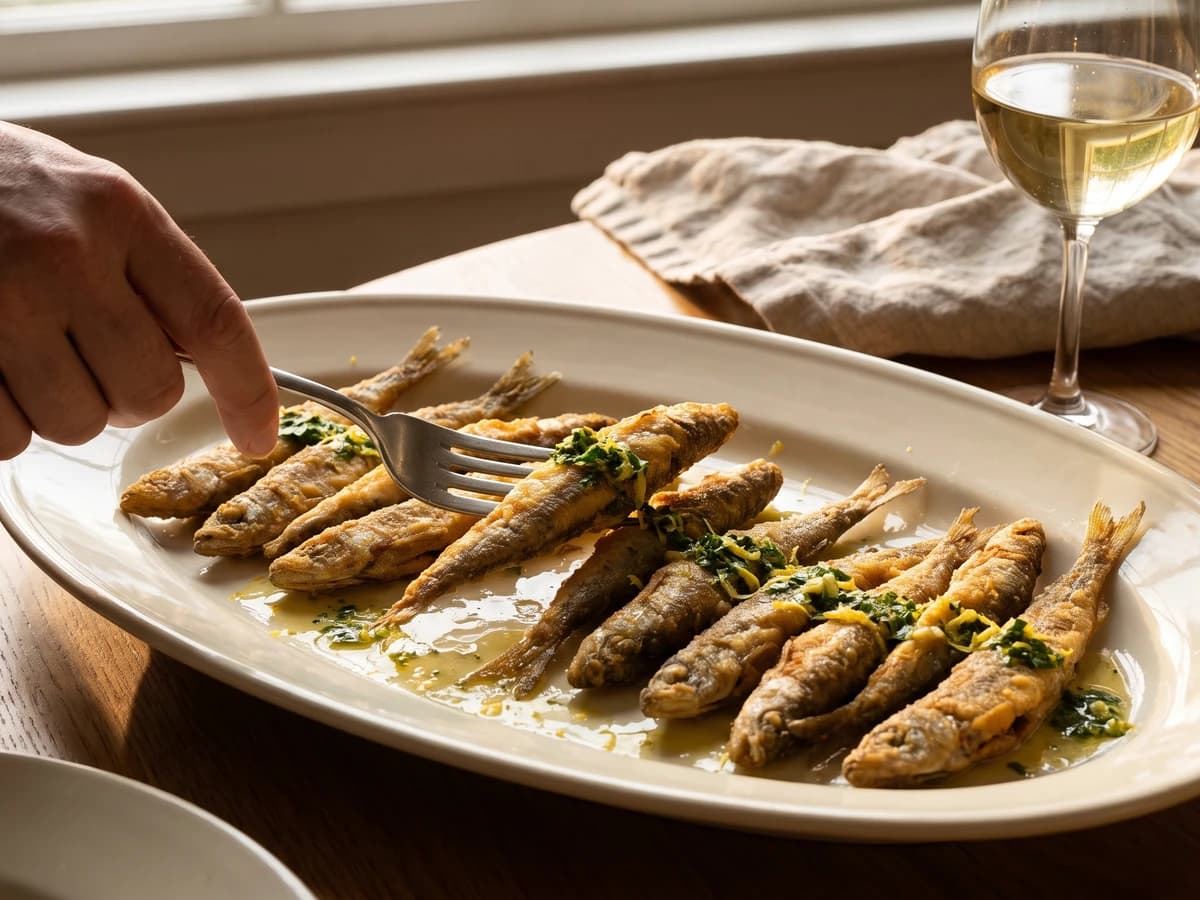
Éperlans à l’Anglaise turns small fish into a lesson in disciplined coating: boned smelts under a close, crisp crumb, pan-fried in clarified butter and finished with bright, half-melted maître d’hôtel butter.

Chef Juliette
Tiny smelts, shallot, mushrooms, white wine, gratin sauce, and fine bread raspings meet a fierce oven, where the fish must turn tender in the same breath the buttered crust bronzes.