
Chef Juliette
John Dory (St. Pierre)
John Dory has the delicacy of sole and the firmness of turbot. A light flouring, a quick butter sauté, and nut-brown beurre noisette show exactly why looks never mattered.
A cooking platform built around craft, culture, and the stories behind what we eat.
Created by Chef Juliette
Based on No. 875, Filets de Soles Déjazet, from Le Guide Culinaire (1907) by Auguste Escoffier
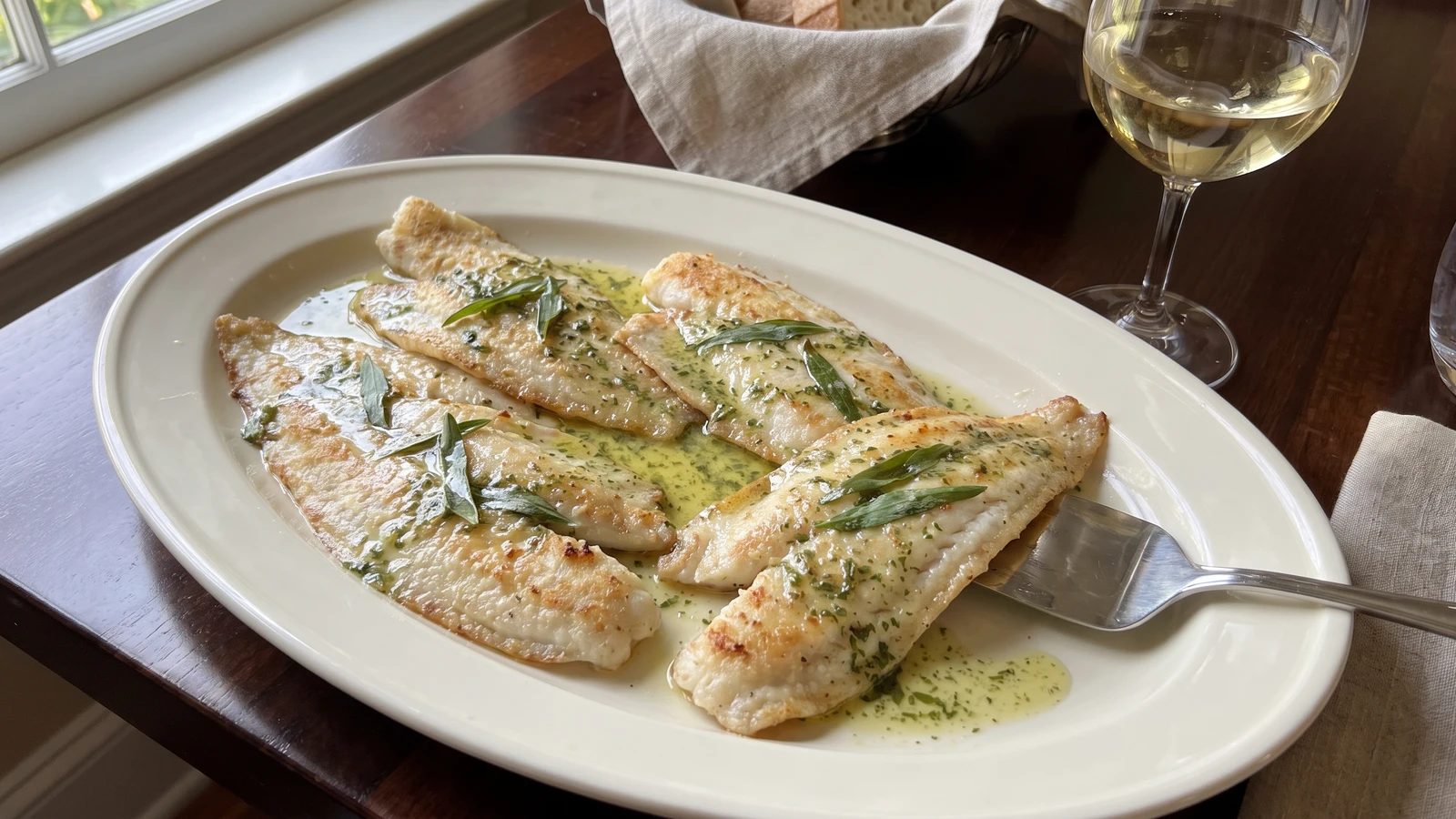
Breaded à l'anglaise, grilled until gold, then veiled in half-melted tarragon butter: Filets de Soles Déjazet proves delicate fish can carry a crisp coat when heat and timing are exact.
Filets de Soles Déjazet (Déjazet-style sole fillets) teaches how repetition can sharpen a flavor: tarragon enters first as butter, then as whole parboiled leaves, aromatic in one form and fresh in the other. Before you touch a pan, know the one thing that decides the cooking: the crumb coat must be thin enough to turn gold at the same moment the sole turns opaque. Paner à l'anglaise means coating with flour, prepared egg mixture, and fine breadcrumbs. The word carries the technique.
The classical entry assumed Anglaise (for Egg-and-bread-crumbing) (No. 174) waiting at the fish station, tarragon butter ready in quantity, and the gentle grilling procedure of Sole Saint-Germain (No. 830) close at hand. A saucier and stock never off the fire have no work here, but a salamander did. Your broiler is its honest home equivalent, and a single small batch of each preparation replaces the brigade's reserve bowls. That reserve mise en place was scaffolding and can go. The thin crust, restrained grilling, half-melted butter, and double application of tarragon are the dish and must stay. One cook, one stove, one evening.
Finished properly, each fillet wears a close butter-gold crust, not a heavy shell, with the tarragon butter gleaming across it rather than soaking through it. The softened leaves remain recognizably green and give a clean anise fragrance with every bite. Make the coating fine and perfectly even before the fish reaches the heat. That is the step to guard.
Filets de Soles Déjazet belongs to the Parisian grand-kitchen repertoire of dishes named for celebrated performers, its title honoring the actress Virginie Déjazet. Its construction is disciplined rather than theatrical: Anglaise (for Egg-and-bread-crumbing) (No. 174) protects the delicate sole, the gentle grilling borrowed from Sole Saint-Germain (No. 830) colors it without frying, and tarragon appears in both butter and leaf. The dish passed readily to the bourgeois dinner table because its distinction comes from exact handling, not an elaborate sauce or regional garnish.
Quantity
8 fillets (about 1½ lb / 680 g total)
pin bones removed
Quantity
1 teaspoon (5 ml / 6 g)
divided
Quantity
¼ teaspoon (1.25 ml / 0.6 g)
Quantity
½ cup (120 ml / 125 g) prepared Anglaise (for Egg-and-bread-crumbing) (No. 174)
Quantity
½ cup (120 ml / 60 g)
Quantity
2 cups (480 ml / 180 g)
Quantity
4 tablespoons (60 ml / 57 g)
melted
Quantity
1 large bunch, about 1 packed cup (240 ml / 25 g) leaves
48 large leaves reserved whole and 2 tablespoons finely chopped
Quantity
6 tablespoons (90 ml / 85 g)
softened
Quantity
4 cups (960 ml / 960 g)
divided between parboiling and cooling
Quantity
1 referenced grilling method from Sole Saint-Germain (No. 830), scaled for 8 fillets
| Ingredient | Quantity |
|---|---|
| skinless Dover sole filletspin bones removed | 8 fillets (about 1½ lb / 680 g total) |
| fine sea saltdivided | 1 teaspoon (5 ml / 6 g) |
| freshly ground white pepper | ¼ teaspoon (1.25 ml / 0.6 g) |
| Anglaise (for Egg-and-bread-crumbing) | ½ cup (120 ml / 125 g) prepared Anglaise (for Egg-and-bread-crumbing) (No. 174) |
| all-purpose flour | ½ cup (120 ml / 60 g) |
| very fine fresh white breadcrumbs | 2 cups (480 ml / 180 g) |
| unsalted butter for grillingmelted | 4 tablespoons (60 ml / 57 g) |
| fresh tarragon leaves48 large leaves reserved whole and 2 tablespoons finely chopped | 1 large bunch, about 1 packed cup (240 ml / 25 g) leaves |
| unsalted butter for tarragon buttersoftened | 6 tablespoons (90 ml / 85 g) |
| waterdivided between parboiling and cooling | 4 cups (960 ml / 960 g) |
| Sole Saint-Germain | 1 referenced grilling method from Sole Saint-Germain (No. 830), scaled for 8 fillets |
Bring half the measured water to a boil with a pinch of the salt, and place the remaining cold water in a bowl. Drop in the 48 whole tarragon leaves for 10 seconds, just until they relax and brighten, then lift them directly into the cold water. Drain and press them completely dry between clean towels. Beat the chopped raw tarragon and another pinch of salt into the softened butter until evenly green-flecked. Keep the tarragon butter cool but pliable. The chopped herb perfumes the butter, while the parboiled leaves preserve a distinct tarragon bite; laid on twice, the tarragon decides the dish.
Run your fingertips over the fillets and remove any remaining pin bones. Blot the fish thoroughly on both sides, then season lightly and evenly with the remaining salt and white pepper. Leave it uncovered in the refrigerator for 10 minutes while you arrange the coating dishes. Wet sole makes the flour patchy, and a patchy foundation lets the crust slide.
Set the flour, prepared Anglaise (for Egg-and-bread-crumbing) (No. 174), and fine breadcrumbs in three wide shallow dishes, in that order. Draw each fillet through the flour and shake off every loose veil, coat it completely in the Anglaise, let the excess drain, then lay it in the crumbs. Pat the coating gently with the flat of a knife so it adheres in one thin, close layer. If a bare patch appears, blot that spot, dust it again with flour, and repeat the coating there. Ça se rattrape. Hold the finished fillets in a single layer, never stacked.
Position an oven rack about 8 inches (20 cm) below the broiler and heat the broiler for 10 minutes. Set a broiler-safe wire rack inside a rimmed sheet pan and brush it lightly with some of the melted butter. This is the home translation of the grill used for Sole Saint-Germain (No. 830): strong radiant heat held far enough away to color the crumbs gently rather than scorch them.
Lay the fillets on the prepared rack without crowding them and brush their upper surfaces lightly with half the remaining melted butter. Broil for 3 to 4 minutes, until the coating is pale gold and firm enough to turn. Ease a wide fish spatula underneath each fillet, turn carefully, brush with the last butter, and grill for another 2 to 3 minutes. The crumbs should be evenly golden as the fish turns opaque and reaches 145°F (63°C) at its thickest point. If the coating darkens too quickly, move the tray one level lower; if a patch lifts during turning, press it gently back into place and dab it with butter.
While the sole grills, warm the tarragon butter over the lowest heat until roughly half is liquid and half remains soft, then stir it off the heat into a thick, glossy pouring consistency. Do not melt it clear. Fully liquid butter runs through the crumbs and leaves them greasy. If it goes too far, set the pan over the bowl of cold water and whisk until the butter thickens but still flows. Ça se rattrape.
Transfer the fillets to a warm oval platter or arrange two on each warmed plate. Spoon the half-melted tarragon butter thinly across the crust, enough to veil it without drowning it, then lay five or six parboiled tarragon leaves over each fillet. Serve at once while the coating is crisp and the butter still clings. À table!
1 serving (about 260g)
Culinary guides, cultural storytelling, and the editorial depth that makes cooking meaningful.
Discover Culinary ExplorerChef Juliette
John Dory has the delicacy of sole and the firmness of turbot. A light flouring, a quick butter sauté, and nut-brown beurre noisette show exactly why looks never mattered.

Chef Juliette
Fresh haddock proves its delicacy in the meunière pan: a fine flour crust, moist pearly flakes, and beurre noisette sharpened with lemon and parsley, ready from one skillet in half an hour.

Chef Juliette
Éperlans à l’Anglaise turns small fish into a lesson in disciplined coating: boned smelts under a close, crisp crumb, pan-fried in clarified butter and finished with bright, half-melted maître d’hôtel butter.

Chef Juliette
Tiny smelts, shallot, mushrooms, white wine, gratin sauce, and fine bread raspings meet a fierce oven, where the fish must turn tender in the same breath the buttered crust bronzes.