
Chef Juliette
John Dory (St. Pierre)
John Dory has the delicacy of sole and the firmness of turbot. A light flouring, a quick butter sauté, and nut-brown beurre noisette show exactly why looks never mattered.
A cooking platform built around craft, culture, and the stories behind what we eat.
Created by Chef Juliette
Based on No. 871, Filets de Soles aux Champignons, from Le Guide Culinaire (1907) by Auguste Escoffier
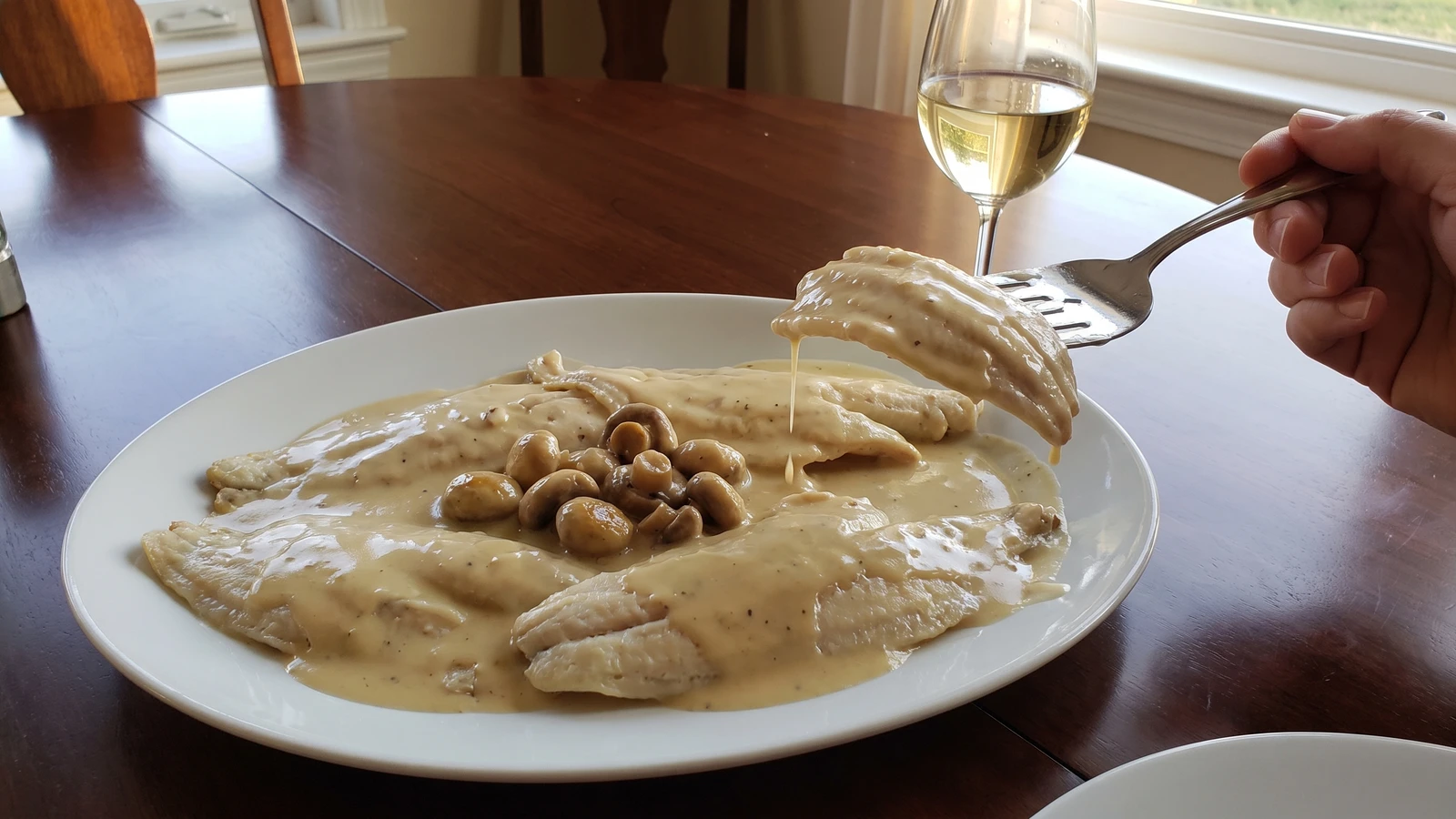
Filets de Soles aux Champignons turns one mushroom liquor into both poaching medium and sauce, giving tender folded sole an ivory, butter-glossed coating with every drop of mushroom character kept.
Filets de Soles aux Champignons (sole fillets with mushrooms) teaches a principle worth carrying through the whole classical repertoire: the mushroom liquor is not a by-product. It poaches the fish, collects the sole's juices, reduces to an essence, and becomes the foundation of the sauce. Discard it or weaken it, and the dish has nowhere to go.
The brigade version assumed a saucier on staff, prepared velouté beside a stockpot never off the fire, and mushroom cuisson already waiting. A salamander has no job here because nothing is browned or gratinéed. For one cook, one stove, one evening, the honest equivalent is to make the mushroom liquor in the same covered pan, measure two tablespoons of prepared fish velouté, and use a warm oval platter while that pan becomes the saucier. Separate holding pans are scaffolding and can go. Stewing the mushrooms, poaching the folded fillets in their liquor, reducing that liquor to one-third, and mounting the sauce with butter are the dish, and every one stays.
The finished sole should be tender enough to separate beneath a fork, with small mushrooms gathered at the center and a pale sauce that coats rather than buries. Measure the mushroom liquor before the fish goes in, then reduce the poaching liquor to one-third; that is the step that decides the sauce.
Filets de Soles aux Champignons belongs to the Parisian classical dining-room repertoire, where sole fillets were folded, shallow-poached, and sauced à la minute while garnishes were kept ready by the saucier. The method traveled readily to the bourgeois home table because its apparent luxury rests on economy: the mushroom cuisson, or cooking liquor, is captured and used twice rather than poured away. The pale richness does not come from cream, as is often assumed, but from velouté, reduction, and butter, with the mushrooms providing the entire aromatic accent.
Quantity
8 (about 1½ lb / 680 g total)
checked for bones
Quantity
about 1 cup (2 oz / 57 g)
wiped clean and left whole or halved only if necessary
Quantity
½ cup plus 1 tbsp (135 ml / 135 g)
divided
Quantity
¼ cup (4 tbsp / 60 ml / 56 g)
divided, with the final 2 tbsp cold and cubed
Quantity
2 tbsp (30 ml / 32 g)
Quantity
½ tsp (2.5 ml / 3 g)
divided
| Ingredient | Quantity |
|---|---|
| skinless sole filletschecked for bones | 8 (about 1½ lb / 680 g total) |
| very small white button mushroomswiped clean and left whole or halved only if necessary | about 1 cup (2 oz / 57 g) |
| waterdivided | ½ cup plus 1 tbsp (135 ml / 135 g) |
| unsalted butterdivided, with the final 2 tbsp cold and cubed | ¼ cup (4 tbsp / 60 ml / 56 g) |
| prepared fish velouté | 2 tbsp (30 ml / 32 g) |
| fine sea saltdivided | ½ tsp (2.5 ml / 3 g) |
Put the mushrooms in a 12-inch lidded sauté pan with 1 tablespoon (15 ml / 14 g) of the butter, ¼ teaspoon (1.25 ml / 1.5 g) of the salt, and ½ cup (120 ml / 120 g) of the water. Cover and bring the liquid to a bare simmer over medium-low heat. Stew for 5 to 7 minutes, rolling the mushrooms once, until they are tender but still hold their shape and the liquor tastes distinctly of mushroom. Lift the mushrooms out with a slotted spoon and reserve them. Strain the liquor into a measuring cup.
Dry the sole fillets and season them with the remaining ¼ teaspoon (1.25 ml / 1.5 g) salt. Fold each fillet neatly into three, bringing the thin tail inward first and the broader end over it, then arrange the packets snugly in one layer in the same pan. Pour the measured mushroom liquor around them and dot with 1 tablespoon (15 ml / 14 g) butter. Cover, bring the liquid just to a tremble over medium heat, then immediately lower the heat and poach for 4 to 6 minutes, until the fish is opaque, separates under light pressure, and reaches 145°F (63°C) at its thickest point. Never let it boil. If the liquid surges, lift the pan from the heat, uncover it for a few seconds, and return it over a gentler flame. Ça se rattrape, provided you catch it promptly.
Warm an oval serving platter with hot water, then dry it thoroughly. Lift the fillets from the pan with a slotted fish slice, letting every drop of their liquor fall back into the pan. Arrange them in a slightly overlapping oval and gather the reserved mushrooms in the center, exactly as the source directs. Cover the platter loosely and keep it beside the stove. Do not put it into a low oven; thin sole continues cooking while it waits.
Bring the poaching liquor to a brisk boil and reduce it to one-third of its volume, about 2 tablespoons (30 ml). The bubbles will grow tighter, the mushroom aroma will deepen, and the liquid will lightly glaze the pan rather than run like water. Whisk in the prepared fish velouté and let the sauce take one gentle bubble. It should coat the back of a spoon. If it remains thin, reduce it briefly before adding the finishing butter; if it has tightened too far, loosen it with reserved water, 1 teaspoon (5 ml / 5 g) at a time.
Monter au beurre, finish the sauce with butter, by taking the pan completely off the heat and whisking in the remaining cold 2 tablespoons (30 ml / 28 g) butter one cube at a time. Each cube must disappear before the next goes in. The sauce is ready when it is smooth, ivory-colored, and glossy enough to cling softly to the whisk. Do not boil it again. If it turns greasy or separates, stop adding butter and whisk in 1 teaspoon (5 ml / 5 g) cold reserved water; once it smooths, continue cube by cube.
Taste the sauce and correct the salt only if necessary. Spoon it over the folded fillets and the mushrooms, coating every piece without drowning the oval arrangement. Serve immediately while the sauce still gleams and the sole is tender. À table!
1 serving (about 190g)
Culinary guides, cultural storytelling, and the editorial depth that makes cooking meaningful.
Discover Culinary ExplorerChef Juliette
John Dory has the delicacy of sole and the firmness of turbot. A light flouring, a quick butter sauté, and nut-brown beurre noisette show exactly why looks never mattered.

Chef Juliette
Fresh haddock proves its delicacy in the meunière pan: a fine flour crust, moist pearly flakes, and beurre noisette sharpened with lemon and parsley, ready from one skillet in half an hour.
Chef Juliette
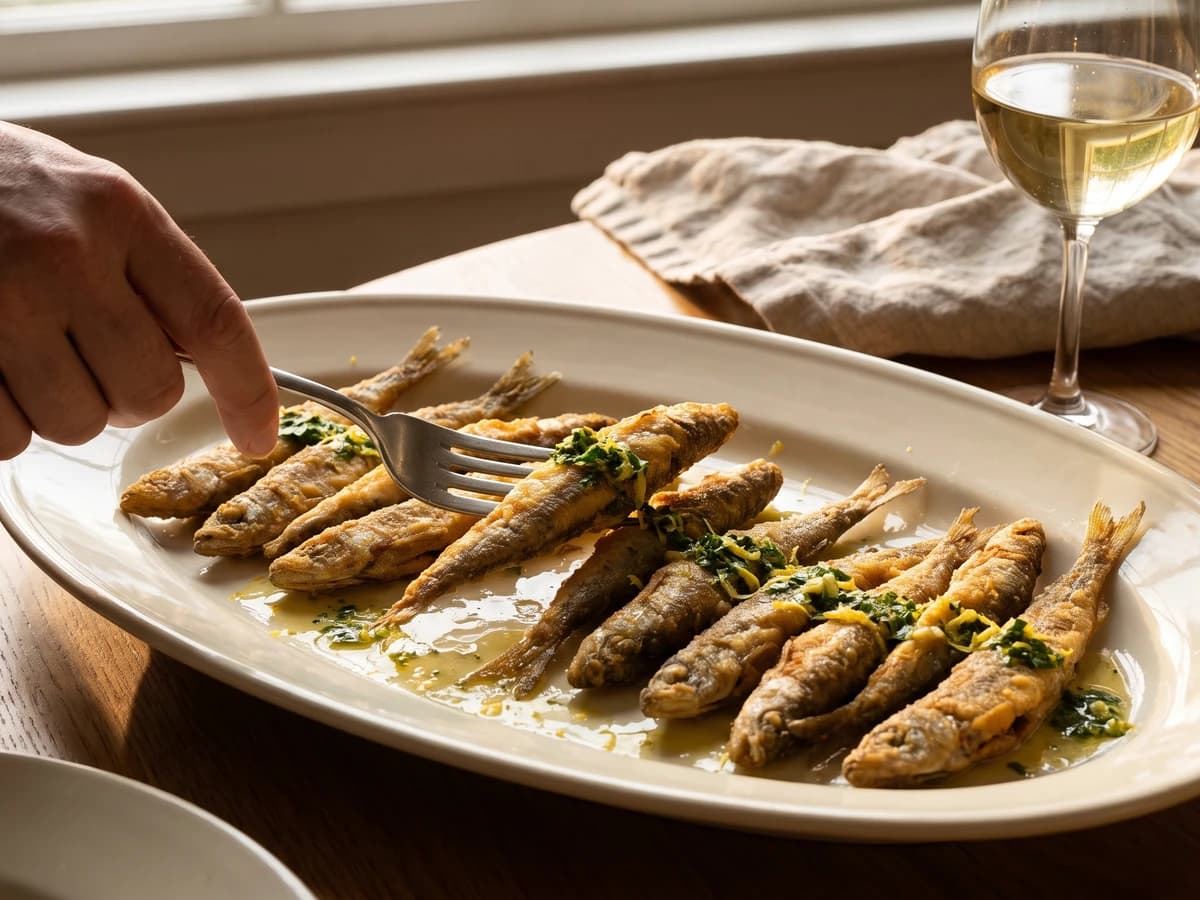
Éperlans à l’Anglaise turns small fish into a lesson in disciplined coating: boned smelts under a close, crisp crumb, pan-fried in clarified butter and finished with bright, half-melted maître d’hôtel butter.

Chef Juliette
Tiny smelts, shallot, mushrooms, white wine, gratin sauce, and fine bread raspings meet a fierce oven, where the fish must turn tender in the same breath the buttered crust bronzes.