
Chef Juliette
John Dory (St. Pierre)
John Dory has the delicacy of sole and the firmness of turbot. A light flouring, a quick butter sauté, and nut-brown beurre noisette show exactly why looks never mattered.
A cooking platform built around craft, culture, and the stories behind what we eat.
Created by Chef Juliette
Based on No. 860, Sole Dieppoise, from Le Guide Culinaire (1907) by Auguste Escoffier
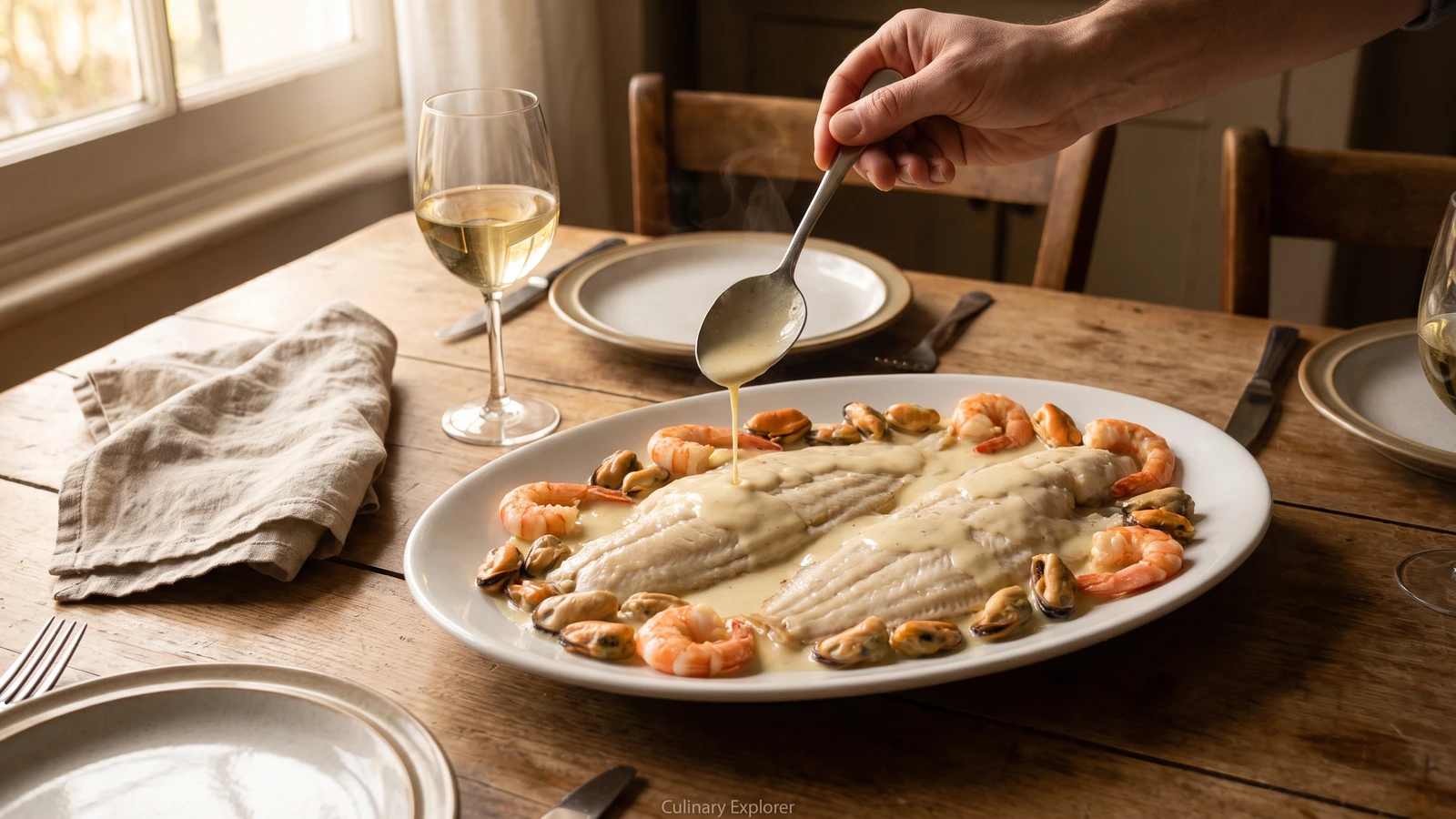
Sole Dieppoise teaches the discipline of reduction: delicate sole, briny mussels, and shrimp beneath an ivory white-wine sauce whose depth comes from every spoonful of fish and shellfish cooking liquor.
Sole Dieppoise (sole with mussels, shrimp, and white-wine sauce) teaches one discipline above all: the poaching liquor is not waste, it is the sauce's backbone. Before you touch a pan, decide that every spoonful of fumet and mussel liquor will be caught, strained, tasted, and reduced with care. The sole is delicate, but the reduction decides whether the finished plate tastes of Dieppe or merely of cream.
The book gives Dieppoise in brigade shorthand, assuming a saucier with white-wine sauce ready, fish fumet never off the fire, shellfish poached elsewhere, and pans broad enough for whole sole. A salamander is not part of this dish, so the home kitchen needs no broiler substitute. For one cook, one stove, one evening, the honest equivalent is eight fillets folded neatly in one sauté pan, mussels cooked first for their liquor, and a small white-wine sauce built while they rest. Whole-fish handling and separate stations were scaffolding. Shallow-poaching the sole in fumet and mussel liquor, reducing that liquor, and coating fish and garnish with the finished sauce are the dish, and they stay.
When it is right, the sole remains pearly and tender, the mussels and shrimp form a generous ring, and the ivory sauce falls from the spoon in a glossy ribbon. Reduce by taste, never by ruler. Mussel liquor can become salt before it becomes sauce, and that is the one step that demands your full attention.
Sole Dieppoise belongs to Dieppe, the Normandy port where flatfish, mussels, and small shrimp naturally met in the same kitchen. In the classical canon, à la Dieppoise became a named fish garnish: poached mussels and shrimp surrounded the fish while their cooking liquor strengthened a pale wine sauce. It is sometimes mistaken for a cream-led Norman preparation, but its identity rests first on fumet and shellfish liquor; the cream rounds that foundation rather than replacing it.
Quantity
8 fillets (1½ pounds / 680 g total)
pin bones removed
Quantity
1 teaspoon (5 ml / 6 g), plus more only if needed
divided
Quantity
¼ teaspoon (1.25 ml / 0.6 g)
Quantity
2 pounds (900 g)
scrubbed and debearded
Quantity
1 cup (240 ml / 240 g)
divided
Quantity
1½ cups (360 ml / 360 g)
divided
Quantity
5 tablespoons (75 ml / 70 g)
divided
Quantity
2 tablespoons (30 ml / 16 g)
Quantity
¾ cup (180 ml / 180 g)
Quantity
8 ounces (225 g)
peeled and deveined with tail shells removed
Quantity
¼ cup (60 ml / 60 g)
only if needed to correct the sauce
| Ingredient | Quantity |
|---|---|
| skinless Dover sole filletspin bones removed | 8 fillets (1½ pounds / 680 g total) |
| fine sea saltdivided | 1 teaspoon (5 ml / 6 g), plus more only if needed |
| finely ground white pepper | ¼ teaspoon (1.25 ml / 0.6 g) |
| live musselsscrubbed and debearded | 2 pounds (900 g) |
| dry white winedivided | 1 cup (240 ml / 240 g) |
| unsalted fish fumet (concentrated fish stock)divided | 1½ cups (360 ml / 360 g) |
| cold unsalted butterdivided | 5 tablespoons (75 ml / 70 g) |
| all-purpose flour | 2 tablespoons (30 ml / 16 g) |
| heavy cream | ¾ cup (180 ml / 180 g) |
| small raw shrimppeeled and deveined with tail shells removed | 8 ounces (225 g) |
| cold water (optional)only if needed to correct the sauce | ¼ cup (60 ml / 60 g) |
Pat the sole fillets completely dry. Fold each fillet in thirds with the tapered end tucked inside, making eight compact portions that will poach evenly. Keep them covered and cold while you scrub the mussels, pull away their beards, and rinse off every trace of grit.
Put the mussels and ½ cup (120 ml / 120 g) of the wine in a covered pot over medium-high heat. Cook for 3 to 5 minutes, shaking the pot once or twice and lifting out mussels as they open. Discard any that remain closed. When cool enough to handle, remove the mussels from their shells and pull away any remaining beards. Strain the liquor through a fine sieve lined with damp paper, then measure ½ cup (120 ml) for poaching the sole. Keep the mussels covered; save any extra liquor for another fish sauce or soup.
Melt 2 tablespoons (30 ml / 28 g) butter in a small saucepan over medium-low heat. Whisk in the flour and cook for 2 minutes without letting it color. This roux, the butter-and-flour thickener, gives the sauce enough body to hold the later reduction. Gradually whisk in the remaining ½ cup (120 ml / 120 g) wine, followed by ½ cup (120 ml / 120 g) fumet. Simmer gently for 6 minutes, whisking occasionally, then add the cream and simmer for another 4 to 5 minutes, until the sauce lightly coats a spoon. Do not season it yet; the mussel liquor still has its say. If the sauce lumps, pass it through the fine sieve and return it to the pan.
Coat a broad lidded sauté pan with 1 tablespoon (15 ml / 14 g) butter. Arrange the folded sole seam-side down in one layer, season lightly with the salt and white pepper, then pour 1 cup (240 ml / 240 g) fumet and the reserved ½ cup (120 ml) mussel liquor around the fish. Cover the surface with a circle of parchment, set on the lid, and bring the liquid just to a tremble. Lower the heat and poach for 5 to 7 minutes, lifting thinner pieces earlier if needed. The sole is ready when the center of each fold has turned pearly and opaque and separates under light pressure. A hard boil tightens delicate fish, so keep the liquid calm.
Warm a serving platter with hot water, dry it, and transfer the sole to it with a fish spatula. Cover loosely with parchment. Add the shrimp to the poaching liquor and hold it at the barest simmer for 1 to 2 minutes, just until the shrimp are opaque and curled into loose crescents. Lift them out immediately. Strain the poaching liquor, wiping the sauté pan clean before returning the liquid to it.
Boil the strained poaching liquor briskly, skimming away any pale foam, until roughly ½ cup (120 ml) remains. Taste it after every minute once it begins to concentrate. If the shellfish flavor is full before the liquid reaches that mark, stop reducing. If salt jumps forward because it went too far, ça se rattrape: whisk the concentrate into the prepared white-wine sauce a spoonful at a time, add cold water 1 tablespoon (15 ml) at a time if needed, and stop when the brininess is balanced. Add the white-wine sauce to the pan and simmer gently until nappante, thick enough to coat the back of a spoon while still flowing freely.
Take the pan off the heat and monter au beurre, finish with cold butter, by whisking in the remaining 2 tablespoons (30 ml / 28 g) a few pieces at a time. The sauce should turn glossy and fall in a smooth ribbon. If it looks oily, keep it off the heat and whisk in 1 teaspoon (5 ml) cold water; the emulsion will come back. Add the mussels and shrimp, then warm them over the lowest heat for no more than 30 seconds. Do not boil the finished sauce.
Arrange the sole neatly down the center of the warm platter. Lift the mussels and shrimp from the sauce and form a generous ring around the fish, then coat the sole and shellfish with the white-wine sauce. Serve at once, while the fish remains tender and the sauce still gleams. À table!
1 serving (about 370g)
Culinary guides, cultural storytelling, and the editorial depth that makes cooking meaningful.
Discover Culinary ExplorerChef Juliette
John Dory has the delicacy of sole and the firmness of turbot. A light flouring, a quick butter sauté, and nut-brown beurre noisette show exactly why looks never mattered.

Chef Juliette
Fresh haddock proves its delicacy in the meunière pan: a fine flour crust, moist pearly flakes, and beurre noisette sharpened with lemon and parsley, ready from one skillet in half an hour.
Chef Juliette
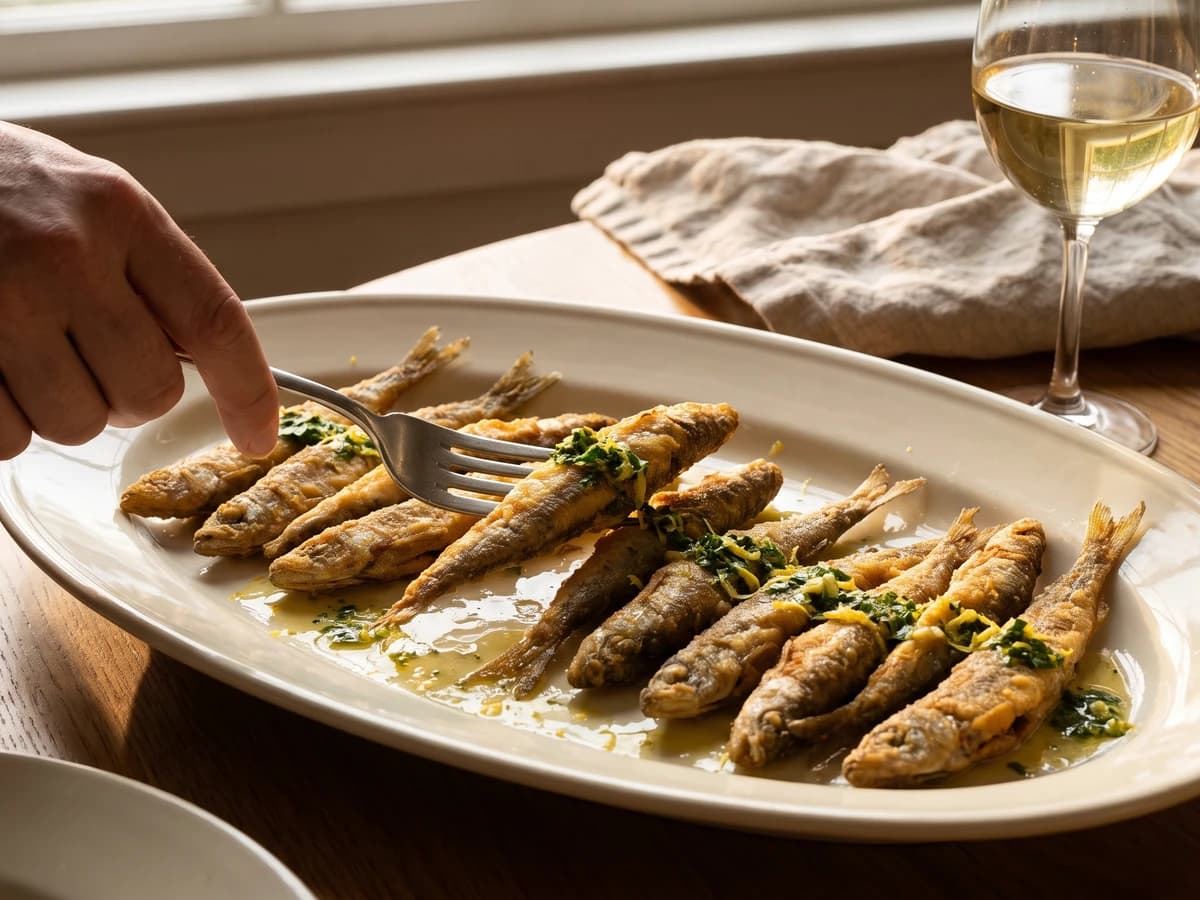
Éperlans à l’Anglaise turns small fish into a lesson in disciplined coating: boned smelts under a close, crisp crumb, pan-fried in clarified butter and finished with bright, half-melted maître d’hôtel butter.

Chef Juliette
Tiny smelts, shallot, mushrooms, white wine, gratin sauce, and fine bread raspings meet a fierce oven, where the fish must turn tender in the same breath the buttered crust bronzes.