
Chef Juliette
John Dory (St. Pierre)
John Dory has the delicacy of sole and the firmness of turbot. A light flouring, a quick butter sauté, and nut-brown beurre noisette show exactly why looks never mattered.
A cooking platform built around craft, culture, and the stories behind what we eat.
Created by Chef Juliette
Based on No. 819, Sole Mornay, from Le Guide Culinaire (1907) by Auguste Escoffier
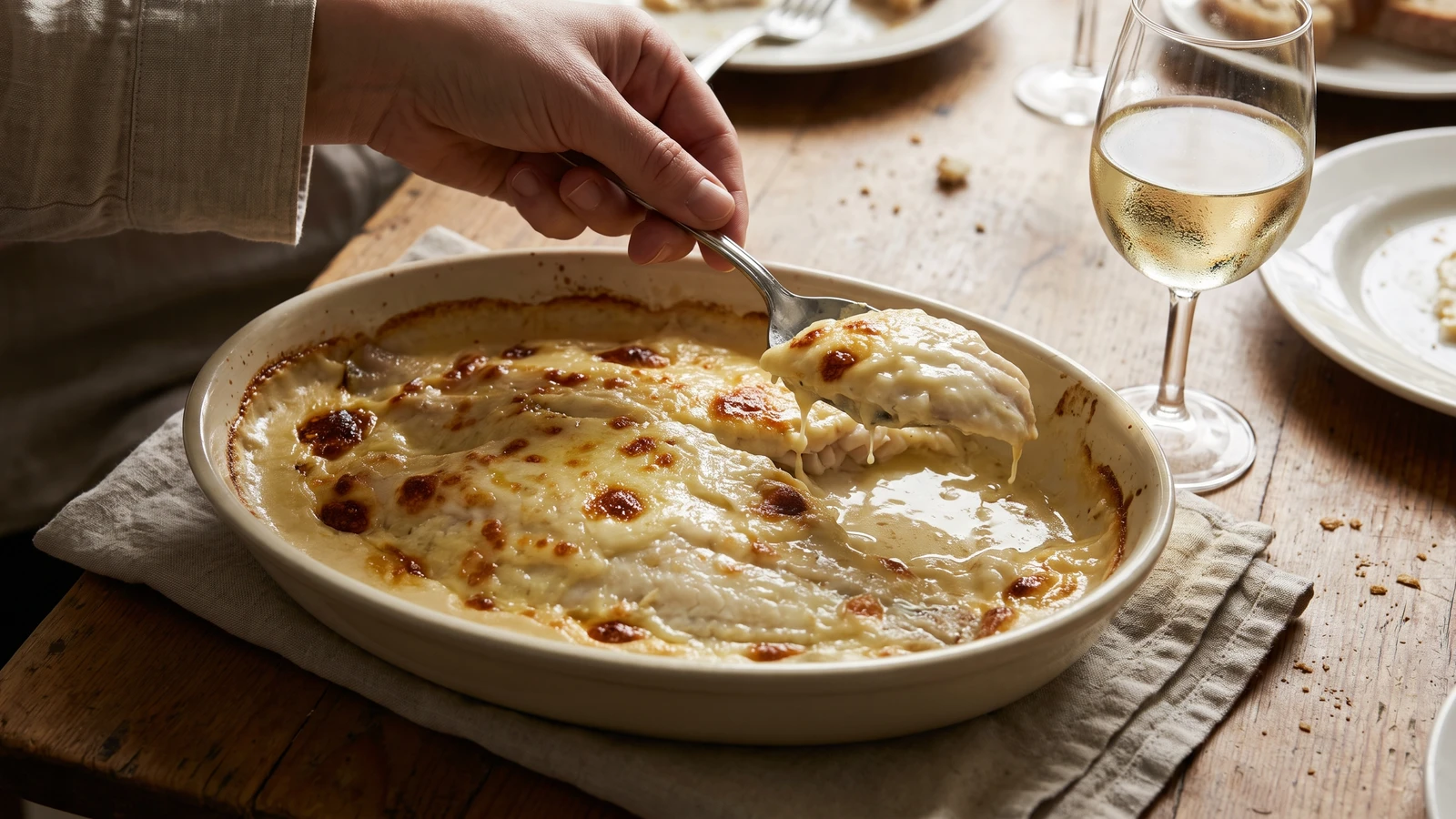
Sole poached at a tremble in fumet, napped with ivory Mornay, scattered with Gruyère and Parmesan, then glazed gold under the broiler: one quiet lesson in sauce, restraint, and heat.
Sole Mornay (sole poached and glazed beneath a cheese-enriched béchamel) teaches one true thing: finish the fish without making it endure the finish. The sole must leave its gentle poach slightly underdone, because the broiler is still cooking even while your eye is admiring the gold. Mornay, béchamel’s cheese-enriched daughter, protects the delicate flesh, but it cannot rescue fish that was boiled first.
The original entry assumed a saucier with Mornay ready, a stockpot of fumet never off the fire, trimmed sole arriving from another pair of hands, and a salamander waiting to glaze each order. At home, the fishmonger skins and fillets four small sole, one saucepan makes only the sauce you need, good prepared fumet replaces the perpetual stockpot, and the broiler replaces the salamander. Sauce holding and service machinery are brigade scaffolding, so they go. The gentle fumet poach, Mornay beneath and above the fish, Gruyère and Parmesan, and the final glaze are the dish itself, so every one stays. One cook, one stove, one evening.
When it is right, the sole yields beneath the serving spoon, the ivory sauce pools around it, and the cheese wears freckles of hazelnut gold. Keep the poaching liquid below a simmer. That is the step that decides the dish.
Sole Mornay belongs to the Parisian classical table, where gently poached flatfish met the canon’s family of daughter sauces and was finished to order beneath a salamander. Mornay is béchamel enriched with Gruyère and Parmesan, and although stories disagree over which member of the Mornay family lent the sauce its name, cooks agree on its method. Its pale dairy richness can suggest Normandy, but this is not a Norman regional preparation; it is a grand-kitchen construction that passed naturally into bourgeois gratin dishes.
Quantity
8 fillets, 3 ounces (85 g) each, about 1½ pounds (680 g) total
Quantity
1 tablespoon (15 ml / 14 g)
for buttering the poaching dish
Quantity
½ cup (120 ml / 120 g)
Quantity
4 tablespoons (60 ml / 56 g)
cut into small pieces for poaching
Quantity
3 tablespoons (45 ml / 42 g)
divided, for the Mornay
Quantity
¼ cup (60 ml / 30 g)
Quantity
1¾ cups (420 ml / 430 g)
Quantity
¼ cup (60 ml / 60 g)
Quantity
1 cup (240 ml / 100 g)
finely grated and divided
Quantity
½ cup (120 ml / 50 g)
finely grated and divided
Quantity
½ teaspoon (2.5 ml / 3 g)
divided
Quantity
⅛ teaspoon (0.6 ml / 0.3 g)
| Ingredient | Quantity |
|---|---|
| skinless Dover sole fillets | 8 fillets, 3 ounces (85 g) each, about 1½ pounds (680 g) total |
| softened unsalted butterfor buttering the poaching dish | 1 tablespoon (15 ml / 14 g) |
| fish fumet (concentrated fish stock) | ½ cup (120 ml / 120 g) |
| unsalted buttercut into small pieces for poaching | 4 tablespoons (60 ml / 56 g) |
| unsalted butterdivided, for the Mornay | 3 tablespoons (45 ml / 42 g) |
| all-purpose flour | ¼ cup (60 ml / 30 g) |
| whole milk | 1¾ cups (420 ml / 430 g) |
| heavy cream | ¼ cup (60 ml / 60 g) |
| Gruyèrefinely grated and divided | 1 cup (240 ml / 100 g) |
| Parmesanfinely grated and divided | ½ cup (120 ml / 50 g) |
| fine sea saltdivided | ½ teaspoon (2.5 ml / 3 g) |
| ground white pepper | ⅛ teaspoon (0.6 ml / 0.3 g) |
Melt 2 tablespoons (28 g) of the Mornay butter in a heavy saucepan over medium-low heat. Add the flour and stir for 2 minutes without letting the roux color; cooking it removes the raw flour taste while keeping the sauce ivory. Take the pan off the heat and whisk in the milk gradually, smoothing each addition before adding the next. Return it to medium-low heat, add half the cream, and cook for 5 to 7 minutes, whisking along the bottom and corners, until the sauce naps the back of a spoon and falls from the whisk in a broad ribbon. Season with half the salt and the white pepper. Remove the pan from the heat, then whisk in half the Gruyère, half the Parmesan, the remaining Mornay butter, and the remaining cream. Once the cheese enters, the sauce must not boil. If it turns grainy or shows beads of fat, pull it from the heat and whisk firmly with a spoonful of the reserved cream until smooth. Ça se rattrape. Press parchment directly against the surface and keep the Mornay warm.
Heat the oven to 325°F (165°C). Butter a 13 by 9-inch (33 by 23 cm) shallow baking dish and lay the sole fillets flat in one uncrowded layer, alternating the narrow ends so they fit without overlapping. Season with the remaining salt. Spoon the fish fumet over and around the fillets, then divide the 4 tablespoons (56 g) of poaching butter into small pieces over the fish. Lay a sheet of parchment directly against the surface and bake for 7 to 10 minutes. The fumet should barely tremble, never boil, and the fish should be opaque at the edges but only just yielding at its thickest point. If the liquid begins bubbling hard, lift the dish from the oven for a minute and lower the heat to 300°F (150°C). The broiler will finish the fish, so stop the poach early rather than late.
Change the oven to high broil and set a rack about 6 inches (15 cm) below the element. If the Mornay has cooled, warm it over the lowest heat only until it flows again. Spread about one-third of the sauce across the bottom of a shallow, broiler-safe gratin dish. Lift each fillet from the poaching dish with a broad fish spatula, pause to let the fumet drain away, and arrange the fish neatly over the sauce. Draining matters: excess poaching liquid thins the Mornay and prevents a clean glaze.
Spoon the remaining Mornay over the sole, covering every fillet from end to end. The sauce should cling in a generous coat rather than run like milk; if it has tightened while waiting, loosen it over gentle heat with a teaspoon of milk. Scatter the remaining Gruyère and Parmesan evenly over the surface. Do not mound the cheese heavily in the center, or the edges will brown before the middle begins to bubble.
Set the gratin dish under the hot broiler for 2 to 4 minutes, rotating it once if your heat is uneven. The Mornay should bubble at the rim and the cheeses should melt into a freckled butter-gold glaze. If one patch darkens too quickly, move the dish down a rack rather than covering the whole surface. Stop as soon as the color arrives; chasing a dark crust only overcooks the sole beneath it. The thickest fillet should be opaque and reach 145°F (63°C). Let the dish settle for 2 minutes, then carry it directly to the table. À table!
1 serving (about 320g)
Culinary guides, cultural storytelling, and the editorial depth that makes cooking meaningful.
Discover Culinary ExplorerChef Juliette
John Dory has the delicacy of sole and the firmness of turbot. A light flouring, a quick butter sauté, and nut-brown beurre noisette show exactly why looks never mattered.

Chef Juliette
Fresh haddock proves its delicacy in the meunière pan: a fine flour crust, moist pearly flakes, and beurre noisette sharpened with lemon and parsley, ready from one skillet in half an hour.
Chef Juliette
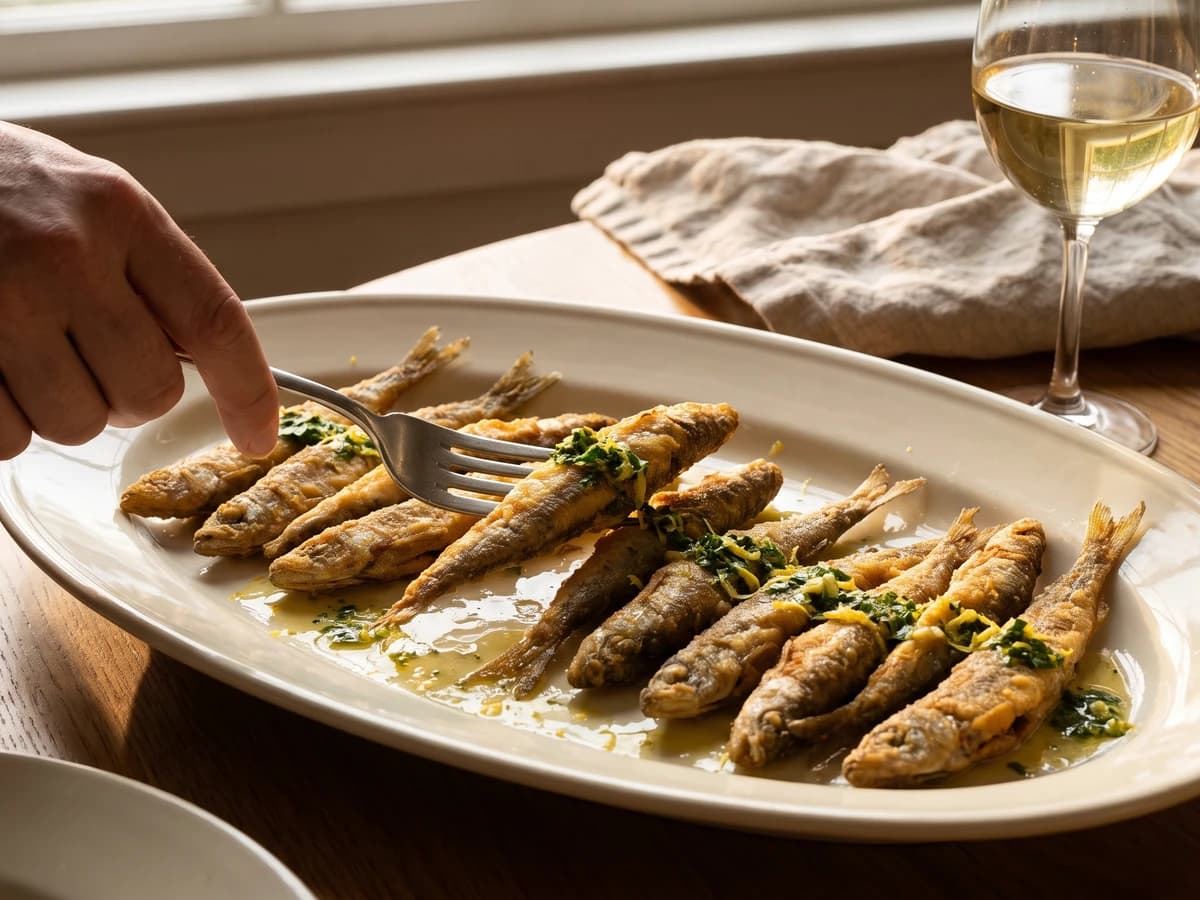
Éperlans à l’Anglaise turns small fish into a lesson in disciplined coating: boned smelts under a close, crisp crumb, pan-fried in clarified butter and finished with bright, half-melted maître d’hôtel butter.

Chef Juliette
Tiny smelts, shallot, mushrooms, white wine, gratin sauce, and fine bread raspings meet a fierce oven, where the fish must turn tender in the same breath the buttered crust bronzes.