
Chef Juliette
John Dory (St. Pierre)
John Dory has the delicacy of sole and the firmness of turbot. A light flouring, a quick butter sauté, and nut-brown beurre noisette show exactly why looks never mattered.
A cooking platform built around craft, culture, and the stories behind what we eat.

Created by Chef Juliette
Based on No. 807, Côtelettes Froides de Saumon, from Le Guide Culinaire (1907) by Auguste Escoffier
Paper-thin sockeye encloses a seasoned salmon center, poached gently in petite molds, chilled, and glazed with clear aspic: the formal ball-supper cutlet translated for one careful cook and a generous celebration table.
Côtelettes Froides de Saumon (cold molded salmon cutlets) teach a cold-kitchen principle: temperature is structure. The one true thing to know before touching a pan is that the salmon must remain cold through shaping, and the cooked cutlets must be colder still before the aspic touches them. Cold fish slices cleanly and holds the mold; a cold surface catches the half-set aspic in a clear, even coat.
The original assumed a cold-larder cook beside the saucier, stock never off the fire for clear aspic, drawers of tin cutlet molds, and enough hands to build a tazza with a rice or semolina pedestal. Your home equivalent is honest: small oval molds, prepared clear fish stock strengthened with gelatin, and a shallow serving dish. The pedestal and vertical salad pyramid were brigade scaffolding, so they go. The buttered mold, red salmon lining, seasoned center, dry poach, immediate unmolding, aspic glaze, and sauceboat are the dish, so every one stays. One cook, one stove, one evening.
When finished, each cutlet should look like polished coral beneath a clear glaze, with a few very green peas held neatly on its surface. The decisive moment is the glazing: wait until the cutlets are thoroughly cold and the aspic has thickened to the body of light cream. Too warm or too fluid and it runs straight onto the tray; catch those two temperatures, and the old ball-supper piece belongs entirely at your table.
Côtelettes froides de saumon belong to the formal Parisian ball-supper table, where the cold-larder repertoire supplied elegant food that could wait gracefully while guests danced. The word cutlet describes the molded silhouette rather than a bone-in piece of fish, a common piece of visual wit in classical cold cookery. The tazza, sculpted pedestal, vegetable-salad pyramid, and hatelet (ornamental skewer) were buffet architecture; the salmon shell, seasoned center, aspic, and cold sauce carried the flavor.
Quantity
10 ounces (285 g)
pin bones removed and partly frozen for slicing
Quantity
1 pound (455 g)
pin bones removed, diced, and kept very cold
Quantity
2 tablespoons (30 ml / 28 g)
softened
Quantity
2 teaspoons (10 ml / 12 g)
divided
Quantity
1/2 teaspoon (2.5 ml / 1 g)
divided
Quantity
2 cups (480 ml / 480 g)
Quantity
1 1/2 tablespoons (22 ml / 14 g)
Quantity
2 tablespoons (30 ml / 20 g)
Quantity
1
Quantity
2 teaspoons (10 ml / 10 g)
Quantity
1 tablespoon (15 ml / 15 g)
Quantity
3/4 cup (180 ml / 165 g)
Quantity
2 tablespoons (30 ml / 4 g)
finely chopped
Quantity
2 tablespoons (30 ml / 30 g)
as needed
| Ingredient | Quantity |
|---|---|
| skinless center-cut sockeye salmonpin bones removed and partly frozen for slicing | 10 ounces (285 g) |
| skinless salmon filletpin bones removed, diced, and kept very cold | 1 pound (455 g) |
| unsalted buttersoftened | 2 tablespoons (30 ml / 28 g) |
| fine sea saltdivided | 2 teaspoons (10 ml / 12 g) |
| ground white pepperdivided | 1/2 teaspoon (2.5 ml / 1 g) |
| clear unsalted fish stock | 2 cups (480 ml / 480 g) |
| unflavored powdered gelatin | 1 1/2 tablespoons (22 ml / 14 g) |
| frozen petite peas | 2 tablespoons (30 ml / 20 g) |
| pasteurized large egg yolk | 1 |
| Dijon mustard | 2 teaspoons (10 ml / 10 g) |
| fresh lemon juice | 1 tablespoon (15 ml / 15 g) |
| neutral oil | 3/4 cup (180 ml / 165 g) |
| chervil leavesfinely chopped | 2 tablespoons (30 ml / 4 g) |
| cold wateras needed | 2 tablespoons (30 ml / 30 g) |
Butter eight 3-ounce (90 ml) oval cutlet molds liberally, reaching into every edge, then refrigerate them for 10 minutes so the butter firms. Place the sockeye in the freezer for 20 to 30 minutes, just until firm enough to slice without bending; it must not freeze solid. Keep the diced filling salmon in the cold while you work. Cold fish cuts cleanly, packs neatly, and stays out of danger.
Using a long, very sharp knife held nearly parallel to the board, cut the sockeye into eight broad slices about 1/16 inch (1.5 mm) thick. Each must cover the base and sides of a mold with about 1/2 inch (1.25 cm) projecting beyond the rim. Press a slice gently into each buttered mold without stretching it. If a slice tears, overlap a thin scrap of sockeye over the gap from the inside; once poached and glazed, the seam disappears.
Chop the filling salmon very finely by hand, or pulse it briefly in a food processor until minced but not puréed. Mix in 1 1/4 teaspoons of the salt and 1/4 teaspoon of the white pepper, stirring firmly for about 30 seconds until the salmon feels slightly tacky. Cook a teaspoonful in barely simmering water and taste it cold enough not to burn you; adjust with a little of the remaining salt if necessary. Divide the mixture among the molds, pressing it into the edges without leaving air pockets, then draw the projecting salmon across the top to enclose each cutlet completely.
Heat the oven to 325°F (165°C). Arrange the filled molds on a baking sheet and pocher à sec, meaning poach them in the moderate oven without a water bath, for 12 to 18 minutes. They are ready when the salmon is just opaque and the center reaches 140°F (60°C); let the molds stand for 3 minutes and confirm that carryover heat brings the centers to 145°F (63°C). If it does not, return them to the oven briefly. The surfaces should remain pale and moist, without browning.
Turn the cutlets out immediately onto a clean chilled tray, as the original method requires. If one clings, hold a hot damp towel against the outside of its mold for 5 seconds and invert again; do not pry at the delicate lining. Blot away any white albumin with the corner of a damp cloth. Let the cutlets stop giving off heat for no more than 20 minutes, cover without touching their surfaces, and refrigerate for at least 2 hours, until thoroughly cold at 40°F (4°C) or below.
Pour 1/2 cup (120 ml) of the cold fish stock into a bowl and sprinkle the gelatin evenly over it. Leave it for 5 minutes to bloom. Heat the remaining 1 1/2 cups (360 ml) of stock until just below a simmer, then remove it from the heat and whisk in the bloomed gelatin until perfectly clear. Season with 1/4 teaspoon salt and 1/8 teaspoon white pepper, then strain through a fine sieve. Set the bowl over ice and stir until the aspic is cold and half-set, with the consistency of light cream. If it becomes lumpy or sets solid, warm it gently over hot water until clear and begin cooling it again. Ça se rattrape.
Whisk the egg yolk with the Dijon mustard, lemon juice, 1/4 teaspoon salt, and the remaining 1/8 teaspoon white pepper. Add the oil drop by drop at first, whisking constantly; once the emulsion has taken and looks glossy, pour the rest in a thin, steady thread. Thin the mayonnaise with 1 to 2 tablespoons of cold water until it falls softly from a spoon, then fold in the chervil. If the mayonnaise splits, put 1 teaspoon of cold water in a clean bowl and whisk the broken sauce into it one spoonful at a time. Cover and refrigerate.
Blanch the peas in boiling water for 30 seconds, cool them immediately in ice water, and dry them thoroughly. Set the cold cutlets on a rack over a tray and spoon or brush each with a thin coat of half-set aspic. Wait about 5 minutes, until the coating feels tacky, then arrange three very green peas neatly on each cutlet and cover them with a second thin coat. If the glaze slides off, the cutlets or aspic are too warm; chill the fish again, thicken the aspic over ice, and try once more. Refrigerate for 30 minutes to set.
Arrange the cutlets in a circle on a flat, shallow serving dish. Spoon enough remaining half-set aspic around them to make a delicate clear layer without burying their shape, then chill for another 15 minutes. Keep the dish cold until serving and offer two cutlets per person with the chervil mayonnaise in a sauceboat. The cutlets should reach the table polished, cool, and unmistakably generous. À table!
1 serving (about 345g)
Culinary guides, cultural storytelling, and the editorial depth that makes cooking meaningful.
Discover Culinary ExplorerChef Juliette
John Dory has the delicacy of sole and the firmness of turbot. A light flouring, a quick butter sauté, and nut-brown beurre noisette show exactly why looks never mattered.

Chef Juliette
Fresh haddock proves its delicacy in the meunière pan: a fine flour crust, moist pearly flakes, and beurre noisette sharpened with lemon and parsley, ready from one skillet in half an hour.
Chef Juliette
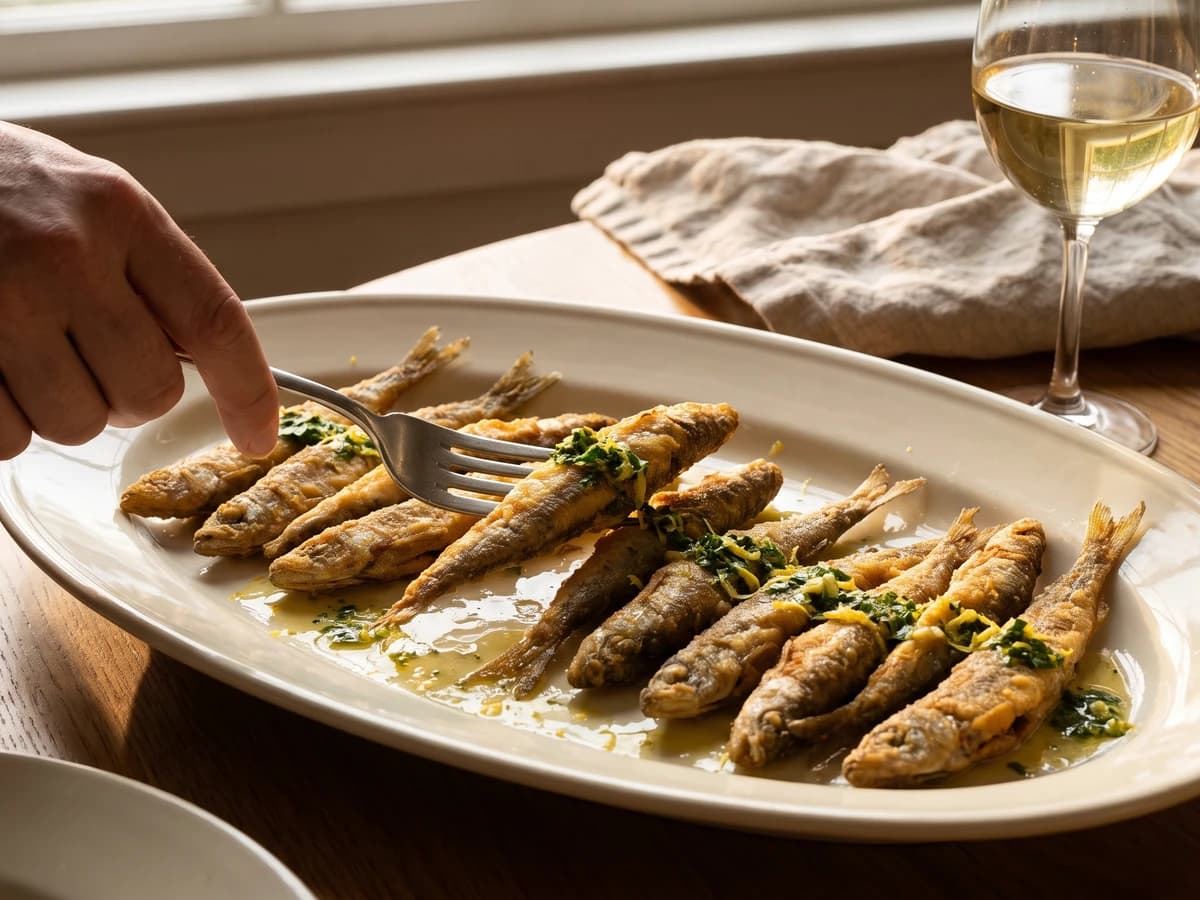
Éperlans à l’Anglaise turns small fish into a lesson in disciplined coating: boned smelts under a close, crisp crumb, pan-fried in clarified butter and finished with bright, half-melted maître d’hôtel butter.

Chef Juliette
Tiny smelts, shallot, mushrooms, white wine, gratin sauce, and fine bread raspings meet a fierce oven, where the fish must turn tender in the same breath the buttered crust bronzes.