
Chef Juliette
John Dory (St. Pierre)
John Dory has the delicacy of sole and the firmness of turbot. A light flouring, a quick butter sauté, and nut-brown beurre noisette show exactly why looks never mattered.
A cooking platform built around craft, culture, and the stories behind what we eat.
Created by Chef Juliette
Based on No. 758, Dorado, from Le Guide Culinaire (1907) by Auguste Escoffier
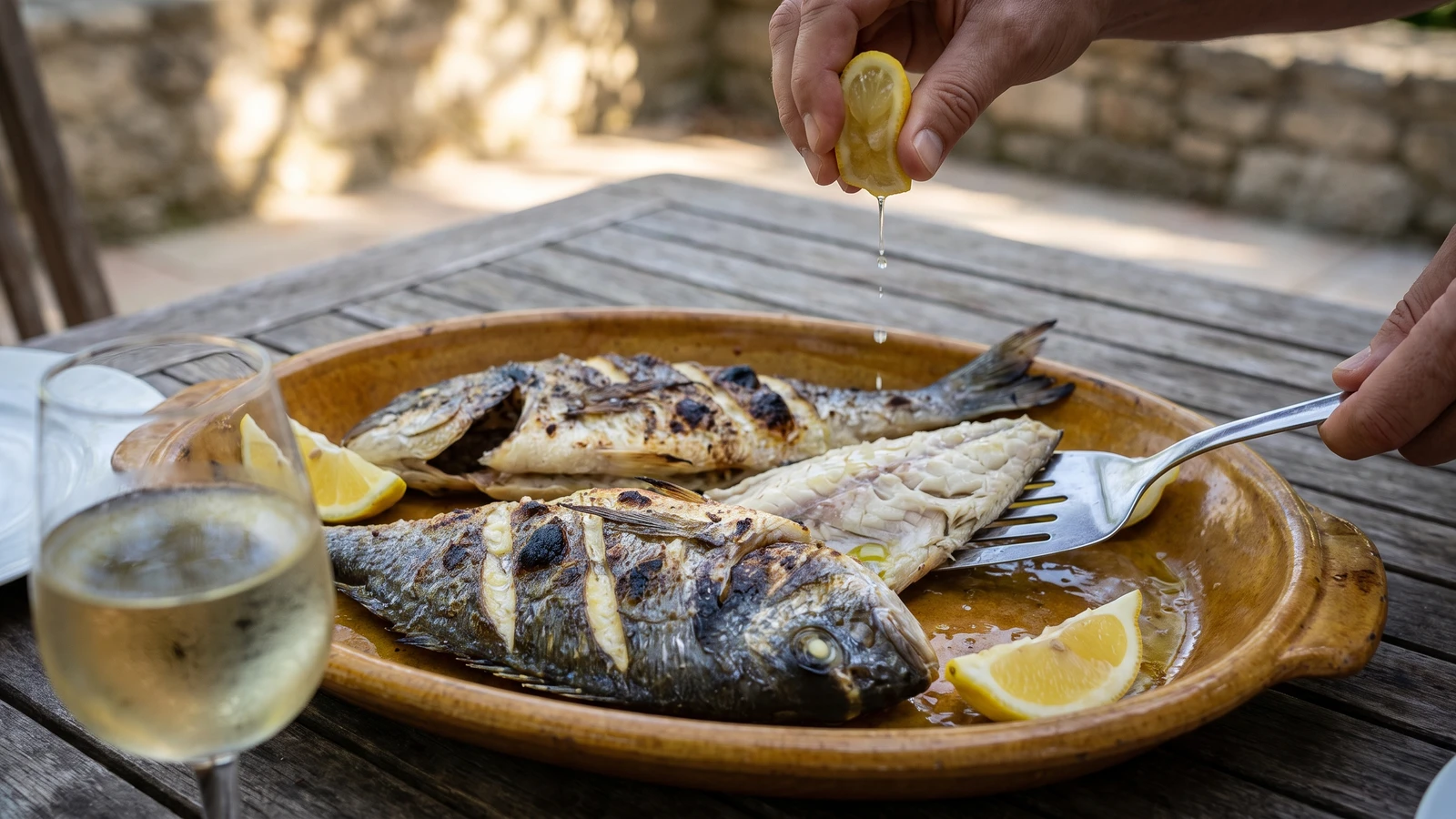
Daurade grillée needs no sauce brigade, only a whole fish, a fierce clean grate, and the patience to let scored, oiled skin blister before you turn it.
Daurade grillée (whole grilled dorado) teaches the law of fish over flame: dry skin, a properly heated grate, and the patience not to move the fish before it releases. Score the skin so the heat enters evenly, oil it generously, then let the edges char and blister while the flesh stays pearly against the backbone. That is the dish.
The original entry offers boiling with English fish sauces, then dismisses it in favor of the grill used along the Mediterranean coast. It assumes a fishmonger has prepared the whole catch and a cook commands a coal fire. There is no saucier's reduction, perpetual stockpot, or salamander work to reproduce. For one cook, the honest equivalents are two cleaned market fish and a two-zone charcoal or gas grill, with a cast-iron grill pan as the indoor cousin. The unspecified service catch becomes two 1½-pound fish for four. The fish kettle and sauce service were scaffolding; scoring, oiling, and direct flame are the dish, so those remain.
Cooking well is not cooking fancy. The daurade needs salt, olive oil, lemon, and your attention. Before you touch the grate, remember the one thing that decides it: a properly browned fish releases, while a pale fish clings, so don't force the turn.
Daurade grillée belongs to Mediterranean fish cooking from Provence through Languedoc, where gilthead bream goes whole over coals and its skin and bones shield the delicate flesh. Classical compendia also offered the fish boiled with English fish sauces, but this entry records the southern preference for grilling, carrying a waterside method into the national canon. In French market language, daurade royale identifies gilthead bream; dorado does not mean mahi-mahi in this dish.
Quantity
2, about 1½ pounds (680 g) each
scaled, gutted, and fins trimmed
Quantity
⅓ cup (80 ml / 73 g)
divided
Quantity
2 teaspoons (10 ml / 12 g)
Quantity
1 teaspoon (5 ml / 2 g)
Quantity
2
each cut into 4 wedges
| Ingredient | Quantity |
|---|---|
| whole daurade royale (gilthead sea bream)scaled, gutted, and fins trimmed | 2, about 1½ pounds (680 g) each |
| extra-virgin olive oildivided | ⅓ cup (80 ml / 73 g) |
| fine sea salt | 2 teaspoons (10 ml / 12 g) |
| freshly ground black pepper | 1 teaspoon (5 ml / 2 g) |
| lemonseach cut into 4 wedges | 2 |
Heat a charcoal or gas grill to 450 to 500°F (230 to 260°C), keeping one section cooler so you have somewhere to move the fish if the dripping oil wakes the flames. Scrub the grate thoroughly. Dip a folded paper towel in 2 teaspoons of the olive oil and, holding it with long tongs, wipe the hot grate several times. Never spray oil toward a lit grill. Indoors, heat a large cast-iron grill pan over medium-high heat and cook one fish at a time.
Wipe the fish inside and out rather than rinsing them, then dry every surface thoroughly with paper towels. Cut three diagonal slashes into each side, about ¼ inch (6 mm) deep and spaced 1½ inches (4 cm) apart. Cut through the skin and just into the flesh, stopping well before the backbone. Scoring lets the thickest part cook with the thinner tail and gives the olive oil somewhere to settle.
Season the cavities, both sides, and the slashes with the salt and pepper. Brush the fish with ¼ cup (60 ml) of the olive oil, working it into every cut. Oil is not decoration here; it carries the heat across the skin and helps the surface blister rather than scorch dry. Keep the lemon off until the end, because acid on raw fish dampens the surface and works against clean browning.
Lay the fish over direct heat with their heads toward the hotter part and tails toward the cooler edge. Close the lid and leave them untouched for 6 to 8 minutes, until the skin is bronzed, the scored edges have charred, and a thin spatula slips beneath without pulling. If dripping oil causes a flare, move the fish to the cooler zone until the flame settles, then return them to the heat. Don't douse the fire with water.
Place one wide spatula beneath the shoulders and a second beneath the tail, then roll each fish gently onto its other side. If the skin resists, wait another 30 to 60 seconds; the browned surface will release when it is ready. If a patch tears, ça se rattrape: slide the spatula beneath the torn skin, complete the turn, and serve that side against the platter. Grill for another 5 to 7 minutes, until the flesh beside the backbone is opaque and pearly and the thickest part reaches 145°F (63°C).
Transfer the daurade to a warm platter and rest them for 3 minutes. Drizzle with the remaining olive oil and squeeze four lemon wedges over the scored skin. To serve, run a spoon along the backbone, lift away the upper fillets, remove the backbone in one piece, then portion the lower fillets. Watch for the small pin bones near the head and serve the remaining lemon alongside. One fish feeds two generously. À table!
1 serving (about 175g)
Culinary guides, cultural storytelling, and the editorial depth that makes cooking meaningful.
Discover Culinary ExplorerChef Juliette
John Dory has the delicacy of sole and the firmness of turbot. A light flouring, a quick butter sauté, and nut-brown beurre noisette show exactly why looks never mattered.

Chef Juliette
Fresh haddock proves its delicacy in the meunière pan: a fine flour crust, moist pearly flakes, and beurre noisette sharpened with lemon and parsley, ready from one skillet in half an hour.
Chef Juliette
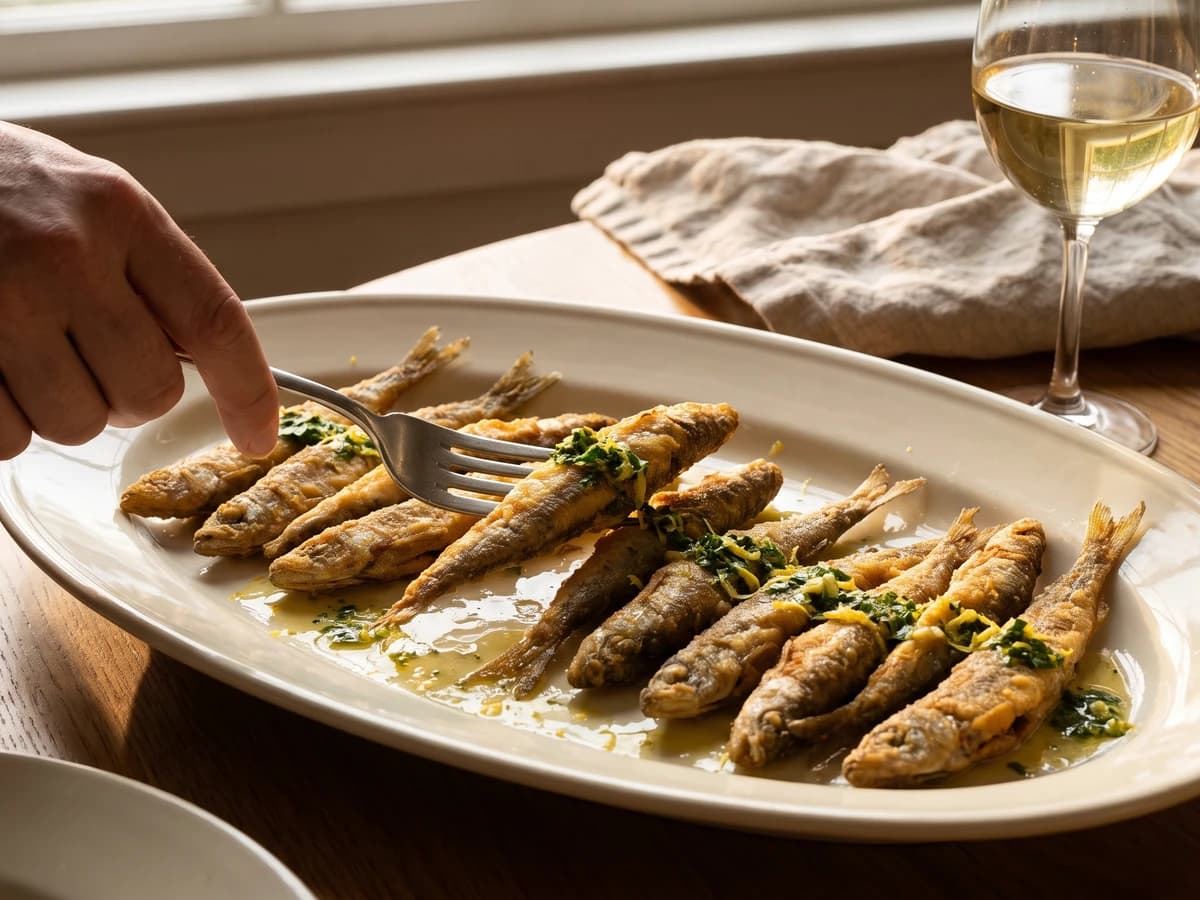
Éperlans à l’Anglaise turns small fish into a lesson in disciplined coating: boned smelts under a close, crisp crumb, pan-fried in clarified butter and finished with bright, half-melted maître d’hôtel butter.

Chef Juliette
Tiny smelts, shallot, mushrooms, white wine, gratin sauce, and fine bread raspings meet a fierce oven, where the fish must turn tender in the same breath the buttered crust bronzes.