
Chef Juliette
John Dory (St. Pierre)
John Dory has the delicacy of sole and the firmness of turbot. A light flouring, a quick butter sauté, and nut-brown beurre noisette show exactly why looks never mattered.
A cooking platform built around craft, culture, and the stories behind what we eat.

Created by Chef Juliette
Based on No. 755, Eels, from Le Guide Culinaire (1907) by Auguste Escoffier
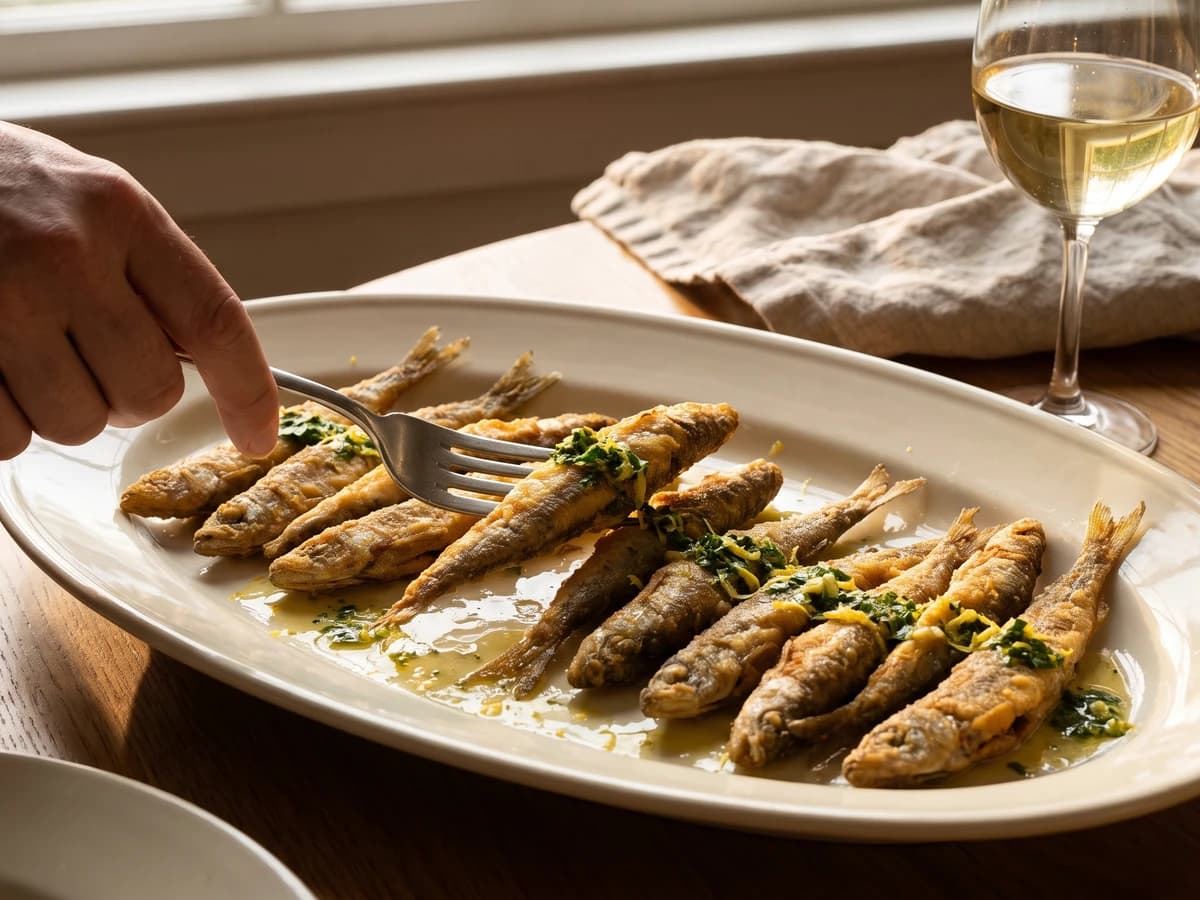
Petites anguilles à la meunière turn the source's plain instruction to fry small eels into supper: crisp flour-dusted edges, rich sweet flesh, and beurre noisette sharpened with lemon.
Petites Anguilles à la Meunière (small eels in the miller's manner) teach the cleanest lesson in frying: the surface must be dry before it meets fat. Meunière means a light coat of flour, butter, and quick cooking, not a batter and not a heavy crust. Get that surface right and the eel comes out bronze at the edges, rich and sweet within, with lemon cutting cleanly through its fat.
The source is brief because it assumes eel is common, and that the cook already knows how to kill, skin, and clean it. That assumption has changed. Have a fishmonger do the difficult work, then replace the broad professional frying setup with one 12-inch skillet and two patient batches; no saucier, standing stockpot, or salamander is hiding behind this dish. That is the honest home translation for four, one cook, one stove, one evening.
The wide pan and brigade hands are scaffolding, and they can go. Drying, flouring at the last moment, and keeping the fat hot enough to seize the coat are the dish, so they stay. Before you touch the pan, blot the pieces until a fresh towel comes away dry; that one act decides the crust.
Eel belongs to France's river, marsh, and estuary tables rather than to one province: the lower Loire and Marais Poitevin treated it as an everyday catch, while French Flanders claimed anguille au vert with its green herb sauce. Larger fish went into matelote, a wine-bound stew, while smaller ones met the frying pan, where meunière gave rich flesh a dry coat and a sharp lemon finish. Across the Channel, Thames-side London coffee shops made eel pie their calling card, while Continental kitchens kept the broader repertoire recorded by the source.
Quantity
2 lb (900 g)
fishmonger-killed, gutted, skinned, heads removed, and cut crosswise into 2-inch (5 cm) pieces
Quantity
1 tablespoon (15 ml / 18 g)
for rubbing and rinsing away
Quantity
½ cup (120 ml / 60 g)
Quantity
1 teaspoon (5 ml / 6 g)
Quantity
½ teaspoon (2.5 ml / 1 g)
Quantity
¾ cup (180 ml / 165 g)
divided
Quantity
4 tablespoons (60 ml / 57 g)
Quantity
1 large
halved, one half juiced and the other cut into wedges
Quantity
¼ cup (60 ml / 15 g)
coarsely chopped
| Ingredient | Quantity |
|---|---|
| small eels, cleaned weightfishmonger-killed, gutted, skinned, heads removed, and cut crosswise into 2-inch (5 cm) pieces | 2 lb (900 g) |
| coarse sea saltfor rubbing and rinsing away | 1 tablespoon (15 ml / 18 g) |
| all-purpose flour | ½ cup (120 ml / 60 g) |
| fine sea salt | 1 teaspoon (5 ml / 6 g) |
| freshly ground black pepper | ½ teaspoon (2.5 ml / 1 g) |
| clarified butterdivided | ¾ cup (180 ml / 165 g) |
| unsalted butter | 4 tablespoons (60 ml / 57 g) |
| lemonhalved, one half juiced and the other cut into wedges | 1 large |
| flat-leaf parsley leavescoarsely chopped | ¼ cup (60 ml / 15 g) |
Keep the prepared eel cold until you are ready to work. Rub the pieces with the coarse salt for one minute to lift any remaining slime, rinse them briefly under cold running water, and drain well. Pat them dry with kitchen towels, changing the towels until a fresh one comes away dry. Do not merely dab the surface; moisture loosens the flour and prevents browning.
Set a wire rack over a tray and warm the oven to 250°F (120°C). Mix the flour with the fine salt and pepper in a shallow dish. Heat half the clarified butter in a 12-inch skillet over medium-high heat until it shimmers and a pinch of flour sizzles immediately without blackening. Coat only the first batch of eel in the seasoned flour, shaking off every loose veil before it reaches the pan.
Lay half the eel pieces in the skillet away from you, leaving clear space between them. Fry for three minutes without disturbing them, then turn each piece a quarter turn every two minutes until all sides are deep gold, about eight to ten minutes altogether. The flesh must be opaque and come easily from the central bone, with the thickest piece reaching 145°F (63°C). If the coating loosens, stop turning and let it set for another minute before easing it free with a thin spatula. Blot and reflour the remaining eel more carefully. Ça se rattrape.
Transfer the cooked eel to the rack and hold it uncovered in the low oven. Remove any dark flour crumbs from the skillet with a slotted spoon, add the remaining clarified butter, and let it return to a lively shimmer. Flour and fry the second batch in the same way. If the fat smells bitter rather than buttery, discard it, wipe the pan, and begin the batch with fresh clarified butter; burnt flour cannot be hidden under lemon.
Pour the used frying butter into a heatproof container and let it cool before disposal. Wipe the skillet clean, add the unsalted butter, and cook over medium heat until the foam settles, the milk solids turn hazelnut brown, and the butter smells round and nutty. This is beurre noisette, hazelnut-browned butter. Pull the pan from the heat at once, carefully add the juice from half the lemon, and stir in the parsley.
Arrange the eel on a warm platter and spoon the beurre noisette over it at the last possible moment, keeping some crisp edges clear of the sauce. Serve with the lemon wedges and warn diners that each piece holds a central bone. Boiled potatoes or a sharp green salad need no further instruction beside it. À table!
1 serving (about 215g)
Culinary guides, cultural storytelling, and the editorial depth that makes cooking meaningful.
Discover Culinary ExplorerChef Juliette
John Dory has the delicacy of sole and the firmness of turbot. A light flouring, a quick butter sauté, and nut-brown beurre noisette show exactly why looks never mattered.

Chef Juliette
Fresh haddock proves its delicacy in the meunière pan: a fine flour crust, moist pearly flakes, and beurre noisette sharpened with lemon and parsley, ready from one skillet in half an hour.
Chef Juliette
Éperlans à l’Anglaise turns small fish into a lesson in disciplined coating: boned smelts under a close, crisp crumb, pan-fried in clarified butter and finished with bright, half-melted maître d’hôtel butter.

Chef Juliette
Tiny smelts, shallot, mushrooms, white wine, gratin sauce, and fine bread raspings meet a fierce oven, where the fish must turn tender in the same breath the buttered crust bronzes.