
Chef Juliette
Bouillabaisse à la Marseillaise
Marseille's great fish stew, saffron-gold and garlic-scented, proves that a hard boil can be the careful choice: it binds olive oil into broth before the whole pot meets bread.
A cooking platform built around craft, culture, and the stories behind what we eat.
Created by Chef Juliette
Based on No. 626, Consommé à la Portugaise, from Le Guide Culinaire (1907) by Auguste Escoffier
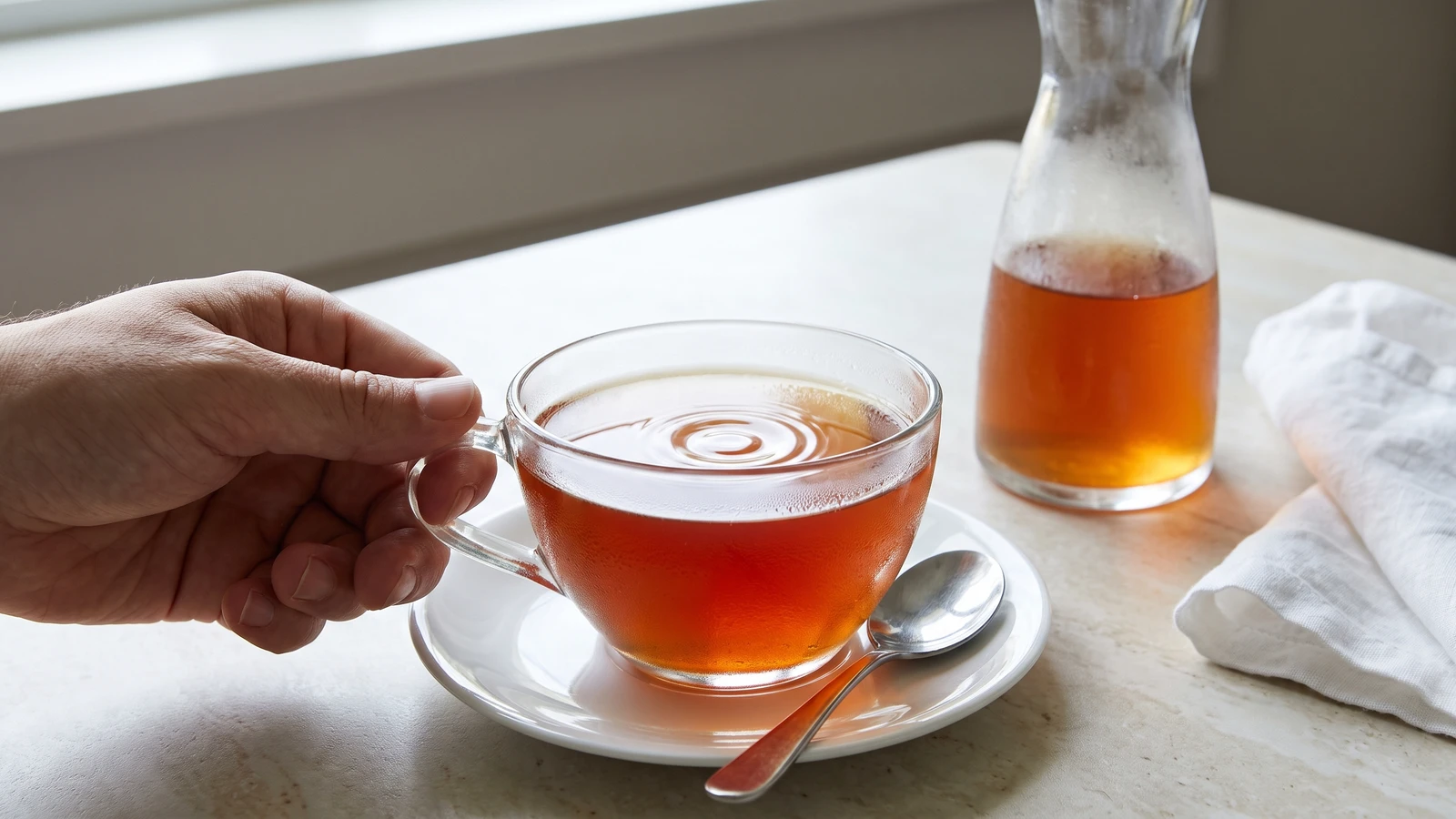
Clarity is the lesson: ripe tomato deepens a finished consommé under the gentlest covered heat, then muslin and patience leave a brilliant, cayenne-touched broth to serve very cold.
Consommé à la Portugaise (clear tomato broth served cold) teaches that clarity is protected by temperature, not won by frantic straining afterward. The one true thing to know before touching the pan is this: once raw tomato enters a finished consommé, the liquid must grow hot enough to exchange flavor but must never boil. Boiling scatters the tomato pulp through the broth and steals its brilliance.
The original entry assumed a saucier on staff and finished consommé drawn hot from a stockpot never off the fire. A salamander has no work here. At home, six cups of finished clear consommé, a heavy saucepan, and a thermometer give the honest equivalent. One cup of raw tomato purée and one-half cup of tomato juice keep the book's proportions exactly while bringing the batch down to about two quarts. The vast brigade quantity is scaffolding and goes; the covered twenty-minute cooking, the gentle heat, and the light pressure through muslin are the dish and must stay. One cook, one stove, one evening.
Finished well, the consommé pours ruby-amber and lucid, with ripe tomato arriving before a restrained flicker of cayenne. Guard the covered twenty minutes. That quiet liquid, hot but absolutely still, decides everything.
Consommé à la Portugaise belongs to the Parisian classical table, where names such as à la portugaise formed a precise kitchen vocabulary and commonly signaled tomato. It is not a Portuguese household soup carried unchanged into France, but a French variation that perfumes and colors an already clarified consommé before straining it back to brilliance. Served cold, it passed naturally from the grand dining room to the summer dinner table, where its restraint remains the pleasure.
Quantity
6 cups (1.42 L / about 1.42 kg)
Quantity
1 cup (240 ml / about 240 g)
uncooked and passed smooth
Quantity
½ cup (120 ml / about 120 g)
Quantity
1 small pinch (about 1/16 teaspoon / 0.1 g)
| Ingredient | Quantity |
|---|---|
| finished clear consommé | 6 cups (1.42 L / about 1.42 kg) |
| raw tomato puréeuncooked and passed smooth | 1 cup (240 ml / about 240 g) |
| unsalted tomato juice | ½ cup (120 ml / about 120 g) |
| cayenne pepper | 1 small pinch (about 1/16 teaspoon / 0.1 g) |
Measure the raw tomato purée and tomato juice separately. If making the purée from whole ripe tomatoes, core them, pulse only until liquid, and pass the pulp through a fine sieve to remove skins and seeds without cooking it. Measure the cup after sieving. The ratio matters here: one part purée to one-half part juice for six parts consommé.
Pour the finished consommé into a 3-quart heavy saucepan and warm it gently to about 170°F (77°C), well below a simmer. Add the raw tomato purée and tomato juice, then stir slowly just until evenly dispersed. Do not whisk. Whisking traps air and agitates the pulp, neither of which helps a clear broth.
Cover the saucepan and hold the mixture between 175°F and 185°F (79°C and 85°C) for twenty minutes, beginning the timing once it has returned to temperature. The surface must remain still, without bubbles breaking through it. If bubbling begins, lift the pan from the heat immediately, uncover it until the surface settles, then cover and finish the remaining time over the smallest burner. The clarity may soften slightly, but the consommé is not lost.
Rinse the muslin in cold water, wring it well, and use it to line a fine-mesh sieve set over a clean bowl. Pour in the consommé gently and let gravity do most of the work. When only tomato pulp remains, press it once or twice with the back of a spoon, lightly enough to release broth without forcing solids through the cloth. If the liquid begins to cloud, stop pressing and pass it through fresh damp muslin under its own weight. Ça se rattrape.
Stir the small pinch of cayenne into the strained consommé while it is still warm. It should leave gentle warmth at the finish, never announce itself as heat; do not add salt by reflex, because the finished consommé should already carry its seasoning. Set the bowl in an ice bath and stir occasionally until thoroughly cold, then cover and refrigerate for at least four hours. Serve very cold in chilled cups, pouring gently so any fine sediment remains behind. À table!
1 serving (about 220g)
Culinary guides, cultural storytelling, and the editorial depth that makes cooking meaningful.
Discover Culinary ExplorerChef Juliette
Marseille's great fish stew, saffron-gold and garlic-scented, proves that a hard boil can be the careful choice: it binds olive oil into broth before the whole pot meets bread.

Chef Juliette
Waterzoi asks fresh, bone-in river fish to thicken its own buttery broth, with parsley root and pepper for company. No flour, no stockpot, just a brisk simmer watched closely.
Chef Juliette
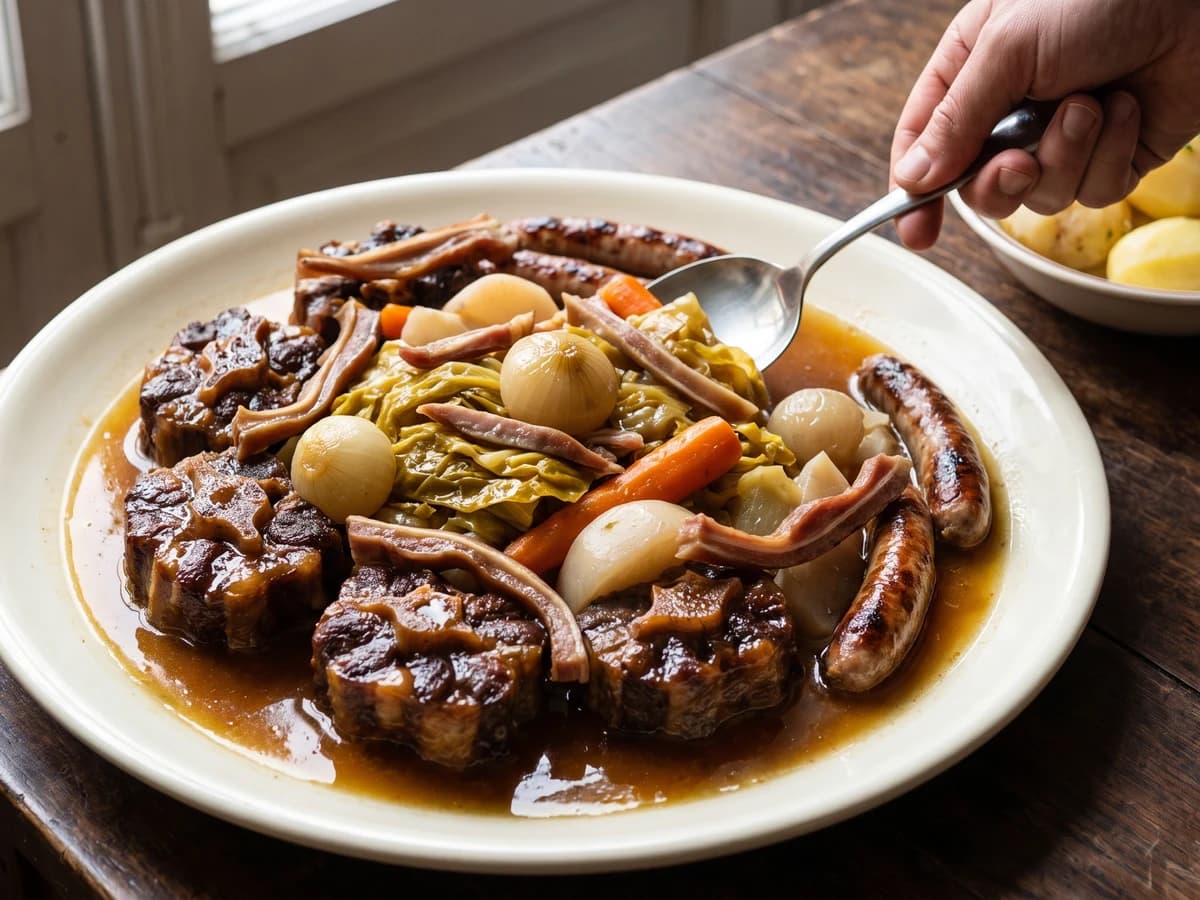
Queue de Bœuf en Hochepot gathers oxtail, pig's trotter and ear, cabbage, roots, and grilled chipolatas around a clear, gelatin-rich broth whose quiet simmer keeps every piece tender and distinct.

Chef Juliette
Beef shoulder larded with bacon, sharpened by red wine and vinegar, then sealed with garlic, vegetables, and dry lemon peel until the low oven turns it yielding and the gravy darkly glossy.