
Chef Juliette
Bouillabaisse à la Marseillaise
Marseille's great fish stew, saffron-gold and garlic-scented, proves that a hard boil can be the careful choice: it binds olive oil into broth before the whole pot meets bread.
A cooking platform built around craft, culture, and the stories behind what we eat.
Created by Chef Juliette
Based on No. 591, Consommé aux Nids d’Hirondelles, from Le Guide Culinaire (1907) by Auguste Escoffier
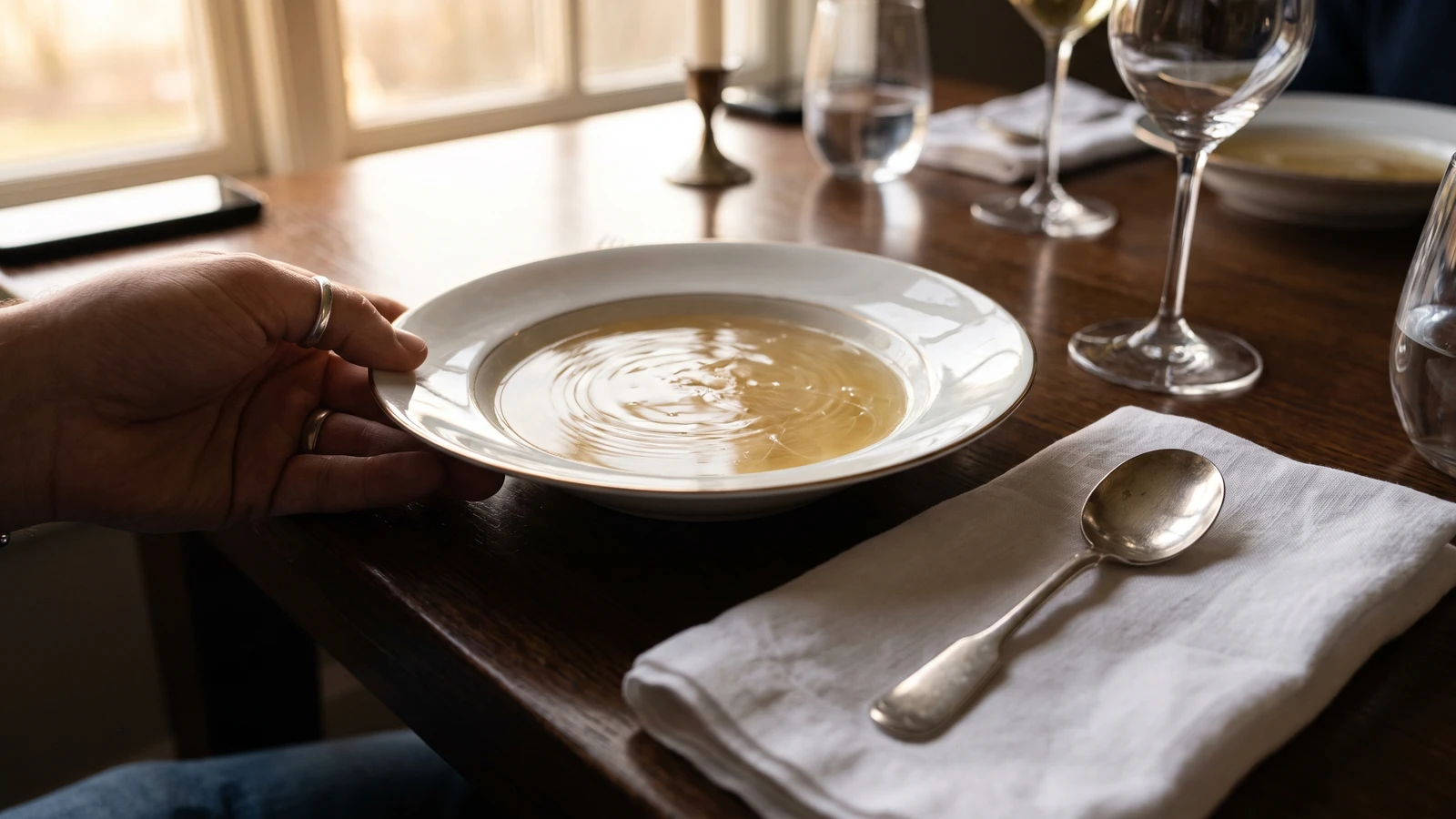
Three edible bird’s nests, a concentrated chicken consommé, and one patient simmer produce a clear soup of extraordinary texture: glossy on the spoon, delicately savory, and threaded like transparent vermicelli.
Consommé aux Nids d’Hirondelles (swallow’s-nest consommé) teaches the discipline of extraction without disturbance. The one true thing to know before touching a pan is that the nests must be completely hydrated and picked clean while cold. Heat cannot repair hurried soaking, and force destroys the transparent filaments the soup exists to reveal.
The original assumed a saucier on staff, a chicken stockpot never off the fire, and spare hands willing to pick each softened nest with a needle. At home, the honest equivalents are a rich finished chicken consommé, a shallow white dish, and pointed culinary tweezers. The service is scaled to about two quarts: the constant stockpot and needle work were brigade scaffolding, so they go, but the twenty-four-hour cold soak, meticulous cleaning, and uninterrupted gentle simmer are the dish and stay. One cook, one stove, one evening, after one quiet day of soaking.
When the consommé is right, it remains pale gold and limpid but gains a delicate viscous gloss, with fine transparent threads suspended through every ladleful. Give the nests their full twenty-four hours in cold water before picking them. That patient hydration is the step that decides the dish.
The ingredient’s real home is the Chinese banquet table, supplied for generations by edible-nest swiftlet colonies in the coastal caves and nesting houses of Southeast Asia; this French preparation belongs to the cosmopolitan grand-kitchen repertoire, not to any French province. The old label “esculent swallow” is a culinary misnomer: the edible cup is formed largely from hardened swiftlet salivary strands, not from twigs like a garden bird’s nest. French cooks placed the carefully cleaned strands in concentrated chicken consommé, translating a prized imported texture into the strict clarity of consommé service while leaving the nest itself visible.
Quantity
3 whole nests (about ¾ oz / 21 g total)
Quantity
8 cups (1.9 L / about 1.9 kg)
well degreased and lightly seasoned
Quantity
4 cups (950 mL / 950 g), plus more if needed to cover
| Ingredient | Quantity |
|---|---|
| whole dried food-grade edible bird’s nests | 3 whole nests (about ¾ oz / 21 g total) |
| rich, clear chicken consomméwell degreased and lightly seasoned | 8 cups (1.9 L / about 1.9 kg) |
| cold water | 4 cups (950 mL / 950 g), plus more if needed to cover |
Place the dried nests in a small nonreactive bowl and cover them generously with the cold water. Cover the bowl and refrigerate for twenty-four hours, turning the nests once after they have softened enough to move without cracking. They should swell, become nearly transparent, and open into pliable layers. Keep them cold throughout; room-temperature soaking for a full day is neither necessary nor wise.
Lift one softened nest at a time into a shallow white dish with a spoonful of its soaking water. Under strong light, tease the layers apart only enough to expose any feather fragments, shell, or dark specks, removing each with pointed culinary tweezers. Swish the cleaned strands gently in fresh cold water, then drain them in a fine-mesh sieve for ten minutes. If a nest tears, do not discard it. Ça se rattrape: gather every clean fragment in the sieve and cook it with the rest; the visible threads will be shorter, but the flavor and gloss remain.
Pour the finished chicken consommé into a heavy 3-quart saucepan and add the drained nests while the broth is still cool. Bring it slowly toward a simmer over medium-low heat without stirring or whisking. The consommé must be rich enough to feel broad on the palate yet perfectly degreased, because a floating film of fat would conceal the fine nest threads.
Once small bubbles rise steadily around the edge, maintain that gentle, unbroken simmer for thirty to thirty-five minutes. Do not let it roll. The soluble portions of the nests will gradually melt into the consommé, giving it a light viscous sheen, while the supporting strands remain like superfine transparent vermicelli. If the boil gets away from you and loose particles cloud the broth, remove the pan from the heat at once, lift out the threads with a fine skimmer, and pass the consommé through a clean dampened fine cloth. Return the broth and threads to the pan and finish over gentler heat. Ça se rattrape.
At thirty minutes, lift a spoonful and inspect it against the light. The broth should remain clear, cling lightly to the spoon, and carry distinct translucent threads; continue to thirty-five minutes if the nests have not released their full gloss. Warm the soup bowls, then ladle slowly and close to the surface so every serving receives an even share of threads. Add no garnish and no reflexive pinch of salt; the seasoned consommé and the nest’s texture are the whole preparation. Serve immediately. À table!
1 serving (about 240g)
Culinary guides, cultural storytelling, and the editorial depth that makes cooking meaningful.
Discover Culinary ExplorerChef Juliette
Marseille's great fish stew, saffron-gold and garlic-scented, proves that a hard boil can be the careful choice: it binds olive oil into broth before the whole pot meets bread.

Chef Juliette
Waterzoi asks fresh, bone-in river fish to thicken its own buttery broth, with parsley root and pepper for company. No flour, no stockpot, just a brisk simmer watched closely.
Chef Juliette
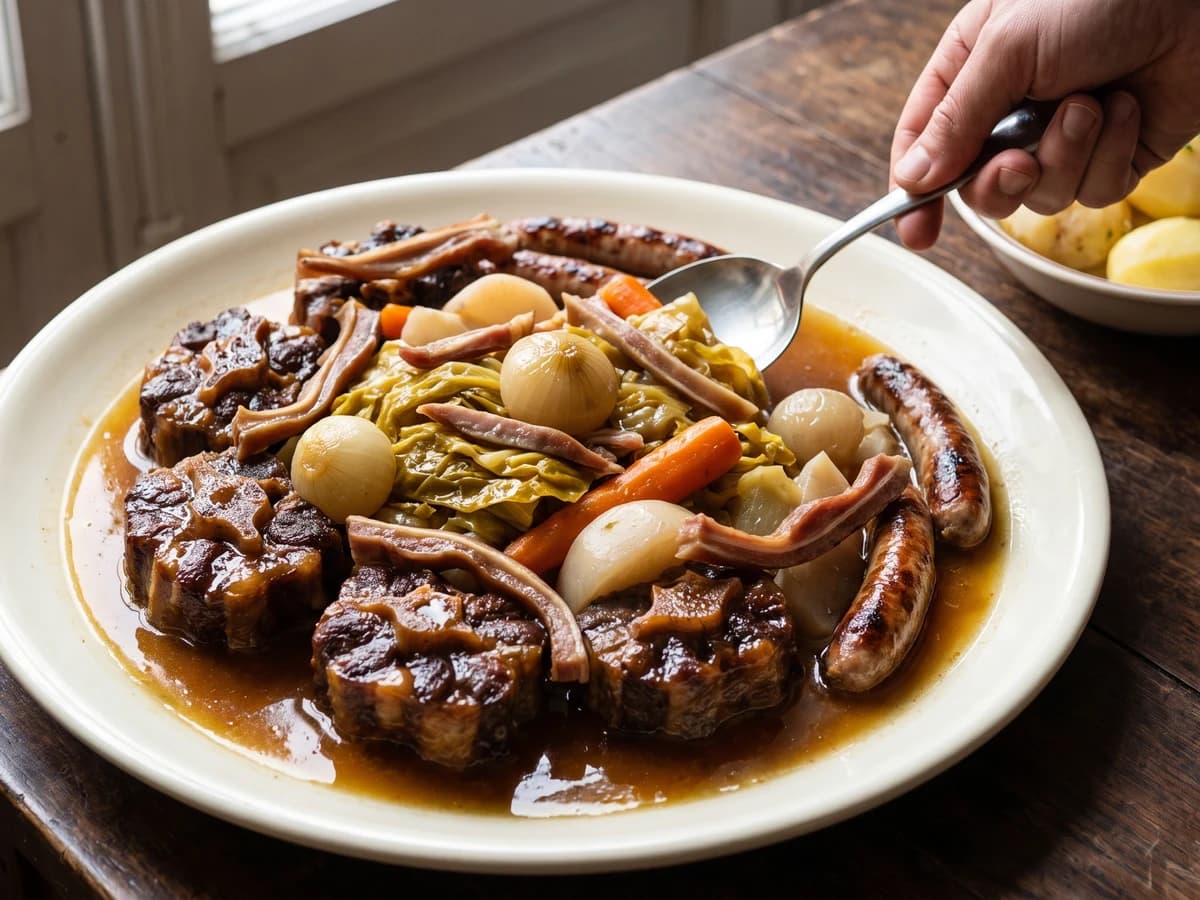
Queue de Bœuf en Hochepot gathers oxtail, pig's trotter and ear, cabbage, roots, and grilled chipolatas around a clear, gelatin-rich broth whose quiet simmer keeps every piece tender and distinct.

Chef Juliette
Beef shoulder larded with bacon, sharpened by red wine and vinegar, then sealed with garlic, vegetables, and dry lemon peel until the low oven turns it yielding and the gravy darkly glossy.