
Chef Juliette
Bouillabaisse à la Marseillaise
Marseille's great fish stew, saffron-gold and garlic-scented, proves that a hard boil can be the careful choice: it binds olive oil into broth before the whole pot meets bread.
A cooking platform built around craft, culture, and the stories behind what we eat.
Created by Chef Juliette
Based on No. 560, Consommé aux Diablotins, from Le Guide Culinaire (1907) by Auguste Escoffier
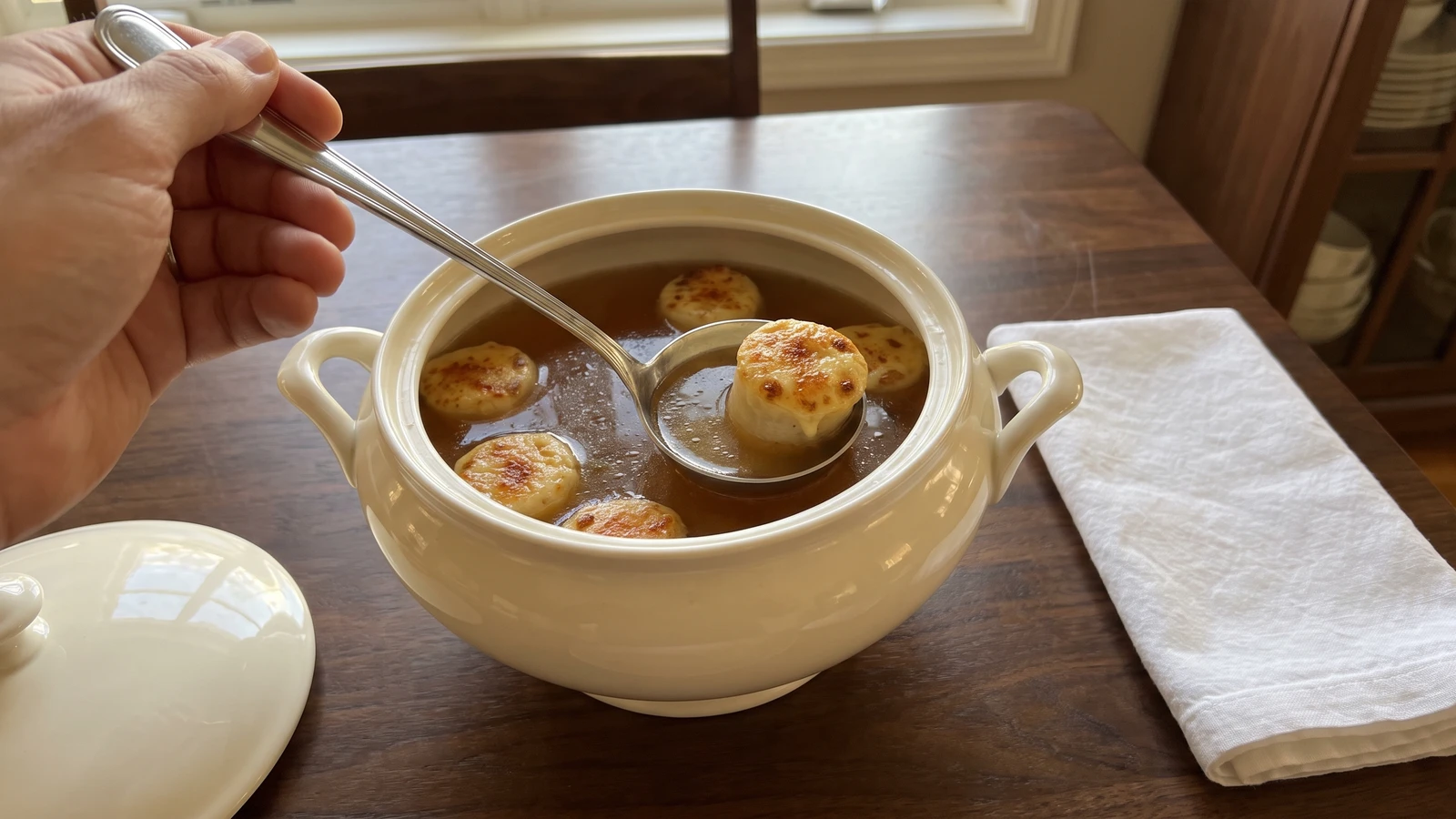
Clear chicken consommé meets crisp flute rounds crowned with cayenne-sharp Béchamel and Gruyère, glazed gold at the last minute. The lesson is timing: keep broth brilliant, keep diablotins proud, and unite them only at service.
Consommé aux Diablotins (clear chicken broth with cayenne-cheese flute rounds) teaches the discipline of last-minute contrast. The consommé must remain brilliant and the diablotins must reach it crisp at the edges, melting at the crown. Marry them early and both lose the thing that makes them worth serving. Before you touch a pan, know this: the garnish waits for the broth, never the broth for the garnish.
The original assumed a saucier on staff, a stock never off the fire, and a salamander ready to glaze each tray. At home, finished chicken consommé, one small saucepan, and an overhead broiler do the same jobs. The brigade's repeated holding and replenishing are scaffolding and can go; this version makes one two-quart dinner-party tureen, using the source ratio twice, while the Béchamel reduction, off-heat Gruyère, domed shape, and last-minute glaze remain untouched. A French soup flute is simply a long crisp roll, and a slender baguette is its honest home equivalent. One cook, one stove, one evening.
Reduce the Béchamel until a spoon drawn across the pan leaves a furrow that stays open. That thickness is the hinge: too loose and the domes slump before they can glaze. Get the reduction right before the Gruyère goes in, and the rest is timing.
Consommé aux Diablotins belongs to the classical Parisian dining room, where a clear consommé was often named for the garnish added at service rather than for a change made to the broth. Diablotins are crisp bread rounds capped with cheese and cayenne, their little-devils name pointing to the pepper's heat, not to a province or rustic soup tradition. The garnish passed naturally from grand kitchens to bourgeois dinner tables because the consommé and Béchamel could wait, while the rounds needed only a final glaze before the tureen appeared.
Quantity
8 cups (1.9 L / 1.9 kg)
Quantity
1 cup (240 ml / 245 g)
Quantity
24 slices, each 1/4 inch (6 mm) thick, about 3 oz (85 g) total
cut into even rounds
Quantity
4 heaped tablespoons (about 80 ml / 45 g)
finely grated
Quantity
1/8 teaspoon (0.6 ml / 0.2 g)
| Ingredient | Quantity |
|---|---|
| finished chicken consommé | 8 cups (1.9 L / 1.9 kg) |
| finished Béchamel | 1 cup (240 ml / 245 g) |
| French soup flute (long crisp roll), or a slender baguettecut into even rounds | 24 slices, each 1/4 inch (6 mm) thick, about 3 oz (85 g) total |
| Gruyère cheesefinely grated | 4 heaped tablespoons (about 80 ml / 45 g) |
| cayenne pepper | 1/8 teaspoon (0.6 ml / 0.2 g) |
Cut 24 even rounds from the soup flute, each 1/4 inch (6 mm) thick. A narrow, crisp roll gives small rounds that float without taking command of the bowl. Arrange them in one layer on a parchment-lined sheet pan. Do not oil or butter them; the Béchamel and Gruyère supply all the richness they need.
Put the finished Béchamel in a small heavy saucepan over medium-low heat. Stir continuously with a heatproof spatula for 5 to 8 minutes, scraping the corners, until it has reduced to about 3/4 cup (180 ml), falls heavily from the spatula, and holds a furrow across the pan for several seconds. Take the pan completely off the heat. Stir in the Gruyère and cayenne just until the cheese melts and the mixture becomes smooth. The off-heat addition matters: fierce heat makes Gruyère stringy and oily.
While the mixture is still pliable, place about 2 teaspoons on each flute round. Use the back of a teaspoon or a small offset spatula to shape each portion into a neat rounded dome, keeping it just inside the bread's edge. If the topping spreads flat, it is too warm or slightly under-reduced. Ça se rattrape: chill the tray for 5 to 10 minutes, then lift the topping back into domes before glazing.
Set an oven rack 5 to 6 inches (13 to 15 cm) below the broiler and preheat it on high. Meanwhile, fill the soup tureen with hot water to warm it. Heat the chicken consommé in a covered saucepan until the surface quivers and the first small bubbles appear at the edge. Keep it at that bare simmer, not a rolling boil, while the diablotins glaze.
Slide the tray beneath the fully heated broiler and watch without leaving the stove. Glaze the diablotins for 1 to 3 minutes, until the domes swell slightly, the Gruyère melts, and the tops turn butter-gold with deeper bronze freckles. If the tray colors unevenly, rotate it once. Lift out any rounds that brown ahead of the others rather than sacrificing them while the pale ones catch up.
Empty and dry the warmed tureen, then pour in the hot consommé. Lift the diablotins from the tray with a thin spatula and float them gently on the broth. Serve immediately, allowing three diablotins per person. They soften if held and can cloud the consommé, so this final minute is part of the technique, not ceremony. À table!
1 serving (about 280g)
Culinary guides, cultural storytelling, and the editorial depth that makes cooking meaningful.
Discover Culinary ExplorerChef Juliette
Marseille's great fish stew, saffron-gold and garlic-scented, proves that a hard boil can be the careful choice: it binds olive oil into broth before the whole pot meets bread.

Chef Juliette
Waterzoi asks fresh, bone-in river fish to thicken its own buttery broth, with parsley root and pepper for company. No flour, no stockpot, just a brisk simmer watched closely.
Chef Juliette
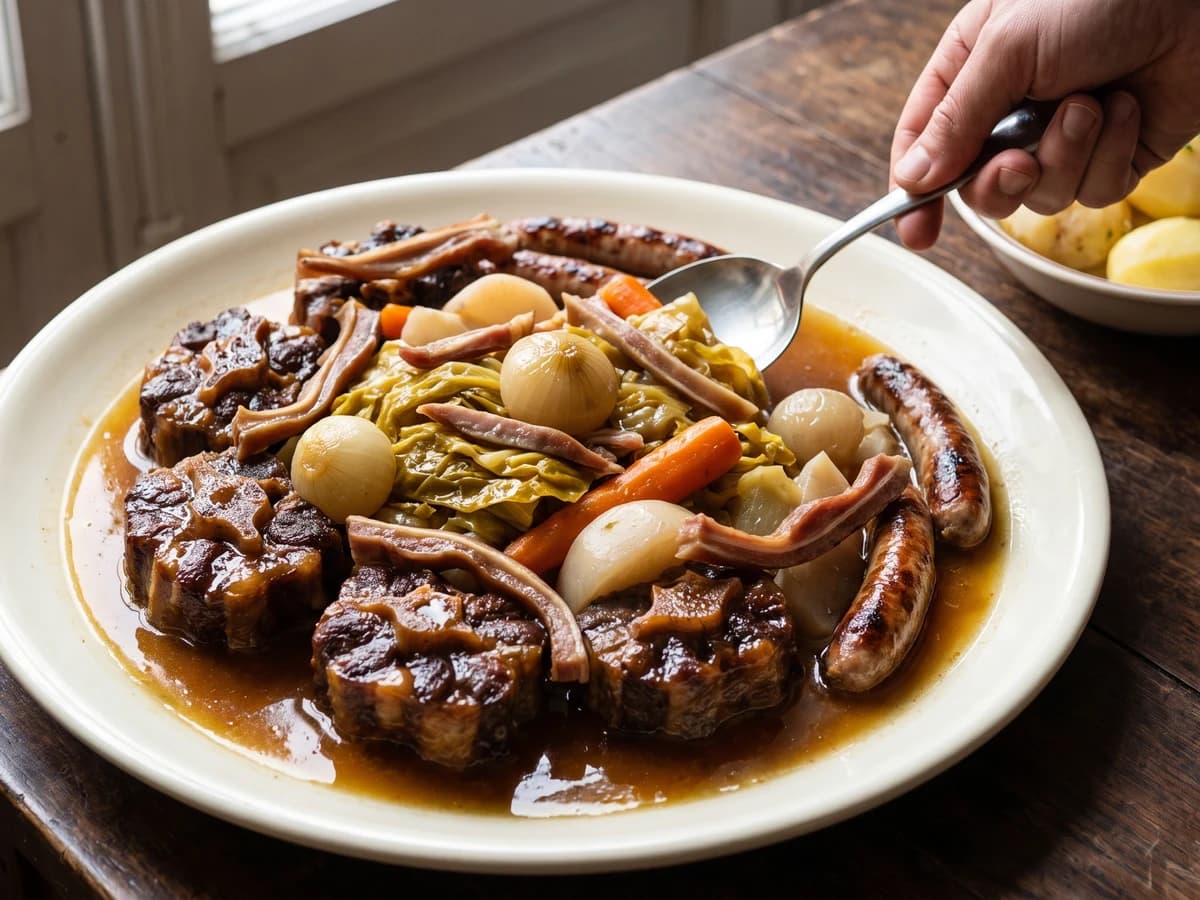
Queue de Bœuf en Hochepot gathers oxtail, pig's trotter and ear, cabbage, roots, and grilled chipolatas around a clear, gelatin-rich broth whose quiet simmer keeps every piece tender and distinct.

Chef Juliette
Beef shoulder larded with bacon, sharpened by red wine and vinegar, then sealed with garlic, vegetables, and dry lemon peel until the low oven turns it yielding and the gravy darkly glossy.