
Chef Juliette
Smelt (Éperlans)
Tiny éperlans, lightly floured and fried until their tails stand crisp, arrive in a generous heap on a napkin with fried parsley and grooved lemon, a weeknight lesson in heat and restraint.
A cooking platform built around craft, culture, and the stories behind what we eat.
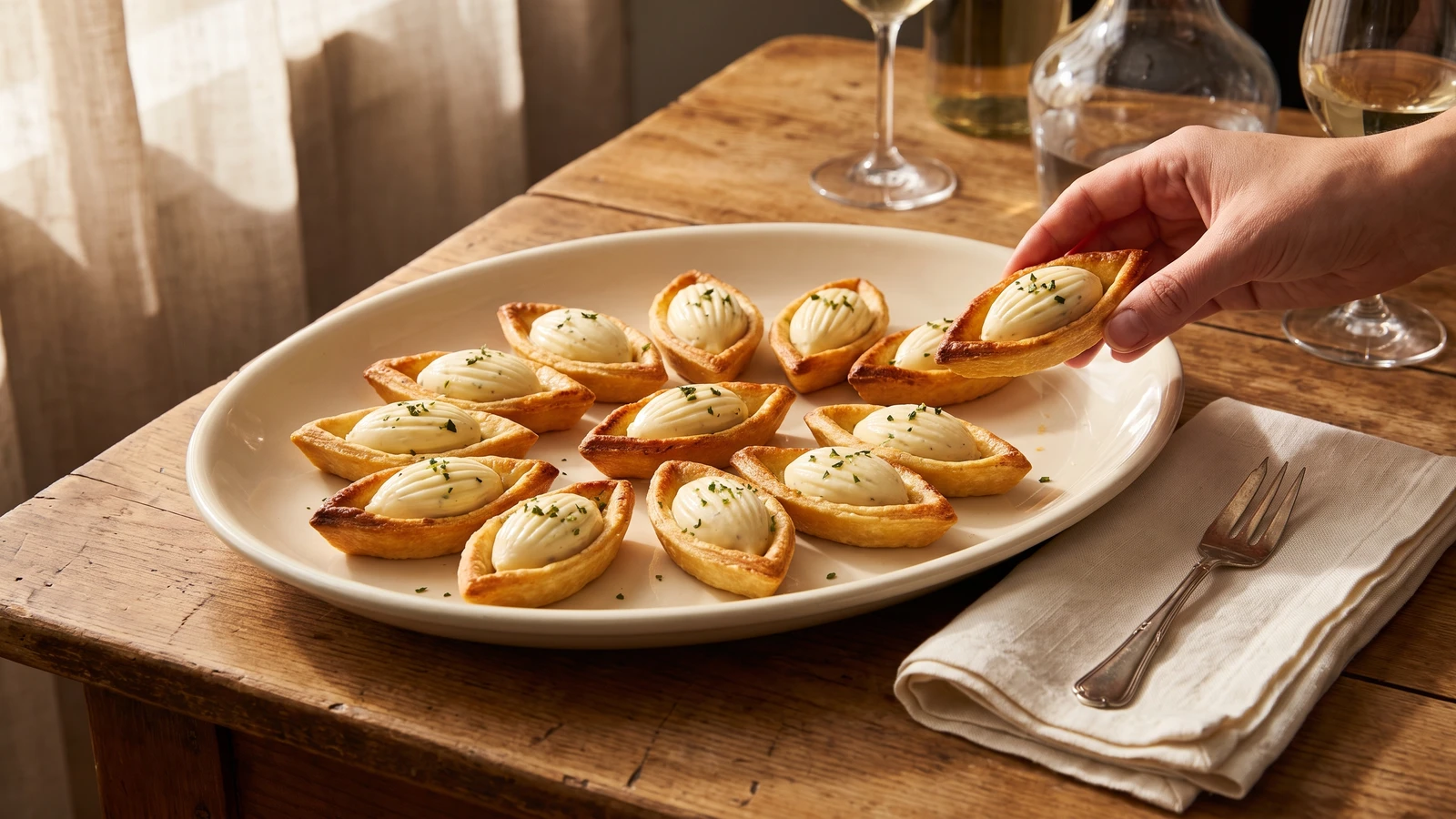
Created by Chef Juliette
Based on No. 314, Barquettes, from Le Guide Culinaire (1907) by Auguste Escoffier
Little boats of short paste, baked until truly dry, then filled at the last sensible moment. Their elegance comes from crispness and proportion, because a fine garnish cannot rescue a damp shell.
Barquettes teach a severe little pastry lesson: the shell must be completely dry before it can be delicate. A damp barquette is not tender, it is simply unfinished. Bake until the base no longer yields, cool it completely, and only then let the garnish in.
The original service assumed drawers of very small boat moulds, trays moving through a drying-box, and another pair of hands tending compound butters, mousses, or clear aspic. At home, twelve moulds work twice, a low oven replaces the drying-box, and the batch stops at 24, enough for eight guests rather than a full dining room. The linked pastry and garnish remain separate preparations, as the book intended. For this one-cook version, compound butter replaces the more elaborate aspic arrangement because both belong to the original family, while only one needs no separate jelly service.
The brigade's dedicated drying station was scaffolding and can go. The final drying is the dish and must stay. If stored shells soften, ça se rattrape: refresh them in a low oven and cool them again. The one step that decides everything is that complete cooling before filling.
Barquettes belong to the classical hors-d’œuvre table, particularly the formal dining rooms and grand kitchens of Paris where small garnished pastry cases were grouped among Frivolities (No. 350). They are not a separate pastry invention: Tartlets and Barquettes (No. 387) share the same paste and preparation, while Croûtes et Croustades (No. 2393) place them within the broader family of edible pastry cases. Only the indented little boat shape distinguishes a barquette from its tartlet cousin.
Quantity
24 Croûtes et Croustades (No. 2393), prepared and blind-baked through Tartlets and Barquettes (No. 387)
Quantity
1 cup (240 ml / 225 g), chosen from Frivolities (No. 350)
cold but spreadable
| Ingredient | Quantity |
|---|---|
| very small boat-shaped pastry shells | 24 Croûtes et Croustades (No. 2393), prepared and blind-baked through Tartlets and Barquettes (No. 387) |
| prepared compound-butter garnishcold but spreadable | 1 cup (240 ml / 225 g), chosen from Frivolities (No. 350) |
Heat the oven to 300°F (150°C). Arrange the 24 Croûtes et Croustades (No. 2393), prepared as boat-shaped shells through Tartlets and Barquettes (No. 387), on a bare baking sheet. They should be evenly golden, rigid at the indented edges, and dry beneath. The old drying-box was brigade scaffolding; your low oven does the same work perfectly well.
Bake the empty shells for 5 to 8 minutes, until their inner surfaces feel dry rather than greasy and the bases sound faintly hollow when tapped. Watch the narrow ends, which colour first. If they darken before the centres dry, cover those tips loosely with small pieces of foil and continue for another 2 minutes. Ça se rattrape.
Transfer the shells immediately to a wire rack and leave them until completely cool, about 15 minutes. Don't crowd them in a bowl or seal them while warm, because trapped moisture undoes the drying. If filling touches a warm shell and begins to melt, lift it out at once, wipe the shell gently, dry it again for 3 minutes, and cool it fully.
Work the prepared compound-butter garnish chosen from Frivolities (No. 350) with a spoon until smooth and spreadable, never melted. If it is hard enough to crack the pastry, leave it at room temperature for 5 minutes. If it becomes glossy and loose, chill it for 10 minutes. Butter, not margarine; the filling must set cleanly without leaving an oily shell.
Pipe or spoon about 2 teaspoons of compound butter into each cooled shell, keeping the filling just below the indented rim so the boat shape remains clear. Set the filled barquettes in the cold for 15 minutes, then let them stand for 10 minutes before serving so the butter is cool but not hard. Arrange them generously on one platter. À table!
1 serving (about 55g)
Culinary guides, cultural storytelling, and the editorial depth that makes cooking meaningful.
Discover Culinary ExplorerChef Juliette
Tiny éperlans, lightly floured and fried until their tails stand crisp, arrive in a generous heap on a napkin with fried parsley and grooved lemon, a weeknight lesson in heat and restraint.

Chef Juliette
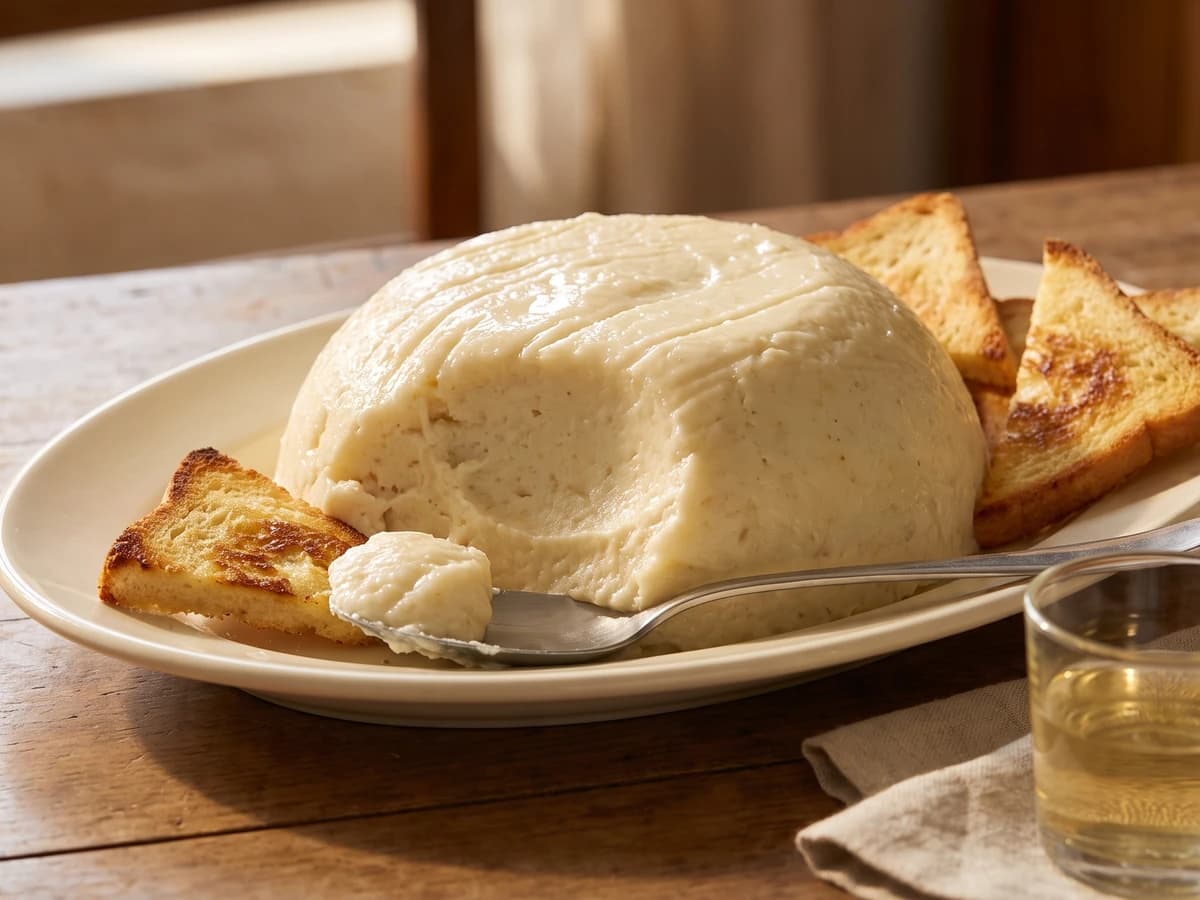
Brandade de Morue turns salt cod, warm olive oil, and milk into a pale, silky emulsion: keep everything warm and add the oil slowly, then crown the generous dome with butter-fried bread.
Chef Juliette
Salt cod worked warm with cream, one patient spoonful at a time, until the rough flakes become a glossy Nîmes paste, domed generously and ringed with butter-fried croutons for the table.

Chef Juliette
Wine-poached char packed in its earthenware crock beneath butter gold: a make-ahead first course that turns careful cooling, thorough boning, and one unbroken seal into quiet abundance.