Culinary Explorer
A cooking platform built around craft, culture, and the stories behind what we eat.
Croûtes et Croustades
Created by Chef Juliette
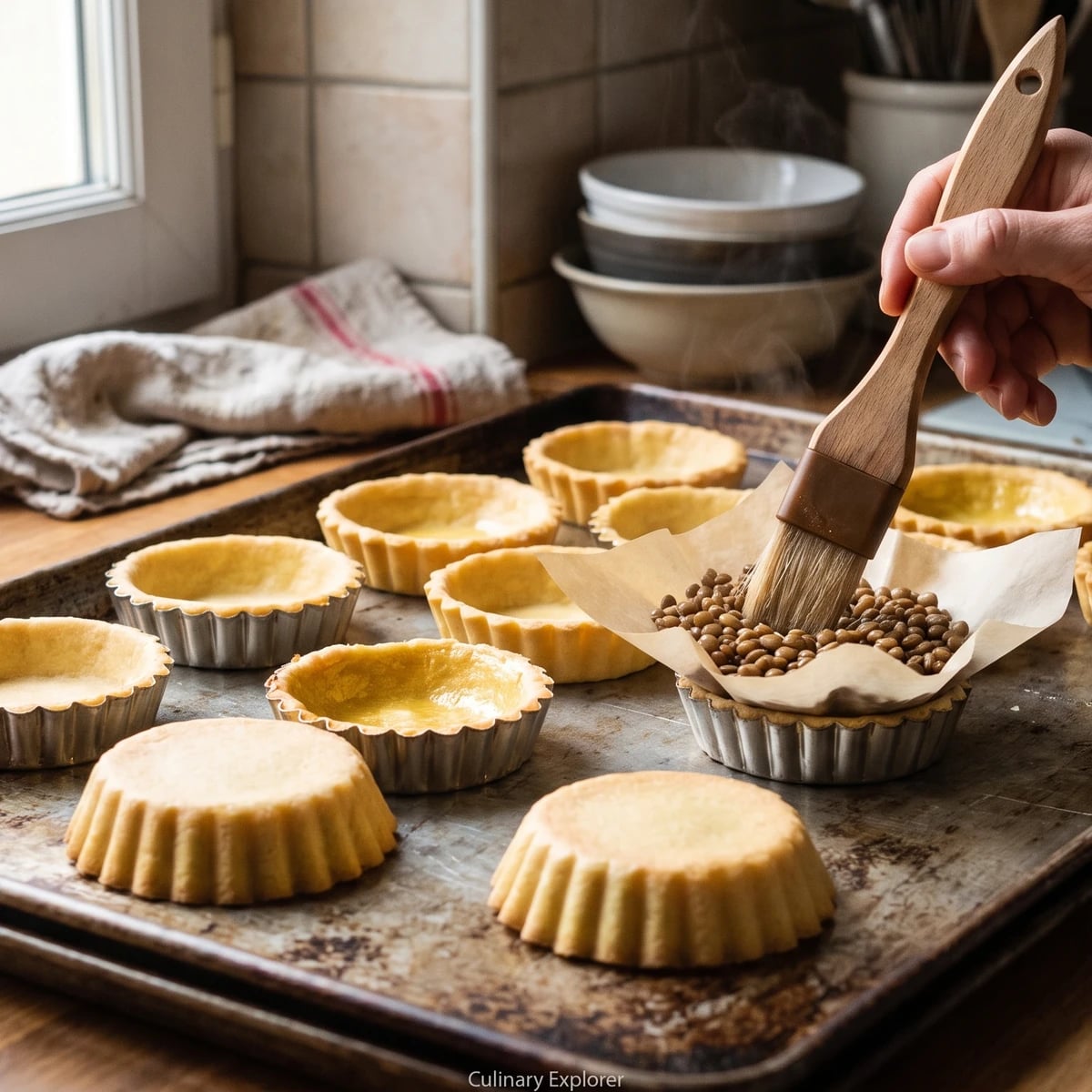
Croûtes et croustades teach the discipline of blind baking: buttered moulds, short paste rolled five millimetres thick, and enough lentils to hold every base flat before the shells are dried or gilded.
Croûtes et croustades (blind-baked tartlet shells) teach one uncompromising lesson: the weight is what keeps the base flat. Pricking helps trapped air escape, but it cannot replace a paper liner filled right to the rim with lentils, split peas, or rice. Skimp there, and the pastry lifts before it has strength enough to hold itself.
The old formula assumed short paste already waiting in the pastry section, ranks of even or grooved moulds, and a drying-box ready to finish the bake. At home, one compact batch of pâte brisée, twelve small moulds, and a domestic oven turned low do the same work. The stored paste and drying-box were brigade scaffolding, so they go; the one-fifth-inch thickness, buttered moulds, pricked bases, paper, and full weight are the dish, so they stay. One cook, one stove, one evening.
When the shells are pale gold and firm, dry them until crisp, or gild the interiors with beaten egg and give them a few more minutes of heat for a thin protective sheen. If a base bubbles when the paper comes away, don't despair; prick it, press it flat under the paper, and return it to the oven. Ça se rattrape. Before you touch the rolling pin, remember the step that matters most: fill every lined mould completely with weight.
Ingredients
plain flour
Quantity
2 cups (475 ml / 250 g)
cold unsalted butter
Quantity
1/2 cup (120 ml / 125 g)
cut into small cubes
fine sea salt
Quantity
3/4 teaspoon (3.75 ml / 4 g)
| Ingredient | Quantity |
|---|---|
| plain flour | 2 cups (475 ml / 250 g) |
| cold unsalted buttercut into small cubes | 1/2 cup (120 ml / 125 g) |
| fine sea salt | 3/4 teaspoon (3.75 ml / 4 g) |
Where cooking meets culture.
Culinary guides, cultural storytelling, and the editorial depth that makes cooking meaningful.
Discover Culinary Explorer