
Chef Juliette
Various Almond Preparations
Five almond preparations, one discipline: remove the skins cleanly, dry every kernel through, then cut, toast, or cloak it in pale caramel without letting its fragrant oils escape.
A cooking platform built around craft, culture, and the stories behind what we eat.
Created by Chef Juliette
Based on No. 2827, Preparation for Bombes, from Le Guide Culinaire (1907) by Auguste Escoffier
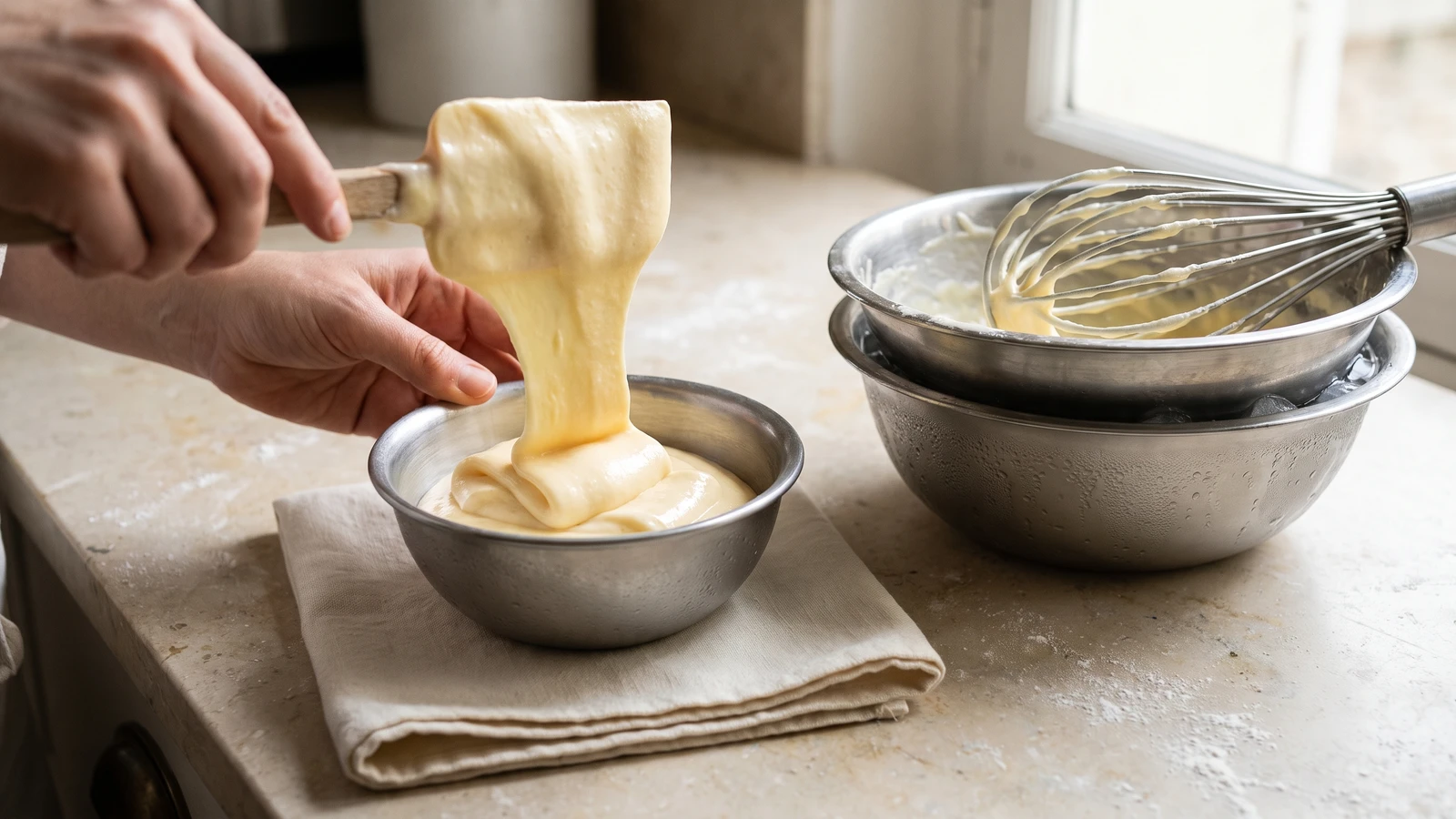
Appareil à bombe is yolks and 28° Baumé syrup whisked to a ribbon, cooled stone-cold, then lightened with whipped cream: the frozen base that makes temperature control taste effortless.
Appareil à bombe teaches the quiet discipline behind French frozen desserts: heat gives the yolks their ribbon, cold fixes that air in place, and cream carries it into the freezer. The one true thing is simple. The yolk base must be completely cold before the whipped cream goes in; warmth steals the volume you spent all that whisking to build.
The book's basin held thirty-two yolks, a quart of syrup, and enough cream for a brigade, with copper over a moderate fire and spare hands to whisk from stove to ice without pause. Here it becomes four yolks, a stainless-steel bowl over barely simmering water, and an ice bath waiting beside the stove. The enormous batch and direct-fire copper were brigade scaffolding, so they go. The 28° syrup, ribbon stage, continuous whisking, ice-cold finish, and real cream stay, because they are the dish. One cook, one stove, one evening.
This small batch fills one home bombe mould without leaving you responsible for thirty-two egg whites and a dessert fit for a dining room. Fold gently, freeze it hard, and it cuts into pale, creamy slices that melt without heaviness. The step that decides everything is the ice-bath whisking: don't let the cream near the base until the bowl feels thoroughly cold.
Appareil à bombe belongs to the Parisian pâtisserie and grand-kitchen repertoire, where bombe glacée was packed into a rounded metal mould, often with an ice-cream shell and a lighter flavoured centre. Its name follows the domed mould, while the preparation itself is a yolk-and-syrup foam strengthened with cream, kin to the foundations used for parfaits and frozen mousses. The elaborate moulding is presentation; the enduring technique is the warm ribbon carried completely cold before the cream is folded in.
Quantity
⅓ cup plus 2½ teaspoons (92 ml / 78 g)
Quantity
¼ cup plus 2½ teaspoons (72 ml / 72 g)
for the 28° Baumé syrup
Quantity
4 (about ¼ cup / 72 g)
Quantity
1 teaspoon (5 ml / 4 g) vanilla sugar, ¾ teaspoon (4 ml / 2 g) finely grated orange rind, or 2 teaspoons (10 ml / 10 g) liqueur
choose one
Quantity
⅔ cup (160 ml / 158 g)
thoroughly chilled
Quantity
4 cups (1 litre / 600 g), plus cold water as needed
for the ice bath
Quantity
1 method reference (No. 2376), none incorporated
used as the ribbon-stage model
| Ingredient | Quantity |
|---|---|
| granulated sugar | ⅓ cup plus 2½ teaspoons (92 ml / 78 g) |
| waterfor the 28° Baumé syrup | ¼ cup plus 2½ teaspoons (72 ml / 72 g) |
| large egg yolks | 4 (about ¼ cup / 72 g) |
| selected flavouringchoose one | 1 teaspoon (5 ml / 4 g) vanilla sugar, ¾ teaspoon (4 ml / 2 g) finely grated orange rind, or 2 teaspoons (10 ml / 10 g) liqueur |
| heavy cream, at least 35% fatthoroughly chilled | ⅔ cup (160 ml / 158 g) |
| icefor the ice bath | 4 cups (1 litre / 600 g), plus cold water as needed |
| Pâte à Génoise Fineused as the ribbon-stage model | 1 method reference (No. 2376), none incorporated |
Combine the sugar and water in a small saucepan. Warm gently, stirring only until every crystal has dissolved and the syrup is perfectly clear, then remove it from the heat without reducing it. You should have about ½ cup (120 ml / 150 g). If evaporation has taken the weight below 150 g, add enough water to restore it, then cool the syrup to room temperature. The 28° means Baumé concentration, not heat.
Set a wide bowl of ice and cold water beside the stove before the yolks meet the heat. Chill the cream and its mixing bowl, and have a clean spatula and fine sieve within reach. Once the yolk foam leaves the heat, the whisking continues without a pause; this small bit of mise en place replaces the spare hands of a brigade.
Put the yolks in a medium stainless-steel bowl and gradually whisk in the cooled syrup in a thin stream. Set the bowl over a saucepan of barely simmering water, making certain its base doesn't touch the water, and whisk continuously as for Pâte à Génoise Fine (No. 2376). After 7 to 10 minutes, the mixture should be pale, swollen, and thick enough to fall from the whisk in a ribbon that remains visible for several seconds; it should reach 72 to 74°C (162 to 165°F). If the edges begin to grain, lift the bowl immediately, whisk hard off the heat for 30 seconds, pass the mixture through the sieve, and return it over gentler water. Ça se rattrape. Firm scrambled curds mean the heat went too far, and that batch must be restarted.
Move the bowl straight from the heat to the prepared ice bath and continue whisking until the foam is dense, stable, and completely cold, about 6 to 8 minutes. Aim for 18°C (64°F) or below, and judge the bowl as well as the thermometer: its underside should no longer carry the least warmth. The mixture may loosen briefly as it leaves the heat. Keep whisking and it will gather itself as it cools.
Whisk the selected flavouring into the cold yolk base. In the chilled bowl, whip the cream until it holds firm peaks whose tips stand upright, stopping while the surface is still smooth. The book asks for stiffly whipped cream, not butter. If the cream just begins to look rough, stop the mixer and fold in a teaspoon of the cold yolk base by hand to smooth it.
Fold one-third of the whipped cream into the yolk base to lighten it, using broad strokes that reach the bottom of the bowl. Add the remaining cream in two portions, turning the bowl as the spatula cuts down, sweeps across, and lifts the mixture over itself. Stop as soon as no white streaks remain. The folding is the emulsion and the structure together; stirring past that point only knocks out the air.
Spoon the appareil à bombe immediately into a chilled 6-inch (15 cm), 2½-cup (600 ml) bombe mould or freezer container. Press it gently against the sides to remove large air pockets, level the surface, and cover it directly before freezing for at least 6 hours, preferably overnight. To unmould, dip only the exterior in lukewarm water for 5 seconds, invert onto a cold plate, and wait a moment for it to release. Let it stand for 5 minutes before cutting so the texture softens from hard-frozen to creamy. À table!
1 serving (about 64g)
Culinary guides, cultural storytelling, and the editorial depth that makes cooking meaningful.
Discover Culinary ExplorerChef Juliette
Five almond preparations, one discipline: remove the skins cleanly, dry every kernel through, then cut, toast, or cloak it in pale caramel without letting its fragrant oils escape.

Chef Juliette
A pastry pantry lesson in one tray: filberts warmed only until their red skins release, rubbed clean, cooled, and chopped into a fragrant mise-en-place for cakes, creams, pralines, and petits fours.

Chef Juliette
The smallest pâtisserie discipline decides whether a cake leaves its mould intact: clarified butter in every corner, followed by the lightest veil of dry flour or fécule.
Chef Juliette
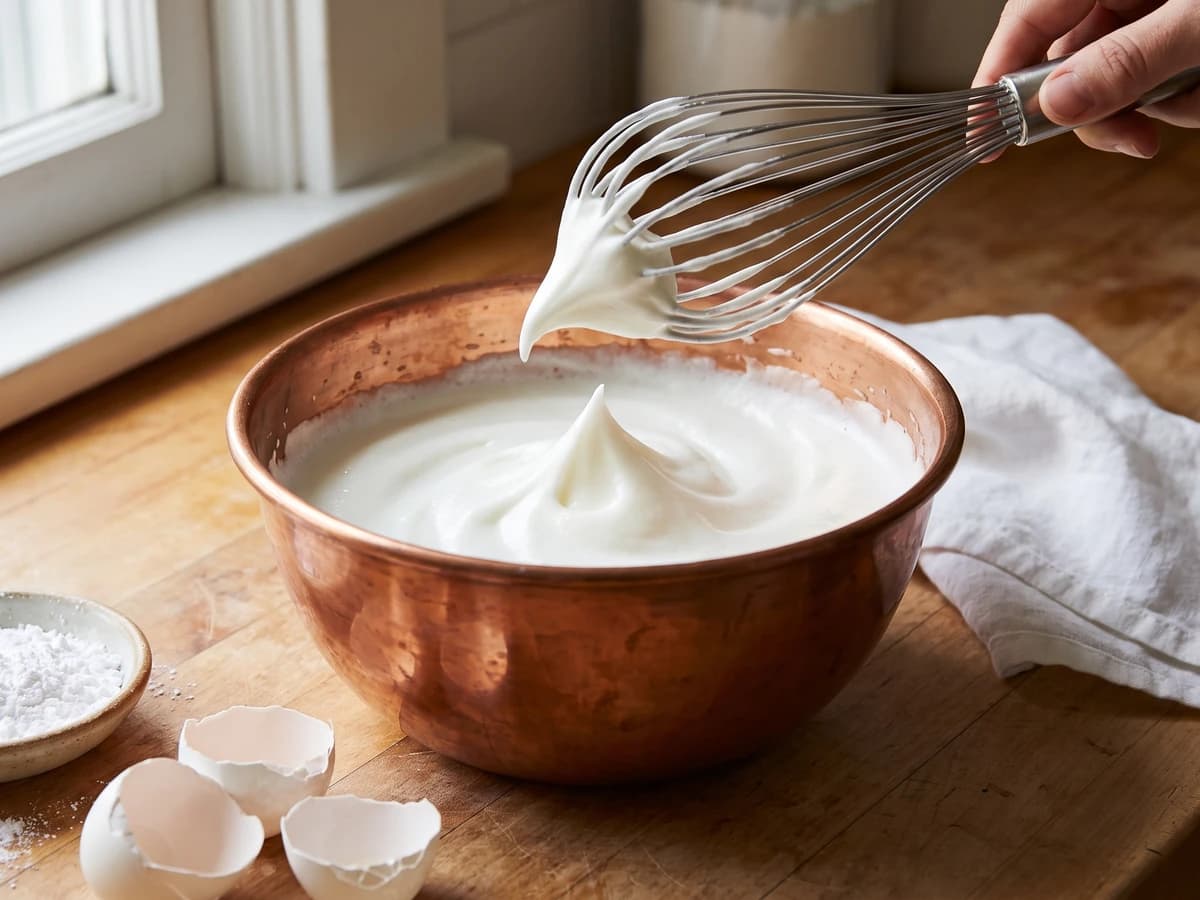
Four whites, one spotless bowl, and a patient change of speed: whisk gently until loosened, then briskly to glossy stiffness, with powdered sugar waiting if the foam begins to granulate.