
Chef Juliette
Various Almond Preparations
Five almond preparations, one discipline: remove the skins cleanly, dry every kernel through, then cut, toast, or cloak it in pale caramel without letting its fragrant oils escape.
A cooking platform built around craft, culture, and the stories behind what we eat.

Created by Chef Juliette
Based on No. 2376, Pâte à Génoise Fine, from Le Guide Culinaire (1907) by Auguste Escoffier
Pâte à Génoise Fine rises on warm-whisked whole eggs alone, then takes sifted flour and melted butter by the gentlest fold, making a fine golden cake ready for a birthday or celebration.
Pâte à Génoise Fine (fine whole-egg sponge) teaches the central truth of sponge cake: the air you whisk into warm whole eggs is the leavening, so every fold must preserve it. There is no baking powder waiting to forgive a heavy hand. When it works, the cake stands even and butter-gold, with a close, light crumb sturdy enough for layers and tender enough to eat from the hand.
The original formula assumed a copper basin balanced over hot cinders or the hob, sixteen eggs, and a brigade that had every mould ready before the foam could wait. At home, a heatproof bowl over a barely simmering bain-marie, an electric mixer, and one 20 cm cake tin do the same work. Every ratio is quartered exactly because brigade volume and the bed of cinders are scaffolding, not the dish; the warm whisk to the ruban (ribbon stage) and the lifted spatula fold must stay. One cook, one stove, one evening.
The butter is melted, not browned, and it goes in last without bubbling. A small portion of batter lightens it before the final fold, the one home-kitchen safeguard added to keep dense butter from dropping through the foam. The step that matters most is the ruban: don't touch the flour until the batter falls from the whisk in a broad ribbon and rests visibly on the surface.
Pâte à génoise belongs to the French pâtisserie canon, particularly the pastry kitchens of Paris, but its name preserves the repertoire's association with Genoa. Unlike many biscuit preparations, which may separate the eggs, génoise builds its lift by whisking whole eggs warm with sugar before flour and butter are folded through. The fine formula became a dependable base for layered celebration cakes because its close, even crumb cuts cleanly and carries a filling without losing its shape.
Quantity
4 (about 200 g without shells)
at room temperature
Quantity
½ cup plus 1 tablespoon (135 ml / 113 g)
Quantity
⅔ cup (160 ml / 85 g)
sifted
Quantity
4 tablespoons (60 ml / 57 g)
melted gently
Quantity
¾ teaspoon (3.75 ml / 3 g) vanilla sugar, ¾ teaspoon (3.75 ml / 2 g) finely grated orange zest, or 1½ teaspoons (7.5 ml / 7 g) liqueur
choose one
Quantity
1 teaspoon (5 ml / 5 g)
softened
Quantity
1 tablespoon (15 ml / 8 g)
| Ingredient | Quantity |
|---|---|
| large eggsat room temperature | 4 (about 200 g without shells) |
| superfine sugar | ½ cup plus 1 tablespoon (135 ml / 113 g) |
| all-purpose floursifted | ⅔ cup (160 ml / 85 g) |
| unsalted buttermelted gently | 4 tablespoons (60 ml / 57 g) |
| selected aromachoose one | ¾ teaspoon (3.75 ml / 3 g) vanilla sugar, ¾ teaspoon (3.75 ml / 2 g) finely grated orange zest, or 1½ teaspoons (7.5 ml / 7 g) liqueur |
| unsalted butter for the mouldsoftened | 1 teaspoon (5 ml / 5 g) |
| all-purpose flour for dredging the mould | 1 tablespoon (15 ml / 8 g) |
Set a rack in the middle of the oven and heat it to 175°C (350°F). Butter a 20 cm (8-inch) round cake tin at least 5 cm (2 inches) deep, dust it thoroughly with the dredging flour, then turn and tap the tin until every greased surface is covered and the excess falls away. Have the mould ready before whisking begins; once the foam reaches the ruban, it must not sit and wait.
Sift the batter flour twice and set the chosen aroma beside it. Melt the butter over the gentlest heat, removing it while a few soft pieces remain and swirling until they disappear. Keep it warm and fluid, about 38 to 43°C (100 to 110°F), but never bubbling. If it foams, take it off the heat and let it settle; if it browns, melt a fresh portion because that toasted flavour belongs to another cake.
Bring 3 cm (about 1 inch) of water to a bare simmer in a saucepan. Combine the eggs and sugar in a large heatproof bowl, set it over the pan without letting the bowl touch the water, and whisk continuously until the sugar has dissolved and the mixture reaches 40 to 43°C (104 to 110°F). Without a thermometer, it should feel distinctly warm but never hot against a clean finger. If a few cooked flecks form at the edge, lift the bowl off immediately and pass the mixture through a fine sieve into a clean bowl. Ça se rattrape. Large curds or a cooked-egg smell mean the heat went too far and the mixture must be started again.
Remove the bowl from the bain-marie and beat with an electric mixer on high speed until the mixture triples in volume, turns very pale, and grows thick enough to hold the trail of the whisk, usually 6 to 8 minutes. Lower the speed for the final minute to even out the bubbles. Test the ruban by lifting the whisk: the batter must fall in a broad ribbon that remains visible on the surface for several seconds before slowly leveling. If it vanishes at once, warm the bowl over the bain-marie for another 20 seconds while whisking, then beat again. Fold in the selected aroma with two broad strokes.
Sift one-third of the flour over the foam. Cut the spatula down through the centre, sweep firmly across the bottom, and lift the batter up and over the flour while turning the bowl. Repeat with the remaining flour in two additions. This lifted motion is the dish; stirring in circles crushes the air you worked to build. Stop as soon as no dry flour remains. If a small pocket hides near the bowl wall, break it with the edge of the spatula and give one more fold, not ten.
Stir one generous spatulaful of the flour-folded batter into the warm melted butter until the mixture is smooth and lightened. Pour this around the edge of the main bowl in two additions, in a thin, quiet ribbon, folding from the bottom after each addition. The butter must never enter bubbling or in one heavy pool. If glossy streaks collect at the bottom, don't stir harder; scrape beneath them and lift them through with two or three broad folds. Ça se rattrape. If the batter begins losing height, stop folding and bake it at once. The cake may be lower, but it will still cut into useful, tender layers.
Pour the batter immediately into the prepared mould from a low height and smooth the surface with one light pass of the spatula. Bake for 22 to 27 minutes without opening the oven during the first 20 minutes. The génoise is ready when the top is evenly golden, the centre springs back under a light fingertip, and the edges have begun to draw slightly from the tin. If the surface colours too quickly after 20 minutes, lay a loose sheet of foil over it and finish baking.
Let the cake stand in its mould for 5 minutes, then run a thin knife around the edge and turn it onto a wire rack. Turn it upright again and cool completely before slicing. The crumb settles as it rests and cuts more cleanly after several hours, which is precisely why génoise serves a birthday or celebration so well. Wrap it only when fully cool. À table!
1 serving (about 50g)
Culinary guides, cultural storytelling, and the editorial depth that makes cooking meaningful.
Discover Culinary ExplorerChef Juliette
Five almond preparations, one discipline: remove the skins cleanly, dry every kernel through, then cut, toast, or cloak it in pale caramel without letting its fragrant oils escape.

Chef Juliette
A pastry pantry lesson in one tray: filberts warmed only until their red skins release, rubbed clean, cooled, and chopped into a fragrant mise-en-place for cakes, creams, pralines, and petits fours.

Chef Juliette
The smallest pâtisserie discipline decides whether a cake leaves its mould intact: clarified butter in every corner, followed by the lightest veil of dry flour or fécule.
Chef Juliette
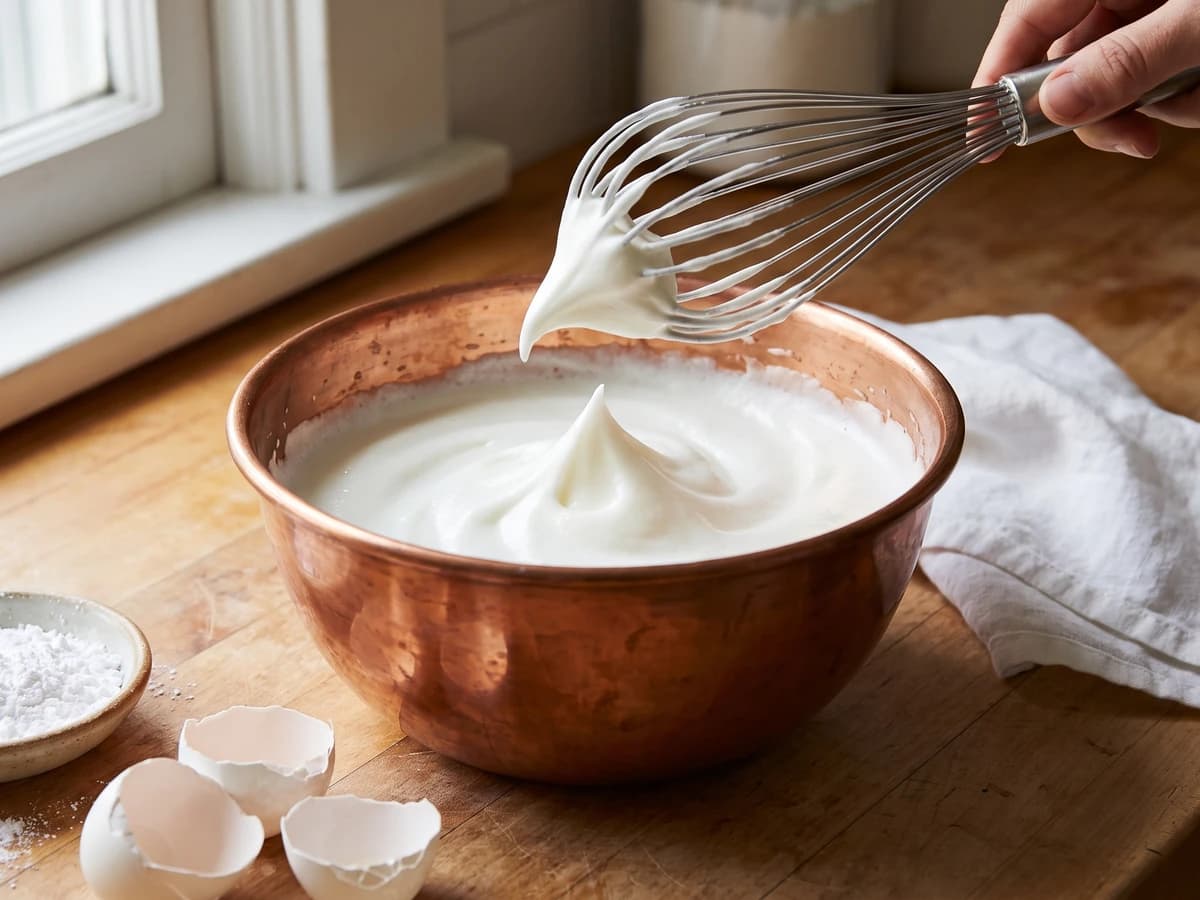
Four whites, one spotless bowl, and a patient change of speed: whisk gently until loosened, then briskly to glossy stiffness, with powdered sugar waiting if the foam begins to granulate.