
Chef Juliette
Various Almond Preparations
Five almond preparations, one discipline: remove the skins cleanly, dry every kernel through, then cut, toast, or cloak it in pale caramel without letting its fragrant oils escape.
A cooking platform built around craft, culture, and the stories behind what we eat.

Created by Chef Juliette
Based on No. 2747, Ice-cream Preparation (Generic Recipe), from Le Guide Culinaire (1907) by Auguste Escoffier
The custard beneath every French cream ice: yolks and sugar drawn to the ribbon, hot milk added slowly, then gentle heat until the spoon wears a satin veil and never a bubble.
Glace à la crème (French custard ice-cream base) teaches the foundation beneath a whole family of frozen desserts. The one true thing to know before touching the pan is simple: the custard must thicken without ever boiling. Yolks give it body, sugar keeps it supple in the freezer, and milk carries whichever infusion will distinguish the finished glace. C'est la même grammaire each time.
The original kitchen assumed a quart of milk, ten yolks, a copper pan, someone available to stir the basin until cold, and an ice-and-salt sorbetière for freezing. For one cook, one stove, one evening, the formula is halved exactly. A heavy saucepan replaces the copper, an ice bath replaces the long watch over a cooling basin, and a countertop ice-cream machine replaces the freezing pail. Those are brigade scaffolding. The ribbon, gradual tempering, and gentle cooking are the dish, so none of them goes.
Once churned, the glace should be pale ivory, dense but yielding, with a clean milk-and-custard flavor ready to carry vanilla, coffee, citrus peel, or another proper infusion. The moment that decides everything is à la nappe, the coating stage: stop when the custard veils the spoon and a finger leaves a clear path through it. Let it boil and it splits.
Glace à la crème belongs especially to the Parisian glacier and pâtisserie tradition, where one cooked custard formula could become a whole cabinet of differently flavored ices. The preparation traveled from specialist ice rooms into grand kitchens and then home freezers, while its grammar remained yolks, sugar, milk, and restrained heat. Despite its name, this classical formula need not contain cream: the yolks provide its richness, and the chosen infusion gives each finished glace its identity.
Quantity
2 cups plus 1 tablespoon (500 ml / 515 g)
Quantity
¾ cup (150 g)
Quantity
5 yolks (about ⅓ cup / 90 g)
| Ingredient | Quantity |
|---|---|
| whole milk | 2 cups plus 1 tablespoon (500 ml / 515 g) |
| granulated sugar | ¾ cup (150 g) |
| large egg yolks | 5 yolks (about ⅓ cup / 90 g) |
| Pâte à Génoise Fine (optional)for serving | 4 slices finished Pâte à Génoise Fine (No. 2376) |
Fit a fine-mesh sieve over a clean 2-quart bowl, then set a larger bowl nearby with ice and cold water. Have this ready before the yolks meet the heat. Custard waits for no one once it reaches à la nappe, and immediate cooling stops the cooking before the eggs tighten further.
Bring the whole milk to a full boil over medium heat, stirring along the bottom so it cannot scorch. As soon as it rises, remove it from the heat. The source calls for boiling milk because it must dissolve the sugar completely and begin cooking the yolks as it is added, but it should not sit bubbling and reducing.
While the milk heats, put the yolks and sugar in a heavy saucepan and whisk immediately. Work them until the mixture turns pale, thickens, and falls from the whisk in a ribbon that rests briefly on the surface before leveling. The source points to Pâte à Génoise Fine (No. 2376) for this same visual test. Do not leave sugar sitting on bare yolks, since it draws out their moisture and forms stubborn yellow grains.
Whisk a small ladleful of the boiling milk into the ribboned yolks, then add the remaining milk little by little, whisking constantly and reaching well into the corners of the pan. This gradual dilution is the tempering: it warms the yolks without seizing them. If a few flecks appear, keep calm and whisk firmly before adding more milk.
Set the saucepan over moderate to medium-low heat and stir continuously with a flexible spatula, scraping the floor and corners. The custard is ready at 180 to 183°F (82 to 84°C), when it veils the spatula and a finger drawn through the coating leaves a clean path. Never let it boil. If the first fine grains appear, remove the pan at once, set its bottom in the ice bath, and blend briefly with an immersion blender before straining. Ça se rattrape. Firm scrambled curds mean the heat went too far.
Pour the custard immediately through the prepared sieve. Set the bowl in the ice bath and stir until the mixture is cool, taking care that no water enters it. Cover the surface directly and refrigerate until thoroughly cold, at least 4 hours and preferably overnight. The original periodic stirring has been replaced by the ice bath because rapid cooling does the same work more safely and with less waiting.
Churn the cold base in a countertop ice-cream machine according to its instructions, usually 20 to 30 minutes, until it holds soft folds and the dasher leaves a clear track. Transfer it to a shallow freezer container, press parchment directly against the surface, cover, and freeze for 2 to 3 hours. If it freezes very hard, leave it at room temperature for 5 to 10 minutes before scooping; softness returns as the sugar relaxes.
Dip the scoop in warm water, wipe it dry, and draw firm curls from the softened glace. Serve it alone to judge the base clearly, or alongside finished Pâte à Génoise Fine (No. 2376), keeping the cake separate so its crumb stays tender. À table!
1 serving (about 126g)
Culinary guides, cultural storytelling, and the editorial depth that makes cooking meaningful.
Discover Culinary ExplorerChef Juliette
Five almond preparations, one discipline: remove the skins cleanly, dry every kernel through, then cut, toast, or cloak it in pale caramel without letting its fragrant oils escape.

Chef Juliette
A pastry pantry lesson in one tray: filberts warmed only until their red skins release, rubbed clean, cooled, and chopped into a fragrant mise-en-place for cakes, creams, pralines, and petits fours.

Chef Juliette
The smallest pâtisserie discipline decides whether a cake leaves its mould intact: clarified butter in every corner, followed by the lightest veil of dry flour or fécule.
Chef Juliette
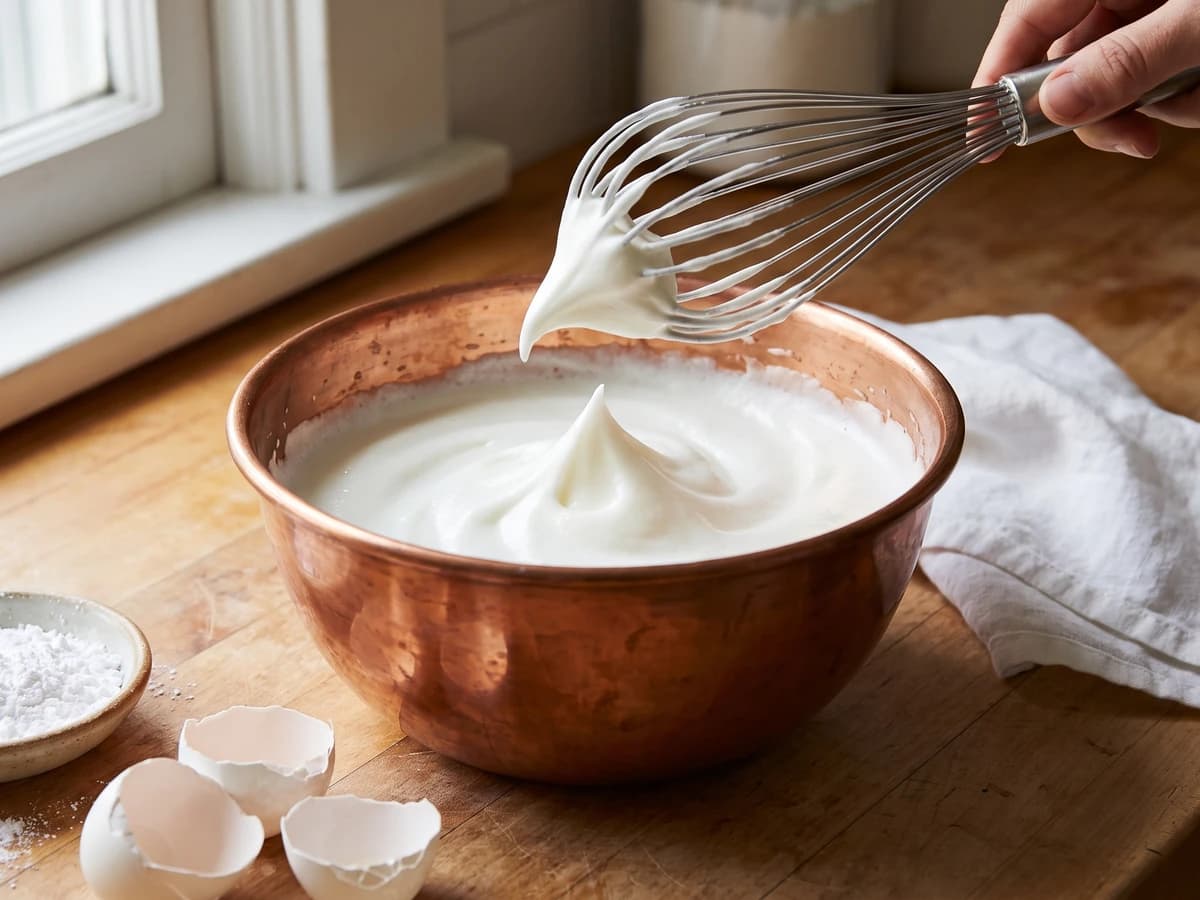
Four whites, one spotless bowl, and a patient change of speed: whisk gently until loosened, then briskly to glossy stiffness, with powdered sugar waiting if the foam begins to granulate.