
Chef Juliette
Various Almond Preparations
Five almond preparations, one discipline: remove the skins cleanly, dry every kernel through, then cut, toast, or cloak it in pale caramel without letting its fragrant oils escape.
A cooking platform built around craft, culture, and the stories behind what we eat.

Created by Chef Juliette
Based on No. 2743, Tivoli aux Fraises, from Le Guide Culinaire (1907) by Auguste Escoffier
A crystal coat of kirsch jelly around fragrant wild strawberry Bavarois, turned from a tube mould and ringed with chopped jelly: the cold-mould lesson in temperature, patience, and a steady hand.
Tivoli aux Fraises (wild strawberry Bavarian cream in kirsch jelly) teaches control of the cold. The one true thing is this: the jelly must be fluid enough to travel and cold enough to cling. Too warm, it pools at the bottom; too firm, it settles in ridges instead of clothing the mould evenly.
The original formula assumed an ornamented tube mould, bowls of broken ice at the pastry station, and clear dessert jelly already prepared in quantity. The ornament and the separate jelly station are brigade scaffolding, so they can go. A plain 1.2-liter metal ring mould, one mixing bowl of crushed ice, and a small batch of gelatin jelly give the home cook the same result with a cleaner release. What must stay is chemiser le moule, to clothe the mould by rocking it over ice, and the generous quantity of wild strawberry purée in the Bavarois. One cook, one stove, one evening, then the cold does the work.
When it turns out properly, the Tivoli stands clear and rose-pink, its kirsch shell catching the light and its chopped jelly trembling around the base. Have the mould thoroughly cold before the first spoonful of jelly touches it. That is the step that decides the dish.
Tivoli aux Fraises belongs to the repertoire of molded entremets developed in the grand kitchens of Paris, where Bavarois, clear dessert jellies, and elaborate moulds moved between the pastry bench and formal celebration table. Its name follows the canon's habit of giving ornate sweets evocative place names; it is not an Italian regional pudding, despite Tivoli being an Italian place. The curious borrowing of an aspic technique reveals the kitchen's shared grammar: savory and sweet preparations were both clothed in clear jelly by rocking a cold mould over broken ice.
Quantity
2 cups (480 ml / 480 g)
divided
Quantity
2/3 cup (160 ml / 135 g)
Quantity
2 tablespoons (30 ml / 18 g)
Quantity
1 tablespoon (15 ml / 15 g)
strained
Quantity
1/4 cup (60 ml / 56 g)
Quantity
1 referenced method (No. 916)
used for clothing the mould
Quantity
1 3/4 cups (420 ml / 450 g)
fresh or thawed and finely sieved
Quantity
1/2 cup plus 2 tablespoons (150 ml / 125 g)
Quantity
1/4 cup (60 ml / 60 g)
Quantity
1 tablespoon plus 1 teaspoon (20 ml / 12 g)
Quantity
1 1/4 cups (300 ml / 285 g)
Quantity
1 tablespoon (15 ml / 15 g)
strained
| Ingredient | Quantity |
|---|---|
| cold water for the kirsch jellydivided | 2 cups (480 ml / 480 g) |
| granulated sugar for the kirsch jelly | 2/3 cup (160 ml / 135 g) |
| 200-bloom powdered gelatin for the kirsch jelly | 2 tablespoons (30 ml / 18 g) |
| fresh lemon juice for the kirsch jellystrained | 1 tablespoon (15 ml / 15 g) |
| kirsch | 1/4 cup (60 ml / 56 g) |
| Another Method of Preparing Aspics de Filets de Solesused for clothing the mould | 1 referenced method (No. 916) |
| unsweetened wild strawberry puréefresh or thawed and finely sieved | 1 3/4 cups (420 ml / 450 g) |
| granulated sugar for the Bavarois | 1/2 cup plus 2 tablespoons (150 ml / 125 g) |
| cold water for the Bavarois gelatin | 1/4 cup (60 ml / 60 g) |
| 200-bloom powdered gelatin for the Bavarois | 1 tablespoon plus 1 teaspoon (20 ml / 12 g) |
| cold heavy cream, at least 35 percent fat | 1 1/4 cups (300 ml / 285 g) |
| fresh lemon juice for the Bavaroisstrained | 1 tablespoon (15 ml / 15 g) |
Pour 1/2 cup (120 ml) of the measured jelly water into a bowl and sprinkle the 18 g gelatin evenly over it. Leave it for 5 minutes to bloom. Warm the remaining water with the 135 g sugar in a small saucepan, stirring gently until completely clear, then remove it from the heat and dissolve the bloomed gelatin in it without whisking. Stir in the strained lemon juice, let the mixture cool below 35°C (95°F), and add the kirsch. Skim away any bubbles and pass the jelly through a fine sieve. Boiling after the gelatin or kirsch goes in weakens the set and drives away the perfume, so keep the heat gentle.
Measure about 1 1/4 cups (300 ml) of jelly into a jug and pour the remainder into a shallow dish to set for the chopped garnish. Set the clean, dry tube mould in a large bowl of crushed ice. Chill the measured jelly until it thickens to the consistency of raw egg white, then chemiser le moule, clothe the mould, with the rocking motion from Another Method of Preparing Aspics de Filets de Soles (No. 916): pour in one-third of the jelly and turn, tilt, and rock the mould continuously so the jelly travels over the base, sides, and central tube. Drain the excess back into the jug, let the coat firm on the ice, and repeat twice to build a clear layer about 3 mm thick. If the jelly runs straight to the bottom, it is too warm; chill it further. If it sets in lumps, warm the jug briefly over warm water and strain it again. Ça se rattrape.
Sprinkle the 12 g gelatin over the 1/4 cup (60 ml) cold water and leave it for 5 minutes. Warm about one-third of the wild strawberry purée with the 125 g sugar just until the sugar dissolves, keeping the purée below a simmer so its fresh perfume remains. Remove it from the heat, stir in the bloomed gelatin until smooth, then add the remaining purée and lemon juice. Set the bowl over ice and stir until the mixture cools to about 20°C (68°F) and begins to coat the spoon. If gelatin starts setting in threads around the bowl, lift it from the ice and stir it briefly over warm water until smooth. Do not discard it.
Whip the cold cream to soft peaks that bend at the tip. Fold one-third into the strawberry base to lighten it, then fold in the rest with broad strokes until the colour is even and no white pockets remain. The strawberry base must be cool and just beginning to thicken before the cream enters. If it is warm, it melts the whipped cream; if it is already firm, it leaves rubbery flecks. Chill or warm the base by a degree or two before folding, according to what the spoon tells you.
Check that the jelly lining is completely firm. Spoon the Bavarois into the mould in several additions, easing it against the coated sides and central tube so no empty pockets remain. Tap the mould once or twice against a folded towel, smooth the top, and cover it without touching the filling. Chill for at least 6 hours, preferably overnight, until the centre is fully set. If the jelly shell softens as you fill, stop and return the mould and Bavarois to the cold for 10 minutes before continuing.
Once the reserved kirsch jelly is firm, cut it into irregular pieces about 5 to 8 mm across. Turn them gently with a cold spoon so they catch the light without becoming crushed or cloudy, then cover and refrigerate them separately until serving.
Chill the serving platter. Dip the mould into warm water at about 40°C (105°F) for 5 to 8 seconds, keeping the water below the rim, then dry it and invert it firmly onto the platter. If the Tivoli does not release, wrap the mould for a few seconds with a towel dipped in warm water; a long second dip may melt the clear shell. Lift the mould straight up, surround the Tivoli generously with the chopped kirsch jelly, and serve at once while the edges remain precise. À table!
1 serving (about 205g)
Culinary guides, cultural storytelling, and the editorial depth that makes cooking meaningful.
Discover Culinary ExplorerChef Juliette
Five almond preparations, one discipline: remove the skins cleanly, dry every kernel through, then cut, toast, or cloak it in pale caramel without letting its fragrant oils escape.

Chef Juliette
A pastry pantry lesson in one tray: filberts warmed only until their red skins release, rubbed clean, cooled, and chopped into a fragrant mise-en-place for cakes, creams, pralines, and petits fours.

Chef Juliette
The smallest pâtisserie discipline decides whether a cake leaves its mould intact: clarified butter in every corner, followed by the lightest veil of dry flour or fécule.
Chef Juliette
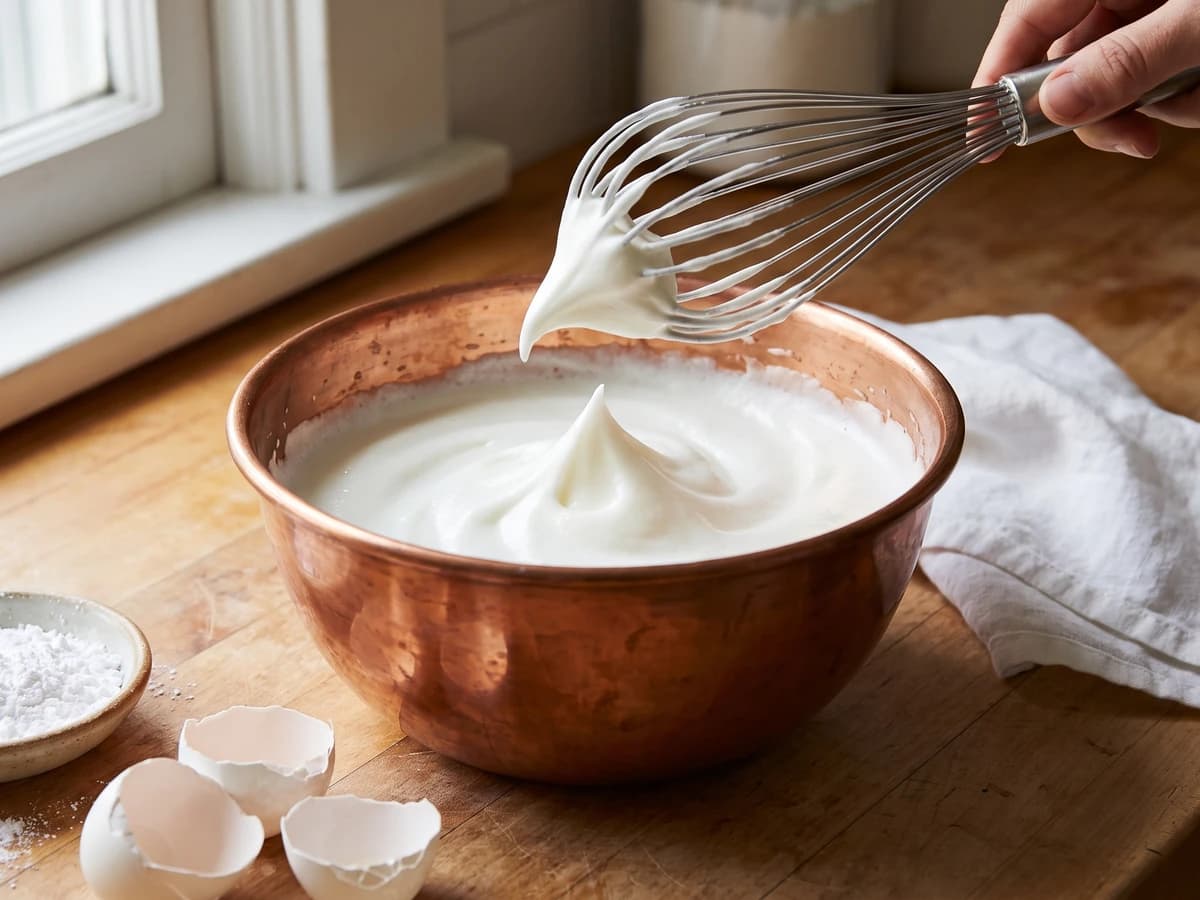
Four whites, one spotless bowl, and a patient change of speed: whisk gently until loosened, then briskly to glossy stiffness, with powdered sugar waiting if the foam begins to granulate.