
Chef Juliette
Various Almond Preparations
Five almond preparations, one discipline: remove the skins cleanly, dry every kernel through, then cut, toast, or cloak it in pale caramel without letting its fragrant oils escape.
A cooking platform built around craft, culture, and the stories behind what we eat.

Created by Chef Juliette
Based on No. 2722, Diplomate aux Fruits, from Le Guide Culinaire (1907) by Auguste Escoffier
The chilled entremets that teaches patience: peach-apricot Bavarois turned onto fruit Génoise, brushed with a clear apricot glaze, then ringed with the same tender fruit for a generous celebration table.
Diplomate aux Fruits (fruit Bavarois on Génoise) teaches that chilling is structural, not a pause between the real work. The finished dessert should stand cleanly above its golden sponge, the Bavarois pale and softly set, its fruit bright beneath a thin apricot gloss. Turn it out too soon and it slumps, releases moisture, and drowns the base.
The original entry assumed a pastry section with Pâte à Génoise Fine, staged sugar cookery, fruit compote, and molds already moving through service, all in brigade quantities. At home, make one-eighth of the Génoise, poach one pan of fruit and use it three ways, then set the Bavarois in a straight-sided cake mold. The separate pastry hands are scaffolding and can go. The fruit-studded Génoise, fully set Bavarois, small-thread apricot glaze, and matching stewed-fruit ring are the dish, so they stay. One cook, one stove, one evening, followed by a proper rest in the cold.
The one true thing to know before touching a pan is this: the Bavarois must set completely before you turn it out. If its center still yields like thick cream, give it more time. A clock cannot hurry gelatin, and patience here is what keeps the Génoise beneath it rather than inside it.
Diplomate aux Fruits belongs to the Parisian entremets table, where molded creams, sponge cakes, fruit compotes, and clear glazes were composed as distinct preparations before service. The name diplomate has never meant one fixed dessert across French pastry, but this form is precise: a fruit Bavarois turned onto fruit Génoise, apricot-glazed and encircled by matching stewed fruit. It traveled naturally from grand-kitchen service to pâtisserie and celebration tables because every component could be prepared ahead, while the turning-out preserved a little ceremony.
Quantity
1 prepared one-eighth batch (No. 2376), about 1¾ cups (415 ml / 225 g) batter
Quantity
1 tablespoon (15 ml / 14 g)
softened, for the pan
Quantity
1 tablespoon (15 ml / 8 g)
for the pan
Quantity
8, about 4 cups (520 g)
pitted and quartered
Quantity
4, about 3 cups (600 g)
peeled, pitted, and cut into wedges
Quantity
1½ cups (360 ml / 360 g)
Quantity
⅔ cup (160 ml / 135 g)
Quantity
3 tablespoons (45 ml / 45 g)
divided
Quantity
1
split lengthwise
Quantity
2¾ teaspoons (13 ml / 9 g)
Quantity
3 tablespoons (45 ml / 45 g)
for blooming the gelatin
Quantity
1½ cups (360 ml / 360 g)
Quantity
2 tablespoons (30 ml / 15 g)
Quantity
1 pinch
Quantity
⅓ cup (80 ml / 100 g) (No. 2344)
| Ingredient | Quantity |
|---|---|
| Pâte à Génoise Fine | 1 prepared one-eighth batch (No. 2376), about 1¾ cups (415 ml / 225 g) batter |
| unsalted buttersoftened, for the pan | 1 tablespoon (15 ml / 14 g) |
| all-purpose flourfor the pan | 1 tablespoon (15 ml / 8 g) |
| medium apricotspitted and quartered | 8, about 4 cups (520 g) |
| medium yellow peachespeeled, pitted, and cut into wedges | 4, about 3 cups (600 g) |
| water | 1½ cups (360 ml / 360 g) |
| granulated sugar | ⅔ cup (160 ml / 135 g) |
| fresh lemon juicedivided | 3 tablespoons (45 ml / 45 g) |
| vanilla beansplit lengthwise | 1 |
| unflavored powdered gelatin | 2¾ teaspoons (13 ml / 9 g) |
| cold waterfor blooming the gelatin | 3 tablespoons (45 ml / 45 g) |
| cold heavy whipping cream | 1½ cups (360 ml / 360 g) |
| confectioners’ sugar | 2 tablespoons (30 ml / 15 g) |
| fine sea salt | 1 pinch |
| smooth apricot jam glaze prepared according to The Cooking of Sugar | ⅓ cup (80 ml / 100 g) (No. 2344) |
Combine the 1½ cups water, granulated sugar, 2 tablespoons of the lemon juice, and the split vanilla bean in a wide saucepan. Bring the liquid to a bare simmer, stirring only until the sugar dissolves. Add the peach wedges first and poach gently for 2 minutes, then add the apricots and continue until both fruits yield to a knife but retain their shapes, about 2 to 4 minutes more. Lift the fruit into a shallow dish and let it cool in enough syrup to cover. If a few pieces collapse, ça se rattrape: reserve those for the purée and keep the neatest pieces for the outer ring.
Heat the oven to 350°F (175°C). Butter and flour an 8-inch (20 cm) round cake pan, then line its base with parchment. Prepare the Pâte à Génoise Fine (No. 2376) according to its own entry, scaled to one-eighth of the formula. Drain and blot about ⅔ cup (90 g) of the poached fruit, dice it small, and fold it through the finished batter with two or three broad turns. Spread the batter evenly in the pan and bake until golden, springy at the center, and beginning to draw from the sides, 15 to 18 minutes. Cool for 10 minutes, turn it onto a rack, and let it become completely cold.
Sprinkle the gelatin over the 3 tablespoons cold water and leave it to bloom for 5 minutes. Weigh 1 pound (450 g) of the remaining poached fruit and blend it with ½ cup (120 ml) of its syrup, the remaining tablespoon of lemon juice, and a pinch of salt. Pass the purée through a fine sieve. Warm one-third of it until hot but not boiling, remove it from the heat, and stir in the bloomed gelatin until perfectly dissolved. Whisk this back into the cold purée, then set the bowl over ice and stir until the mixture cools and begins to coat the spoon like light cream. If it firms into lumps before the cream is ready, warm a small portion until fluid and whisk it back through the rest. Ça se rattrape.
Whip the cold cream with the confectioners’ sugar to soft peaks. The cream should bend from the whisk, not stand stiffly. Fold one-quarter into the cooled fruit mixture to lighten it, then fold in the remainder in two additions, lifting from the bottom so the Bavarois stays airy. Rinse a 7-inch (18 cm) straight-sided charlotte mold or cake pan with cold water and leave it faintly wet. Fill it with the Bavarois, smooth the surface, cover, and chill for at least 6 hours, preferably overnight. It is ready only when the center is firm and moves as one piece when the mold is gently tilted.
Level the cold Génoise if necessary, leaving a base about ¾ inch (2 cm) thick. Prepare the smooth apricot jam glaze to the small-thread stage according to The Cooking of Sugar (No. 2344), then brush a thin, even film over the top and outer edge of the Génoise while the glaze remains fluid. Set the base on its serving platter and let the glaze cool completely. If it tightens before you finish brushing, warm it gently just until it loosens; do not flood the sponge.
Drain the reserved poached fruit thoroughly and blot away loose syrup. Dip only the outside of the Bavarois mold into warm water for 3 seconds, dry it, and invert it onto a flat plate. If it resists, wrap the mold briefly in a warm towel and try again. Do not keep heating it, or the outer layer will melt. Slide the Bavarois into the center of the glazed Génoise. If it shows any sign of slumping, return the mold over it at once and chill again before proceeding.
Arrange the drained peach and apricot pieces closely around the Bavarois, following the exposed border of Génoise without spooning syrup onto the cake. Chill the assembled diplomate for 30 minutes so every layer settles together. Cut with a thin knife dipped in hot water and wiped dry between slices. The Bavarois should hold a tender, clean edge above the fruit-flecked Génoise. À table!
1 serving (about 280g)
Culinary guides, cultural storytelling, and the editorial depth that makes cooking meaningful.
Discover Culinary ExplorerChef Juliette
Five almond preparations, one discipline: remove the skins cleanly, dry every kernel through, then cut, toast, or cloak it in pale caramel without letting its fragrant oils escape.

Chef Juliette
A pastry pantry lesson in one tray: filberts warmed only until their red skins release, rubbed clean, cooled, and chopped into a fragrant mise-en-place for cakes, creams, pralines, and petits fours.

Chef Juliette
The smallest pâtisserie discipline decides whether a cake leaves its mould intact: clarified butter in every corner, followed by the lightest veil of dry flour or fécule.
Chef Juliette
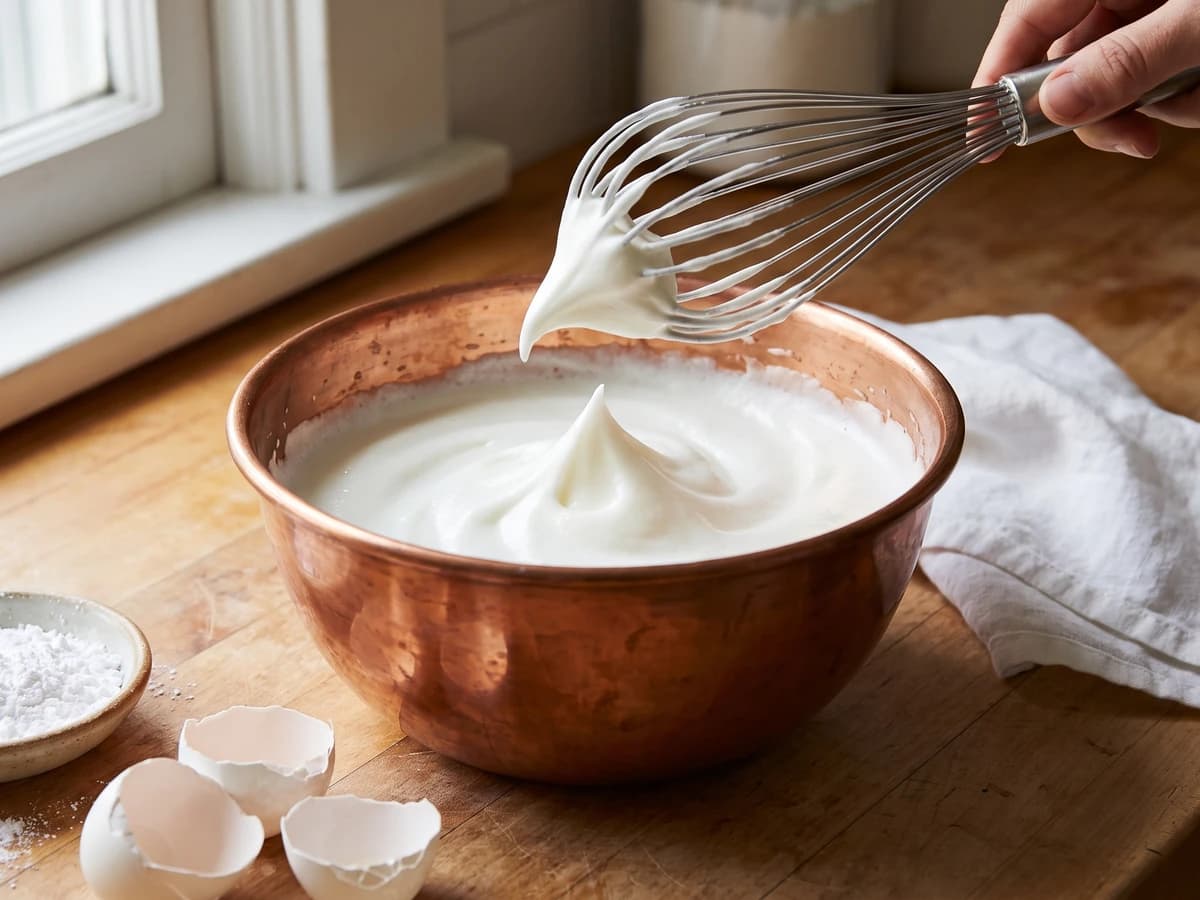
Four whites, one spotless bowl, and a patient change of speed: whisk gently until loosened, then briskly to glossy stiffness, with powdered sugar waiting if the foam begins to granulate.