
Chef Juliette
Various Almond Preparations
Five almond preparations, one discipline: remove the skins cleanly, dry every kernel through, then cut, toast, or cloak it in pale caramel without letting its fragrant oils escape.
A cooking platform built around craft, culture, and the stories behind what we eat.

Created by Chef Juliette
Based on No. 2721, Croûte à la Mexicaine, from Le Guide Culinaire (1907) by Auguste Escoffier
A crown of almond-crusted Génoise surrounding a jagged mound of Plombière ice: this grand frozen entremets succeeds on one quiet discipline, drying every cake finger hard before cold cream can touch it.
Croûte à la Mexicaine (crisp Génoise crown with Plombière ice) teaches that a frozen dessert is won by controlling moisture. The almond-coated croûtes must be dried hard and cooled completely before the ice comes near them. Leave their centers tender, and the proud crown wilts into cake.
The original assumed an entremets station with stale Pâte à Génoise Fine (No. 2376), cake-coating Pralin (No. 2352), and Plombière ice waiting in readiness, plus a drying oven and cold storage close at hand. A low home oven, a wire rack, and a freezer-chilled platter do the same work. The brigade centerpiece becomes twelve three-inch fingers and one quart of ice, enough for six. Batch production was scaffolding and goes; the dry croûtes and last-minute rocky pyramid are the dish and stay. One cook, one stove, one evening.
The finished dessert should arrive as a rough ivory mound rising above a dry, almond-gold crown, generous enough that everyone takes a second finger. The decisive step is the drying: one cooled croûte must be crisp through before you build the crown.
Croûte à la Mexicaine belongs to the Parisian grand-kitchen repertoire of pièces glacées (frozen showpieces), assembled from prepared pâtisserie components at the entremets station. Here the title Mexicaine does not signal Mexican ingredients or method; it belongs to the repertoire's decorative naming, echoed by the rocky pyramid, while the structure is thoroughly French: Pâte à Génoise Fine (No. 2376), almond Pralin (No. 2352), and Plombière ice. Plombière ice is associated by name with Plombières-les-Bains in the Vosges, though its precise naming story remains debated, and generations of pâtissiers have used it as a rich frozen centerpiece.
Quantity
12 fingers (about 4 oz / 115 g) from Pâte à Génoise Fine (No. 2376)
cut into 3 x 1½ x ⅓-inch (7.5 x 4 x 0.8-cm) fingers
Quantity
1 quart (4 cups / 950 ml / about 700 g)
frozen firm
| Ingredient | Quantity |
|---|---|
| stale Pâte à Génoise Finecut into 3 x 1½ x ⅓-inch (7.5 x 4 x 0.8-cm) fingers | 12 fingers (about 4 oz / 115 g) from Pâte à Génoise Fine (No. 2376) |
| cake-coating Pralinprepared in the Condé style | ¾ cup (180 ml / 180 g) Pralin (No. 2352) |
| Plombière icefrozen firm | 1 quart (4 cups / 950 ml / about 700 g) |
Heat the oven to 300°F (150°C) and line a baking sheet with parchment. Put the round serving platter in the freezer. With a serrated knife, cut the stale Pâte à Génoise Fine (No. 2376) into 12 fingers, each 3 inches long, 1½ inches wide, and ⅓ inch thick. Keep the dimensions even: thin pieces break beneath the coating, while thick ones hold enough moisture to soften the finished crown.
Spread the cake-coating Pralin (No. 2352) over every face of each finger in a thin, even layer, about ⅛ inch (3 mm) thick. Set the coated fingers on the prepared sheet without letting them touch. Work lightly so you coat the crumb rather than compressing it. If the surface tears and lifts, stop and chill the fingers for 10 minutes before continuing. Ça se rattrape: the cold firms the Génoise enough to accept the pralin cleanly.
Dry the croûtes in the moderate oven for 30 to 40 minutes, rotating the sheet after 20 minutes, until the almond coating is pale old-gold and the fingers feel firm through their centers. Colour is not the test; dryness is. If the coating darkens while the centers still yield, lower the oven to 275°F (135°C) and continue drying. Cool one finger for 5 minutes and test it. If it bends or feels tacky, return the batch to the oven for another 8 to 12 minutes.
Transfer the croûtes to a wire rack and cool them for at least 40 minutes. They must be completely cold before assembly, because residual warmth melts the ice and starts the softening you worked to prevent. If holding them for later, seal them in an airtight container at room temperature once cold. Do not refrigerate them; the refrigerator supplies humidity.
Take the chilled platter from the freezer. Arrange the 12 croûtes in a close, overlapping crown, with their long sides following the circle and a 5-inch (13-cm) hollow left in the middle. The ring should look generous and architectural without being fussy. Keep the Plombière ice frozen while you arrange it, since every minute of firmness helps at the next step.
Let the Plombière ice stand only until a scoop can enter it cleanly, usually 3 to 5 minutes. Pack a broad base into the center of the crown, then stack irregular, angular scoops into a rocky pyramid that rises clearly above the croûtes. Do not smooth it; the broken, craggy silhouette is the intended finish. If the pyramid slumps, put the platter in the freezer for 10 minutes, then rebuild the top with firmer scoops. Serve immediately, giving each guest ice and two croûtes. À table!
1 serving (about 165g)
Culinary guides, cultural storytelling, and the editorial depth that makes cooking meaningful.
Discover Culinary ExplorerChef Juliette
Five almond preparations, one discipline: remove the skins cleanly, dry every kernel through, then cut, toast, or cloak it in pale caramel without letting its fragrant oils escape.

Chef Juliette
A pastry pantry lesson in one tray: filberts warmed only until their red skins release, rubbed clean, cooled, and chopped into a fragrant mise-en-place for cakes, creams, pralines, and petits fours.

Chef Juliette
The smallest pâtisserie discipline decides whether a cake leaves its mould intact: clarified butter in every corner, followed by the lightest veil of dry flour or fécule.
Chef Juliette
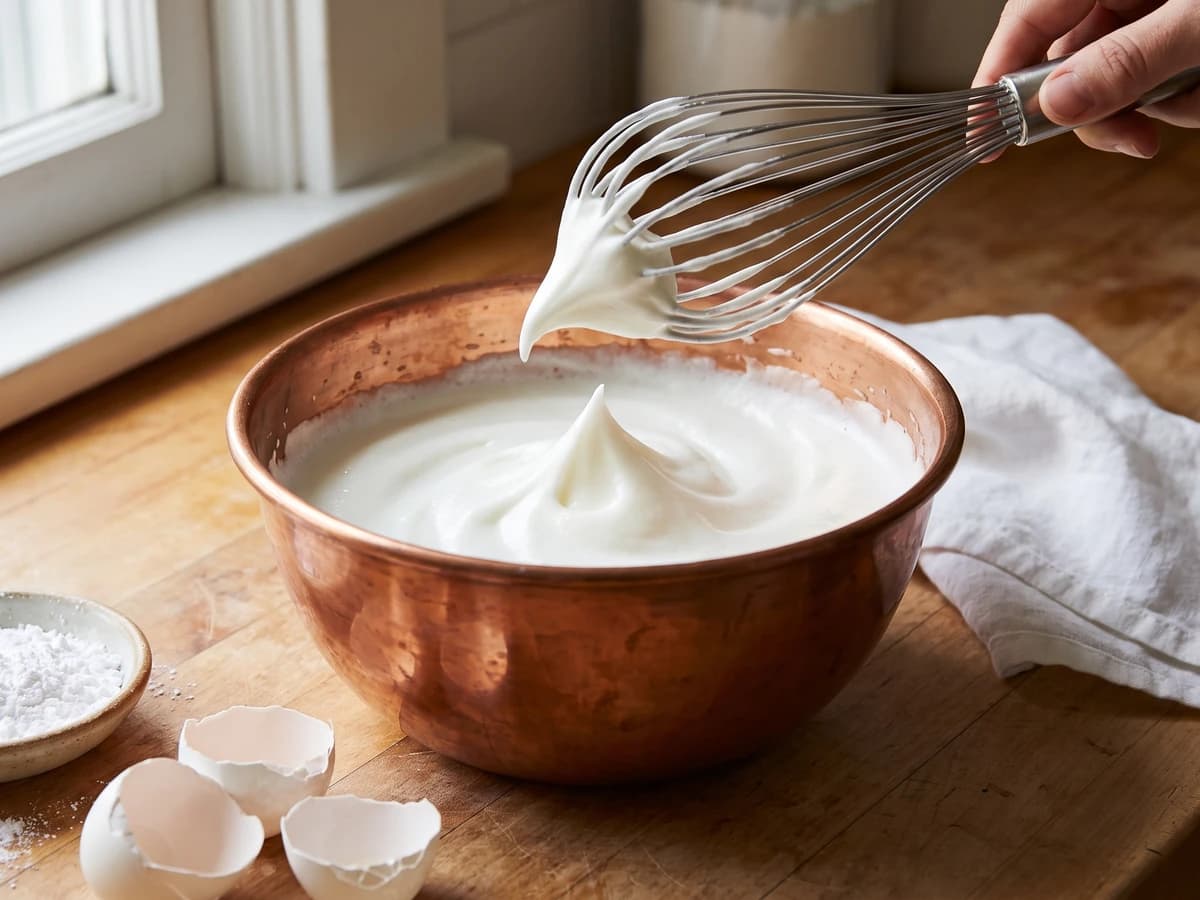
Four whites, one spotless bowl, and a patient change of speed: whisk gently until loosened, then briskly to glossy stiffness, with powdered sugar waiting if the foam begins to granulate.