
Chef Juliette
Various Almond Preparations
Five almond preparations, one discipline: remove the skins cleanly, dry every kernel through, then cut, toast, or cloak it in pale caramel without letting its fragrant oils escape.
A cooking platform built around craft, culture, and the stories behind what we eat.
Created by Chef Juliette
Based on No. 2667, Abricots à la Royale, from Le Guide Culinaire (1907) by Auguste Escoffier
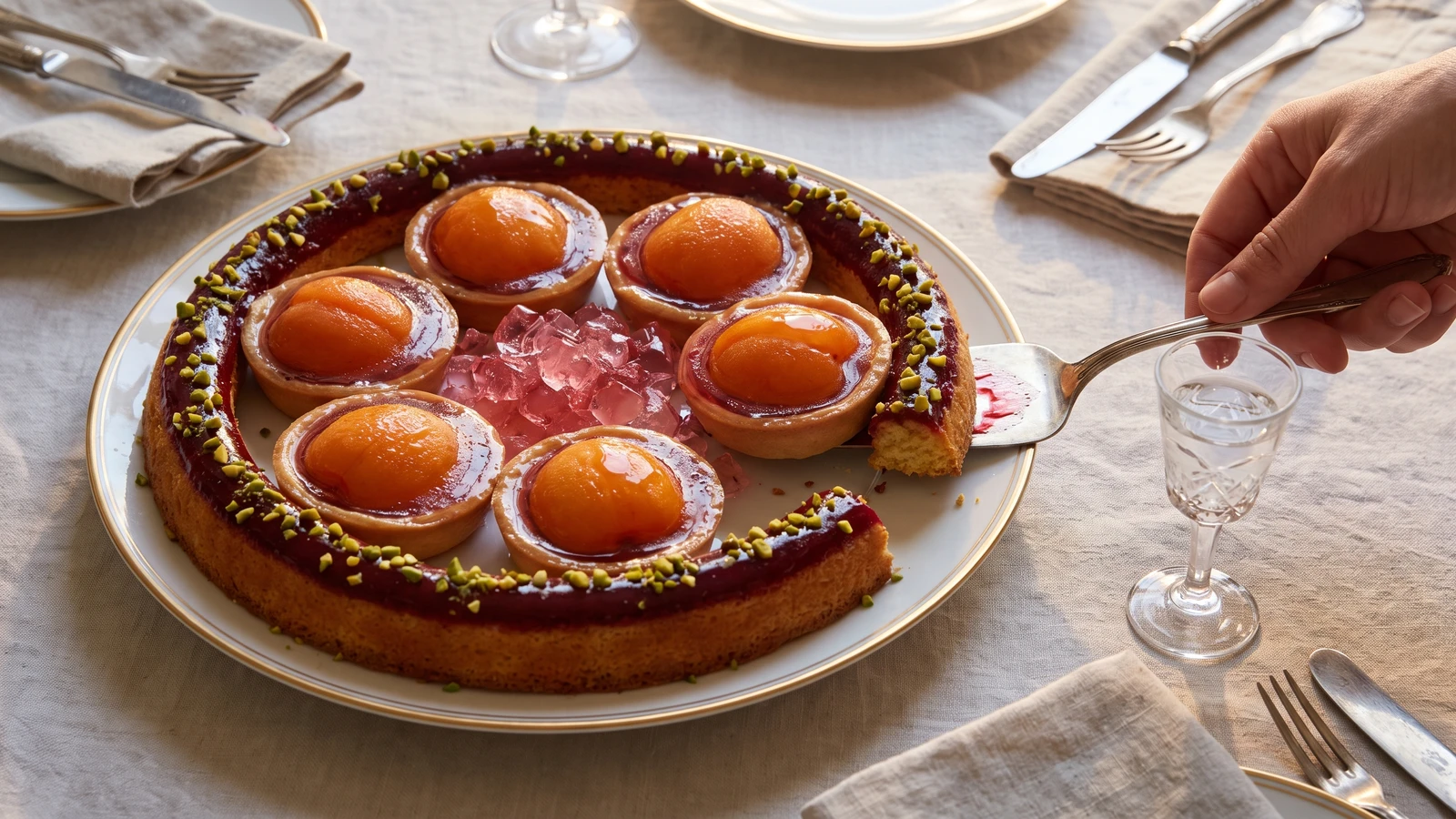
Clear Kirsch jelly holding vanilla-poached apricots, turned out over a red-currant-glazed Génoise crown with pistachios and pink anisette jelly: a grand entremets made manageable by patience, not pastry-kitchen manpower.
Abricots à la Royale (poached apricots in Kirsch jelly on a glazed sponge crown) teaches the discipline of a clear set. The one true thing is this: once gelatin enters the syrup, it must never boil. Strain gently, stir without beating in bubbles, and the jelly will turn out limpid enough to show every golden curve of the fruit.
The original entry assumed a pâtisserie section with cold poached fruit, several prepared jellies, and a finished Génoise waiting for assembly. Its copper pans, separate hands, and the finger-and-thumb test for cooked sugar were brigade scaffolding; they can go. Six deep tartlet moulds, a damp coffee filter, a digital thermometer, and a shallow border made from Pâte à Génoise Fine (No. 2376) are the honest home equivalents. The small-thread glaze prescribed by The Cooking of Sugar (No. 2344), the cold fruit, the clear jelly, and the full crown presentation are the dish, so those stay. This is one cook, one stove, one evening of active work, with the refrigerator taking the long watch.
When it is right, the apricots glow through the Kirsch jelly, the red-currant glaze catches the light, and the chopped pink anisette jelly fills the centre like cut garnet. The step that decides everything comes first: pass the poaching syrup through damp paper without pressing it, and if it remains hazy, strain it again before touching the gelatin.
Abricots à la Royale belongs to the formal Parisian entremets table, where professional pastry rooms joined poached fruit, molded jelly, Génoise, and cooked preserves into architectural desserts carried whole to the dining room. It is not a regional apricot pudding; it applies the methods of grande cuisine to orchard fruit and turns separate pastry preparations into one composed crown. The title à la Royale signals an elaborate menu presentation, not proof of a palace origin.
Quantity
6 medium (about 1 lb / 450 g)
halved and pitted
Quantity
3 cups (720 ml / 720 g)
Quantity
1¼ cups (300 ml / 250 g)
Quantity
1
split lengthwise
Quantity
3½ teaspoons (17 ml / 11 g)
Quantity
2 tablespoons (30 ml / 28 g)
Quantity
1½ teaspoons (7.5 ml / 5 g)
Quantity
1 tablespoon (15 ml / 14 g)
Quantity
1 drop
Quantity
1 shallow 9-inch (23 cm) border (about 10 oz / 285 g), prepared from Pâte à Génoise Fine (No. 2376) and completely cooled
Quantity
⅓ cup (80 ml / 105 g), for a small-thread glaze following The Cooking of Sugar (No. 2344)
Quantity
2 teaspoons (10 ml / 10 g)
only if needed to rescue the glaze
Quantity
⅓ cup (80 ml / 45 g)
finely chopped
| Ingredient | Quantity |
|---|---|
| ripe but firm apricotshalved and pitted | 6 medium (about 1 lb / 450 g) |
| water | 3 cups (720 ml / 720 g) |
| granulated sugar | 1¼ cups (300 ml / 250 g) |
| vanilla beansplit lengthwise | 1 |
| unflavored powdered gelatin for the Kirsch jelly | 3½ teaspoons (17 ml / 11 g) |
| Kirsch | 2 tablespoons (30 ml / 28 g) |
| unflavored powdered gelatin for the pink jelly | 1½ teaspoons (7.5 ml / 5 g) |
| anisette | 1 tablespoon (15 ml / 14 g) |
| rose-pink food coloring | 1 drop |
| shallow Génoise border | 1 shallow 9-inch (23 cm) border (about 10 oz / 285 g), prepared from Pâte à Génoise Fine (No. 2376) and completely cooled |
| red-currant jelly | ⅓ cup (80 ml / 105 g), for a small-thread glaze following The Cooking of Sugar (No. 2344) |
| hot water (optional)only if needed to rescue the glaze | 2 teaspoons (10 ml / 10 g) |
| shelled unsalted pistachiosfinely chopped | ⅓ cup (80 ml / 45 g) |
Combine the water, sugar, and split vanilla bean in a wide saucepan. Bring to a boil just long enough to dissolve the sugar, then lower the heat until the syrup barely trembles. Slip in the apricot halves in one layer and poach for 3 to 5 minutes, turning once, until a fine skewer enters with slight resistance. Lift each half out as it becomes ready; apricots rarely keep the same clock. If one begins to soften at the edge, remove the others immediately and let the syrup's remaining heat finish them. Cool the halves on a tray, cover, and refrigerate until thoroughly cold.
Remove the vanilla bean and let the syrup stand undisturbed for 10 minutes so loose fruit pulp settles. Pass it first through a fine-mesh sieve, then through a dampened coffee filter set over a bowl. Never press or squeeze the filter; pressure forces pulp through and clouds the jelly. Measure 2½ cups (600 ml) of clear syrup, dividing 1¾ cups (420 ml) for the Kirsch jelly and ¾ cup (180 ml) for the pink jelly. If the syrup still looks hazy, pass it through fresh damp paper once more. Ça se rattrape.
For the Kirsch jelly, place ⅓ cup (80 ml) of its cold syrup in a bowl and sprinkle over the 3½ teaspoons (11 g) gelatin. For the pink jelly, place 3 tablespoons (45 ml) of its cold syrup in a second bowl and sprinkle over the 1½ teaspoons (5 g) gelatin. Leave both for 5 minutes to bloom. Warm the remaining portion of each syrup separately until hot but nowhere near a simmer, then stir it gently into its bloomed gelatin until completely dissolved. Do not whisk. Once barely warm, stir the Kirsch into the larger batch; add the anisette and one restrained drop of coloring to the smaller batch. Pass each through a fine sieve into a pouring jug and skim away any bubbles. From this point, neither jelly may boil. If either starts setting before you pour it, stand the bowl in warm water and stir slowly until fluid again.
Rinse six deep 4-ounce (120 ml) tartlet moulds with cold water and shake them out without drying or greasing them. Oil would leave a film over the jelly. Arrange two cold apricot halves in each mould, curved sides facing the bottom and slightly overlapping. Spoon in just enough Kirsch jelly to anchor the fruit, then chill for 10 to 15 minutes until tacky. If a half floats, stop and let this first layer set more firmly; then fill the moulds to their rims with the remaining Kirsch jelly. Pour the pink anisette jelly into a shallow 6-inch (15 cm) dish. Refrigerate both jellies until completely firm, at least 6 hours and preferably overnight.
Set the completely cooled border prepared from Pâte à Génoise Fine (No. 2376) on a flat serving platter. Heat the red-currant jelly in a small heavy saucepan, following The Cooking of Sugar (No. 2344), until a digital thermometer reads the small-thread stage, 215°F (102°C). The thermometer replaces the finger test, which belongs nowhere near boiling sugar in a home kitchen. Brush the hot glaze thinly over the top and exposed sides of the Génoise, then immediately sprinkle on the chopped pistachios so they adhere. If the glaze tightens before the border is covered, warm it briefly; if it has cooked too far, stir in the hot water one teaspoon at a time and rewarm only until brushable. Let the glazed border cool completely, then chill it for 20 minutes.
Fill a shallow bowl with warm water, about 105°F (40°C). Dip one tartlet mould to just below its rim for 2 to 3 seconds, wipe the outside dry, and invert it over its intended place on the Génoise border. Repeat, spacing the six apricot jellies evenly into a crown. If a jelly refuses to release, lift the mould and dip it for one more second rather than pulling at the edges. If an edge softens, return the mold to the refrigerator for 10 minutes and try again with cooler water.
Turn the firm pink anisette jelly onto a cold board and chop it into small, irregular pieces about ½ inch (1 cm) across. Heap them generously in the centre of the Génoise border, keeping their cut surfaces lively rather than pressing them flat. Refrigerate the assembled Abricots à la Royale until service, but bring it out 5 minutes before cutting so the Kirsch and anisette can speak. Present the crown whole, then cut between the molded jellies so each of the six servings carries one. À table!
1 serving (about 260g)
Culinary guides, cultural storytelling, and the editorial depth that makes cooking meaningful.
Discover Culinary ExplorerChef Juliette
Five almond preparations, one discipline: remove the skins cleanly, dry every kernel through, then cut, toast, or cloak it in pale caramel without letting its fragrant oils escape.

Chef Juliette
A pastry pantry lesson in one tray: filberts warmed only until their red skins release, rubbed clean, cooled, and chopped into a fragrant mise-en-place for cakes, creams, pralines, and petits fours.

Chef Juliette
The smallest pâtisserie discipline decides whether a cake leaves its mould intact: clarified butter in every corner, followed by the lightest veil of dry flour or fécule.
Chef Juliette
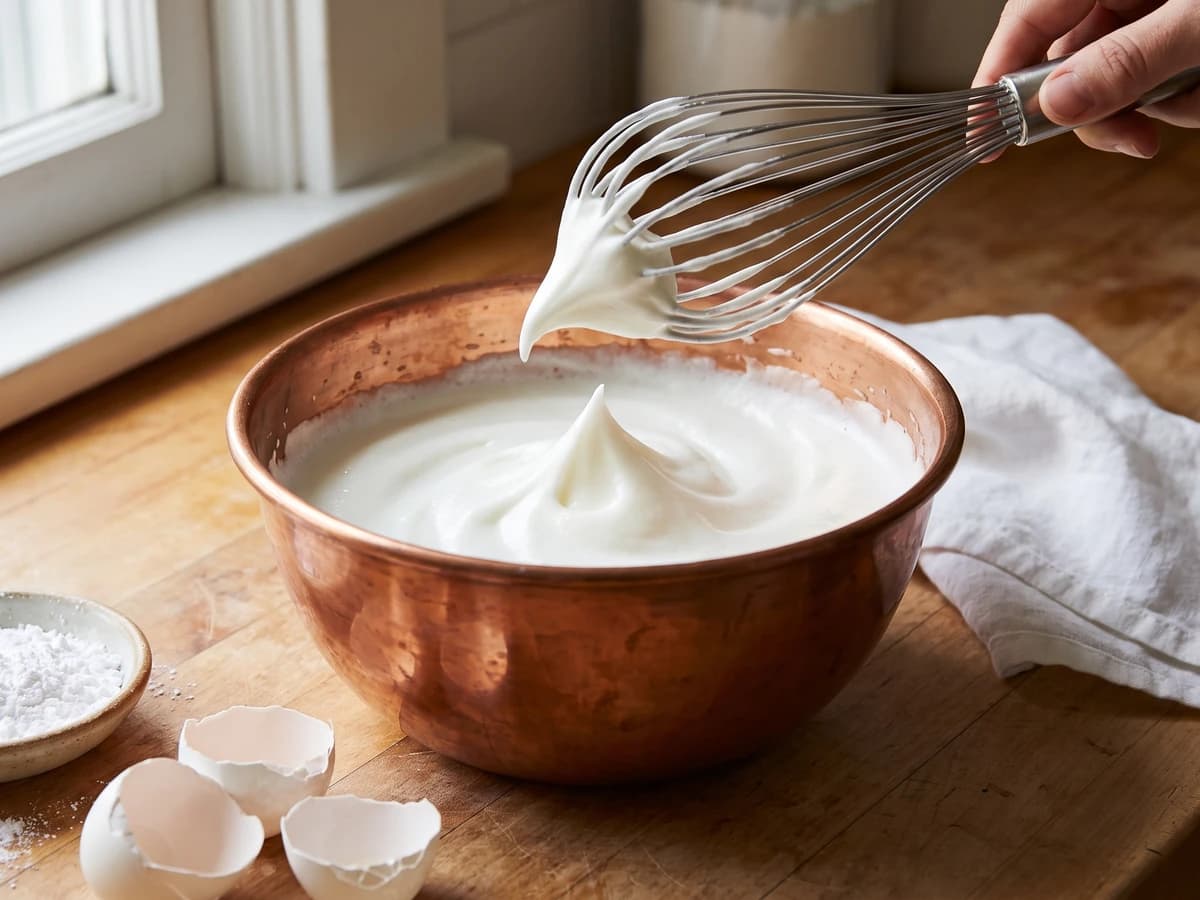
Four whites, one spotless bowl, and a patient change of speed: whisk gently until loosened, then briskly to glossy stiffness, with powdered sugar waiting if the foam begins to granulate.